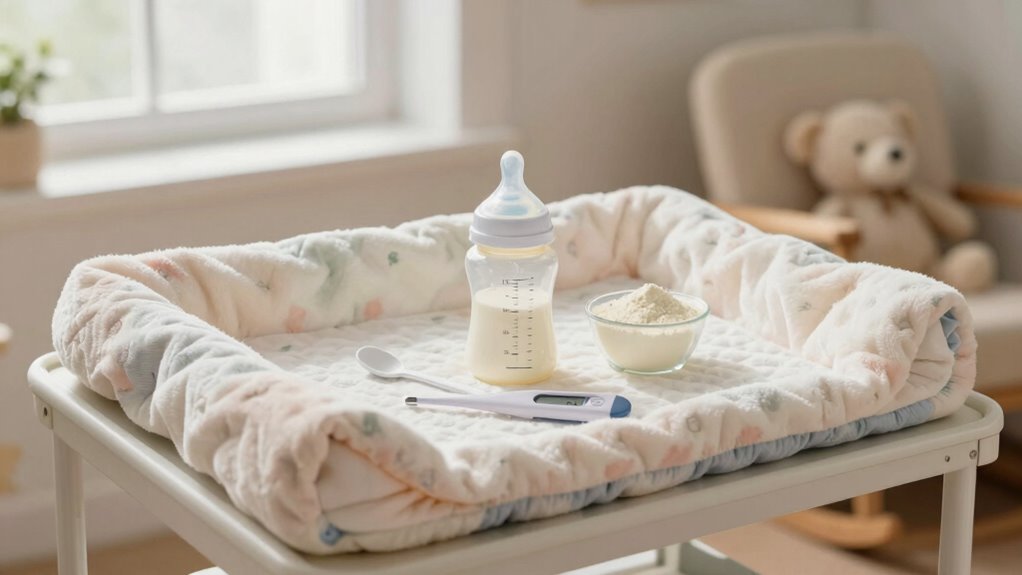

Even if you plan to breastfeed, it’s smart to prepare for all feeding options. Have a few cans of formula on hand and get familiar with bottles, nipples, and sterilizers before your due date. Knowing how to use these tools can ease any challenges that come with breastfeeding. Supporting your baby’s needs means staying flexible, and if you want tips on stocking up and managing unexpected hurdles, there’s more to think about.
Key Takeaways
- Have a few cans of formula and bottles ready as a backup for feeding emergencies.
- Familiarize yourself with bottle sterilization and feeding equipment before birth.
- Research and choose suitable infant formula in advance for quick access if needed.
- Learn proper bottle feeding techniques to ease transitions between breastfeeding and formula.
- Observe your baby’s hunger cues and be flexible in feeding methods to ensure proper nutrition.
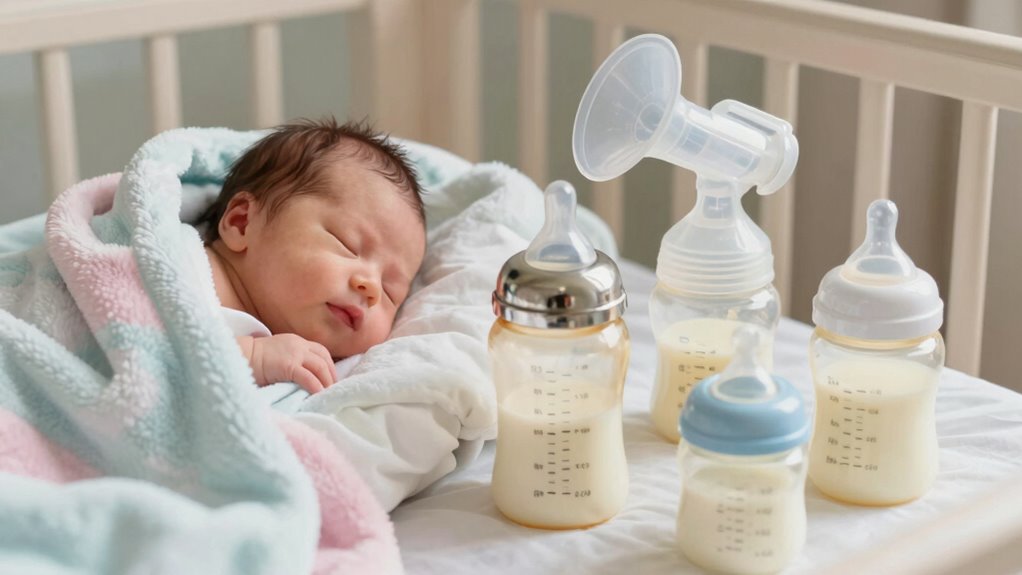
Choosing the right feeding option for your newborn is an important decision that can impact their health and your experience as a parent. While many women plan to breastfeed, it’s wise to prepare for all possibilities, including formula feeding, in case breastfeeding challenges arise. Knowing what to have on hand guarantees you’re ready to provide your baby with proper nutrition, no matter what happens in the early days.
Preparing for all feeding options ensures your baby’s proper nutrition and your confidence in any situation.
If you plan to breastfeed but want to be prepared, start by researching different types of formula just in case. Formula feeding can be a safe and convenient alternative if breastfeeding proves difficult or if you need to supplement. It’s helpful to have a few cans of infant formula in your home before your due date, so you’re not scrambling to find supplies once your baby arrives. Talk to your healthcare provider about which formulas are best for your newborn, especially if they have special dietary needs or sensitivities.
Breastfeeding challenges are common, especially in the beginning. Some moms experience latching difficulties, pain, or concerns about milk supply. These issues can be frustrating and may lead to feelings of doubt or stress. Having formula available can facilitate some of this pressure, giving you options to ensure your baby is fed while you work through breastfeeding difficulties. Remember, many mothers face hurdles initially, but with support and patience, most can overcome them. Meanwhile, formula feeding provides a reliable backup, so your little one still receives essential nutrients.
Even if you are committed to breastfeeding, it’s a good idea to be familiar with the equipment involved, such as bottles, nipples, and sterilizers. You might want to practice using these items before your baby arrives so you’re comfortable with how they work. If you do encounter breastfeeding challenges, having these supplies ready can make the transition smoother and less stressful. Additionally, some mothers choose to pump milk to build a stash, which can be used if nursing isn’t immediately possible or if you need to be away from your baby.
Preparing for all feeding options also means understanding your baby’s cues and needs. Watch for signs of hunger, and be adaptable. Whether you’re breastfeeding directly or offering formula, your goal is to ensure your baby is well-fed, comfortable, and growing healthily. It’s perfectly normal to face obstacles early on, but having the right supplies and knowledge will help you feel more confident. Being aware of feeding options and their potential challenges can help you make informed decisions that best suit your family. Ultimately, the best approach is one that works for your family, supports your well-being, and keeps your baby nourished and happy.

Dr. Brown's All-in-One Sterilizer and Dryer for Baby Bottles, Parts and Other Newborn Essentials
- Sterilizes Multiple Bottles: Sterilize up to six bottles at once
- Kills 99.9% Bacteria: Eliminates bacteria, mold, yeast
- Versatile 4-in-1 Functionality: Sterilize, dry, combine, or store
As an affiliate, we earn on qualifying purchases.
As an affiliate, we earn on qualifying purchases.
Frequently Asked Questions
Can I Switch Between Breastfeeding and Formula Easily?
Yes, you can switch between breastfeeding and formula easily. If you face breastfeeding challenges, like latch issues or low milk supply, supplementing with formula can be helpful. To make the changeover smooth, keep some formula on hand and follow simple formula feeding tips, such as proper mixing and feeding positions. Remember, flexibility is key, and many moms successfully combine both methods to meet their baby’s needs.
What Are the Best Bottles for Newborn Feeding?
You’ll want bottles with soft silicone nipples and adjustable flow to mimic breastfeeding, making feeding less of a surprise. For bottle materials, go for BPA-free plastic or glass—because who doesn’t love the idea of feeding your baby something that won’t turn toxic? Choosing a bottle with the right nipple flow guarantees your little one stays comfortable and avoids fussiness. After all, nothing says “easy feeding” like the perfect combo of materials and flow.
How Do I Know if My Baby Is Getting Enough Milk?
You can tell if your baby is getting enough milk by watching their weight gain and diaper output. If your milk supply is adequate, your baby should gain weight steadily and have about 6-8 wet diapers daily. Also, notice if they seem satisfied after feeds and are alert. If you’re concerned, consult your pediatrician to ensure your milk supply suffices your baby’s needs and they’re thriving.
Are There Any Foods to Avoid While Breastfeeding?
An ounce of prevention is worth a pound of cure, so you should avoid certain foods while breastfeeding. You might want to limit spicy foods and dairy restrictions if your baby shows signs of fussiness or digestive issues. While most foods are fine, paying attention to your baby’s reactions helps. If something seems to upset your little one, consider cutting back on those foods to keep both of you happy and healthy.
How Do I Introduce a Bottle to a Breastfeeding Baby?
To introduce a bottle to your breastfeeding baby, start by offering it when your baby is calm and hungry. Use a slow-flow nipple to promote bottle acceptance and minimize nipple confusion. Try different positions and comfort measures. Be patient, as some babies may take time to accept the bottle. Consistency helps, but don’t force it—keep positive and gentle, and gradually increase bottle feeding alongside breastfeeding.

Similac 360 Total Care Ready-to-Feed Baby Formula
- Halal Certified: Suitable for Halal diets
- Kosher Certified: Meets Kosher standards
- Gluten Free: Contains no gluten
As an affiliate, we earn on qualifying purchases.
As an affiliate, we earn on qualifying purchases.
Conclusion
No matter which feeding path you choose, being prepared makes all the difference. Remember, it’s better to have a backup plan than to be caught off guard. Whether you stick to breastfeeding or introduce bottles, having supplies ready lets you focus on bonding with your little one. Like a good sailor, stay flexible and keep your eyes on the horizon—smooth sailing starts with good preparation from the very start.

Lansinoh Anti-Colic Baby Bottles, BPA-Free Plastic, 5 Ounces, 3 Count, Slow Flow Nipples (Size S), Breastfeeding Bottle with NaturalWave Design, Baby Essentials
- Baby-accepted BPA-Free Bottles: Soft silicone nipples with wide slope
- Clinically Proven Anti-Colic System: Air ventilation reduces gas and fussiness
- Supports Baby-Led Feeding: Flexible nipple stretches with sucking
As an affiliate, we earn on qualifying purchases.
As an affiliate, we earn on qualifying purchases.
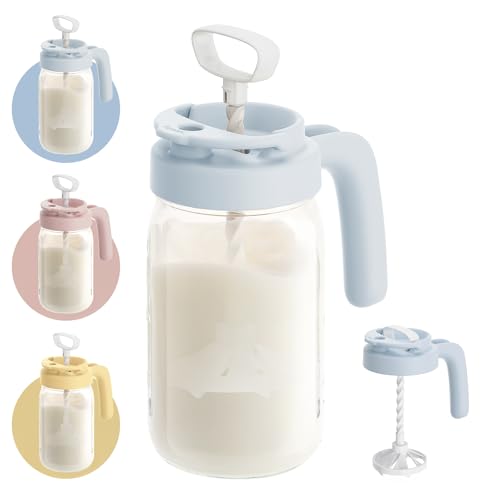
Papablic Breast Milk Pitcher, Formula & Baby Feeding Container, Blue
- Designed for the Pitcher Method: Helps mix, store, and keep fat layer intact
- Safe & Durable Materials: Made with glass and BPA-free plastic lid
- Built-in Mixing Handle: Ensures even mixing with no bubbles or clumps
As an affiliate, we earn on qualifying purchases.
As an affiliate, we earn on qualifying purchases.