To determine how much freezer space you’ll need, first estimate your daily milk output based on your pumping habits, typically 1-3 ounces per feeding. Plan for extra milk to cover feeding fluctuations and long-term storage. Use flexible containers that expand during freezing and label each with the expression date. Keep your freezer at or below 0°F to preserve freshness. As you organize your stash, you’ll discover tips to optimize your storage needs.

Turn the school run and nap time into listening time
- Thousands of audiobooks, podcasts and originals
- Listen on your phone, tablet or Echo — also offline
- Cancel anytime
Key Takeaways
- Estimate daily milk needs based on your baby’s feeding habits to determine storage volume requirements.
- Plan for approximately 25-30 oz of stored milk per week if pumping daily.
- Use flexible containers like storage bags or small bottles to maximize freezer space and prevent leaks.
- Allocate a dedicated freezer section for breast milk to keep it organized and easily accessible.
- Ensure your freezer maintains a consistent temperature at or below 0°F (-18°C) to keep milk safe and fresh.
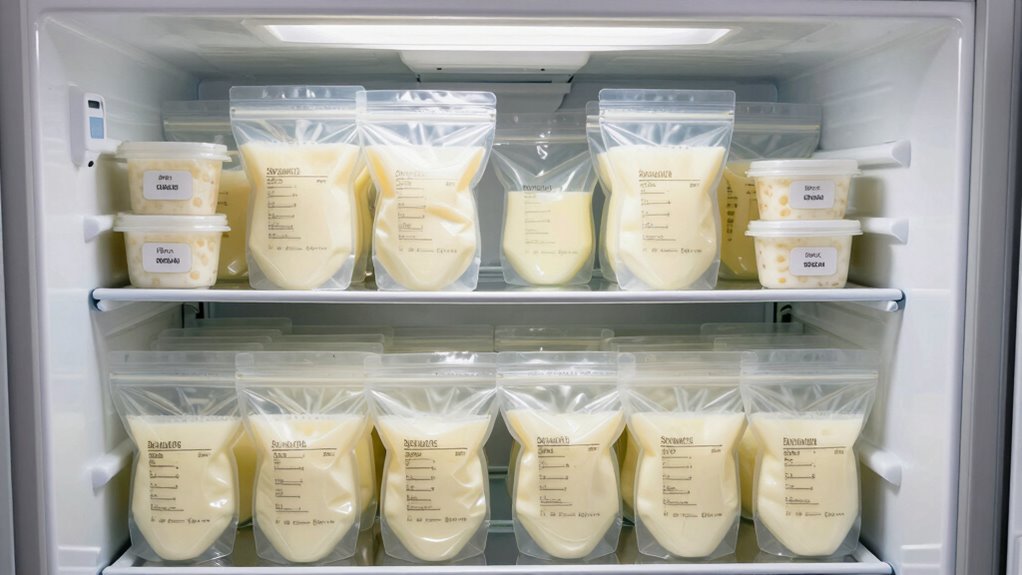
Are you wondering how to effectively store breast milk to guarantee it stays fresh and safe for your baby? Proper storage begins with understanding how much milk you’ll need to store and the space required to keep it fresh. To determine this, start by considering your baby’s feeding habits, whether you’re exclusively breastfeeding or supplementing with formula. As you become familiar with your breastfeeding techniques, you’ll notice how much milk you produce daily, which helps estimate your storage needs. Keep in mind that newborns typically consume about 1 to 3 ounces per feeding, but this varies, so it’s wise to prepare a little extra.
When planning your freezer space, remember that breast milk expands as it freezes, so you’ll need containers that can accommodate this. Standard storage bags or small, clean bottles work well, and it’s best to label each with the date of expression. This way, you can use the oldest milk first, maintaining freshness. If you’re considering milk donation options, storage becomes even more critical. Donated milk must be stored properly to ensure safety and quality, so understanding your capacity helps you contribute without overwhelming your freezer.
In addition to your current needs, think about future use. If you’re planning to return to work or pump regularly, you’ll want enough space for multiple days’ worth of milk. A good rule of thumb is to store about 25 to 30 ounces per week if you’re pumping daily. To keep it organized, designate a specific section of your freezer for breast milk, separate from other frozen items. This not only makes it easier to find what you need but also minimizes the risk of contamination.
The amount of freezer space required depends on your pumping frequency and the quantity of milk you produce. Small freezers or dedicated sections in larger freezers are usually sufficient for most breastfeeding mothers, but if you’re planning to donate milk or store for several months, you might need a more sizable space. Remember, the key is to keep the milk at a consistent, safe temperature—ideally at or below 0°F (-18°C)—and to avoid overfilling containers, which can cause leakage or spoilage.
As an affiliate, we earn on qualifying purchases.
Frequently Asked Questions
How Long Can I Store Breast Milk Safely?
You can store breast milk safely for up to 6 months in a standard freezer, and up to 12 months in a deep freezer, following breast milk storage guidelines. To maximize freshness, label each container with the date of expression. Remember to adhere to breastfeeding tips like storing milk in small portions and avoiding refreezing. Proper storage helps ensure your baby gets nutritious, safe milk whenever needed.
What Are the Best Containers for Storing Breast Milk?
You should choose breast milk container types that prioritize storage container safety, like BPA-free plastic bottles or glass containers. These options prevent leaks, preserve milk quality, and are easy to clean. Avoid using regular plastic bags or containers not designed for freezing, as they can crack or harbor bacteria. Opt for containers with tight-fitting lids to prevent spills and contamination, ensuring your stored breast milk stays fresh and safe for your baby.
Can I Mix Fresh and Frozen Breast Milk?
Like a magician blending colors, you can mix fresh and frozen breast milk, but always prioritize milk storage safety. Make certain both are at similar temperatures before combining to prevent bacterial growth. Mix only small amounts initially, and use the combined milk within 24 hours. Remember, maintaining proper hygiene and temperature control keeps your milk safe, just like a master chef balancing flavors to create a perfect dish.
How Do I Thaw Frozen Breast Milk Properly?
To thaw frozen breast milk properly, you should transfer it to the fridge overnight or hold the container under warm running water. Avoid using a microwave, as it can destroy nutrients and breast milk fortifiers. If you plan to use milk pasteurization, make sure the milk is thawed safely before pasteurizing. Always gently swirl the milk to mix, don’t shake, to preserve its nutrients and quality.
How Often Should I Rotate My Stored Breast Milk?
Your breast milk deserves a royal treatment, so don’t let it sit forgotten! You should rotate your stored breast milk every 3-4 weeks, following milk storage guidelines to keep it fresh and safe. Always use the oldest milk first, and label containers with the date. Proper breast milk rotation ensures your baby gets the best nourishment and reduces waste, keeping your freezer organized and your supply ideal.
As an affiliate, we earn on qualifying purchases.
Conclusion
Now, as you plan your breast milk storage, you might find that your freezer suddenly fills up faster than you expected—almost like it’s trying to tell you how much love and nourishment you’re giving. It’s a little coincidence that your growing stash mirrors your baby’s growth, reminding you that every ounce stored is a small miracle. Trust your plan, and remember, each drop is a precious gift both you and your baby will cherish.
freezer organization for breast milk
As an affiliate, we earn on qualifying purchases.
As an affiliate, we earn on qualifying purchases.
As an affiliate, we earn on qualifying purchases.
Fall Picks
fall essentials
As an affiliate, we earn on qualifying purchases.