
Telemedicine in prenatal care offers great convenience by allowing you to monitor your pregnancy remotely with wearable devices and virtual consultations, reducing trips to the clinic and easing stress. However, it’s vital to understand that not all conditions can be managed online, and some visits still need in-person care. Ensuring provider training and proper system integration are essential for safety. If you keep exploring, you’ll discover how to make the most of this innovative approach while staying safe.
Key Takeaways
- Telemedicine enhances prenatal care by increasing access and reducing the need for frequent in-person visits.
- Remote monitoring devices allow real-time tracking of maternal and fetal health, supporting early detection of issues.
- Provider training is essential to ensure accurate data interpretation, safe interventions, and effective patient education.
- Integrating technology with professional oversight ensures personalized care, but some conditions still require face-to-face evaluations.
- While offering convenience, telemedicine should complement traditional care, with awareness of its limitations and the need for comprehensive assessment.
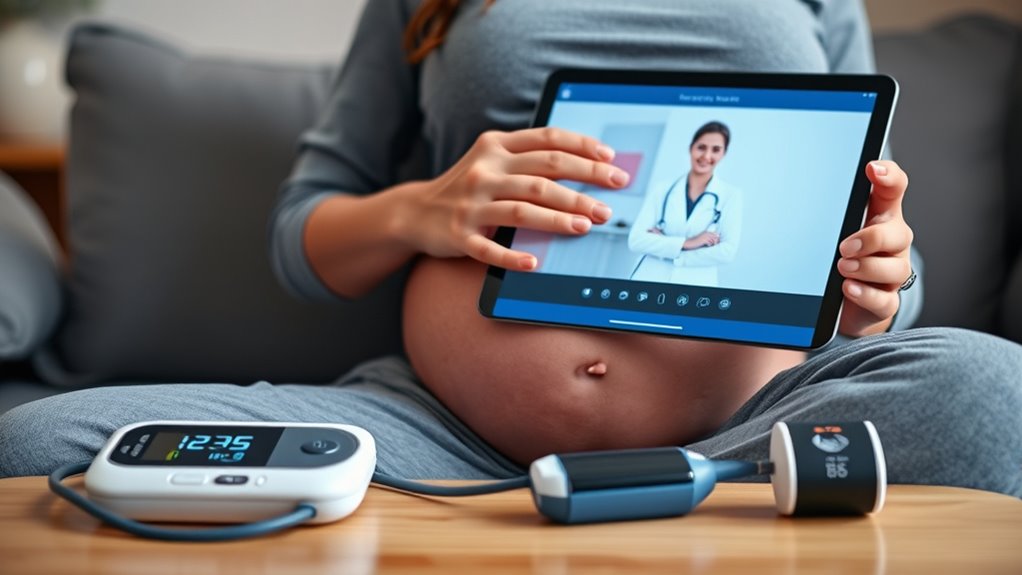
Telemedicine is transforming prenatal care by making it more accessible and convenient for expectant mothers. With remote monitoring, you can now keep a close eye on your pregnancy without frequent in-person visits. Devices such as wearable heart rate monitors, blood pressure cuffs, and fetal Dopplers allow you to transmit essential data directly to your healthcare provider. This real-time information helps your provider stay informed about your health and your baby’s development, reducing the need for unnecessary trips to the clinic. Remote monitoring not only saves you time but also provides peace of mind, especially if you have a high-risk pregnancy or live far from your healthcare facility.
However, for telemedicine to be effective in prenatal care, provider training is indispensable. Healthcare providers need to be well-versed in operating remote monitoring devices and interpreting the data they collect. Proper training ensures that providers can identify warning signs early, make accurate assessments, and determine when an in-person visit is necessary. It also involves educating you on how to use the devices correctly, troubleshoot common issues, and understand the importance of regular monitoring. When providers are adequately trained, the quality of virtual care improves markedly, making telemedicine a safe and reliable option for prenatal management.
The integration of remote monitoring into prenatal care requires a well-structured system that combines technology with professional expertise. You benefit when your healthcare team is trained to interpret remote data accurately and respond promptly to any abnormalities. This seamless communication can lead to earlier interventions, better pregnancy outcomes, and increased overall satisfaction with your care experience. Additionally, provider training helps ensure that telemedicine consultations are thorough and personalized, even when not face-to-face. Implementing standardized protocols can further enhance the effectiveness and safety of remote prenatal care.
While remote monitoring and provider training are fundamental to the success of telemedicine in prenatal care, it’s necessary to recognize its limitations. Not all conditions can be managed remotely, and some situations demand in-person evaluation. Telemedicine should complement, not replace, traditional prenatal visits, especially during critical periods of pregnancy. Still, with advanced technology and properly trained providers, telemedicine can markedly enhance the prenatal care landscape, making it more flexible and responsive to your needs. Ultimately, when both you and your healthcare team are equipped with the right tools and knowledge, telemedicine can offer a safer, more convenient, and engaging pregnancy journey.
Frequently Asked Questions
How Does Telemedicine Impact Early Pregnancy Detection Accuracy?
Telemedicine can impact early pregnancy detection accuracy by relying on remote ultrasound and home pregnancy tests. You might use home tests initially, but remote ultrasounds provide more precise confirmation. However, accuracy depends on the quality of your tests and the availability of reliable imaging. While telemedicine offers convenience, verify you follow professional guidance to interpret results correctly, reducing the risk of false negatives or positives early on.
Are There Specific Prenatal Tests That Cannot Be Done Remotely?
It’s like trying to send a telegram in the age of smartphones—you can’t do everything remotely. Certain prenatal tests, like ultrasound scans, require in-person visits because of ultrasound limitations. While remote blood tests are possible, procedures like detailed ultrasounds or amniocentesis can’t be accomplished through telemedicine. You’ll need to visit your healthcare provider for these essential tests to ensure accurate results and proper fetal assessment.
How Is Emergency Prenatal Care Handled via Telemedicine?
In emergency prenatal situations, telemedicine uses remote triage to assess your symptoms quickly. You should contact your healthcare provider immediately, who will guide you through emergency protocols, such as checking for signs of preterm labor or bleeding. They may advise you to visit the nearest emergency room or provide specific instructions based on your symptoms. Always prioritize in-person care when symptoms are severe, and follow your provider’s guidance.
What Are the Privacy Concerns With Remote Prenatal Consultations?
You need to be aware that privacy concerns with remote prenatal consultations mainly involve data security and patient confidentiality. When you share personal health information online, there’s a risk it could be intercepted or accessed without permission. To protect yourself, verify your telemedicine platform uses strong encryption, complies with healthcare privacy laws, and maintains strict access controls. Being cautious helps safeguard your sensitive information during virtual prenatal visits.
Can Telemedicine Replace Traditional In-Person Prenatal Visits Entirely?
You can’t fully replace traditional in-person prenatal visits with just virtual consultations. While digital check-ins offer convenience and boost patient satisfaction, they lack the tactile reassurance of hands-on exams and detailed ultrasounds. Imagine a pregnant belly gently cradled in your hands—some things just can’t be seen or felt through a screen. Combining both approaches provides the best care, ensuring safety while embracing digital health’s benefits.
Conclusion
As you navigate the gentle path of telemedicine in prenatal care, remember it offers a warm, guiding light through busy days. While it brings comfort and convenience, stay mindful of its subtle shadows. Trust your instincts and stay connected with your healthcare team, like a tender whisper in the breeze. Embrace the journey with open eyes and a caring heart, knowing that each step can lead to a smoother, more peaceful experience for both you and your little one.