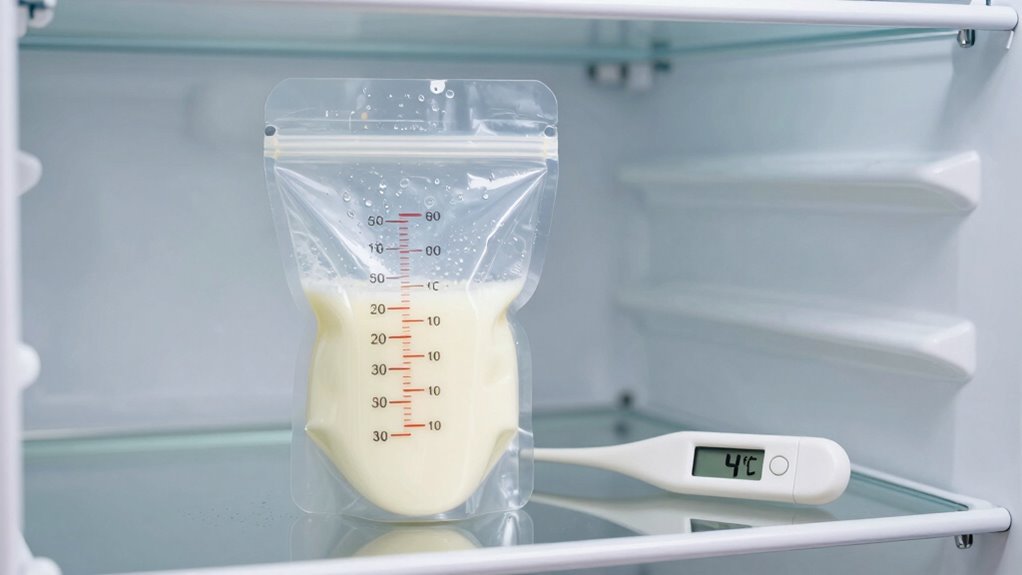

To keep your breast milk safe, always follow temperature guidelines: store freshly expressed milk at room temperature for no more than 4 hours, refrigerate at 39°F (4°C) or below for up to 4 days, and freeze at 0°F (-18°C) or lower for 3 to 6 months. Proper storage prevents bacteria and preserves nutrients. If you want to master these essential temperature rules and ensure your baby’s safety, there’s more to learn.

Get baby and family essentials delivered free — and shop member deals
- Fast, free delivery on millions of items
- Access to Prime Big Deal Days deals on October 6–7
- Prime Video, Amazon Music and more included
Key Takeaways
- Keep freshly expressed milk at room temperature no longer than 4 hours.
- Refrigerate breast milk at 39°F (4°C) or below, safe for up to 4 days.
- Freeze milk at 0°F (-18°C) or lower, ideally used within 3-4 months.
- Thaw frozen milk in the refrigerator overnight; do not thaw at room temperature.
- Avoid warming milk in the microwave; gently warm in warm water or a bottle warmer.
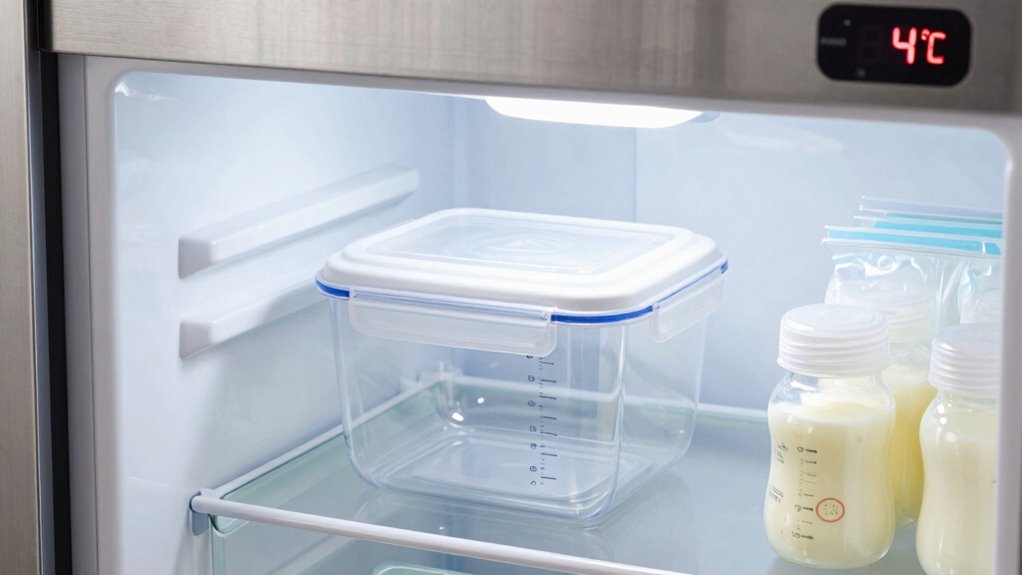
Storing breast milk safely is vital to make certain your baby stays healthy and protected from potential contamination. When it comes to preserving your milk, choosing the right breast milk containers is essential. Opt for sterile, BPA-free bottles or specialized storage bags designed for breast milk. These containers help prevent bacteria growth and maintain the quality of your milk. Make sure to leave some headspace in the containers to allow for expansion if the milk freezes. Properly labeled containers with dates help you keep track of freshness, so you use the oldest milk first and minimize waste. Additionally, understanding filtration and container safety ensures your storage methods align with best practices for preventing contamination.
Choose sterile, BPA-free containers with labels to keep breast milk fresh and safe for your baby.
Temperature control is key in breast milk storage. Freshly expressed milk should be kept at room temperature no longer than four hours. Once you refrigerate it, aim to store it at 39°F (4°C) or below. Refrigeration slows bacterial growth, keeping the milk safe for up to four days. For longer storage, freezing is the best option. Ensure your freezer maintains a steady temperature of 0°F (-18°C) or lower. Frozen breast milk can stay good for up to six months, but for maximum quality, try to use it within three to four months.
When you’re ready to thaw frozen breast milk, it’s important to follow safe thawing methods. Never thaw milk at room temperature for an extended period, as this can promote bacterial growth. Instead, thaw the milk in the refrigerator overnight, which is the safest method. If you need the milk sooner, you can gently warm it by placing the sealed container in a bowl of warm water or using a bottle warmer. Avoid using the microwave because it can create hot spots that scald your baby’s mouth and degrade the milk’s nutrients. Once thawed, use the milk within 24 hours and do not refreeze it.
Always check the milk’s smell and appearance before feeding. If it smells sour or has changed in texture, discard it. Proper storage practices, clean containers, and safe thawing methods ensure your breast milk remains nutritious and safe for your baby. Remember, maintaining appropriate temperatures and handling techniques helps prevent bacterial contamination and preserves the milk’s beneficial properties. By following these simple rules, you give your little one the best start with milk that’s both safe and nourishing.
BPA-free breast milk storage bottles
As an affiliate, we earn on qualifying purchases.
As an affiliate, we earn on qualifying purchases.
Frequently Asked Questions
How Long Can Breast Milk Be Safely Stored at Room Temperature?
You can safely store breast milk at room temperature for up to 4 hours, following room temperature guidelines. To keep it fresh and safe, avoid leaving it out longer than this. Remember, storage duration tips suggest cooling or refrigerating milk promptly if not used right away. Always check your milk for signs of spoilage before feeding, and when in doubt, it’s best to discard to ensure your baby’s safety.
Can I Refreeze Breast Milk After Thawing?
If you accidentally thawed breast milk, don’t refreeze it unless it follows specific thawing guidelines. Typically, once milk’s been thawed in the fridge and kept cold, you can refreeze it within 24 hours, but only if it’s still fresh and hasn’t been left out at room temperature. Always follow proper refreezing protocols to keep your milk safe, and remember, when in doubt, it’s better to use fresh milk.
What Containers Are Best for Storing Expressed Breast Milk?
You should choose breast milk storage containers that are BPA-free, sterile, and specifically designed for storing milk. Glass or high-quality plastic containers with tight-fitting lids are best for storage containers safety. These containers prevent leaks, contamination, and spoilage. Guarantee they are easy to clean and label with the date. Properly storing your expressed breast milk in safe, suitable containers helps maintain its nutritional quality and safety.
How Do I Know if Stored Breast Milk Has Spoiled?
You can tell if stored breast milk has spoiled by doing a smell test; it should smell mild or slightly soapy. If it smells sour or off, discard it. Check for color changes—if it looks discolored or has lumps, it’s best not to use it. Always trust your senses; if anything seems unusual, it’s safer to throw the milk away to ensure your baby’s safety.
Is It Safe to Mix Freshly Expressed Milk With Previously Stored Milk?
Did you know that 80% of moms mix freshly expressed milk with stored milk? It’s generally safe if you follow proper storage guidelines. When you do milk mixing, verify the freshly expressed milk is at the same temperature as the stored milk, and do it quickly to prevent bacterial growth. Always use clean containers, and avoid mixing milk that’s been stored for different lengths of time to stay within safe storage guidelines.
breast milk storage bags with labels
As an affiliate, we earn on qualifying purchases.
As an affiliate, we earn on qualifying purchases.
Conclusion
Storing breast milk safely is like tending a delicate garden—you need the right temperature to keep everything thriving. Remember, freezing is your winter, refrigeration is spring, and room temperature is summer. By following these temperature rules, you’re nurturing your baby’s health and trust. Treat your milk like a precious treasure, and it’ll serve your little one well, blossoming into nourishment that’s always fresh and safe. Keep these tips close, and your milk will always be in its prime.
baby bottle warmer for breast milk
As an affiliate, we earn on qualifying purchases.
As an affiliate, we earn on qualifying purchases.
As an affiliate, we earn on qualifying purchases.
Cold & flu season Picks
humidifiers
As an affiliate, we earn on qualifying purchases.