Before every nap, do a quick 60-second safety check on your travel crib. Make sure the sides are fully unfolded and securely locked into place. Confirm that all latches or clips are engaged and stable. Check that the mattress fits snugly—no gaps or wobbling—and isn’t too big or small. Inspect for loose or broken parts, ensuring the frame is stable. Mastering this routine helps you set up confidently and keep your little one safe—learn more to perfect your process.
Key Takeaways
- Practice unfolding and folding the crib multiple times to ensure quick, confident setup within 60 seconds.
- Verify all side locks and latches are fully engaged and secure for stability.
- Confirm the mattress fits snugly without gaps or uneven edges for safety and comfort.
- Conduct a quick safety inspection to check for loose parts, broken components, and frame stability.
- Perform this safety check before every nap to ensure the crib remains secure and safe for your child.
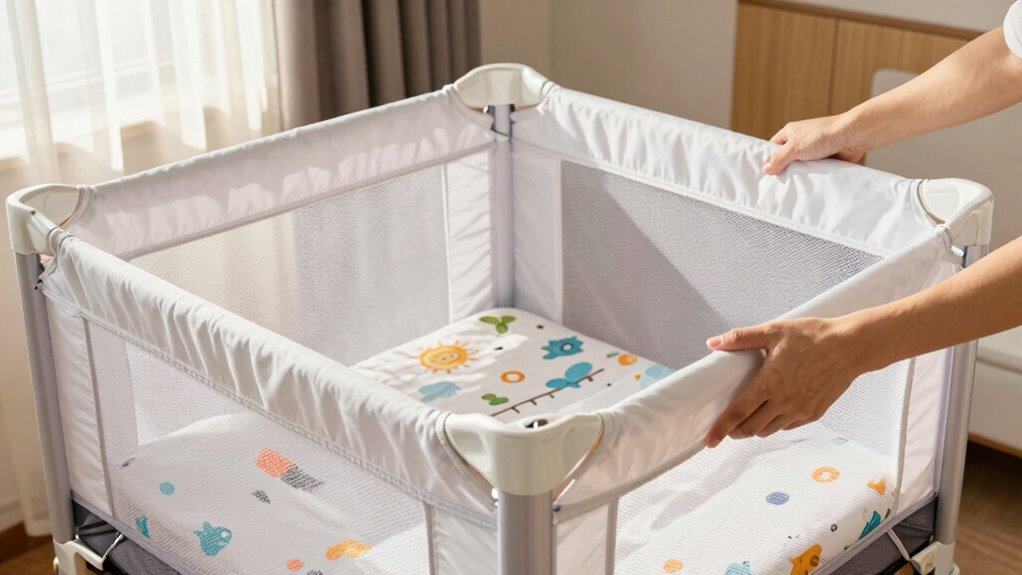
Setting up a travel crib quickly and correctly can make your trip much smoother. When you’re in a new environment, you want to ensure your little one is safe and comfortable without wasting precious time. The first step is familiarizing yourself with the crib’s folding mechanisms. Most travel cribs feature straightforward, user-friendly designs that allow you to unfold and set up the structure in seconds. Practice opening and closing the crib a few times before your trip so you’re confident with the process. This way, when it’s time to assemble the crib at your destination, you won’t be fumbling with complicated parts or unsure of how everything clicks into place. Pay attention to how the sides lock into position—many cribs have secure latches or clips that guarantee stability once properly set up. Confirm that all parts are firmly engaged before moving on to the next step.
Another essential aspect is mattress compatibility. Not all travel cribs use the same mattress size, so double-check that the mattress you bring fits snugly within the frame. A mattress that’s too small can pose safety risks, like gaps where a child’s limbs could get trapped or an uneven surface that affects sleep quality. Conversely, a mattress that’s too large might not fit entirely, making it difficult to secure the sides properly or risking damage to the crib’s structure. To avoid these issues, always verify the manufacturer’s recommended mattress dimensions and test fit your mattress beforehand. If you’re using a different mattress than the original included, make sure it’s firm, waterproof, and fits well. Proper mattress compatibility not only guarantees safety but also helps your child sleep comfortably during the trip.
Once the crib is unfolded and the mattress is in place, give everything a thorough safety check. Make sure all locking mechanisms are secure, the frame is stable, and there are no loose or broken parts. Check that the mattress sits flat without any gaps or uneven edges. This quick safety check should take no more than a minute but can substantially reduce the risk of accidents. Remember, a well-assembled travel crib offers peace of mind, so take the time to confirm all components are properly engaged. Doing this before every nap or bedtime ensures your little one sleeps soundly and safely, no matter where you are. Incorporating proper setup procedures—such as verifying all parts are correctly assembled—aligns with best practices for safety and stability. With a little preparation and attention to detail, you’ll be able to set up your travel crib in just 60 seconds, making your trip smoother and more enjoyable for everyone involved.
Frequently Asked Questions
What Are Common Travel Crib Safety Hazards to Watch For?
You should watch for hazards like loose or torn crib fabric that could pose a suffocation risk. Make certain the mattress is firm and fits snugly to prevent gaps where a child could get stuck. Check for broken or missing parts in the frame, and avoid using pillows, blankets, or stuffed animals inside the crib. Regularly inspecting these elements helps keep your baby safe during every nap.
How Often Should I Replace Travel Crib Parts?
You should replace travel crib parts according to the recommended part replacement schedule, typically every 1-2 years, or sooner if you notice signs of wear or damage. Regular travel crib maintenance helps guarantee safety and longevity. Check manufacturer guidelines for specific parts like mattress supports or fabric. By staying proactive with part replacement, you reduce risks and keep your travel crib safe for every nap.
Can Travel Cribs Be Used Outdoors Safely?
You can use travel cribs outdoors safely if you choose ones with portable bedding and outdoor fabrics designed for weather resistance. Keep an eye on the setup, ensuring stability and avoiding direct sun or wind exposure that could damage materials or compromise safety. Always perform a quick safety check, like you do before every nap, and bring along a sturdy, weather-appropriate cover for extra protection.
What Is the Weight Limit for Travel Cribs?
The travel crib weight capacity typically ranges from 30 to 50 pounds, depending on the model. You should always check the specific travel crib’s instructions for durability and weight limits. Staying within the travel crib weight capacity guarantees safety and prolongs its durability. Exceeding the limit can compromise the crib’s structure, making it unsafe for your child. Always verify the weight limit before use to keep your little one secure.
Are Travel Cribs Suitable for Overnight Sleeping?
Yes, travel cribs are suitable for overnight sleeping, provided you consider their durability and features. Durable, dependable designs make certain safety, while portable features make setup simple and stress-free. You’ll find sturdy sides, secure mattresses, and easy-fold mechanisms that support restful, reliable nights. Just double-check the safety standards and follow the 60-second safety check, ensuring your little one sleeps soundly and securely in their travel crib all night long.
Conclusion
By taking just a minute to perform your safety check, you’re weaving a safety net that catches your little one before they drift into sleep. Think of it as tightening the strings of a well-loved kite—secure, steady, and ready to soar. A quick, consistent setup transforms travel chaos into a calm oasis, giving you peace of mind and your child a safe haven. After all, a safe nap is the foundation for a happy day on the go.