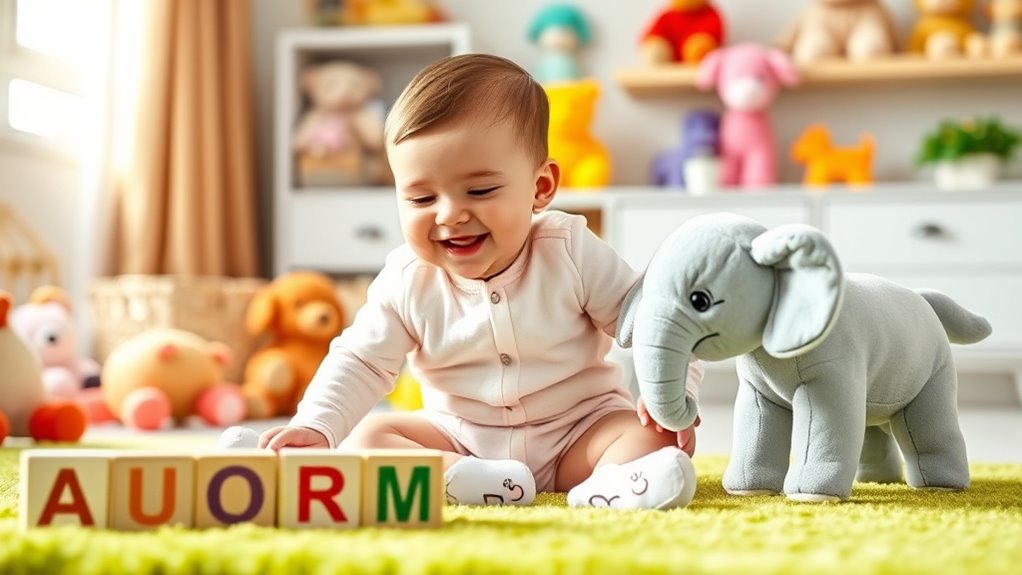

Engaging your baby with animal sounds is a fun way to boost their language skills. They absorb sounds from birth, so introducing simple animal noises helps them learn easily. Using toys, books, and songs can make the experience even more enjoyable. Plus, mimicking these sounds supports cognitive development and memory. By encouraging them to imitate, you’re laying a solid foundation for future communication. Discover more about how these playful activities can enhance your baby’s learning journey!

Turn the school run and nap time into listening time
- Thousands of audiobooks, podcasts and originals
- Listen on your phone, tablet or Echo — also offline
- Cancel anytime
Key Takeaways
- Early exposure to animal sounds aids language development, making it fun and engaging for babies.
- Simple animal sounds are easy for babies to imitate, supporting their cognitive and verbal skills.
- Reading books and singing songs like “Old Macdonald” introduces animal sounds in an enjoyable way.
- Playing with animal toys encourages sound imitation, reinforcing learning through play.
- Mastering animal sounds expands vocabulary and enhances social skills, laying a foundation for future communication.
From the moment they’re born, babies are like little sponges, soaking up the sounds around them. This early exposure to language is crucial, especially when it comes to animal sounds. You mightn’t realize it, but right from day one, your baby’s brain is hard at work, absorbing everything you say, including those fun animal noises.
As they reach around six months, their interest in these sounds typically ramps up, and you’ll notice their excitement and engagement when you make them.
Around nine months, your little one might begin to imitate the sounds they hear. This is the start of a fascinating journey toward language development. By twelve months, consistent imitation becomes more common, marking an essential milestone in how they learn to communicate.
Animal sounds are particularly helpful in this process because they’re simple and fun, often involving easy-to-pronounce consonants like “p,” “m,” and “h.” These sounds act as building blocks, helping your baby combine consonants with vowels to create new words.
Reading books about animals can be an effective way to introduce these sounds. When you read aloud, your baby not only hears the sounds but also sees the animals, connecting the symbols with their corresponding noises.
Singing songs like “Old Macdonald” adds a playful element to learning, making it enjoyable for both of you. Engaging in play with animal toys further encourages imitation, as your baby explores the world of sounds in a hands-on way.
Exposing your child to real-life animal sounds—like those from your pet or at a zoo—reinforces their learning. Interactive games and quizzes can also make this process engaging and educational, allowing your baby to practice their skills in a fun environment.
As they learn to associate sounds with animals, they develop cognitive processing skills that enhance their comprehension. The act of imitating these sounds goes beyond mere fun; it’s a crucial part of their brain development.
Frequent imitation strengthens the language areas in their brain, setting the stage for more complex language skills. Combining verbal imitation with gestures fosters overall development and communication.
As your baby masters these animal sounds, they’ll not only expand their vocabulary but also enhance their memory and social skills, preparing them for the wonderful world of language.
Frequently Asked Questions
What Age Is Best for Introducing Animal Sounds to Babies?
The best age to introduce animal sounds to babies is around 6 months. At this stage, they start showing interest in environmental sounds, making it the perfect time for you to engage them with animal noises.
How Can I Encourage My Baby to Mimic Animal Sounds?
To encourage your baby to mimic animal sounds, start by making the sounds yourself during playtime.
Use toys or books with animals, and demonstrate the sounds while showing the corresponding animal. Engage in back-and-forth sound-making games; it’s a fun way to invite imitation.
Exaggerate your facial expressions to capture their attention, and incorporate silly sounds to keep things light-hearted.
Celebrate their attempts, reinforcing their efforts to imitate and communicate!
Are There Any Apps for Teaching Animal Sounds to Infants?
Yes, there are several apps designed for teaching animal sounds to infants!
You can explore options like Fisher-Price’s app, which offers interactive activities for babies, or the “Learn The Animal Sounds” app, featuring over 80 unique noises.
The Speech Blubs App helps your little one learn through imitation, while the Toddler Animal Sounds App provides engaging visuals and sounds.
These apps make learning fun and can significantly aid your baby’s speech development!
What Are the Benefits of Teaching Animal Sounds Early?
Teaching animal sounds early boosts your child’s language skills, as it enhances phonological awareness and articulation.
It also expands their vocabulary in a fun way, making learning memorable. You’ll notice improved memory and categorization abilities as they associate sounds with animals.
Plus, mastering these sounds builds their confidence and encourages social interaction.
Finally, introducing animal sounds fosters cultural awareness and a connection to nature, enriching their overall development.
Can Animal Sounds Aid in Language Development for Babies?
Imagine a symphony of sounds, each note representing a new word your baby can learn.
Animal sounds can absolutely aid in language development. By imitating these noises, you help your little one exercise their vocal cords, sharpening articulation.
This playful interaction not only expands their vocabulary but also boosts confidence in communication. As they connect sounds with animals, they’re building a foundation for speech, creating a joyful dance of language right before your eyes.
Conclusion
In conclusion, exploring baby’s animal sounds is a delightful way to spark curiosity and joy in your little one. Each sound not only entertains but also encourages early language development and bonding between you and your baby. So, why not make learning fun by turning playtime into an adventure filled with roars, quacks, and meows? Embrace these moments together, and watch as your baby’s love for animals—and sounds—grows. Happy learning!
Halloween Picks
halloween
As an affiliate, we earn on qualifying purchases.