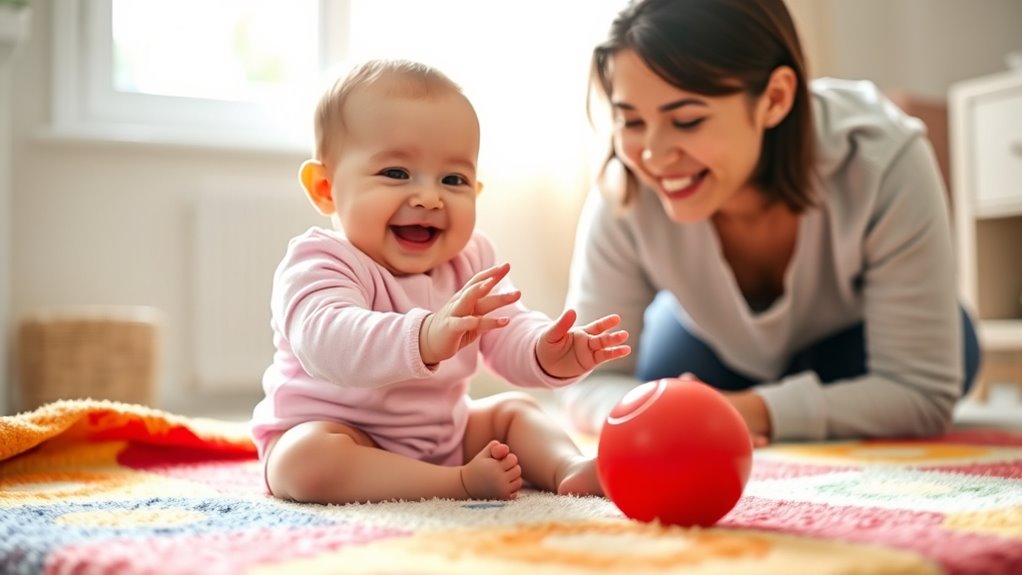

To teach your baby to roll a ball, start by choosing a colorful, smooth ball. Sit across from your baby in a clear space and roll the ball toward them. Use phrases like “Ready, Set, Go!” to signal the activity. Encourage your little one to roll the ball back and guide their hands if needed. Praise their efforts to build confidence and strengthen their motor skills. There’s much more to explore about this engaging activity!

Turn the school run and nap time into listening time
- Thousands of audiobooks, podcasts and originals
- Listen on your phone, tablet or Echo — also offline
- Cancel anytime
Key Takeaways
- Select a colorful and easy-to-grip ball, and ensure a clear, safe area for rolling.
- Position yourself across from the baby and use verbal cues like “Ready, Set, Go” to start.
- Demonstrate rolling the ball and gently guide the baby’s hands to encourage participation.
- Provide plenty of praise and repetition to boost the baby’s confidence and motor skills.
- Engage in playful chasing as the baby grows, enhancing coordination and physical activity.

Teaching your baby to roll a ball can be a fun and rewarding experience that enhances their motor skills and fosters social interaction. Typically, babies around six months old are ready to start learning this skill, as they begin to develop the necessary motor abilities. To begin, choose a colorful, smooth, or textured ball that’s easy for your baby to grip. Make sure the environment is clear of obstacles to keep things safe as they learn.
Start by positioning yourself across from your baby, creating an inviting space for interaction. Roll the ball towards them and encourage them to roll it back. Use verbal cues like “Ready, Set, Go” to signal the start of the activity. This not only captures their attention but also introduces them to the concept of taking turns. Initially, you might want to demonstrate how to roll the ball by gently guiding their hands, helping them understand the movement involved.
Repetition is key to reinforcing learning, so try to incorporate this activity several times a day. Be sure to celebrate their efforts with lots of praise, as this boosts their confidence and encourages them to keep trying. As they get the hang of it, you can help them hold the ball with both hands and apply gentle pressure to roll it. This will strengthen the muscles in their arms and hands while enhancing their coordination.
As your baby grows, they’ll likely start crawling or walking, which opens up even more opportunities for fun. Rolling the ball can become a playful chase, further developing their gross motor skills and balance. Keep the engagement lively by rolling the ball in different directions, encouraging them to explore their space. This interaction not only promotes physical activity but also enhances their hand-eye coordination as they track the moving ball.
Encourage eye contact during the activity, as this boosts social communication skills. Use verbal interaction to maintain their interest, and watch as they respond with excitement. This shared experience can help develop emotional intelligence, strengthening your bond as you enjoy each other’s company.
As your baby learns to anticipate and respond to actions, they’ll grasp the importance of social cues, laying the groundwork for future interactions. With patience and encouragement, rolling a ball can become a cherished bonding activity that supports your baby’s overall development.
Frequently Asked Questions
What Age Should I Start Teaching My Baby to Roll a Ball?
You should start teaching your baby to roll a ball around 12 to 15 months. At this age, they’re developing the motor skills needed to manipulate objects.
You’ll notice their interest in rolling activities, which helps improve their hand-eye coordination. Create a safe and engaging environment for play, and choose a colorful ball that’s easy for them to grasp.
Your involvement will make the experience fun and encourage their learning and development.
What Type of Ball Is Best for Babies to Practice With?
When choosing a ball for your baby, consider size, texture, and safety.
Opt for small to medium-sized, lightweight, and durable materials like foam or soft plastic. Look for smooth or ribbed textures to enhance grip and sensory experience.
Bright, contrasting colors grab their attention and aid visual tracking. Ensure there are no loose parts to avoid choking hazards.
How Can I Encourage My Baby to Roll the Ball Back?
To encourage your baby to roll the ball back, engage in interactive play.
Roll the ball towards them and cheerfully say, “You can do it!” Use gentle physical guidance if needed, helping them understand the motion.
Place toys nearby to spark their interest and motivate movement.
Remember to clap and praise their efforts to reinforce positive behavior.
With patience and consistent encouragement, you’ll see their skills grow over time!
Are There Safety Concerns When Teaching Ball Rolling to Babies?
Yes, there are safety concerns when teaching ball rolling to babies. You need to closely supervise them to prevent accidents and ensure they’re developmentally ready for this activity.
Use appropriately sized balls to avoid choking hazards, and keep the play area clean and free of sharp objects. Be mindful of overstimulation and watch for any allergic reactions to the materials.
Ensuring a safe environment will help your baby enjoy the learning experience.
How Can I Make This Activity More Fun for My Baby?
To make playtime positively playful for your baby, incorporate colorful, captivating balls that spark excitement.
Set the scene with silly sounds and rhythmic music while you roll the ball back and forth. Engage your little one with encouraging expressions and cheerful cheers.
Use varied textures and sizes to keep their interest piqued. Add a dash of adventure by placing the ball just out of reach, igniting their curiosity and motor skills development!
Conclusion
In the end, rolling a ball can be a delightful dance of discovery for your little one. With patience and playful practice, you’ll witness their joyful journey as they learn to connect, coordinate, and create. So grab a colorful ball and get ready for giggles and glee! Each roll brings new revelations, reinforcing their growing skills and strengthening your bond. Enjoy this exciting experience together, and soon they’ll be rolling like a pro, spreading smiles all around!
Fall Picks
fall essentials
As an affiliate, we earn on qualifying purchases.