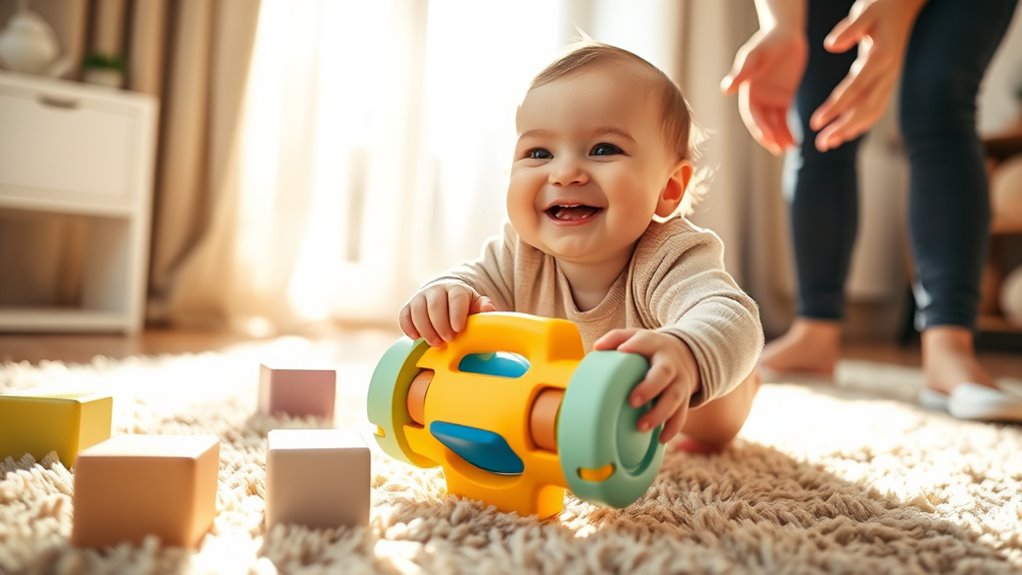

To help your baby stand, start by encouraging tummy time to build core strength, aiming for 15-30 minutes daily by two months. Place toys just out of reach to motivate pulling up. Use exercise saucers for leg strength and hold hands to build their confidence. Ensure a safe environment by clearing clutter and softening surfaces. If your baby isn’t standing independently by 15 months, consult your pediatrician. There’s more to explore regarding milestones and techniques!
Key Takeaways
- Encourage tummy time daily to build core strength, essential for balance and stability when learning to stand.
- Use toys placed just out of reach to motivate your baby to pull up and practice standing.
- Support your baby by holding their hands while guiding them into standing to build confidence.
- Create a safe environment with soft surfaces and remove hazards to minimize injury risks during practice.
- Monitor developmental milestones and consult a pediatrician if your baby hasn’t stood independently by 15 months.

Helping your baby stand is an exciting milestone that marks their growing independence. Most babies begin standing with support between 6.5 and 12 months. You’ll likely notice your little one pulling up to stand around 7 to 10 months and eventually standing independently between 9 and 15 months. Keep in mind that every baby develops at their own pace, so don’t worry if your child takes a little longer, especially if they were born prematurely. Regular wellness checkups are essential for tracking their progress and addressing any concerns.
To help your baby build the core strength necessary for standing, tummy time is vital. Start with just 3-5 minutes a day, gradually increasing it to 15-30 minutes by the time they reach two months. This practice strengthens their core muscles, which are crucial for balance and stability. Activities like crawling and sitting also play a significant role in core development, paving the way for a smooth transition from crawling to standing.
Tummy time is essential for building core strength, aiding your baby’s transition from crawling to standing.
You can encourage standing by placing toys just out of reach to motivate your baby to pull up. When you hold their hands and guide them into a standing position, you’re building their confidence too. Consider using exercise saucers or activity centers; these can effectively develop leg strength. Ensure you create a safe environment with soft surfaces to minimize the risk of injury. As your baby grows stronger, gradually reduce your support to help them improve their balance.
Safety is paramount during this stage. Clear away clutter and sharp objects to reduce the risk of injury. Anchor any furniture that could tip over and use soft corner guards to protect against impacts. Avoid letting your baby near stairs or high surfaces, and stay calm during any falls, as your reaction can influence their response.
Strengthening your baby’s balance and coordination is also essential. Activities like rocking and swinging enhance their vestibular sense, aiding balance. Encourage different motor movements, like climbing over pillows, to boost coordination. Playing with other babies can inspire standing attempts, making the process even more engaging for them.
Keep an eye out for developmental signs, such as bouncing on knees or experimenting with foot placement. If your baby isn’t standing by 18 months, it’s essential to consult a pediatrician. Factors like muscle tone and baby fat can influence their progress, and bringing videos of any concerning behaviors to doctor visits can be helpful. Regular checkups are crucial for monitoring their development and addressing any potential issues.
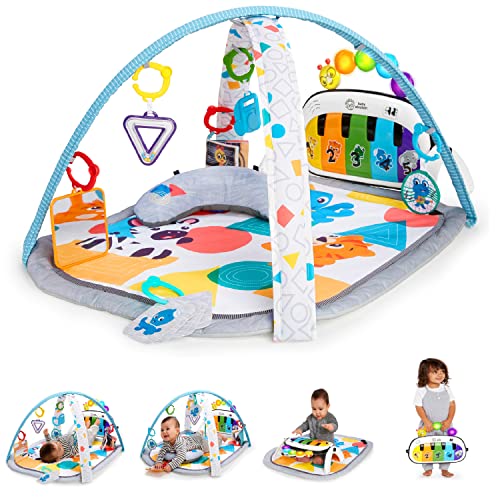
Baby Einstein 4-in-1 Kickin' Tunes Music and Language Play Gym and Piano Tummy Time Activity Mat
- Developmental Support: Supports motor and cause-effect skills
- Versatile Modes: Four modes for different play stages
- Musical & Educational: 25+ minutes of lights, music, and language learning
As an affiliate, we earn on qualifying purchases.
As an affiliate, we earn on qualifying purchases.
Frequently Asked Questions
What Developmental Milestones Precede a Baby’s Ability to Stand?
Before your baby can stand, they typically reach several key milestones.
First, they gain head control around six months, followed by supporting weight on their legs at four months.
Rolling over and sitting independently by nine months are crucial for balance.
Crawling helps build muscle strength and coordination.
As they practice these movements, they develop the balance and core strength needed to eventually stand on their own.
Are There Specific Toys That Encourage Standing?
Sure, selecting suitable standing-supportive toys is simple!
Push walkers provide perfect stability, while activity tables spark sensory exploration.
Standing art easels stimulate creativity and promote upright play.
Water tables invite interactive fun, encouraging prolonged standing and play kitchens ignite imaginative role-play.
Position toys at varying heights to motivate your little one to reach and stand.
How Can I Ensure Safety While My Baby Practices Standing?
To ensure safety while your baby practices standing, clear clutter and remove tripping hazards from the floor.
Use soft surfaces like rugs to cushion falls, and anchor furniture to prevent tipping.
Supervise closely and react calmly if your baby falls, helping them stay confident.
Create soft landing areas and avoid hard surfaces without support.
Designate safe zones with toys that encourage standing, making sure your baby has a secure and fun environment.
When Should I Seek Help if My Baby Struggles to Stand?
When you watch your little one wobble like a baby deer, it’s both heartwarming and nerve-wracking.
If your baby’s not standing independently by 16 months, it’s time to seek help. It’s like a gentle nudge from the universe, guiding you to ensure their development stays on track.
A pediatrician can assess their progress and suggest the best next steps, offering reassurance and support when you need it most.
Don’t hesitate; you’re their advocate!
What Are Common Signs of Readiness to Start Standing?
You’ll notice several signs that your baby’s ready to start standing.
Look for them pulling up on furniture or practicing balance by letting go briefly. They may bounce while standing, showing increased confidence.
If your little one is curious and reaches for objects above their eye level, that’s a good indication too.
Frequent transitions between sitting and kneeling signal their growing strength and coordination, which are crucial for standing independently.
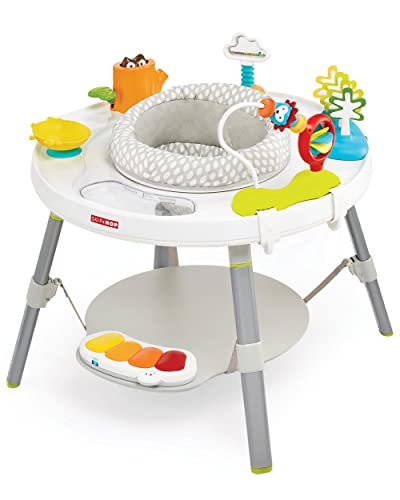
Skip Hop Baby Activity Center: Interactive Play Center with 3-Stage Grow-with-Me Functionality, 4mo+, Explore & More
- Grows with Baby in 3 Stages: Supports babies from 4 months to 25 lbs
- 360° Rotating Seat: Promotes movement and coordination
- 25+ Developmental Activities: Includes toy loops and clip-on toys
As an affiliate, we earn on qualifying purchases.
As an affiliate, we earn on qualifying purchases.
Conclusion
Helping your baby stand is a joyful journey filled with milestones. Remember, most infants take their first steps between 9 and 12 months, but every baby develops at their own pace. Engaging in fun activities like playful lifting and providing sturdy furniture for support can make a big difference. Did you know that around 80% of babies can pull themselves up to a standing position by 9 months? So, embrace the process and enjoy watching your little one grow!

Baby Einstein Neptune's Ocean Discovery Activity Baby Jumper Activity Center, Ages 6 Months +, Max Weight 25 lbs., Unisex
- Ocean-themed discovery activities: Dive into ocean-themed activities in all directions
- Swiveling bouncy seat: 360° swivel seat for easy toy access
- Adjustable height positions: Four height settings for growing babies
As an affiliate, we earn on qualifying purchases.
As an affiliate, we earn on qualifying purchases.

12 Pack Soft Corner Protector Baby Proofing Edge and Corner Guards, Safety Pre-Taped Rubber Foam Furniture Bumper for Fireplace, Table, Stair, Cabinet (Black)
- Easy Installation: Pre-taped for quick setup
- Wide Application: Fits tables, furniture, fireplaces
- Enhanced Protection: Made of soft, impact-absorbing NBR
As an affiliate, we earn on qualifying purchases.
As an affiliate, we earn on qualifying purchases.