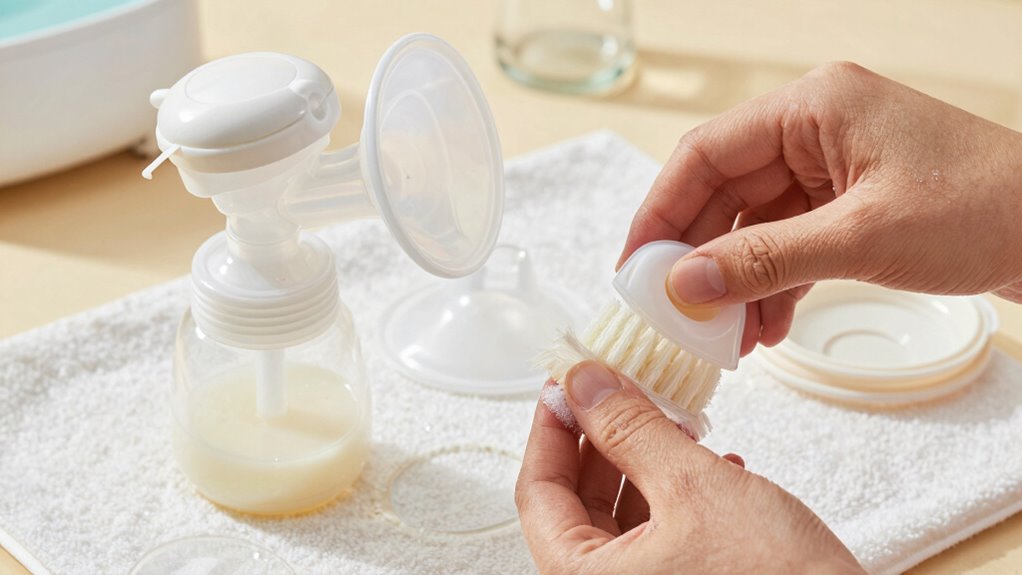
To clean your breast pump properly, start by disassembling all parts that contact breast milk, including flanges, valves, membranes, bottles, and tubing. Rinse everything immediately after use, then wash with a bottle brush and mild soap, making sure to reach hidden spots. Rinse thoroughly and air-dry on a clean surface. For sterilization, boil the parts or use an sterilizer, following manufacturer instructions. Keep all parts dry and inspect regularly for damage—if you want to learn how to tackle tricky spots and ensure total cleanliness, keep going.
Key Takeaways
- Disassemble all parts contacting breast milk, including flanges, valves, membranes, bottles, and tubing, following manufacturer instructions.
- Rinse all components immediately after use with running water to prevent milk residue drying and buildup.
- Wash parts thoroughly with a bottle brush and mild soap, avoiding harsh chemicals, then rinse completely.
- Sterilize all parts regularly using boiling water, sterilizers, or according to manufacturer guidelines, ensuring they are fully dry before reassembly.
- Check and clean hidden or hard-to-reach areas during reassembly to ensure no residue or debris remain.
Keeping your breast pump clean is essential for your baby’s health and your peace of mind. Proper cleaning helps prevent bacteria buildup, reduces the risk of infections, and ensures that your baby receives safe, hygienic breast milk. When it comes to breast milk storage, you want to be confident that your milk remains uncontaminated from start to finish. That’s why thorough cleaning and sterilization of your pump and accessories are non-negotiable steps in your routine.
Keeping your breast pump clean ensures your baby’s safety and peace of mind.
Start by disassembling your pump completely after each use. Remove all parts that come into contact with breast milk, such as flanges, valves, membranes, bottles, and tubing. It’s important to note that some parts, especially tubing and motor units, may require special attention. For tubing, check if it’s compatible with sterilization methods, as some are not heat-safe. For the rest, wash them immediately to prevent milk residue from drying and becoming harder to clean.
When it comes to breast milk storage, ensure that all bottles and storage containers are washed with hot, soapy water, rinsed thoroughly, and air-dried or dried with a clean towel. Proper storage minimizes bacteria growth and preserves milk quality. Use sterilized containers whenever possible for added safety, especially if your baby is very young or has a compromised immune system.
Pump accessory sterilization should be performed regularly, ideally daily or after each use if your baby was ill or if you’re using the pump frequently. Boiling parts in water for about five minutes is a simple, effective method. Alternatively, many hospital-grade sterilizers or electric sterilizer units are convenient options that quickly and thoroughly sterilize all parts simultaneously. Remember to follow the manufacturer’s instructions for each sterilization method to avoid damaging your equipment.
Cleaning your pump thoroughly after each use involves rinsing all parts that have come into contact with milk under running water, then washing with a bottle brush and mild soap. Avoid using bleach or harsh chemicals that could leave residues. Rinse everything well to remove any soap traces. Once cleaned, allow parts to air-dry completely on a clean towel or drying rack, preventing bacterial growth caused by dampness. Reassemble only after all parts are dry to avoid trapping moisture inside. Additionally, proper maintenance of your equipment can extend its lifespan and ensure consistent performance.
Frequently Asked Questions
How Often Should I Sterilize My Breast Pump Parts?
You should sterilize your breast pump parts after each use to maintain proper hygiene practices and prevent infections. For daily cleaning, wash all parts thoroughly with soap and water, then sterilize at least once a day, especially if your baby is newborn or immunocompromised. If you’re using the pump frequently, increase sterilization frequency to ensure all hidden parts stay clean and safe. Following these hygiene practices helps keep your milk safe for your baby.
Can I Use Vinegar to Clean My Breast Pump?
Vinegar cleaning can be a quick, natural way to freshen up your breast pump, but it’s not the best disinfectant. While it helps remove residue and odors, it doesn’t eliminate all germs. For thorough cleanliness, consider alternative disinfectants like sterilizing solutions or boiling water. Think of vinegar as a gentle brushstroke rather than the full masterpiece—use it for routine cleaning, but rely on stronger disinfectants for deep sanitation.
Are There Specific Brushes for Cleaning Hidden Parts?
Yes, there are specific cleaning brushes designed for cleaning hidden components of your breast pump. These brushes are small, narrow, and flexible, allowing you to thoroughly clean hard-to-reach areas like valves and membranes. Use these cleaning brushes with warm, soapy water to guarantee every hidden component is spotless. Regularly inspect and replace the brushes to maintain proper hygiene and ensure your pump functions effectively.
What’s the Best Way to Dry Breast Pump Components?
You should air dry your breast pump components after washing to prevent bacteria growth. Place them on a clean, dry towel in a well-ventilated area, ensuring they’re completely dry before reassembling. Avoid using towels or cloths that might harbor germs. Regular sterilization, especially if you pump frequently, helps keep everything safe. Remember, proper air drying and consistent sterilization are key to maintaining a clean, healthy pumping experience.
How Do I Prevent Mold Buildup in My Pump?
To prevent mold buildup in your pump, make certain you dry all parts thoroughly after cleaning, especially hidden areas. Store components in a clean, dry place, and avoid airtight containers that trap moisture. Use proper mold prevention and storage tips, like leaving parts uncovered or loosely stored. Regularly inspect your pump for any signs of mold, and clean it promptly if you notice any. This keeps your pump safe and hygienic for every use.
Conclusion
Now that you know how to clean your breast pump thoroughly, you can trust that every part is safe and sanitized, just like you intended. It’s funny how a little extra effort keeps your baby’s feeding safe and your mind at ease. When you follow these steps consistently, cleaning becomes second nature—almost automatic. So, keep up the routine, stay diligent, and enjoy those precious moments knowing your pump is spotless, just like your little one deserves.