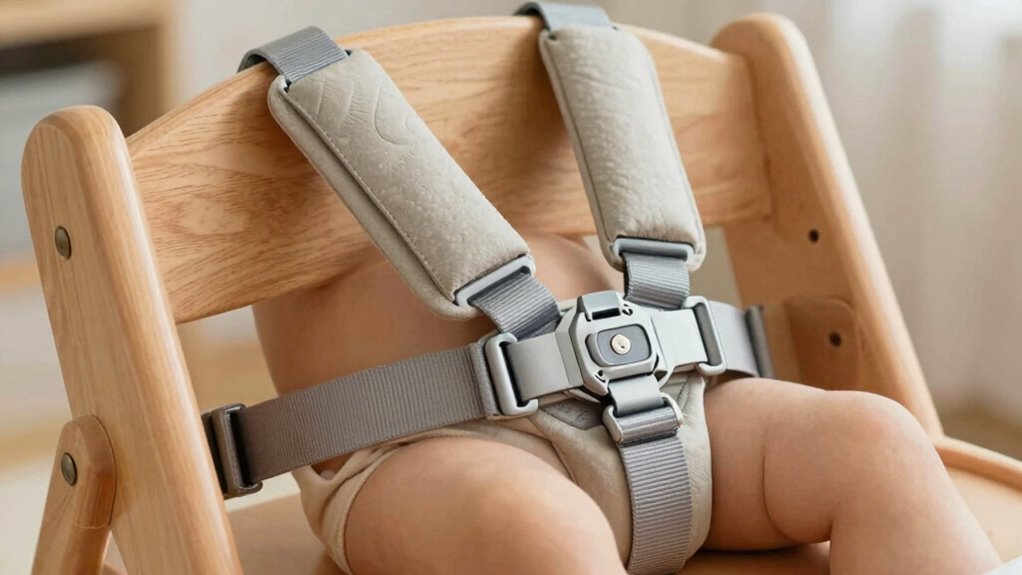
To prevent slips, ensure your child’s straps are properly threaded through designated slots without twists, lying flat against their body for a snug fit. Fasten buckles securely and check regularly for looseness or damage. Also, make certain the straps are adjusted so they’re snug but comfortable. Keep the high chair stable by verifying slip-resistant features and cleaning non-slip pads. Proper strap placement and secure fastening are vital—continue to discover tips that can help keep your little one safe.
Key Takeaways
- Thread all straps correctly through designated slots to ensure proper fit and security.
- Keep straps flat against the child’s body without twists for optimal grip.
- Adjust straps snugly, not too tight, to prevent slipping while maintaining comfort.
- Regularly inspect and tighten straps to prevent looseness over time.
- Use slip-resistant features on the high chair and floor to enhance overall stability.

Have you ever wondered if your child’s high chair is truly safe? Ensuring safety starts with paying attention to strap adjustment and slip prevention. Proper strap placement is essential because it keeps your child securely in the seat and minimizes the risk of slipping or falling. When you’re securing your little one, always make sure the straps are snug but not too tight. Loose straps can allow your child to wiggle free or slide down, which defeats their purpose. On the other hand, straps that are too tight can cause discomfort and may restrict movement or breathing. Check each strap regularly to guarantee they fit correctly and haven’t become loose over time. Proper strap adjustment is a simple yet vital step to prevent accidents. Additionally, inspecting the non-slip features of the high chair ensures stability during use. Slip prevention is another key factor in high chair safety. Many high chairs come with a tray or a base that can help keep your child in place, but these features aren’t enough on their own. The seat itself and the surface it sits on should also be slip-resistant. If your high chair has rubber grips or textured feet, make sure they’re clean and in good condition. These prevent the chair from sliding unexpectedly, especially on smooth or slippery floors. If your high chair doesn’t have built-in slip-resistant features, consider adding non-slip pads underneath the legs. This small addition can greatly reduce the chance of the chair slipping during meal times or when your child shifts position. When positioning your child in the high chair, double-check that the straps are correctly threaded through all the designated slots. The straps should be flat against the child’s body, without any twists or folds, to guarantee maximum safety. You also want to verify the buckle is securely fastened and that there’s no excess slack. Many accidents happen because straps aren’t properly adjusted or because a child manages to wiggle out of a loosely secured harness. By regularly inspecting and adjusting the straps, you minimize these risks.
Frequently Asked Questions
Can Straps Cause Discomfort or Skin Irritation for Babies?
Straps can sometimes cause discomfort or skin irritation for babies, especially if the strap material isn’t soft or breathable. If you notice redness or chafing, it’s likely due to the material rubbing against their skin. To prevent this, choose straps made from gentle, skin-friendly fabrics and make certain they fit snugly but not too tight. Regularly check and adjust the straps to keep your baby comfortable and avoid irritation.
How Often Should I Check Strap Integrity and Wear?
Think of your high chair straps as the guardians of your little one’s safety, needing regular inspection. You should check strap wear and perform safety checks weekly to catch any signs of fraying or damage. This routine guarantees your child’s security isn’t compromised. Keep a close eye on the integrity of each strap, replacing them immediately if you notice any wear, so your baby remains safe and secure during mealtime adventures.
Are There Specific Strap Materials Recommended for Safety?
You should look for straps made from durable, non-toxic materials like polyester or nylon, which meet safety standards. These materials are strong, resistant to wear, and easy to clean, ensuring long-lasting safety. Always check that the straps comply with current safety standards, such as ASTM or JPMA certifications. Using high-quality, compliant strap materials helps prevent slips and keeps your child secure in the high chair.
What’s the Best Way to Clean High Chair Straps?
When it comes to strap cleaning, think of it as giving your high chair a fresh start. Remove the straps and hand wash them with warm, soapy water or use a gentle machine cycle if they’re machine washable. For stubborn stain removal, consider a mixture of baking soda and water or a mild vinegar solution. Regular cleaning keeps straps fresh, safe, and looking new—plus, it’s a simple way to maintain your little one’s safety.
Do Different High Chair Models Require Different Strap Placements?
Different high chair models do require specific strap placements due to their unique designs. You should always refer to the manufacturer’s instructions for proper strap adjustment techniques. By paying attention to the high chair design, you’ll ensure the straps are snug and correctly positioned to prevent slips. Proper strap placement enhances safety, so take the time to adjust each strap according to the model’s guidelines for a secure fit every time.
Conclusion
By ensuring your child’s straps are snug and properly positioned, you’re like a skilled captain anchoring a ship securely in rough waters. When straps stay in place, slips become rare, and your little one stays safe and comfortable. Remember, a quick check before every meal is like tightening a seatbelt before a car ride—simple but essential. Keep safety your top priority, and watch your child enjoy their high chair adventures worry-free.