TL;DR

Turn the school run and nap time into listening time
- Thousands of audiobooks, podcasts and originals
- Listen on your phone, tablet or Echo — also offline
- Cancel anytime
Halloween costume accessories for kids work best when they are age-appropriate, comfortable, and safe: soft props and face paint instead of vision-blocking masks for little ones, reflective or light-up items for visibility, and no small detachable parts for children under 3. The right 3–4 accessories can turn basic clothes into a complete witch, superhero, or animal costume for under $20.
Last October, my niece wore a plain black leotard and leggings to the school parade. No store-bought costume. Just a $6 witch hat, a felt broom, and a swipe of green face paint. She won “most creative costume” in her grade — beating out three kids in $60 packaged outfits.
That’s the secret nobody tells you: accessories do the heavy lifting. The hat, the tail, the wand, the glow-in-the-dark gloves — that’s what people actually see and remember. The base outfit? Kids barely notice it.
This guide walks you through what matters most: picking accessories your kid will actually keep on all night, avoiding the safety traps (masks, small parts, trailing capes), matching accessories to popular costume themes, and doing it all without emptying your wallet.
Accessories — not the base outfit — create costume recognition: 2–4 pieces (hat, tail, cape, face paint) turn plain clothes into a complete character for under…
Skip masks for kids under 6; use non-toxic face paint (patch tested 48 hours ahead), headbands, or hats instead to protect vision and breathing.
Check every accessory for small detachable parts (choking risk under 3), flame-resistant labels, and secure battery compartments on light-up items — and run a…
Choose sensory-friendly swaps: soft fabric headbands, tag-free capes with Velcro, and quiet pieces without flashing lights or sound effects.
Buy for the dress-up bin: capes, wings, wands, and crowns get reused for months of pretend play, making them the best value per dollar.
Why Accessories Matter More Than the Costume Itself
Halloween costume accessories are the details — hats, capes, wands, tails, gloves, face paint — that turn clothes into a character. They matter more than the base outfit because they carry the recognition, the personality, and often the safety features of the whole look.
Think of the costume as a cake and the accessories as the frosting and candles. A plain gray sweatshirt is boring on its own. Add mouse ears, a pipe-cleaner tail, and drawn-on whiskers? Instant mouse. The accessories are what make people say “oh, I get it!”
Accessories also solve the three problems parents care about most: comfort (a soft cape beats a stiff jumpsuit), visibility (reflective tape and glow sticks), and budget (a $15 accessory kit revives the dress-up bin instead of buying new).
And here’s the kicker — a good cape or pair of wings gets reused for months of pretend play after Halloween. That cardboard-box robot costume? It’s in the recycling by November 2.
The Safety Checklist Every Parent Should Run Before October 31
The safest Halloween accessories for kids are soft, blunt, flame-resistant, and free of small detachable parts. Masks are the biggest risk for young children because they block vision and breathing; face paint, hats, and headbands are safer swaps.
Before anything goes in the shopping cart, run this check:
- Skip masks for kids under 6. Small eye holes and poor ventilation make tripping and panicked meltdowns more likely. Use non-toxic face paint instead — and patch test it on the forearm 48 hours before the big night.
- Check for choking hazards. Detachable gems, plastic fangs, beads, and buttons are risky for children under 3. Check the age label on every package.
- Go soft on props. Foam swords, fabric tails, and plastic wands — never anything with sharp edges or real weight behind a swing.
- Look for flame-resistant labels. Jack-o’-lanterns and fire pits are everywhere. Skip long, flowing capes and loose sleeves on younger kids.
- Secure battery compartments. Light-up wands and LED accessories are great — but button batteries are dangerous if swallowed, so make sure the screw-closed compartment stays shut.
- Run a CPSC recall check. Before Halloween, search the U.S. Consumer Product Safety Commission recall database for any light-up or costume items you’re reusing from previous years.
Quick rule of thumb: if you wouldn’t let your kid swing it at a sibling, run with it, or wear it near a candle — it doesn’t make the cut.
The Right Accessories for Your Kid’s Age (Toddler to Tween)
Age-appropriate Halloween accessories match a child’s mobility, attention span, and dexterity. Toddlers need soft, simple pieces; tweens can handle detailed props, makeup, and character kits.
The difference is real. Hand a toddler a glow-in-the-dark skeleton mask and she’ll have it off before you reach the second doorstep. Hand a tween a plush tail and she’ll feel babified. Match the accessory to the kid:
| Age | Best Accessories | Skip These |
|---|---|---|
| Toddlers (1–3) | Felt hats, plush tails, soft wings, headbands, non-toxic face paint | Masks, small parts, long capes, cords |
| Preschool (3–5) | Lightweight wands, animal ears, small treat bags, simple capes | Anything with buttons or beads that detach |
| School-age (6–10) | Themed props, comfortable masks, light-up accessories, character kits | Heavy props, vision-blocking masks |
| Tweens (11–12) | Costume makeup, themed gloves, costume jewelry, detailed props | Babyish pieces — ask first, seriously |
One more tip: do a full dress rehearsal a week before. If the hat itches or the elastic pinches, you have time to fix it instead of discovering it on the doorstep at 6 p.m.
Match the Accessories: What Goes With Witch, Superhero, Fairy, and More
Every popular kids’ costume has a short list of accessories that complete the look. Buying 3–4 matching pieces is usually cheaper than a full packaged costume and fits better.
Here’s the cheat sheet readers are likely to need, built around the biggest themes year after year — superheroes, magical creatures, animals, and spooky classics:
- Witch: hat, broom, cape, striped tights, cauldron-shaped treat bag
- Superhero: mask, cape, gloves, emblem, belt
- Animal (cat, dog, dinosaur): ears, tail, face paint nose and whiskers, paw gloves
- Fairy: wings, wand, crown, tutu, glitter hair clips
- Pirate: eye patch, hat, foam sword, belt, boot covers
- Skeleton: glow-in-the-dark gloves, bone-print leggings, face paint, glow sticks
- Vampire: cape, medallion, gloves, (age-appropriate, safely fitted) fangs
- Robot: cardboard panels, foil gloves, silver face paint, antenna headband
Real-world example: a gray hoodie and sweatpants plus $18 of dinosaur accessories — spiked felt tail, claw gloves, and a scale hood — looks better than most boxed dino costumes, and the tail survives into the dress-up bin.
Turn Basic Clothes Into a Costume Using Only Accessories
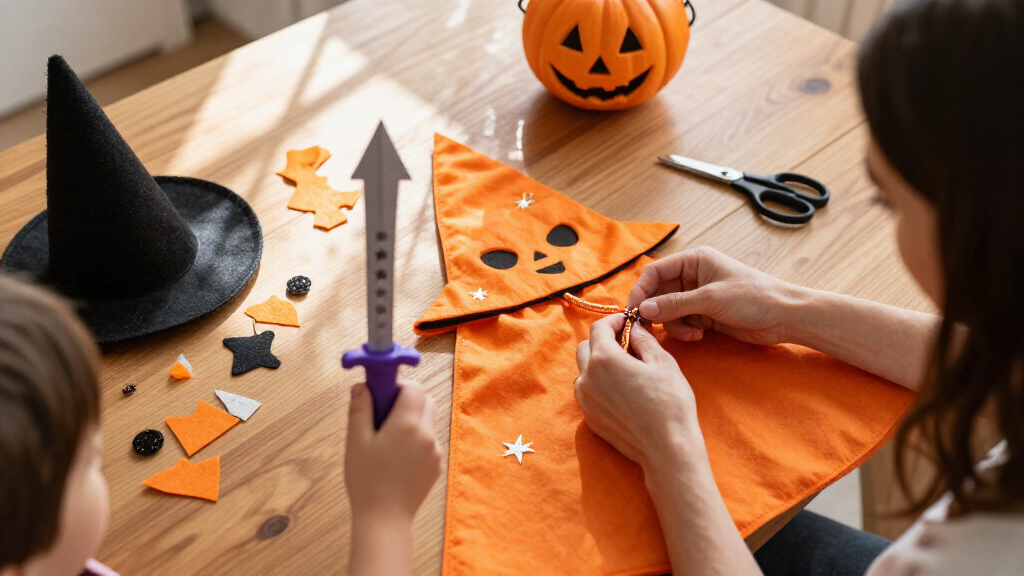
You can build a complete kids’ Halloween costume from clothes you already own plus 2–3 accessories. Start with a solid-color base, then layer on the theme pieces that signal the character.
The formula is simple: base outfit + head piece + one handheld prop + one visual detail. That’s it.
- Black clothes + witch hat + broom + face paint = witch (or add ears and a tail instead = black cat)
- Solid pajamas + animal ears + tail + nose paint = any animal in 10 minutes
- Leggings and tee + cape + mask + gloves = superhero in your kid’s favorite colors
- All-black outfit + skeleton gloves + bone leggings + glow sticks = glowing skeleton
- Old dress + wings + wand + flower crown = fairy
This approach saves real money — most of these come in under $20 total versus $40–60 for packaged costumes — and it handles the classic October 30 emergency when your kid announces the costume “isn’t right anymore.”
Sensory-Friendly Accessories Kids Will Actually Keep On
Sensory-friendly Halloween accessories are soft, lightweight, quiet, and non-irritating — designed so children with sensory sensitivities can wear them comfortably for hours instead of ripping them off by the end of the block.
Picture a typical scene: a 6-year-old in a plastic superhero mask gets 30 feet down the sidewalk, starts tugging at the elastic because the foam presses his cheekbones, and by the third house the mask is in your pocket and he’s “just a kid in a red shirt.” The costume didn’t fail — the accessory did. The same night, a kid in a soft fabric headband with cat ears and a Velcro cape makes it around the whole block without a single adjustment. That’s the difference sensory-friendly choices make.
If your kid hates masks, hats, or anything with a tag (and plenty do — this isn’t just about diagnosed sensitivities), the swaps are easy:
- Fabric headbands with animal ears instead of hard plastic masks — a 4-year-old who won’t tolerate a dinosaur hood will happily wear fuzzy ears on a soft band all night
- Soft felt or cotton capes with Velcro closures instead of tight ties at the neck — think of the difference between a scratchy winter scarf knotted tight and a loose, blanket-soft cape
- Tag-free, seamless pieces — check inside every item the way you’d check a shirt; a single stitched label at the collar can end the night early
- Skip the sound effects and flashing lights if loud, unpredictable noise is a trigger — a plain tutu works just as well as one that plays music every time she twirls
- Adaptive options like wheelchair-friendly capes and side-mounted wings are increasingly available from major retailers
Let your child pick the accessories and practice wearing them at home first — a Saturday afternoon “costume parade” around the living room is a low-stakes dress rehearsal. A kid who chose the cat ears herself will wear them all night. A kid who had superhero goggles forced on him will not.
Stretch Your Budget: Sets, DIY, and Pieces That Outlive October
The most budget-friendly Halloween accessories are multi-piece bundles, DIY versions made from felt and cardboard, and reusable dress-up pieces like capes and wings that get played with year-round.
Accessory sets are usually the best value per dollar. A fairy bundle (wings, wand, crown) or superhero kit (cape, mask, gloves, belt) typically costs less than buying the pieces separately — and less than half a full costume.
DIY is even cheaper, and kids love helping. Felt ears hot-glued to a plain headband, a cardboard sword wrapped in foil, pipe-cleaner antennae, a no-sew tulle tutu — all doable in under 30 minutes with supplies from any craft store.
Finally, think past October 31 when you buy. A good cape, a pair of fairy wings, a play crown, and costume jewelry all live in the dress-up bin for years. That’s the real return on a Halloween purchase: one night of trick-or-treating, then months of Saturday-morning pretend play. Thrift stores and costume swaps with friends cut the cost even further.
Frequently Asked Questions
Are Halloween masks safe for kids?
Masks can be safe for older children if they fit well and allow full vision and easy breathing. For toddlers and preschoolers, face paint, headbands, or hats are safer choices because masks restrict peripheral vision and can cause tripping after dark.
What are the safest Halloween accessories for toddlers?
Soft headbands, plush tails, fabric capes, felt hats, and non-toxic face paint are the best options for children under 3. Avoid anything with small detachable parts, sharp props, long trailing fabric, or cords near the neck.
How can I make my child more visible while trick-or-treating?
Add reflective tape to the treat bag or cape, give your kid glow sticks or LED bracelets, or choose a light-up wand or bag. These add fun and double as safety gear on dark sidewalks.
Are Halloween accessory sets worth buying?
Usually yes — bundles like a fairy set (wings, wand, crown) or superhero kit (cape, mask, gloves, belt) cost less than buying pieces individually and often less than half a full costume. Just check comfort and age labels before buying.
What can I do if my child refuses to wear a mask or hat?
Skip it and pivot: face paint, a themed headband, gloves, a cape, or a handheld prop can carry the costume just as well. Let your child pick the pieces themselves — kids wear what they choose far longer than what’s forced on them.
Conclusion
Here’s the one thing to remember: shop for the accessory, not the costume. A soft, safe, well-chosen hat or cape does more for the look than an expensive boxed outfit ever will — and it lives on in the dress-up bin long after the candy’s gone.
So before you buy anything this year, ask one question: will my kid still be wearing this at the last doorstep of the night? If the answer’s yes, you’ve won Halloween.
Fall Picks
fall essentials
As an affiliate, we earn on qualifying purchases.