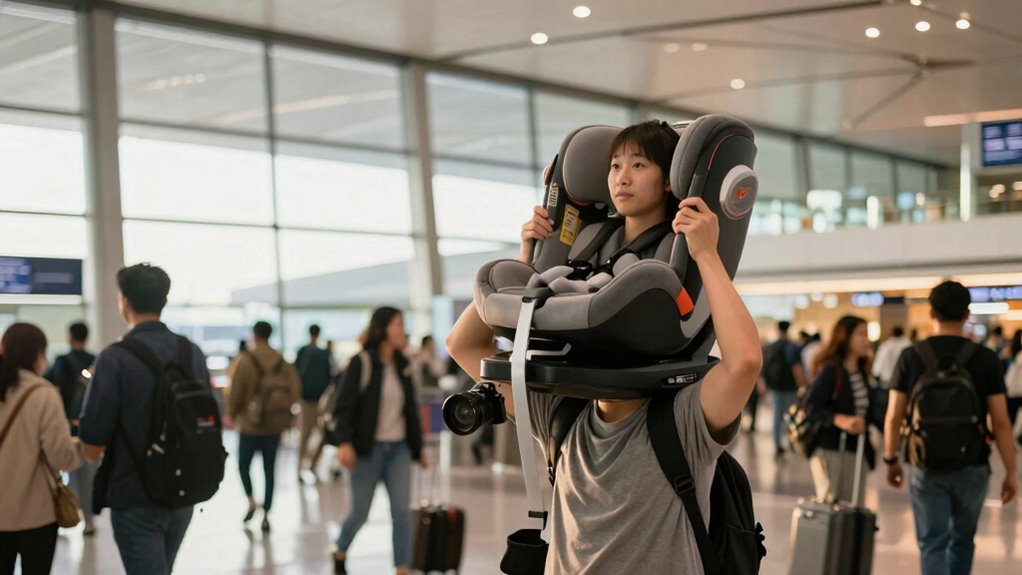
To make flying with a car seat easier, gate-check it instead of hauling it through the airport. This keeps the seat clean and in good condition while allowing your child to use it immediately after landing. Arrive early to verify proper installation, and bring the seat’s manual for quick setup. Most airlines allow it at no extra charge, which simplifies travel. Keep discovering tips that will help you stay relaxed and prepared throughout your trip.
Key Takeaways
- Gate-check the car seat to protect it and use it immediately after landing.
- Ensure the seat is FAA-approved and practice installation at home for confidence.
- Bring the seat’s manual or download instructions for quick reference during installation.
- Arrive early to allow ample time for proper installation and securement.
- Confirm airline policies beforehand to avoid surprises and streamline the check-in process.
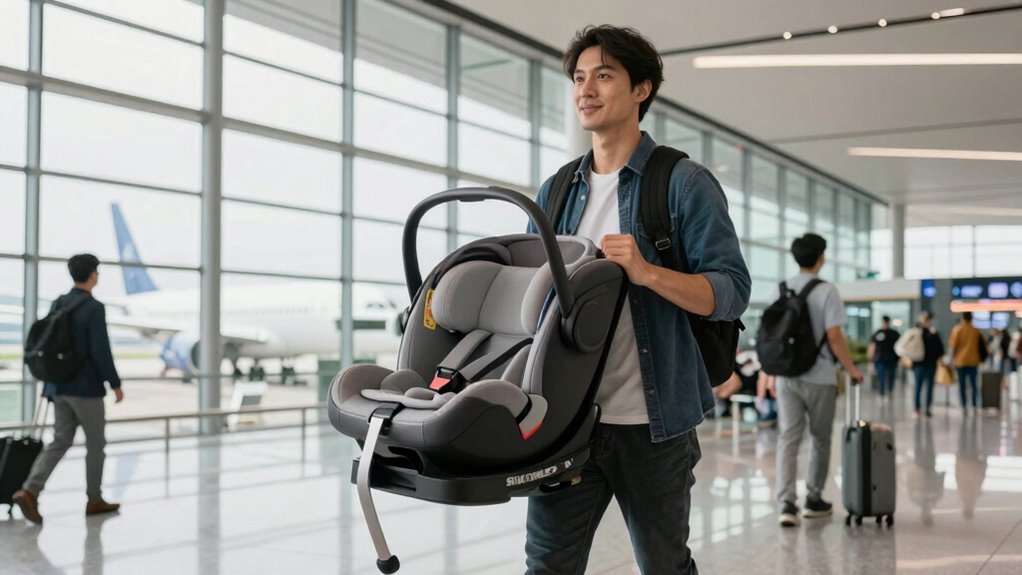
Traveling with a car seat might seem intimidating, but with some preparation, it can be a smooth experience. When you’re flying with your little one, understanding airline regulations is essential. Most airlines allow you to bring a car seat for your child’s safety, often at no extra charge, but it’s best to check their specific policies beforehand. Some airlines require that the car seat be FAA-approved for in-flight use, so confirming this guarantees you’re complying with the rules and your child’s safety isn’t compromised. Typically, you’ll need to bring your car seat to the gate so it can be checked in and then reinstalled on the plane, which can save you from lugging it through the airport. Many parents find that gate-checking the car seat helps keep it clean and protected, plus you can often use it right after landing without waiting for baggage.
When it comes to car seat safety, your main goal is to make sure the seat is properly installed for every flight. Airlines often recommend that you bring your own vehicle instructions, or print out the installation guidelines from the manufacturer’s website, to guarantee the seat is correctly secured in the aircraft seat. Using a lap belt and shoulder harness, just like in your car, offers the best protection. Some seats can be installed using the airplane’s seat belt, but it’s essential to double-check that your specific model is compatible. Many parents swear by a quick, thorough practice session at home before the trip, so you’re confident in how to install and secure the seat quickly at the airport. This preparation can help reduce stress during check-in or boarding.
Another tip that seasoned parents swear by is bringing a travel-friendly, lightweight car seat or a compact, FAA-approved booster if your child is old enough. Not only does this make installation easier, but it also guarantees your child’s safety during the flight. Remember to pack the seat’s manual, or download it onto your device, so you can reference it if needed. It’s also helpful to arrive early at the airport to give yourself plenty of time for check-in and to get the seat properly installed on the plane. This way, you avoid rushing and can double-check that everything’s secure before takeoff. Being familiar with car seat materials and installation techniques can further ensure safety and ease during your travels. Traveling with a car seat is manageable when you understand airline regulations and prioritize car seat safety; with a little preparation, you can focus on enjoying your trip instead of stressing over logistics.
Frequently Asked Questions
Can I Use My Car Seat on Different Airlines?
Yes, you can use your car seat on different airlines, but you should verify airline compatibility first. Most airlines allow car seats that meet safety standards, but seat installation methods may vary. You’ll want to confirm whether your car seat’s installation system is compatible with each airline’s seat belts or harnesses. Always confirm with the airline beforehand to ensure smooth security checks and proper installation at the gate, avoiding surprises on travel day.
Is There a Weight Limit for Car Seats on Planes?
You wonder if there’s a weight limit for car seats on planes, and the answer is yes, typically around 40-50 pounds. Car seat safety and airline regulations guide these limits, ensuring your child’s comfort and safety. Always check your airline’s specific policies before traveling. Using an FAA-approved car seat that fits within these weight guidelines helps keep your little one secure and compliant during the flight.
How Do I Protect the Car Seat During Baggage Handling?
To protect your car seat during baggage handling, add extra padding like a car seat cover or bubble wrap, which helps absorb shocks. Use baggage handling tips such as securing the straps and placing the seat in a sturdy, clearly labeled bag or box. This prevents damage and keeps your car seat safe, ensuring it arrives in good condition for your trip. Always double-check your packing for maximum protection.
Are There Specific Car Seats Approved for Airplane Use?
Did you know that over 90% of car seats are FAA-approved? Yes, there are specific car seats approved for airplane use, and you should look for ones with FAA approval and proper car seat certification. These seats are designed to meet strict safety standards for air travel, ensuring your child’s safety. Always verify the label and manufacturer’s guidelines to confirm it’s suitable for airplane use before flying.
Can I Check My Car Seat at the Gate?
Yes, you can check your car seat at the gate according to airline policies. This option allows you to use your travel accessories efficiently and keeps your car seat safe until boarding. Just arrive early, inform airline staff, and they’ll help you gate-check it. This way, you avoid lugging it through the airport, and your child can remain comfortably secured during the flight.
Conclusion
Next time you breeze through the airport with your car seat in tow, remember that seasoned parents swear by this trick—because sometimes, the easiest solutions turn out to be the most unexpected. Coincidentally, that small, overlooked tip might just make your entire journey smoother. So, keep an open mind, trust your instincts, and you’ll find that traveling with your little one becomes less stressful and even a bit more manageable than you thought.