

If your baby’s constipated, try a few gentle remedies. Move their legs in a cycling motion and give tummy massages to encourage bowel movements. You can also add fiber-rich foods like apples and prunes to their diet, and offer extra water if they’re formula-fed. A warm bath can help relax them too. These steps can bring quick relief, but there’s more you can do for ongoing care and prevention.
Key Takeaways
- Gently move your baby’s legs in a cycling motion to stimulate bowel movement.
- Provide tummy massages to help relax the digestive system and encourage stool passage.
- Introduce fiber-rich foods like apples and prunes into your baby’s diet for better bowel health.
- Ensure your baby is well-hydrated, especially if formula-fed, by offering extra water between feeds.
- Give your baby a warm bath to help them relax and potentially ease constipation discomfort.

Constipation in babies can be concerning for any parent, but understanding its symptoms and causes can help you ease your little one’s discomfort. If your baby’s pooping fewer than three times a week, or if those poos are larger than usual and dry, hard, or lumpy, you might be dealing with constipation. You may also notice that their wind and poo are unusually smelly, and they seem less hungry than usual. Recognizing these signs early can make a big difference in how you manage the issue.
Several factors could contribute to your baby’s constipation. A change in diet, like introducing formula or solid foods, often leads to this uncomfortable situation. Dehydration, whether due to illness or teething, can also play a role. Additionally, if your older baby isn’t getting enough fiber, constipation can become more likely. It’s worth considering whether your baby might be sensitive to certain formulas or foods, and in rare cases, underlying medical conditions, such as Hirschsprung’s disease, could be to blame. Regular monitoring of baby’s bowel movements is essential to identify any issues early.
Several factors, like dietary changes and dehydration, can lead to your baby’s constipation, so it’s important to monitor their intake and habits.
Feeding methods can significantly affect bowel movements too. Formula feeding is more often linked to constipation compared to breastfeeding. Breast milk acts as a natural laxative, helping to keep stools soft and regular. If you suspect constipation, check your formula-to-water ratio; getting it wrong can contribute to the problem. If your baby is formula-fed and struggling with constipation, offering extra water between feeds might help.
There are several home remedies you can try to relieve your baby’s discomfort. Gently moving their legs in a cycling motion or giving them tummy massages can encourage bowel movements. Adding fiber-rich foods like apples and prunes to their diet can be beneficial, and a warm bath can help your baby relax.
If you find that constipation persists, it’s essential to consult a healthcare provider. They may suggest laxatives or glycerin suppositories under supervision but avoid using enemas or mineral oil unless directed by a doctor.
To prevent constipation from occurring in the first place, ensure your baby stays hydrated and maintain the right formula-to-water ratio. Encourage regular bowel movements through gentle exercise, and keep an eye on their bowel habits. If you notice any persistent issues, don’t hesitate to reach out to your healthcare provider for guidance.
With the right approach, you can help your little one feel comfortable and happy again.
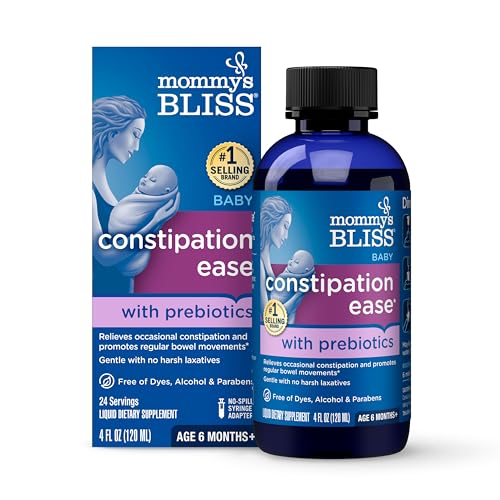
Mommy's Bliss Constipation Ease + Prebiotics, Relieves Occasional Constipation, Gentle & Safe, No Harsh Laxatives, 4 Fl Oz Bottle (Pack of 1)
Gentle Ingredients: Naturally and gently relieve occasional baby and toddler constipation without any harsh chemical laxatives; Made with…
As an affiliate, we earn on qualifying purchases.
As an affiliate, we earn on qualifying purchases.
Frequently Asked Questions
What Are the Signs of Constipation in Infants?
When you’re observing signs of constipation in your infant, look for straining during bowel movements and hard, dry stools.
You might notice reduced frequency of bowel movements and your baby being fussier than usual.
Keep an eye out for decreased appetite and any signs of discomfort.
If your little one’s bowel movements happen less than three times a week or they seem to struggle, it’s a good idea to consult a pediatrician.
Can Formula Feeding Contribute to Baby Constipation?
Yes, formula feeding can contribute to baby constipation.
Since formula is often harder to digest than breast milk, your baby’s stool may become hard and pellet-like.
High casein protein levels, different lipid structures, and a lack of prebiotics in formula can worsen this issue.
Additionally, formulas with higher iron content may also lead to constipation.
It’s crucial to monitor your baby’s bowel movements and consult your pediatrician if you notice signs of discomfort.
Is It Safe to Use Laxatives for Babies?
You might wonder if laxatives are safe for babies.
The truth is, while certain laxatives like PEG 3350 can be effective, they should only be used under medical supervision.
Babies are sensitive, and using laxatives without guidance can lead to dependency or irritation.
It’s best to explore natural remedies and dietary changes first.
Always consult your pediatrician to ensure the safety and health of your little one before trying any treatment.
How Often Should Babies Have Bowel Movements?
Babies typically have 2-5 bowel movements each day in their first six weeks, sometimes more, especially if they’re breastfed.
By the end of the first week, it’s common for them to have 5-10 daily.
As they grow, you might notice fewer movements, often around once a week by 3 months.
When Should I Consult a Pediatrician About Constipation?
If you notice your baby showing signs of constipation, it’s important to know when to consult a pediatrician.
Seek help if your baby’s vomiting, showing unusual tiredness or weakness, has a loss of appetite, exhibits abdominal swelling, or if there’s blood in the stool.
These symptoms could indicate a more serious underlying issue.
It’s always better to err on the side of caution when it comes to your baby’s health.

Frida Baby Gassy Belly Rub | Infant Gas Relief | Baby Gas Relief Rub for Belly Massages Made with Natural Oils
GAS RELIEF: Belly massages help gas bubbles work their way out of baby's system.
As an affiliate, we earn on qualifying purchases.
As an affiliate, we earn on qualifying purchases.
Conclusion
If your baby’s constipated, you’re not alone—about 5% of infants experience this issue at some point. By incorporating a few simple dietary changes and ensuring your little one stays hydrated, you can help ease their discomfort. Remember, gentle tummy massages and regular tummy time can also promote healthy digestion. Don’t hesitate to reach out to your pediatrician if problems persist. Keeping your baby happy and comfortable is the goal, and you’re well on your way!

Happy Baby Digestive Support Blends, Organic Stage 2 Baby Food with Prebiotic Fiber, Apple, Pumpkin & Prune, 4 Ounce Pouch (Pack of 16)
DIGESTIVE SUPPORT BLENDS: This blend delivers prebiotic fiber which positively impacts the bacteria in babys gut to help…
As an affiliate, we earn on qualifying purchases.
As an affiliate, we earn on qualifying purchases.

Sav-A-Chick 9 Pack of Electrolyte and Vitamin Supplement Strip for Poultry , Birds, Chickens, Ducks, Turkeys
Use by date: This product’s use by date is determined by the Period After Opening symbol. The Period…
As an affiliate, we earn on qualifying purchases.
As an affiliate, we earn on qualifying purchases.