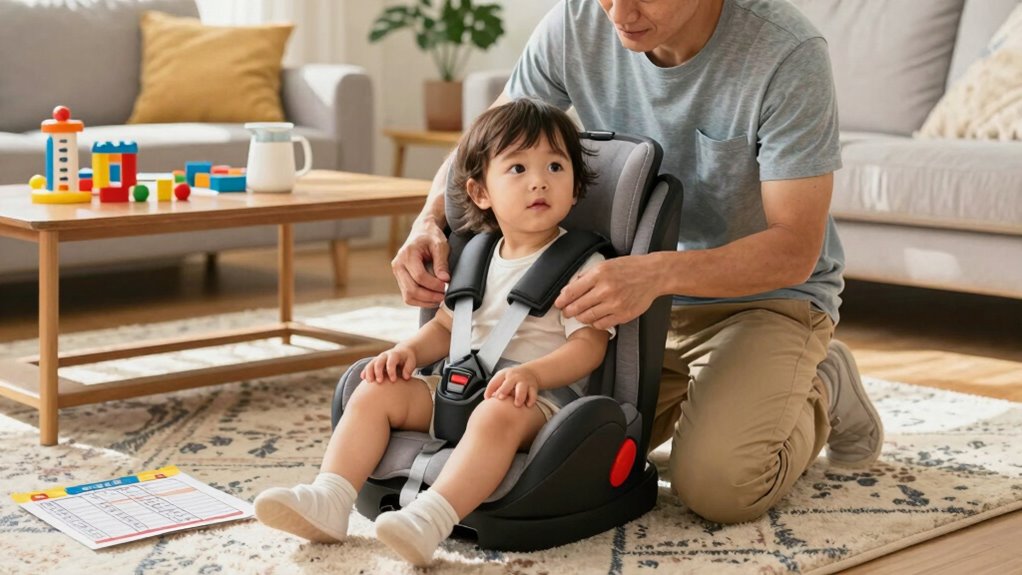
To guarantee your child’s booster seat is ready, check that it’s securely installed—no more than an inch of movement side to side or front to back. Make sure the seat fits your child’s height and weight, and that the seat belt is positioned properly across the chest and hips. Also, verify the headrest supports your child’s head and neck, and that your child sits upright with feet touching the floor. If you keep these steps in mind, you’ll help keep your child safe. Discover more tips to keep your child protected.
Key Takeaways
- Verify the booster seat is securely anchored and doesn’t shift more than 1 inch in any direction.
- Ensure the child’s seat belt is properly positioned, flat across the chest and hips, without twists.
- Confirm the child’s head and neck are supported by the headrest or side wings for side-impact safety.
- Make sure the child is sitting upright with feet touching the floor or footrest for proper positioning.
- Regularly check that the booster seat fits the child’s size and the seat belt fits correctly each time.

Are your child’s booster seat properly ready for safe and comfortable use? Ensuring your child’s booster seat is correctly installed and fits properly is essential for their safety and comfort. Many parents overlook key details that can compromise seat belt safety and compliance with car seat laws. The importance of a proper booster seat setup cannot be overstated, as it directly impacts your child’s protection in the event of a crash.
First, you should verify that the booster seat is securely anchored to your vehicle. A loose or wobbly seat not only feels unstable but also jeopardizes seat belt effectiveness. When installed correctly, the booster should not shift more than an inch side to side or front to back. Many parents miss this critical step, which can lead to improper seat belt positioning. Remember, car seat laws vary by state, but most jurisdictions require booster seats until children reach specific height and weight limits. Staying informed about these regulations ensures you’re compliant and prioritizing your child’s safety.
Ensure your booster seat is securely anchored; it shouldn’t shift more than an inch for optimal safety.
Next, check that the booster seat is appropriate for your child’s size and weight. If your child is still within the recommended limits, the seat should provide a snug fit without forcing them into an uncomfortable position. An improperly sized booster can cause the seat belt to sit incorrectly on their body, reducing its effectiveness. Your child’s shoulder belt should lie flat across the chest, away from their neck, and the lap belt should rest snugly across their hips, not their stomach. Achieving this proper fit is essential for seat belt safety and is often overlooked during quick checks.
You also need to assess whether the booster seat has a proper headrest or side wings that support your child’s head and neck. This extra support is critical for protection in side-impact collisions. If the headrest is too low or the sides don’t adequately contain your child’s head, it’s time to adjust or replace the seat. Proper head and neck support not only enhances comfort but also reinforces safety standards required by car seat laws.
Finally, double-check that your child is correctly positioned in the booster seat each time you use it. They should sit upright with their back against the seat and feet touching the floor or footrest, if available. The seat belt must be correctly routed through the designated guides, ensuring it’s not twisted or placed over the neck or arm. Small adjustments now can make a significant difference in keeping your child safe and comfortable during every trip. Regularly reviewing these steps helps you stay vigilant and ensures your booster seat is always ready for safe use. Additionally, proper ventilation of the vehicle can improve comfort during longer trips.
Frequently Asked Questions
When Should I Transition My Child to a Booster Seat?
You should change your child to a booster seat when they outgrow their forward-facing car seat, typically around age 4 to 7, based on car seat laws. The booster seat benefits include ensuring the seat belt fits properly, providing better safety and comfort. Make sure your child passes the 5-step test—sitting upright, knees bent at the edge of the seat, and the seat belt fitting correctly—before switching.
Are There Specific Height or Weight Limits for Booster Seats?
You should know that booster seat height guidelines and weight requirements vary by model, but generally, children need to meet specific criteria before moving up. Usually, they should outgrow the seat’s height and weight limits, meaning their ears are level with the top of the seat, and they’ve reached the seat’s maximum weight. Think of it as fitting a puzzle piece; if it’s not snug, it’s time to move on.
How Can I Tell if My Child’s Booster Seat Is Properly Installed?
To make certain your child’s booster seat is properly installed, start with a thorough installation check. Make sure the seat belt fits snugly across your child’s shoulder and lap without slack or twisting. Confirm the booster is securely anchored, not wobbly, and positioned on the vehicle seat. Always follow the manufacturer’s instructions for installation, and double-check that the seat belt properly threads through the designated guides for maximum safety.
What Are Common Mistakes Parents Make With Booster Seat Use?
Sometimes, overlooking seat positioning and belt fit can lead to less effective booster use. You might unknowingly install the booster too loosely or position the seat incorrectly, which compromises safety. Guarantee the lap belt fits snugly across your child’s hips and the shoulder belt across the chest, and that the seat is properly aligned. Avoid these common pitfalls by double-checking every time, giving your child the best protection possible.
How Often Should I Check My Child’s Booster Seat for Safety?
You should check your child’s booster seat for safety before each trip. Ensure the seat belt fits properly across their hips and chest, not the stomach or neck. Also, verify the seat adjustment is correct, so your child is snug and secure. Regularly inspecting these factors guarantees the seat provides ideal protection and comfort, preventing common mistakes like improper seat belt fit and incorrect seat positioning that can compromise safety.
Conclusion
You check the harness, you verify the fit, you guarantee the seat is secure. You understand the importance, you follow the steps, you prioritize safety. By doing so, you protect your child, you prepare for the journey, you give peace of mind. Remember, readiness isn’t a one-time task but a continuous effort. Stay vigilant, stay informed, stay committed—because every trip counts, and your child’s safety depends on your diligence.