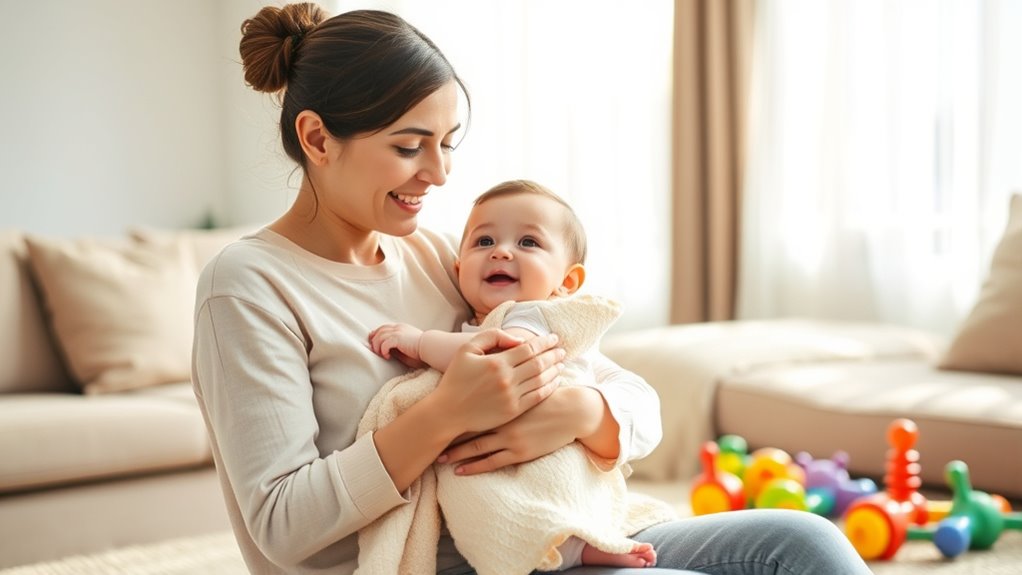

To manage your baby’s clinginess, start with short separations and gradually increase their duration as your baby adjusts. Establish a predictable daily routine to foster a sense of security, and ensure consistency among caregivers. Offer comfort through physical touch, positive interactions, and calming techniques like swaddling or singing. Use distractions or familiar toys to ease anxiety, and create a support system for yourself. Keep exploring ways to build that emotional bond and security for your little one.

Turn the school run and nap time into listening time
- Thousands of audiobooks, podcasts and originals
- Listen on your phone, tablet or Echo — also offline
- Cancel anytime
Key Takeaways
- Gradually introduce short separations to help your baby adjust to being apart from you.
- Establish a consistent daily routine to create a sense of security for your baby.
- Use calming techniques like swaddling and soft singing to soothe your baby during anxious moments.
- Utilize baby carriers to keep your baby close while allowing you to move freely.
- Engage in activities during calm times to distract your baby and reduce clinginess.
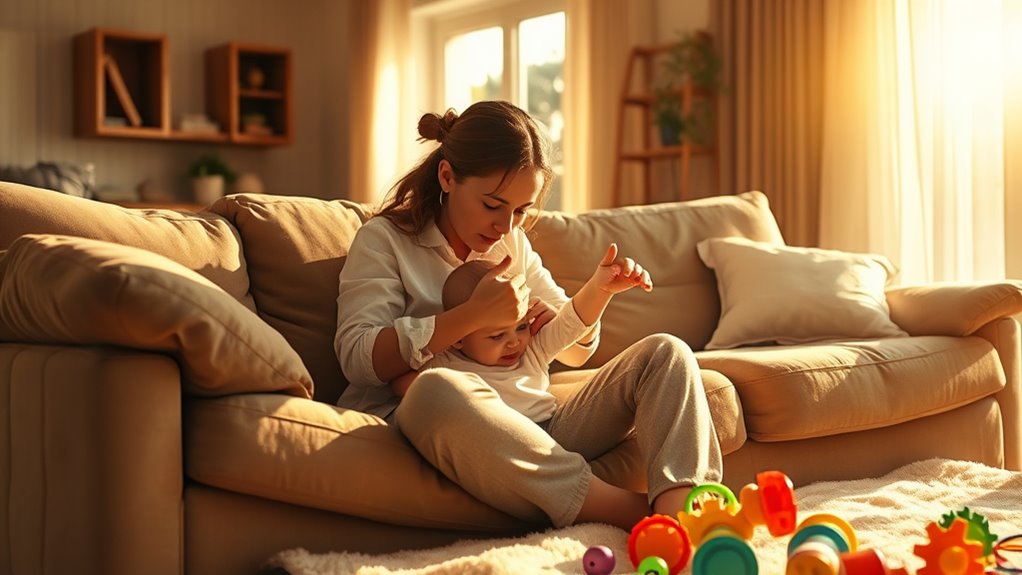
As your baby grows and becomes more aware of their surroundings, you might notice an increase in clinginess, often peaking around ten months. This behavior is completely normal and often stems from separation anxiety. At this stage, your little one starts to differentiate between familiar and unfamiliar faces, leading to a heightened desire for your presence. While this may feel overwhelming at times, it’s important to remember that clinginess enhances the emotional bond you share with your baby, providing them comfort and reassurance.
To help manage your baby’s separation anxiety, try gradually introducing separation. Start with short absences and slowly increase the duration as your baby adjusts. When you leave, let them know you’re going, and reassure them upon your return to create a sense of stability. Consistency in your daily routine can also play a significant role in reducing anxiety. The more predictable their world feels, the more secure they’ll be.
Gradually introducing separation helps ease your baby’s anxiety, fostering stability and security through consistent routines and reassuring interactions.
Building trust is vital during this phase. Establishing a predictable daily routine helps your baby know what to expect, which fosters a sense of security. Ensure that the caregivers in your baby’s life are consistent, as this stability contributes to their emotional well-being. During stressful times, offer emotional support, and engage in positive interactions through talking, singing, and physical touch. These connections help your baby feel safe and loved.
When your baby feels overwhelmed, calming techniques can be invaluable. The Five S’s—swaddling, shushing, swaying, sucking, and swinging—are great tools for soothing your little one. Speak in a soft voice and provide physical comfort through cuddling and holding. Singing can also create a calming atmosphere for both of you. Don’t forget to practice deep breathing to stay calm during stressful moments.
Engaging in activities during calm times can also help. Use feeding times as opportunities for interaction, and read to your baby to foster a connection. Playtime is essential for encouraging exploration and independence, so provide sensory stimulation to keep them engaged.
Lastly, consider practical solutions like using baby carriers to keep your baby close while allowing you some freedom. Distraction with toys or familiar objects can ease separation anxiety, and sometimes, stepping away quietly is necessary to avoid triggering clinginess. Establishing a support system can also lighten your load, ensuring that you can manage everyday tasks while nurturing your baby’s emotional needs.
baby swaddle blankets for calming
As an affiliate, we earn on qualifying purchases.
As an affiliate, we earn on qualifying purchases.
Frequently Asked Questions
Is Clinginess a Sign of Developmental Milestones?
Yes, clinginess is often a sign of developmental milestones.
When your baby reaches significant growth phases, they may become more attached to you as they navigate new abilities and experiences.
This clinginess usually occurs at specific ages, like around 8 months or 12 months.
It’s a normal part of their development, reflecting their need for comfort and security.
Understanding this can help you respond more effectively during these periods.
How Long Does Clinginess Typically Last?
Clinginess can feel like a wave rising and falling, often crashing into your daily routine. Typically, it lasts a few weeks, especially during those significant developmental leaps.
Depending on your baby’s temperament, the duration may vary; some little ones cling tighter during teething or learning to walk.
Don’t worry—this is a normal phase. As your child grows, they’ll gradually gain confidence, and those clingy waves will start to recede.
Can Clinginess Occur With Different Caregivers?
Yes, clinginess can definitely occur with different caregivers.
When your baby feels a strong attachment to you, they might show hesitation or anxiety around others. This is especially true if they’re not familiar with those caregivers or if routines change.
Consistency in care and familiar environments can help ease their anxiety. Engaging in activities together can also create a sense of security, making transitions smoother for everyone involved.
Are Certain Baby Temperaments More Prone to Clinginess?
You’ve probably heard the saying, “Different strokes for different folks.”
When it comes to baby temperaments, some are indeed more prone to clinginess. Babies with difficult or slow-to-warm-up temperaments often struggle with separation and adapt slowly to new situations. Their heightened sensitivity can lead to increased clinginess as they seek comfort and reassurance from you.
Understanding your baby’s temperament can help you navigate their needs better and foster a secure attachment.
What Are Common Myths About Baby Clinginess?
You might hear several myths about baby clinginess. For instance, some believe cuddling spoils babies, but it actually fosters emotional security.
Others think leaving babies to cry teaches them to self-soothe, yet this can cause distress.
Additionally, many assume clinginess results from overindulgence, while it’s a normal developmental phase.
Finally, constant presence doesn’t create clinginess; instead, it provides the love and security needed for your baby to grow and become independent.
As an affiliate, we earn on qualifying purchases.
Conclusion
In the grand circus of parenting, your baby’s clinginess is the spotlight-stealing tightrope walker, teetering on the edge of independence. Instead of pulling your hair out, embrace the chaos! Grab a front-row seat, because who wouldn’t want to be the main act in this production? With patience and a sprinkle of humor, you’ll turn those clingy moments into a hilarious dance of love and laughter. After all, who needs personal space when you’ve got a miniature shadow?
baby comfort toys for separation anxiety
As an affiliate, we earn on qualifying purchases.
As an affiliate, we earn on qualifying purchases.
As an affiliate, we earn on qualifying purchases.
Cold & flu season Picks
humidifiers
As an affiliate, we earn on qualifying purchases.