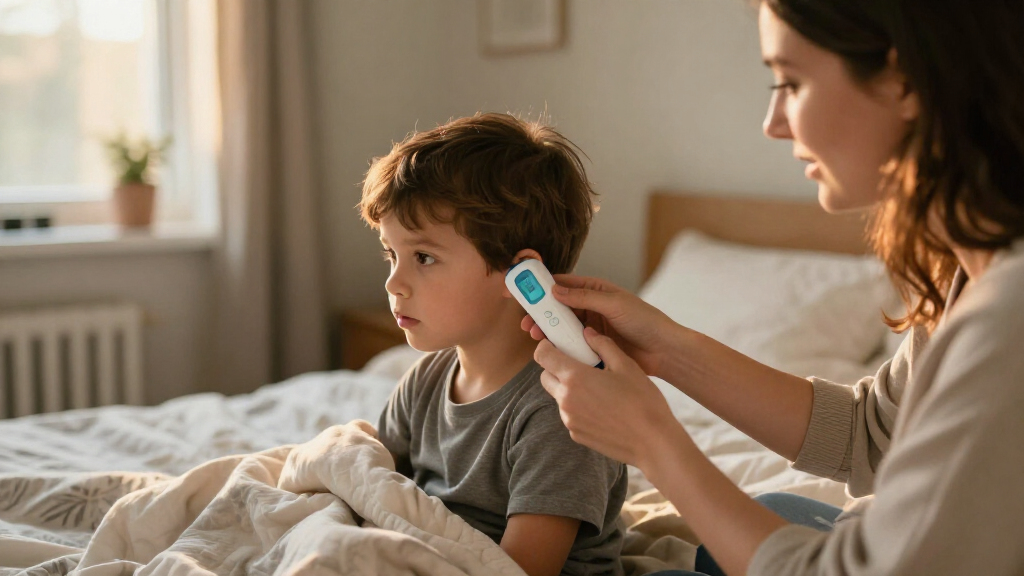
The Frida 3-in-1 Infrared Thermometer is a compact home thermometer that reads temperatures through the ear, by touching the forehead, or without contact. Its strongest advantage is three ways to take a quick reading, which can suit different ages and situations; its main drawback is that ear readings rely on careful placement. It is a sensible choice for households that value flexibility and speed, though buyers who want a single, fully touchless method may be better served by a simpler forehead model.

Turn the school run and nap time into listening time
- Thousands of audiobooks, podcasts and originals
- Listen on your phone, tablet or Echo — also offline
- Cancel anytime
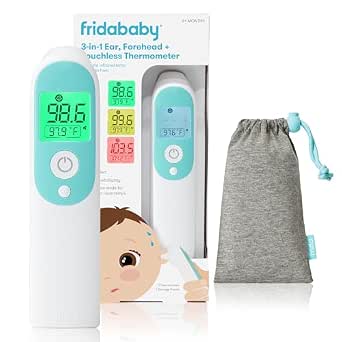
Frida 3-in-1 Infrared Thermometer for Ear
- ✔ Measurement modes: Ear, forehead contact, touchless
- ✔ Display type: Digital, backlit
- ✔ Technology: Infrared
Why This Product Stands Out
The Frida stands out through method flexibility rather than advanced connectivity or elaborate data features. A touchless option can be convenient when contact is unwelcome, while ear and forehead-contact readings give caregivers other ways to check. That mix is useful in a household where one method does not suit everyone. Many basic thermometers focus on a single measurement site; here, the extra modes are the defining reason to choose this model.
That breadth comes with a modest learning curve. Users need to choose a mode and take the reading in the way that mode requires. The ear option in particular depends on correct probe placement, so three modes do not guarantee that every reading will be equally straightforward. Its one-second response and backlit display fit the expectations of a practical household digital thermometer, while the lack of connectivity keeps the feature set simple.
Compared with a dedicated no-touch forehead thermometer such as the iHealth PT3 or Braun Sensian 4, the Frida’s case is strongest when the additional ear and contact modes matter. If touchless operation is the only priority, those focused alternatives may be easier to use. The SURPEER infrared thermometer gun serves a very different purpose, with a broad industrial measurement range; its specifications do not make it a direct substitute for routine body-temperature checks.
Key Features and What They Mean
Three measurement modes let caregivers adapt the check to the person and situation. Touchless readings avoid contact, which helps when a child is asleep or resists having a thermometer placed against them. Forehead-contact readings give caregivers a familiar alternative when they prefer contact, while the ear mode offers another option for people comfortable positioning the probe. Families caring for people with different ages or comfort levels benefit most from having these choices; households that always use one method may find the extra modes less useful.
About one-second readings make it easier to get a quick check before a restless child loses patience or moves away. This can make temperature checks less disruptive during an illness, especially when they need to be repeated. The speed supports convenience, though users still need to follow the instructions, particularly for ear measurements, because a fast result is not automatically a reliable one.
The backlit digital display makes the result visible in a dim bedroom, helping caregivers check a sleeping child at night without switching on a bright light. Memory recall lets them review earlier readings and notice how temperatures have changed without relying on memory during a busy illness. These features make monitoring easier, but the device does not interpret a trend or replace professional advice when symptoms are concerning.
The thermometer runs on one included AAA battery, so it can be used without waiting for a recharge, and it can be wiped clean for reuse. The pouch helps keep the compact, three-inch device together in a drawer or travel bag, making it easier for families to find when a quick check is needed. These practical details suit buyers who want a portable thermometer that is ready to store and carry without a phone connection or charging routine.
The stated 95°F–108°F temperature range covers body-temperature checks, so the device is intended for family health monitoring rather than measuring objects or room temperatures. It has no connectivity, meaning results remain on the thermometer; caregivers can use memory recall for comparison but must keep any longer-term record themselves. Buyers who want a simple device may find this straightforward, while those who want automatic phone records should look for a connected model.
Performance and Real-World Use
In everyday use, the Frida’s quick response and several measurement options are likely to make routine checks less cumbersome. Touchless operation can reduce the need to disturb or position someone, while the display and memory recall support quick follow-up. A compact size and pouch also make it easy to store where the family keeps basic health supplies.
The main usability question is whether caregivers are comfortable changing modes and following the instructions for each one. Ear measurements need careful placement; a hurried or poorly aligned reading may be less dependable. If a result seems unexpected, repeating the measurement according to the manual or using an appropriate alternative method can help, but persistent symptoms call for medical guidance rather than repeated device checks alone.
Maintenance is uncomplicated: the unit is reusable and should be wiped clean, with its battery replaced when needed. The plastic construction and lack of connectivity keep the design simple, though the provided facts do not establish long-term durability. The thermometer is intended to report temperature, not identify the cause of a fever or determine whether treatment is needed.
Who Should Buy This
This thermometer makes the most sense for families who want more than one way to check temperature and expect to use it with both children and adults. Caregivers who value quick readings, a readable display at night, and a pouch for keeping the device ready will get practical benefits from the package. It is also a reasonable fit for households comfortable learning the different measurement methods and checking the manual when results do not match expectations.
Who Should Skip This
Skip it if you want a single, no-contact forehead thermometer and see no value in ear or forehead-contact readings; a focused model such as the iHealth PT3 or Braun Sensian 4 may better match that preference. It is also a poor choice for anyone seeking an industrial temperature gun like the SURPEER, since the Frida’s range is limited to body temperatures. Buyers who expect a thermometer to diagnose illness or guide care without considering symptoms and medical advice should choose a different approach to health decisions.
Value for Money
At a mid-range price, the Frida is worth its cost for households that will use more than one measurement mode. The touchless, forehead-contact, and ear options can help caregivers adapt checks for different ages and comfort levels, while the quick readings, backlit screen, memory recall, included battery, and pouch make the device easier to use and keep ready. For families who want that flexibility in one thermometer, the added modes justify paying more than they would for a basic single-method model.
It is less compelling at this price if touchless forehead readings are all you need: the extra modes add complexity without much benefit, and a dedicated model may offer better value. The Frida also will not suit buyers who want phone-based records. Its price is best justified by regular use of its multiple methods, particularly in a household checking temperatures for both children and adults.
Frida 3-in-1 Infrared Thermometer for Ear
The Frida stands out through method flexibility rather than advanced connectivity or elaborate data features. A touchless option can be convenient when contact is unwelcome, while ear and forehead-contact readings give caregivers other ways to check.
Pros:
- Ear, forehead-contact, and touchless modes give households more options across ages and comfort levels.
- Readings take about one second, making brief checks easier when a child is restless or unwell.
- The backlit display is easier to read during nighttime checks without needing to turn on a room light.
- Memory recall helps compare readings over time instead of relying on memory during a busy illness.
- A storage pouch and included AAA battery make it convenient to keep ready at home or pack for travel.
Cons:
- Ear readings depend on careful probe placement, so the added mode may be less useful for caregivers who find positioning difficult.
- The 95°F–108°F range makes this a body-temperature device, not a general-purpose infrared thermometer.
- Three modes add flexibility but also mean users must select the right method and follow its instructions.
- A temperature reading is only a data point; the device cannot diagnose an illness or explain symptoms.
Best for: Households with babies, children, and adults that want ear, forehead-contact, and touchless readings in one compact device.
Not ideal for: Buyers who want only no-contact forehead readings or who need a temperature reading to serve as a diagnosis.
Bottom line: The Frida 3-in-1 Infrared Thermometer is worth buying when its three measurement modes solve a real household need .
Frequently Asked Questions
Is the Frida thermometer suitable for checking a child’s temperature?
It is designed for checking temperatures in babies, children, and adults, with ear, forehead-contact, and touchless modes. Follow the instructions for the chosen method, since ear placement affects the reading.
Is the touchless mode enough reason to choose this thermometer?
It can be, especially if you also want the option of ear or forehead-contact readings. If you plan to use only touchless forehead checks, a dedicated model such as the iHealth PT3 or Braun Sensian 4 may be a simpler match.
Can this thermometer diagnose a fever or illness?
No. It provides a temperature reading, which is one piece of information and not a diagnosis. Consider symptoms and seek medical advice when needed.
Does the Frida thermometer save readings to a phone?
No. It has no connectivity. Memory recall is available on the device, but readings are not sent to a phone or connected health log.
Final Thoughts
The Frida 3-in-1 Infrared Thermometer is worth buying when its three measurement modes solve a real household need. It pairs quick readings with useful nighttime visibility and simple storage, giving families practical flexibility in a compact device. Its ear mode requires care, and no thermometer reading provides a diagnosis. Choose it if you will use the added options; choose a dedicated touchless forehead thermometer if you want one method with fewer decisions.
Halloween Picks

Haunted Hill Farm 2-Ft. Zombie Raccoon Halloween Animatronic

6-Foot Jason Voorhees Animatronic Halloween Decoration

Pumpkin Halloween Fog Machine with 12-Color LED Lights, Bluetooth Speaker, and Remote
As an affiliate, we earn on qualifying purchases.