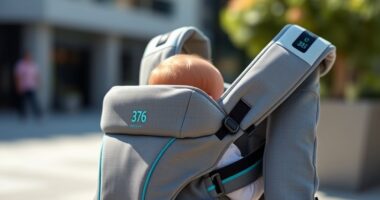
Before your first hike with a baby carrier, check all straps, buckles, and harnesses for damage or loose parts to guarantee safety. Inspect the fabric and frame for tears, wear, or rust, and make sure the fit is comfortable and properly adjusted for both you and your child. Confirm all features like sun shade or rain cover are in good condition. Taking these steps now helps prevent surprises on the trail—keep exploring to learn more about prepping your carrier for the outdoors.
Key Takeaways
- Inspect all straps, buckles, and fasteners for signs of wear, damage, or corrosion to ensure secure fit and safety.
- Check the fabric and frame for tears, thinning areas, rust, or structural damage affecting support and durability.
- Adjust straps for a snug, comfortable fit on hips and shoulders; test with a load to verify comfort and security.
- Confirm safety features like sun shields or rain covers are intact, functional, and suitable for outdoor conditions.
- Perform a thorough pre-trip inspection, cleaning, and maintenance to prevent failures during your hike.
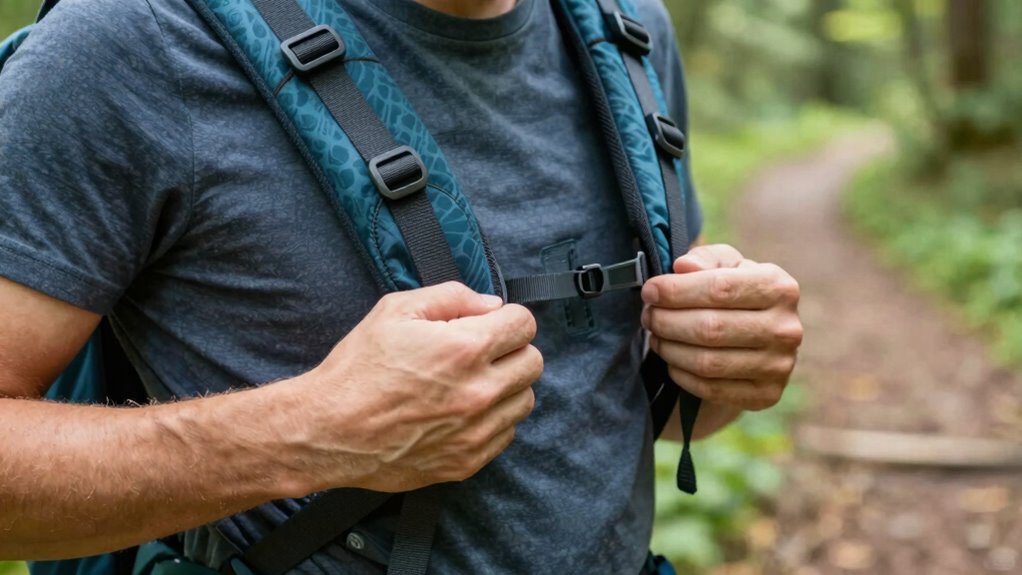
Hiking baby carriers are essential gear for parents who want to explore the outdoors while keeping their little ones close. Before heading out on your first trail, it’s vital to check your carrier thoroughly to guarantee both mountain safety and proper gear maintenance. You don’t want to find yourself midway through a hike worrying if your carrier is secure or if it might fail. Start by inspecting the straps, buckles, and harnesses. Make sure all fasteners are in good condition, free from cracks or fraying, and that they clip securely. Loose or damaged buckles pose a serious safety risk, so testing each one before your trip can prevent accidents.
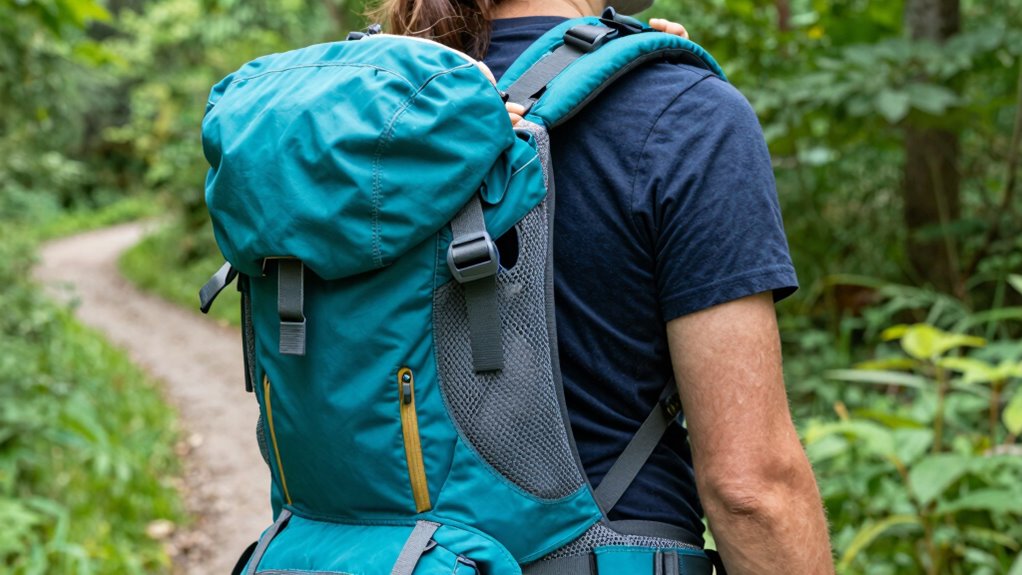
Next, examine the fabric of the carrier. Look for signs of wear, tears, or thinning areas that could compromise support or comfort. If your carrier has a frame, confirm that it’s sturdy and free of rust or damage. Proper gear maintenance isn’t just about longevity; it’s about mountain safety. A well-maintained carrier supports your child evenly and reduces the risk of discomfort or injury during the hike. Also, check the padding and straps for any signs of deterioration, ensuring they provide adequate cushioning and support for both you and your little one.
Inspect fabric for tears, wear, or thinning areas to ensure safety and comfort during your hike.
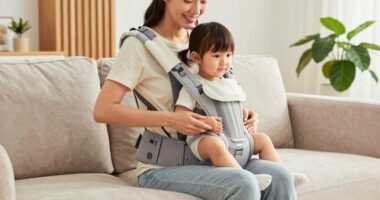
It’s equally important to verify that the carrier fits correctly. Adjust the straps to make sure they’re not too tight or loose, and that the carrier sits comfortably on your hips and shoulders. An ill-fitting carrier can cause fatigue or back pain, making your adventure less enjoyable and potentially unsafe. Before setting out, do a quick test load by placing your child in the carrier and walking around a bit. This helps you identify any discomfort or adjustments needed, giving you peace of mind on the trail.
Additionally, consider the environment where you’ll hike. Check if your carrier has features like sun protection or rain covers, and ensure they’re in good shape. If your hiking involves rugged terrain, confirm that the carrier’s support system is designed for such conditions, giving you extra stability and safety. Remember, mountain safety isn’t just about knowing the trail but also about ensuring your gear is reliable and well-maintained. Regularly cleaning your carrier and inspecting it before each adventure keeps it in top condition, ready to handle whatever the trail throws at you. Proper family photoshoot fails remind us that thorough preparation can prevent unexpected issues during outdoor activities.
Frequently Asked Questions
When Is My Baby Ready for a Hiking Carrier?
Your baby is ready for a hiking carrier when they’re at least 6 months old, can sit up unassisted, and meet the carrier’s weight limits, typically around 15-20 pounds. Make certain their neck and head are strong enough for support, and check that the carrier fits comfortably. If your little one shows interest and is developmentally ready, you’re good to go. Always prioritize safety and comfort on the trail.
How Do I Clean and Maintain the Carrier?
To keep your hiking baby carrier in top shape, follow simple cleaning routines and maintenance tips. Usually, you can spot-clean with a damp cloth and mild soap after hikes. For thorough cleaning, check the manufacturer’s instructions for machine washing or hand washing. Regularly inspect straps, buckles, and fabric for wear. Store it in a cool, dry place when not in use, and keep it clean to guarantee safety and longevity.
Can I Use the Carrier for Toddlers or Only Infants?
You can definitely use a hiking baby carrier for toddlers, but check the fabric durability and weight capacity first. Confirm the carrier can support your toddler’s weight comfortably and is made from sturdy, breathable fabric. Most carriers designed for infants have adjustable features, so verify they accommodate your toddler’s size. Using the right carrier ensures safety and comfort on your trail adventures, making the hike enjoyable for both of you.
What Safety Features Should I Look For?
You should look for safety features like secure straps, a sturdy frame, and a reliable harness system to guarantee your child’s comfort and safety. Check that the carrier is made from durable, breathable material to withstand outdoor conditions and keep your child comfortable during hikes. Make sure the carrier provides proper support for your child’s back and neck, and that it’s easy to adjust for a snug, safe fit.
Are There Specific Brands Recommended for Hiking Carriers?
You should consider brands like Osprey, Deuter, and Kelty for hiking carriers, as they prioritize comfort features and have solid weight capacity. Look for carriers with padded shoulder straps, adjustable waistbands, and breathable mesh for added comfort. Guarantee the carrier supports the weight of your baby and gear comfortably. Reading reviews and trying on different models helps you find the best fit, so your hikes stay enjoyable and safe.
Conclusion
Before hitting the trail, make sure your hiking baby carrier is perfect—think of it as your magic carpet that turns every walk into a grand adventure. With the right carrier, you’ll feel like a superhero soaring through mountains while your little explorer is snug as a bug in a rug. Get it right, and you’ll be unstoppable, conquering peaks and creating memories so epic, even the mountains will envy your adventure. Happy hiking!