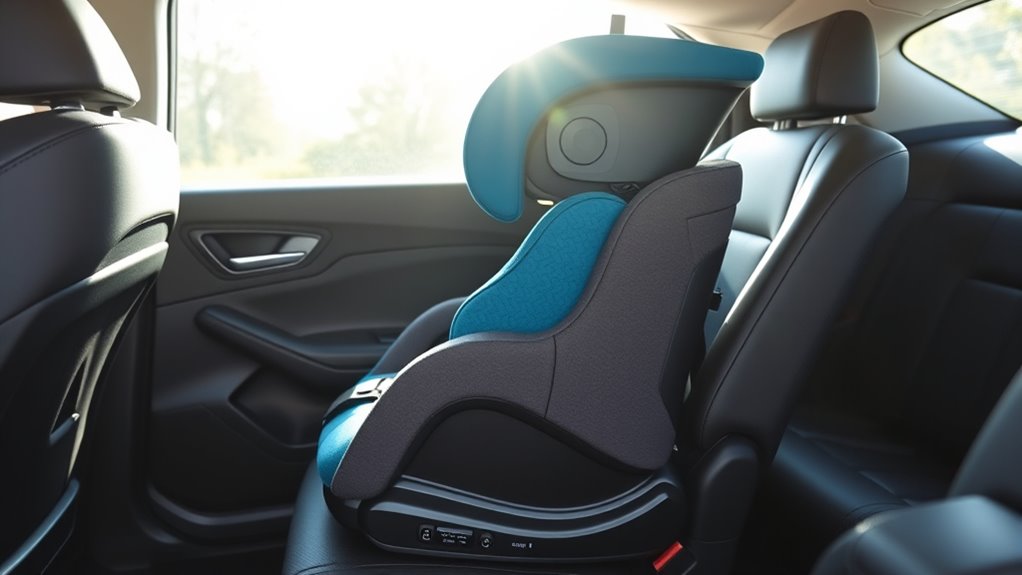

Choosing the right car seat angle is essential because it keeps your child properly supported and reduces the risk of airway obstruction or slipping during stops or accidents. A snug, correct angle ensures their head and neck stay safe and prevents discomfort that might make them fidget or try to escape. Proper positioning can literally save their life by preventing injuries. Keep exploring to discover how to achieve and maintain the safest seat angle for your child.
Key Takeaways
- Proper seat angle prevents airway obstruction, reducing the risk of suffocation during sleep or sudden stops.
- Correct recline supports the child’s head and neck, minimizing injury in crashes.
- Ensuring the right angle secures the child firmly, preventing excessive movement in collisions.
- An optimal seat position promotes comfort, decreasing fussing and ensuring correct harness use.
- Regularly adjusting the angle as the child grows maintains safety and proper spinal development.

When it comes to ensuring your child’s safety in the car, choosing the right car seat angle is essential. The correct angle not only helps keep your child secure but also reduces the risk of injury in the event of a sudden stop or collision. One of the first things you should focus on is proper installation. Use the manufacturer’s installation tips as your guide—most car seats come with detailed instructions, and many have level indicators to help you achieve the correct position. Confirming that the seat is tightly secured with either the seat belt or LATCH system is crucial. A loose seat can shift during transit, compromising safety. When installing, double-check that the seat doesn’t wiggle more than an inch side-to-side or front-to-back, and make sure it’s at the proper recline angle for your child’s age and size. Proper installation techniques are vital for effective safety. Additionally, the use of level indicators can greatly assist in achieving the correct seat angle for optimal protection.
Ensuring proper seat angle and secure installation is vital for your child’s safety and comfort in the car.
Comfort considerations are equally important because a comfortable child is more likely to stay seated properly and avoid fussing or trying to escape the seat. An improperly angled seat can cause discomfort, making your child fidget or even slip out of the harness. For infants and young children, the seat should be reclined enough to support their head and neck, especially during naps. As your child grows, you’ll want to adjust the angle to keep them snug and secure without causing pressure points or pinching. Look for adjustable features that allow you to fine-tune the tilt, ensuring they’re not sitting too upright or too reclined, which can affect both comfort and safety. The importance of seat positioning can’t be overstated for child safety.
Furthermore, consider your child’s size and weight when choosing the seat angle. For newborns and smaller infants, a more reclined position is often necessary to keep their airway open and support their developing spine. Older children, who have better head control, can sit more upright, but you still need to confirm the angle offers enough support. Remember, comfort isn’t just about padding or fabric; it’s about positioning the child correctly so that they remain secure and relaxed during the ride. Proper car seat installation is essential for safety and peace of mind. Regularly checking the seat angle as your child grows can help prevent unintentional mispositioning that could compromise safety.
Understanding tent camping locations can also help you choose a safe and comfortable environment for travel breaks or overnight stays if you plan trips involving longer drives. Ensuring that the environment is secure and suitable for rest can contribute to your child’s overall safety and comfort during travel. Ultimately, the right car seat angle plays a key role in your child’s safety and comfort. Take the time to follow installation tips carefully and regularly check the angle as your child grows. Making these adjustments not only keeps your little one safe but also makes car rides more enjoyable for everyone. Proper positioning isn’t just a detail—it’s a lifesaver.
Frequently Asked Questions
How Does Car Seat Angle Affect Child Safety During a Crash?
You should understand that the car seat angle directly impacts your child’s safety during a crash. Proper seat posture ensures your child’s head and neck are well supported, reducing injury risk. An ideal angle also enhances comfort, making your child less likely to fidget or unbuckle, which could be dangerous. By adjusting the seat for comfort maximization, you help maintain correct posture, ultimately protecting your child in emergency situations.
Can Improper Angle Installation Cause Long-Term Injuries?
Improper angle installation can cause long-term injuries by affecting seatbelt tension and padding placement. If your child’s car seat is too upright or reclined, the seatbelt might not secure them properly, risking internal injuries or spinal issues over time. Incorrect padding placement can also lead to pressure points, causing discomfort or damage. Always guarantee the seat angle supports proper seatbelt tension and correct padding placement for your child’s safety and comfort.
What Signs Indicate a Car Seat Angle Is Incorrect?
You should check for signs that your car seat angle is wrong, like poor seat belt placement, which may cause the belt to sit too high or too low on your child’s body. Also, observe harness tightness; if it’s too loose or too tight, the angle might be off. A properly installed seat ensures your child’s comfort and safety, with harnesses snug and belts correctly positioned, providing ideal protection.
Does Vehicle Type Influence the Ideal Car Seat Angle?
You might wonder if vehicle type affects the ideal car seat angle. It does, so always follow installation tips tailored to your vehicle. Adjust the seat so your child’s harness fits snugly and their head doesn’t slump forward. Use seat adjustment features to find the safest angle, especially in different car models. Always test the seat’s stability and comfort, ensuring your child is secure and properly positioned for maximum safety.
Are There Age-Specific Angle Recommendations for Children?
You should consider age-specific angle recommendations for children to guarantee proper safety. As your child grows, their growth-adjusted angles help keep them secure and comfortable. For infants, a more reclined position offers support, while older kids need a more upright angle for proper harness fit. Always follow manufacturer guidelines and consult safety experts to choose the correct, age-appropriate positioning, which can markedly reduce injury risk during accidents.
Conclusion
Choosing the right car seat angle is like finding the perfect saddle for a rider—it’s all about balance and safety. When you set it correctly, you’re giving your child a sturdy foundation that can absorb shocks and keep them secure during a sudden stop or crash. Think of it as tuning a musical instrument; the right angle guarantees everything plays in harmony. Prioritize this detail, and you’re creating a safe journey where your child can thrive.