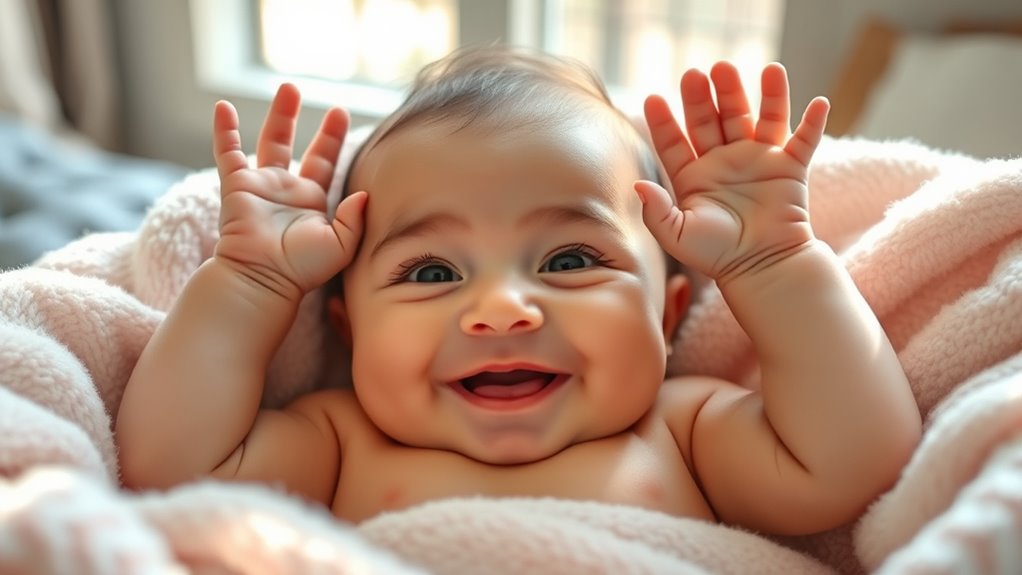

To spot your baby’s happiness cues, look for smiles, especially responsive ones as they grow. Eye contact shows their comfort and connection with you. Listen for babbles and laughter as signs of joy. Pay attention to their body language—relaxed posture, open hands, and smooth movements indicate contentment. Engaging in play can also signal excitement. Noticing these cues helps strengthen your bond and ensures emotional well-being. There’s much more to discover about your baby’s joy!
Key Takeaways
- Look for reflexive and responsive smiles; these indicate comfort and joy in interaction with caregivers.
- Observe eye contact; consistent locking of eyes shows security and emotional connection.
- Listen for happy vocalizations like coos and laughter, signaling contentment and communication.
- Note body language; relaxed posture and open movements suggest happiness and engagement.
- Watch for active play; vigorous play indicates curiosity and excitement, reflecting overall emotional well-being.
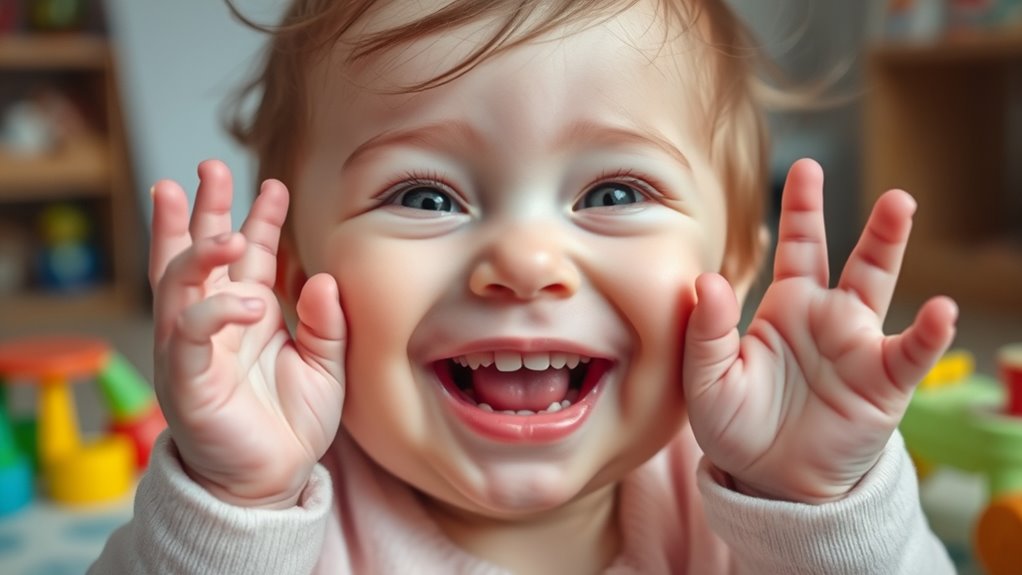
How can you tell if your baby is truly happy? One of the most telling signs is their smile. From the first few weeks, you might notice reflexive smiles, but by two to three months, those smiles become more responsive. When your baby beams at you or grins at familiar faces, they’re expressing joy.
Eye contact is equally important. When your little one locks eyes with you, it’s a sign they feel secure and connected. This engagement not only shows their comfort with you but also indicates their interest in the world around them.
Listen closely to your baby’s vocalizations. Happy babies tend to babble, producing a delightful mix of vowels and consonants. You might hear coos and gurgles that reflect their contentment. As they grow, laughter and joyful sounds will emerge, especially around four to six months. These vocalizations are their way of communicating happiness and engagement. The sounds they make often evolve as they feel more secure, indicating their emotional development.
Happy babies vocalize joy through delightful babbles and coos, signaling their emotional growth and engagement with the world.
Pay attention to your baby’s body language, too. A relaxed posture, open hands, and kicking legs signify happiness. If your baby appears calm and relaxed, it’s a strong indication they’re comfortable. Good muscle tone and smooth movements suggest they’re engaged and enjoying their surroundings. You’ll find that their posture can reveal a lot about their emotional state.
Engagement in play is another clear indicator of happiness. When babies are secure, they play more vigorously, showing curiosity and excitement. Sensory experiences during playtime help stimulate their minds and keep them content. Observing your baby during play can give you insights into their emotional and cognitive development.
Lastly, consider their emotional cues and behavioral states. A secure attachment to you is vital for their happiness. If you notice a lack of distress or discomfort, that’s a positive sign. Babies experience a range of emotions, and recognizing these cues helps you respond to their needs. Active alert states suggest excitement and engagement, while quiet alert states show interest. In contrast, fussiness may indicate distress.
Creating a supportive environment contributes significantly to your baby’s happiness. Regular routines and loving interactions help them feel secure. By fostering a comfortable space filled with sensory experiences, you’ll promote their emotional well-being. By observing these cues, you can better understand and nurture your baby’s happiness.
Frequently Asked Questions
What Are Some Common Signs of Baby Discomfort?
When you’re with your baby, watch for signs of discomfort. Increased fussiness or irritability often indicates something’s wrong.
Changes in sleep patterns or appetite can also be red flags. Look for tense posture, restlessness, or avoiding eye contact.
If your baby cries persistently or exhibits unusual facial expressions, they might be in pain. Keep an eye out for arching their back or splaying fingers, as these behaviors can signal discomfort too.
How Can I Differentiate Between Happiness and Excitement?
To differentiate between happiness and excitement in your baby, pay attention to their expressions and sounds.
Happy babies often coo or babble calmly, while excited ones might make louder, more urgent noises.
Observe their physical movements too; happiness usually involves relaxed body language, whereas excitement comes with energetic waving or kicking.
Lastly, consider the context—familiar, comforting situations tend to evoke happiness, while new or stimulating environments spark excitement.
Do Different Cultures Interpret Baby Cues Differently?
Yes, different cultures do interpret baby cues differently.
You’ll find that cultural beliefs and practices shape how caregivers respond to a baby’s needs. For instance, some cultures prioritize certain cues over others, while communication styles vary greatly.
Your understanding of these differences can enhance the way you interpret and react to cues. Being culturally aware helps you provide more individualized care, fostering a stronger bond with the child and ensuring their emotional well-being.
When Should I Be Concerned About My Baby’s Mood?
You should be concerned about your baby’s mood if they’re persistently crying, have feeding difficulties, or show poor sleep patterns.
If your little one seems unusually restless or anxious, it might signal distress.
Pay attention to their weight gain, too; failure to thrive can indicate underlying issues.
If you notice these signs consistently, it’s wise to consult a healthcare professional for guidance and support.
Early intervention can make a significant difference.
Can Parenting Styles Affect Baby Happiness Cues?
Yes, your parenting style can definitely affect your baby’s happiness cues.
If you practice authoritative parenting, you’re likely to create a supportive environment that encourages emotional expression.
On the other hand, strict or uninvolved approaches may stifle your baby’s ability to communicate feelings, leading to anxiety or insecurity.

Stroller Organizer with Cup Holder, Non-Slip Stroller Caddy Baby Essentials
- Large Capacity Storage: Holds bottles, diapers, toys, snacks
- Ideal Gift for New Moms: Perfect for baby showers and gender reveals
- Universal Compatibility: Fits most stroller brands and models
As an affiliate, we earn on qualifying purchases.
Conclusion
By tuning into your baby’s happiness cues, you can unlock a treasure chest of joy that’ll make your heart burst like a piñata filled with rainbows! Those giggles and coos are like music to your ears, transforming even the gloomiest days into a whirlwind of sunshine. Remember, every smile is a tiny spark of magic, connecting you and your little one in an unbreakable bond. So, keep your eyes peeled and relish in every happy moment together!