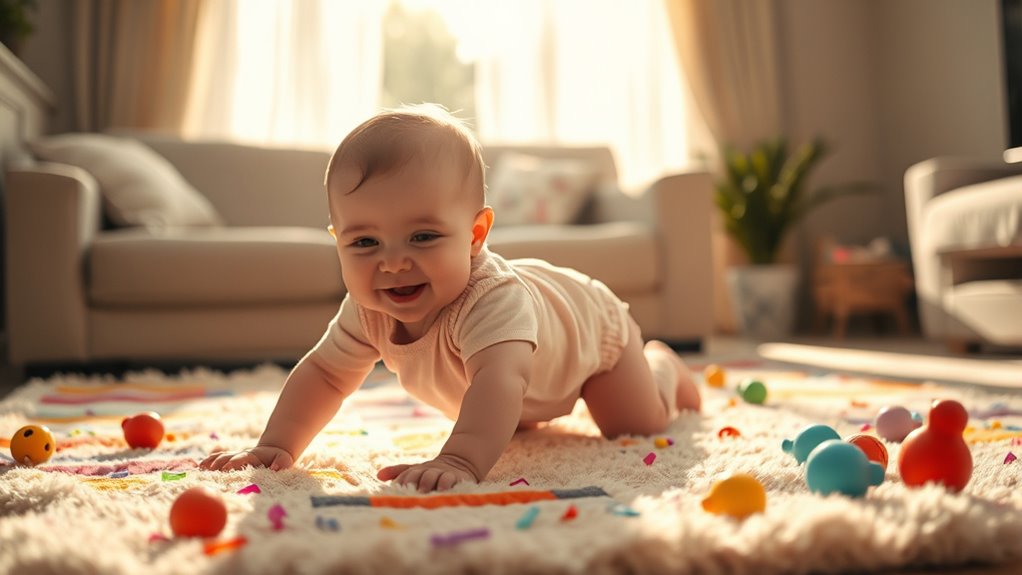

Encouraging your baby’s crawling is a fun journey! Start with tummy time, aiming for 30 minutes daily to build their upper body strength. Use toys to entice them to move, and celebrate their unique crawling style, as each baby’s method is different. Ensure a safe space for exploration by removing hazards and keeping a close eye on them. Want to discover more tips on fostering their independence and motor skills? You’ll find more helpful insights ahead!

Turn the school run and nap time into listening time
- Thousands of audiobooks, podcasts and originals
- Listen on your phone, tablet or Echo — also offline
- Cancel anytime
Key Takeaways
- Start tummy time early, aiming for 30 minutes daily to strengthen essential muscles for crawling.
- Use toys placed out of reach to motivate your baby to move and explore.
- Encourage pre-crawling activities like rolling, pivoting, and scooting to build strength and coordination.
- Supervise closely and baby-proof the environment to create a safe space for crawling practice.
- Recognize that crawling styles vary, and support your baby’s individual journey at their own pace.
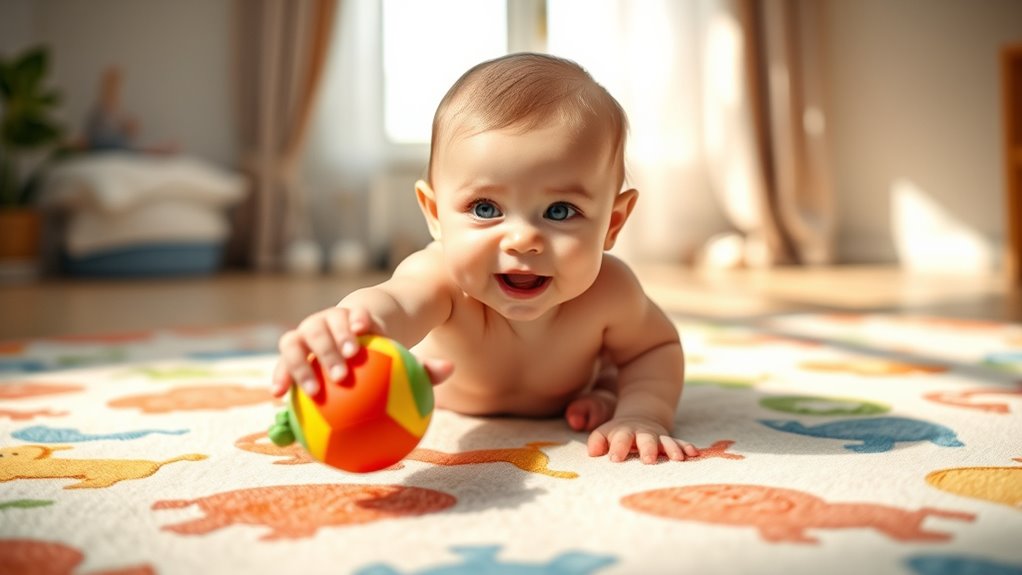
Crawling is an exciting milestone in your baby’s development, marking their first steps toward independence. Most babies begin crawling between 6 and 10 months, but don’t worry if yours starts earlier or later; every child develops at their own pace. Some might even skip crawling altogether, which is perfectly normal. While crawling isn’t always viewed as a strict developmental milestone by health organizations, it plays a crucial role in your baby’s growth.
Crawling marks a thrilling developmental milestone, paving the way for your baby’s independence and growth.
As your little one starts to crawl, you’ll notice significant benefits that come along with this newfound mobility. Crawling enhances motor skills and coordination, allowing your baby to strengthen both their arm and leg muscles. This activity also boosts brain development by engaging both sides of the body, setting the stage for future skills like walking and dressing. By crawling, your baby improves their visual tracking abilities and develops the balance and strength necessary for more complex movements later on.
To encourage crawling, start with tummy time from birth. Aim for at least 30 minutes of tummy time daily, as recommended by the American Academy of Pediatrics. This practice strengthens neck, back, and shoulder muscles while preventing flat spots on your baby’s head. Begin with short sessions and gradually increase the duration as your baby becomes more comfortable.
You can also try various activities to promote crawling. Demonstrating push-ups can encourage imitation, while teaching your baby to rock on their hands and knees improves balance. Placing toys just out of reach compels them to move, and using mirrors stimulates curiosity. Play tunnels can make crawling practice fun and engaging.
Watch for stages leading up to crawling. Rolling, pivoting, and even scooting are all precursors to crawling that show your baby’s growing strength. Some may even rock backward before they crawl forward. As they explore, ensure safety by supervising closely, baby-proofing the environment, and clearing the floor of hazards.
Crawling styles vary, too. Your baby might adopt the classic crawl, the belly crawl, or even a backward crawl. Each style showcases their unique approach to movement. Remember, every baby is different, and the most important thing is to support their journey towards crawling and beyond.
As an affiliate, we earn on qualifying purchases.
Frequently Asked Questions
What Age Do Most Babies Start Crawling?
Most babies start crawling between 6 and 12 months old.
You’ll find that around half of them typically begin around 8 months. Some may surprise you by starting as early as 6 months, while others mightn’t crawl until after 11 months.
Remember, crawling isn’t a universal milestone; some babies skip it entirely and jump straight to walking.
Each child’s development varies, so be patient and enjoy watching their unique journey unfold.
Is Crawling Necessary for My Baby’s Development?
Crawling is essential for your baby’s development. It builds strength in muscles and joints, laying the groundwork for walking and balance.
As your baby crawls, they enhance gross motor skills and improve coordination between both sides of their body. This stage also promotes sensory experiences, helping them understand their environment better.
Skipping crawling could lead to delays in other developmental areas, so encouraging this movement is beneficial for their growth.
How Can I Tell if My Baby Is Ready to Crawl?
You can tell if your baby’s ready to crawl by observing their movements.
Look for signs like rocking back and forth on hands and knees or pushing up on their arms during tummy time.
If they’re reaching for toys just out of reach or turning over frequently, that’s a good indication.
You’ll also notice increased neck strength as they explore their surroundings, which shows they’re developing the necessary skills for crawling.
Are There Different Crawling Styles My Baby Might Use?
Yes, your baby might use different crawling styles as they develop.
You’ll notice the classic hands and knees crawl, the army crawl where they drag their belly, or even the bear crawl using hands and feet.
Some babies may scoot while sitting, and others might try the crab crawl, moving sideways.
Each style reflects their unique way of exploring and strengthening their muscles, so don’t worry if they choose one over another!
What Should I Do if My Baby Skips Crawling?
If your baby skips crawling, don’t panic! They might just be plotting a unique way to conquer the world.
Keep an eye on their overall development; watch for signs of movement or strength. Encourage exploration through play and tummy time, but remember, every baby’s journey is different.
If worries linger, consulting a pediatrician can offer peace of mind. They’ll help you navigate this fascinating phase of growth and development!
As an affiliate, we earn on qualifying purchases.
Conclusion
Encouraging your baby to crawl is a fun and rewarding journey. Remember, around 90% of babies start crawling between 6 and 10 months, so you’re right on track! By creating a safe space and engaging with them, you’re not just helping them develop physically but also boosting their confidence. Enjoy these moments of exploration together, as each little crawl brings them closer to discovering the world around them. Keep cheering them on; they’re doing great!
As an affiliate, we earn on qualifying purchases.
As an affiliate, we earn on qualifying purchases.
Cold & flu season Picks
humidifiers
As an affiliate, we earn on qualifying purchases.