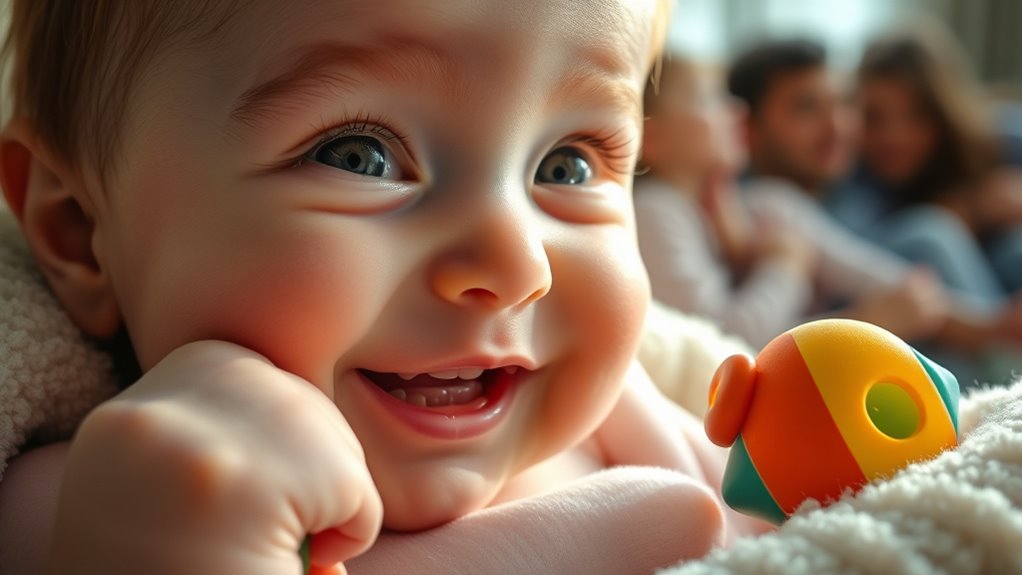

From birth, your baby shows early emotional development through expressions of happiness, distress, and interest. By 2 to 3 months, you’ll notice a “social smile” as they engage with the world. Around 4 months, giggles and laughter start to emerge, signaling joy. As they grow, they’ll experience a wider range of emotions, including anger and sadness, with strong bonds forming by 6 months. Discover even more fascinating aspects of their emotional journey as they grow.

Turn the school run and nap time into listening time
- Thousands of audiobooks, podcasts and originals
- Listen on your phone, tablet or Echo — also offline
- Cancel anytime
Key Takeaways
- Babies express initial emotions such as interest, distress, disgust, and happiness right from birth through facial expressions and body posture.
- The “social smile” emerges around 2 to 3 months, indicating engagement with caregivers and surroundings.
- Between 2 to 6 months, babies develop a broader emotional range, including anger, sadness, and fear, often responding to social dynamics.
- By 6 months, strong emotional bonds with primary caregivers form, crucial for psychological growth and understanding social interactions.
- Around 8 to 10 months, separation anxiety appears, reflecting the deepening emotional connections and awareness of caregiver presence.
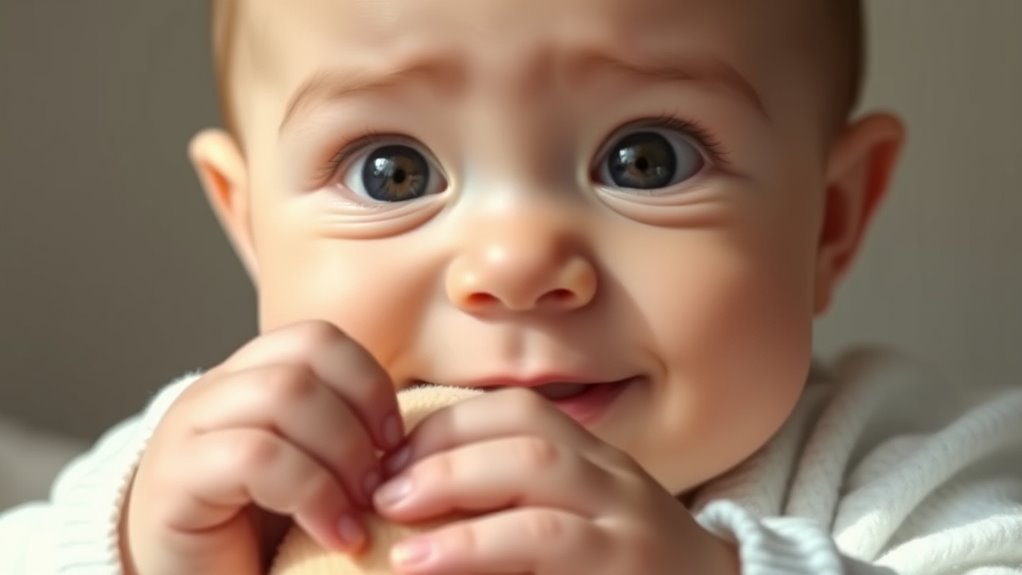
As your baby grows, you’ll notice their emotional development unfolding in fascinating ways. Right from birth, your little one starts expressing feelings like interest, distress, disgust, and happiness through facial expressions and body posture. You might see them frown when they’re uncomfortable or beam with joy when they see your familiar face.
Around 2 to 3 months, the “social smile” emerges, indicating that they’re beginning to engage with the world around them. This early interaction is crucial for building connections.
By the time your baby reaches 4 months, you’ll likely hear their first giggles. Laughter is a beautiful milestone, showing that they’re starting to respond to humor and joy. Between 2 and 6 months, your baby’s emotional range expands even further, showcasing feelings like anger, sadness, surprise, and fear. You might notice them becoming uneasy around unfamiliar faces, known as stranger anxiety, peeking around 5 to 6 months. This indicates their growing awareness of social dynamics and the importance of trusted caregivers.
By 4 months, your baby’s giggles reveal their budding sense of humor, while stranger anxiety highlights their growing social awareness.
As your baby continues to develop, they begin distinguishing various emotional expressions around 4 months. You’ll see them mimic the feelings and expressions they observe, a sign that they’re learning social skills through interaction.
By 6 months, they’re forming strong bonds with you, their primary caregiver. This emotional connection is vital for their psychological growth, as babies learn to notice and respond to your feelings, creating a nurturing environment.
Between 8 and 10 months, separation anxiety kicks in when you leave their sight. This can vary in intensity depending on your baby’s temperament and the surrounding environment. By 9 months, their emotional palette broadens, allowing them to express displeasure and sadness more clearly. This is also when their temperament becomes more apparent, leading to rapid mood changes—often referred to as emotional lability.
Engaging in playful activities like peek-a-boo not only enhances your baby’s social interactions but also nurtures their emotional learning. These back-and-forth exchanges help them understand the significance of emotions and their responses.
As an affiliate, we earn on qualifying purchases.
Frequently Asked Questions
What Are the Best Activities to Promote Emotional Development in Babies?
To promote emotional development in babies, engage in activities like puppet play to illustrate feelings, or use music and singing to encourage expression.
Messy play with sand or paint lets them explore emotions physically. Playing peekaboo introduces excitement and surprise, while reading books about emotions helps them identify feelings.
Consistent interaction, like maintaining eye contact and responsive parenting, fosters a secure attachment, providing a strong foundation for their emotional growth.
How Can I Support My Baby’s Emotional Milestones?
To support your baby’s emotional milestones, engage in meaningful interactions. Talk and respond to their sounds, and use facial expressions to convey emotions.
Maintain eye contact to build trust, and provide comfort through touch and cuddling. Encourage play and exploration, allowing them to express themselves.
Be responsive to their cues, validating their feelings, and establish consistent routines to foster a sense of security. This nurturing environment will greatly enhance their emotional development.
What Role Does Nutrition Play in Emotional Development?
Nutrition’s nurturing nature significantly shapes emotional development.
You’re fueling your child’s feelings by providing essential nutrients. A balanced diet brimming with omega-3 fatty acids, zinc, and antioxidants enhances brain health, fostering emotional stability.
By ditching processed foods and prioritizing hydration, you’re promoting a positive mood and cognitive clarity.
Are There Specific Toys That Aid in Emotional Growth?
Absolutely! You’ll find that certain toys can significantly aid emotional growth.
For instance, dolls with emotional faces help you teach empathy, while puppets encourage role-playing and self-expression.
Doctor kits promote pretend play, allowing your child to explore emotions, and stacking toys develop problem-solving skills.
Emotion-based toys provide visual cues for processing feelings.
These interactive options not only entertain but also enrich your child’s emotional understanding and social skills as they play.
How Can Parents Manage Their Own Emotions Around Babies?
Did you know that nearly 75% of new parents report feeling overwhelmed by stress?
To manage your emotions around your baby, start by practicing mindfulness; it helps you stay present. Create space between your triggers and reactions to lower emotional intensity.
Regular physical activity can boost your mood, while taking breaks to breathe can help calm you down.
baby social smile development book
As an affiliate, we earn on qualifying purchases.
As an affiliate, we earn on qualifying purchases.
Conclusion
As you nurture your baby’s emotional garden, watch for those early buds of feelings blossoming into vibrant expressions. Each giggle, frown, and coo paints a canvas of their inner world, revealing the masterpiece of their emotional development. Just like a delicate flower needs sunlight and care, your love and attention will help those emotions thrive. Embrace this journey, and you’ll witness your little one bloom into a confident, emotionally intelligent individual, ready to face life’s seasons.
As an affiliate, we earn on qualifying purchases.
baby separation anxiety comfort items
As an affiliate, we earn on qualifying purchases.
As an affiliate, we earn on qualifying purchases.
Columbus Day / Indigenous Peoples' Day Picks
long weekend sales
As an affiliate, we earn on qualifying purchases.