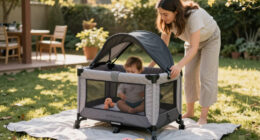
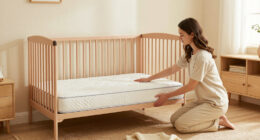
To childproof every room, make sure medicines are stored high and locked away, and dispose of expired supplies safely. Cover electrical outlets with safety plugs and keep cords out of reach. Unplug appliances when not used and keep small objects or liquids away from curious hands. Regularly check each space for hazards, clear clutter, and maintain safety devices. Continuing through your home, you’ll discover more essential tips to keep your child safe as they explore.

Turn the school run and nap time into listening time
- Thousands of audiobooks, podcasts and originals
- Listen on your phone, tablet or Echo — also offline
- Cancel anytime
Key Takeaways
- Store medicines securely out of children’s reach, using high, locked cabinets and disposing of unused drugs properly.
- Install outlet covers and keep electrical cords out of reach to prevent shocks and tripping hazards.
- Unplug appliances when not in use and keep cords away from children to reduce fire and injury risks.
- Maintain a clutter-free environment, securing furniture and removing small objects that could be swallowed.
- Regularly review safety measures and conduct routine checks to adapt to your child’s growing curiosity and mobility.

Childproofing your home is an essential step to keep your little ones safe as they explore their environment. One of the most critical aspects is ensuring that medication storage is secure and out of reach. Kids are naturally curious and often unaware of the dangers that medications pose, so you need to store all medicines in high, locked cabinets or shelves that your child cannot access. Avoid leaving medication bottles on countertops or within easy reach, and always dispose of unused or expired medicines properly. Remember, even a small pill or liquid can be dangerous if swallowed, so vigilance is key. Additionally, you should educate yourself on safe medication storage practices and keep emergency numbers handy in case of accidental ingestion. Understanding vetted safety guidelines can help you implement the most effective childproofing measures.
Electrical safety is another vital component of childproofing your home. Outlets are tempting targets for curious children, so installing outlet covers or safety plugs is a must. These simple devices prevent accidental shocks by blocking access to live electrical contacts. Be sure to check that all covers are securely in place and replace any that are damaged or missing. Avoid using extension cords or overloaded power strips, as these increase the risk of electrical fires or shocks. Keep electrical cords out of reach, and avoid running them across walkways where children might pull on them or trip. Furniture should be positioned away from outlets to prevent children from climbing and accessing electrical connections. If you have appliances with cords, ensure they are unplugged when not in use, and never leave appliances unattended while plugged in. For additional safety, consider installing tamper-resistant outlets, especially if your child is particularly inquisitive.
Childproofing isn’t just about keeping your child physically safe; it’s about creating an environment where they can explore freely without constant danger lurking around every corner. By focusing on medication storage, you eliminate the risk of poisoning, and by enhancing electrical safety, you reduce the chances of shocks or fires. These proactive steps give you peace of mind, allowing your child to develop independence while staying safe. Regularly review and update your safety measures as your child grows and becomes more mobile. Remember, what’s safe today might need an upgrade tomorrow as your little one’s curiosity expands. Being vigilant and proactive in these areas ensures that you’re doing everything possible to create a safe, secure space where your child can learn and explore confidently.
As an affiliate, we earn on qualifying purchases.
Frequently Asked Questions
When Should I Start Childproofing My Home?
You should start childproofing your home as early as possible, ideally before your baby begins to crawl, around 4-6 months. Follow a baby proofing timeline to ensure safety at every stage. Conduct a regular safety assessment schedule to identify potential hazards and address them promptly. Starting early helps create a safe environment and gives you peace of mind as your little one explores their surroundings.
How Do I Childproof a Rental Property?
Imagine you’re in a vintage movie set, and you need to childproof your rental property. Start with renting safety by installing temporary barriers on stairs and doorways. Use adhesive mounts for cabinets and outlets, which won’t harm walls. Keep sharp objects and small items out of reach, and secure furniture to the wall. These simple steps make certain your little one stays safe without risking your security deposit.
Are There Childproofing Products Suitable for Older Children?
Yes, there are age-appropriate products designed for older children that provide safety enhancements. You can use outlet covers, door/window latches, and cabinet locks tailored to their growing abilities. Consider installing stair gates or window restrictors to prevent falls. These products help you maintain a safe environment as your child’s needs evolve, giving you peace of mind while allowing them the freedom to explore safely.
How Often Should I Review and Update Childproofing Measures?
You should review and update your home safety measures at least every six months, or whenever your child’s age or abilities change. Regularly checking for new hazards helps prevent accidents and guarantees your child’s safety. Stay vigilant, and adapt your hazard prevention strategies as needed, especially after renovations or if you notice new risks. Consistent reviews keep your home safe and give you peace of mind knowing you’re actively protecting your child.
What Are Cost-Effective Ways to Childproof on a Budget?
You can easily childproof your home without emptying your wallet! Try DIY solutions like using household items—like rubber bands on cabinet latches or foam padding on sharp edges. Budget-friendly tips include repurposing old furniture for safety, hanging heavy objects out of reach, and using inexpensive safety locks. These simple, cost-effective tricks not only protect your little one but also keep your budget intact, making safety achievable for everyone.
As an affiliate, we earn on qualifying purchases.
Conclusion
Childproofing your home is like building a fortress, keeping your little one safe while allowing them to explore. By following this checklist for every room, you create a secure environment where accidents are less likely to happen. Remember, safety isn’t a one-time task but an ongoing process. Stay vigilant and regularly update your childproofing measures. With a little effort, you turn your home into a safe haven — as secure as a castle, ready for your child’s adventures.
As an affiliate, we earn on qualifying purchases.
As an affiliate, we earn on qualifying purchases.
Fall Picks
fall essentials
As an affiliate, we earn on qualifying purchases.