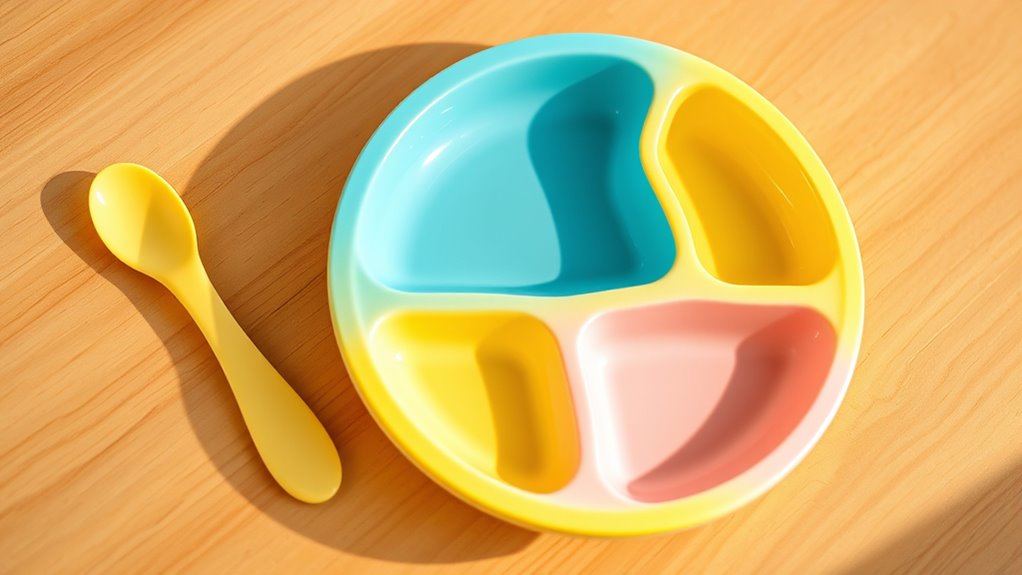

Silicone plates and spoons are great for baby-led weaning because they’re soft, flexible, and safe for your little one. They help prevent injuries by having rounded edges and resist breakage or splintering. These utensils are non-toxic, easy to clean, and durable enough for frequent use. Plus, their textured surfaces and designed shapes encourage your baby to develop self-feeding skills with confidence. Continue exploring to discover how to choose the best silicone utensils for your baby’s safety and growth.

Get baby and family essentials delivered free — and shop member deals
- Fast, free delivery on millions of items
- Access to Prime Big Deal Days deals on October 6–7
- Prime Video, Amazon Music and more included
Key Takeaways
- Silicone plates feature textured surfaces to prevent slipping, promoting independent self-feeding.
- Silicone spoons are lightweight with rounded edges, ensuring safe and comfortable feeding for babies.
- Both utensils are made from non-toxic, BPA-free silicone, ensuring safety during baby-led weaning.
- Dishwasher-safe and durable, silicone plates and spoons are easy to clean and withstand frequent use.
- The flexible, non-porous nature of silicone minimizes breakage, choking hazards, and bacterial buildup during feeding.
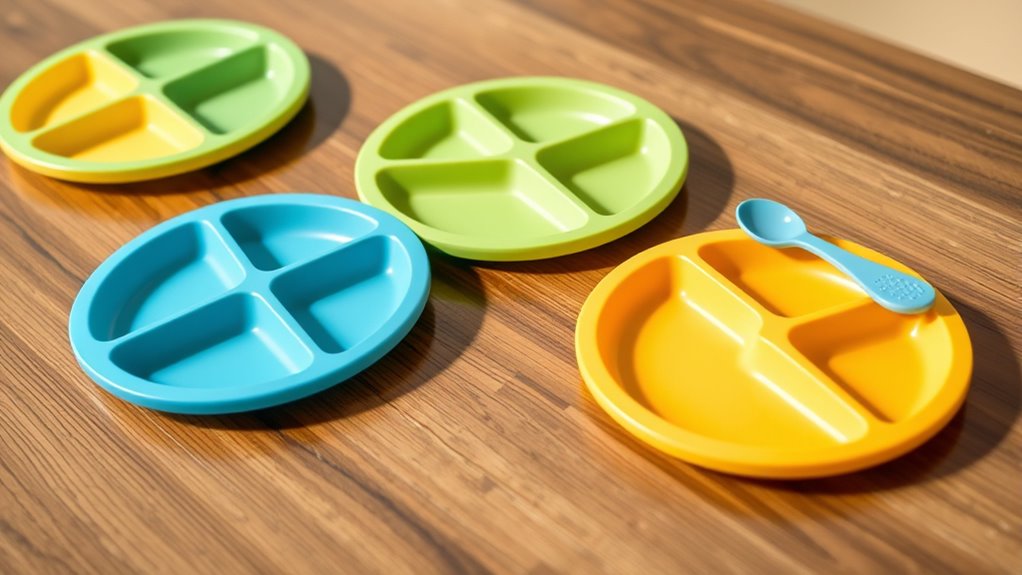
Feeding safety is the top priority during your baby’s self-feeding adventures. Silicone utensils are soft and flexible, reducing the risk of injury if your baby bites down too hard or mishandles them. Unlike metal or hard plastic, silicone won’t cause cuts or discomfort, which is essential for early self-feeding stages. Additionally, silicone is non-toxic and free from harmful chemicals like BPA, phthalates, and PVC. Knowing that the utensil materials are safe gives you peace of mind, allowing you to focus on encouraging your baby’s independence without worrying about potential health risks.
When selecting silicone plates and spoons, pay attention to their design and construction. Look for utensils with rounded edges and no small parts that could pose choking hazards. The materials should be durable enough to withstand frequent washing and exposure to hot foods, but soft enough to be gentle on your baby’s gums. Dishwasher-safe silicone makes cleanup easier, which is a huge advantage when managing messy mealtimes. The material’s flexibility also means the utensils are less likely to break or splinter, further enhancing feeding safety.
Using silicone utensils also encourages your baby to develop proper self-feeding skills. The textured surface of some plates helps prevent slipping, keeping food in place, while the shape of the spoons is designed to fit comfortably in small hands. The lightweight nature of silicone utensils makes it easier for your baby to grasp and manipulate them, fostering independence. Plus, silicone’s non-porous surface doesn’t harbor bacteria as easily as porous materials, contributing to overall feeding safety.
Furthermore, ongoing AI safety research and monitoring can help ensure that the materials used in baby utensils remain safe and free from emerging vulnerabilities, aligning with broader safety standards.
silicone baby plates with textured surface
As an affiliate, we earn on qualifying purchases.
As an affiliate, we earn on qualifying purchases.
Frequently Asked Questions
Are Silicone Plates Microwave-Safe for Baby Food Reheating?
Yes, silicone plates are microwave-safe for reheating baby food, but you should always check the manufacturer’s reheating guidelines first. Follow proper microwave safety by making certain the plate is labeled microwave-safe and avoid overheating. Use short intervals and stir the food to prevent hot spots. This way, you guarantee safe reheating, protecting your baby from burns and maintaining food quality. Always double-check the product instructions for specific reheating recommendations.
How Do I Clean Silicone Baby Utensils Effectively?
To clean silicone baby utensils effectively, you can use dishwasher cleaning for convenience and thoroughness. For stubborn stains, soak the utensils in warm, soapy water or a mixture of baking soda and water before scrubbing gently. Avoid harsh chemicals to keep the silicone safe for your baby. Regular cleaning not only removes stains but also guarantees the utensils stay hygienic and safe for use every day.
Can Silicone Utensils Cause Allergies in Babies?
Silicone utensils rarely cause allergies because they are generally hypoallergenic and free from common allergy triggers. Silicone safety has been well studied, showing it’s a safe material for babies’ sensitive skin and digestive systems. However, if your baby shows signs of an allergic reaction, like rash or swelling, stop using the utensils and consult a pediatrician. Overall, silicone is a safe choice for baby utensils, minimizing allergy concerns.
What Age Is Appropriate to Introduce Silicone Plates and Spoons?
You should introduce silicone plates and spoons around 6 to 9 months, when your baby shows signs of developmental readiness. Interestingly, studies show that most babies start self-feeding by 9 months. At this age, they develop the coordination needed to handle utensils and manage different textures. Keep an eye on your little one’s motor skills, and you’ll know the right time to introduce these utensils safely and confidently.
Are Silicone Utensils More Durable Than Plastic Alternatives?
Silicone utensils are generally more durable than plastic alternatives because they resist cracking, breaking, and staining better over time. Their material safety makes them a smart choice for your little one, as they’re flexible and less likely to splinter. Plus, silicone’s heat resistance guarantees they won’t warp or degrade with use. Overall, silicone utensils offer a longer-lasting, safer option for your baby’s feeding needs.
baby-led weaning silicone spoons
As an affiliate, we earn on qualifying purchases.
As an affiliate, we earn on qualifying purchases.
Conclusion
With silicone plates and spoons in hand, you’re guiding your little one on a journey of independence, one bite at a time. Picture their tiny fingers grasping confidently, exploring new textures and flavors, as you sit back and watch their confidence grow. These utensils aren’t just tools—they’re symbols of trust and discovery, shaping your baby’s future. Embrace each messy moment, knowing you’re nourishing not just their body, but their curiosity and spirit.
As an affiliate, we earn on qualifying purchases.
dishwasher safe silicone baby plates
As an affiliate, we earn on qualifying purchases.
As an affiliate, we earn on qualifying purchases.
Fall Picks
fall essentials
As an affiliate, we earn on qualifying purchases.