A split-screen baby monitor lets you view two camera feeds at once, making it easier to check on siblings or different sleeping spaces without switching views. My best overall pick is the HelloBaby 6-Inch Split Screen Video Baby Monitor, which pairs a roomy display with a simple no-WiFi setup. The Babysense TOUCH 7-inch stands out for app access and tracking features, while the Comfyer BM01 offers a larger screen without relying on WiFi. The main tradeoffs are screen size versus portability, local viewing versus app access, and extra features versus simpler controls. Read on for the full comparison and advice on choosing the right monitor for your rooms and routine.

Turn the school run and nap time into listening time
- Thousands of audiobooks, podcasts and originals
- Listen on your phone, tablet or Echo — also offline
- Cancel anytime
Complete the kit


Key Takeaways
- Screen size is a defining split-screen tradeoff: the 7-inch Comfyer and Babysense TOUCH displays give each camera feed more room, while 4.3- to 5-inch models take up less space.
- No-WiFi models dominate this lineup: they suit parents who want a dedicated monitor, while the ARENTI D3 and Babysense TOUCH add app-based viewing for remote access.
- Two cameras do not guarantee flexible placement: compare pan, tilt, zoom, and camera controls if you need to reposition views as children move between rooms.
- Babysense PRO adds more than split-screen viewing: its night light, white noise, and sound-and-light features may replace separate nursery devices, but add complexity.
- Battery claims and screen size need to be weighed together: portable models can be useful for travel, but frequent split-screen viewing and larger displays may affect how long a charge lasts.

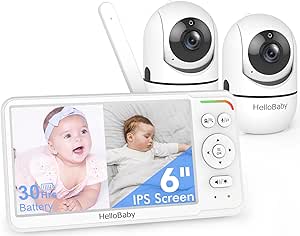


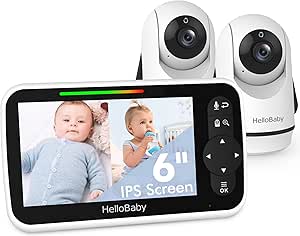


| splitscreen baby monitor | Cameras | Display | Connection | Battery life |
|---|---|---|---|---|
| HelloBaby HB6550-2 5" Dual Cam | — | 5-inch IPS | 2.4GHz FHSS, no WiFi | Up to 30 hours in ECO mode |
| HelloBaby No WiFi Baby Monitor | 2 | — | 2.4GHz FHSS, no WiFi | 16 to 30 hours |
| Comfyer BM01 7-inch Split-Scre | 2 | 7-inch, 720p HD | 2.4GHz FHSS, no WiFi | — |
| VTech VM350-2 Baby Monitor wit | 2 | — | Encrypted 2.4GHz FHSS, no WiFi | Up to 12 hours video or 21 hours audio |
| ARENTI D3 Baby Monitor Set wit | — | 5 inches | WiFi 6 | — |
| HelloBaby 6" Split Screen Vide | 2; split-screen view with PTZ | — | — | — |
| Babysense 5" HD Non WiFi Split | 2 | 5-inch, 720p HD | — | — |
| GoodBaby 5" Split Screen Baby | 2; expandable to 4 | 5-inch HD LCD | — | Up to 30 hours in VOX mode; 10 hours with screen on |
| Babysense TOUCH 7" Touchscreen | 2; dual 4MP lenses | — | — | Up to 30 hours |
| iFamily 4.3" Split-Screen Vide | 2 | 4.3 inches | — | — |
| HelloBaby 6-Inch Split-Screen | 2 | 6-inch IPS split-screen | 2.4 GHz FHSS, no Wi-Fi | 16–31 hours in ECO/VOX mode |
| Babysense PRO Full HD 5.5" Spl | 2 included; expandable to 4 | 5.5-inch Full HD split-screen | FHSS, non-Wi-Fi | Up to 20 hours |
| Split-Screen Baby Monitor with | 2 | 4.3-inch IPS LCD | 2.4 GHz FHSS, no Wi-Fi | — |
More Details on Our Top Picks
HelloBaby HB6550-2 5″ Dual Camera Baby Monitor with Pan/Tilt/Zoom
The HB6550-2 suits parents who want a private, internet-free monitor but do not need both camera feeds on screen at once. Its single-view switching avoids the split-screen layout offered by the HelloBaby 6-Inch Split Screen Video Baby Monitor, which can be easier for checking two rooms simultaneously. In return, this model pairs that focused view with up to 30 hours in ECO mode and remote pan, tilt, and zoom, so you can adjust a camera without entering the nursery. Two pre-paired cameras simplify setup, and FHSS transmission works without a router or app. The tradeoff is central to the choice: switching views is less immediate than seeing both babies together, and the listed outdoor range may drop indoors. I’d choose it for battery endurance and camera control, not for a true split-screen experience.
Pros:- Up to 30 hours of battery life in ECO mode
- No-WiFi 2.4GHz FHSS connection
- Remote pan, tilt, and zoom for repositioning the camera view
- Two cameras are pre-paired, with capacity to expand to four
Cons:- Single-view switching does not provide simultaneous split-screen monitoring
- The stated 1000-foot range is an outdoor figure and may be lower indoors
- The antenna needs manual extension for stronger signal performance
Best for: Parents who prioritize a long-lasting handheld monitor, private no-WiFi connection, and remote camera adjustment over simultaneous viewing.
Not ideal for: Parents of twins or children in separate rooms who want both camera feeds visible at the same time.
- Display:5-inch IPS
- Included cameras:2; expandable to 4
- Connection:2.4GHz FHSS, no WiFi
- Battery life:Up to 30 hours in ECO mode
- Range:Up to 1000 feet outdoors
- Pan and tilt:355° pan and 120° tilt
- Field of view:178°
- Other features:Two-way audio, night vision, temperature monitoring, 8 lullabies, VOX sound detection
Our verdict“Choose the HB6550-2 if long ECO-mode battery life and private camera switching matter more than seeing two feeds side by side.”
HelloBaby No WiFi Baby Monitor with 2 Cameras and 6-Inch Split Screen
This HelloBaby is a straightforward fit for parents who want to see two rooms at once without connecting a monitor to WiFi. Its 6-inch split screen gives each camera a simultaneous place on the display, an advantage over the HelloBaby HB6550-2, which switches between camera views instead. Remote pan and tilt help fill in blind spots, while the no-WiFi FHSS connection keeps monitoring on the dedicated parent unit rather than a phone app. Battery life is listed at 16 to 30 hours, so actual runtime depends on use and settings. Room-temperature alerts, a feeding timer, and lullabies add useful routine support, though this feature set remains more basic than the ARENTI D3’s app-based alerts and higher-resolution cameras. I’d favor this model for dependable two-room viewing; skip it if remote smartphone access is a must.
Pros:- 6-inch screen shows both camera feeds simultaneously
- No-WiFi FHSS connection does not depend on internet access
- Remote pan and tilt help adjust coverage from the parent unit
- Includes temperature alerts, lullabies, and a feeding timer
Cons:- No app or smartphone access for remote viewing
- Battery life varies from 16 to 30 hours rather than offering one fixed runtime
- Placement and physical setup affect camera coverage
Best for: Parents of twins or siblings in separate rooms who want a large, simultaneous view on a dedicated no-WiFi screen.
Not ideal for: Caregivers who need to check the nursery remotely by phone or prefer a single-camera view on a smaller display.
- Screen:6-inch split-screen display
- Cameras:2
- Connection:2.4GHz FHSS, no WiFi
- Battery life:16 to 30 hours
- Night vision:Infrared
- Remote pan and tilt:355° side to side and 120° up and down
- Mounting:Tabletop, wall mount, or crib mount
- Additional features:Two-way audio, temperature alerts, lullabies, time display, feeding timer
Our verdict“Pick this HelloBaby if a large no-WiFi split screen is your priority and phone-based monitoring is not.”
Comfyer BM01 7-inch Split-Screen Baby Monitor with 2 Cameras and Audio, No WiFi
The Comfyer BM01 is the screen-first choice in this group: its 7-inch display gives split-screen feeds more room than the 5-inch VTech VM350-2, which can make checking two camera views at a glance less cramped. It keeps the connection local with 2.4GHz FHSS and adds remote pan, tilt, and digital zoom, plus a 6000mAh battery rated for 13 hours of video or two days of audio. Those figures suit parents who often keep the monitor on, though video runtime is shorter than the up-to-30-hour claims for both HelloBaby models here. Its bendable goose-neck mount offers flexible positioning, but it requires physical mounting and may not suit every surface. I’d choose the BM01 for its roomy display and battery capacity, not for a simple tabletop setup or a compact parent unit.
Pros:- 7-inch display provides more room for simultaneous camera feeds
- No-WiFi FHSS connection keeps video off an internet-dependent app
- 6000mAh battery is rated for 13 hours of video or two days of audio
- Remote pan, tilt, and 2x/4x digital zoom support camera adjustments
Cons:- Video battery life is shorter than the up-to-30-hour claims of the HelloBaby models
- Flexible mount requires physical placement and may not fit all furniture
- Listed for indoor use, with no waterproof rating
Best for: Parents who want a large split-screen view and flexible camera positioning for monitoring two rooms or babies.
Not ideal for: Families who need a compact, tabletop-only setup or a monitor rated for outdoor or water-exposed use.
- Display:7-inch, 720p HD
- Camera resolution:1080p
- Cameras:2
- Connection:2.4GHz FHSS, no WiFi
- Battery:6000mAh; 13 hours video or 2 days audio
- Pan and tilt:355° pan and 120° tilt
- Zoom:2x and 4x digital zoom
- Other features:Night vision, two-way audio, soothing sounds, temperature alerts, bendable goose-neck mount
Our verdict“Choose the BM01 if a spacious split-screen display and flexible mounting matter more than maximum video runtime or simple placement.”
VTech VM350-2 Baby Monitor with 2 Cameras, 5″ Screen, No WiFi, Split-Screen, Night Vision, Two-Way Talk, Temperature Sensor, Lullabies, 1000ft Range
The VTech VM350-2 is the uncomplicated option for families who want a dedicated, no-WiFi monitor with both feeds available at once. Its pre-paired cameras support plug-and-play setup, while split-screen and patrol modes offer two ways to check rooms: simultaneous viewing or sequential camera checks. That makes it more flexible than the HelloBaby HB6550-2, which switches between views but does not show both together. The limit is picture detail: this model’s 480p video is modest beside the Comfyer BM01’s 1080p cameras and 720p display. Its 5-inch screen is also smaller than the 6- and 7-inch alternatives, though the layout may suit a simpler bedside setup. With up to 12 hours of video battery life, it is a practical basic pick, but not the choice for a large screen or sharper image.
Pros:- Pre-paired units support plug-and-play setup
- Split-screen and patrol modes offer different ways to monitor two rooms
- Encrypted FHSS connection works without WiFi, an app, or cloud storage
- Includes night vision, two-way talk, temperature alerts, and soothing sounds
Cons:- 480p video offers less detail than the Comfyer BM01’s higher-resolution camera system
- 5-inch display is smaller than the HelloBaby 6-inch and Comfyer 7-inch options
- No smartphone access through WiFi
Best for: Parents who want pre-paired cameras, a no-app setup, and a choice between split-screen and patrol viewing.
Not ideal for: Buyers who prioritize high-detail video, a large display, or smartphone access outside the home.
- Screen:5 inches
- Video resolution:480p
- Cameras:2
- Connection:Encrypted 2.4GHz FHSS, no WiFi
- Range:Up to 1000 feet
- Battery life:Up to 12 hours video or 21 hours audio
- Viewing modes:Split-screen and patrol mode
- Other features:Night vision, two-way talk, temperature sensor, lullabies, white noise, VOX mode
Our verdict“Choose the VM350-2 for easy setup and flexible viewing modes, but look to the Comfyer BM01 if image detail is your priority.”
ARENTI D3 Baby Monitor Set with 2 Cameras, 3MP WiFi 6, 5″ Display, and Free App
The ARENTI D3 suits parents who want a local monitor screen and the option to check cameras through a smartphone app. Its two 3MP cameras, 4x digital zoom, and motion tracking put more emphasis on image detail and smart alerts than the no-WiFi HelloBaby 6-Inch Split Screen Video Baby Monitor, which keeps viewing on its dedicated parent unit. That app flexibility is useful away from home, but it also brings account registration and a WiFi setup that the FHSS models avoid. The 5-inch local display is smaller than the screens on the Comfyer BM01 and HelloBaby 6-inch model, so it is not the strongest choice for an expansive side-by-side view. Local SD-card storage and AES128 encryption add privacy controls, but the listed 20 fps video and manual focus are tradeoffs for buyers focused on smooth, effortless viewing.
Pros:- Two 3MP cameras provide higher listed resolution than the no-WiFi options here
- App access adds smartphone viewing beyond the dedicated parent unit
- Motion tracking, cry detection, and temperature and humidity alerts add monitoring tools
- MicroSD storage supports local recording, up to 256GB
Cons:- WiFi and account registration are required for app use, unlike the FHSS-only models
- 5-inch display is smaller than the Comfyer BM01 and HelloBaby 6-inch screens
- 20 fps video and manual focus may be less smooth and convenient than buyers expect
Best for: Parents who want app-based remote viewing, higher-resolution cameras, and smart alerts alongside a dedicated monitor display.
Not ideal for: Families who want a fully offline monitor, do not want to register an app account, or prefer a larger local split-screen display.
- Camera resolution:3MP (2048 × 1536)
- Display:5 inches
- Connection:WiFi 6
- Zoom:4x digital
- Storage:MicroSD card, up to 256GB
- Night vision:8 infrared LEDs
- Transmission range:400 to 1000 feet
- Other features:Motion tracking, cry detection, temperature and humidity alerts, two-way audio, lullabies
Our verdict“Choose the ARENTI D3 if smartphone access and smart camera features outweigh a larger screen or a no-WiFi connection.”
HelloBaby 6″ Split Screen Video Baby Monitor with 2 Cameras, No WiFi
The 6-inch IPS screen gives this HelloBaby a roomier split-screen view than the 5-inch Babysense 5″ HD monitor, which can make checking two sleeping areas easier at a glance. Its two cameras support remote pan, tilt, and zoom, while infrared night vision and two-way audio cover common monitoring needs without relying on a home network. The 4000 mAh battery, temperature monitoring, lullabies, and ECO mode add useful flexibility, especially for families who want an all-in-one parent unit. The tradeoff is the same one found with other non-WiFi picks: there is no smartphone app or remote viewing when you leave home. I’d choose it over the smaller iFamily 4.3-inch model when screen space matters more than compactness.
Pros:- 6-inch IPS display gives the split-screen view more room than smaller-screen alternatives.
- Two cameras can be viewed together and remotely adjusted with pan, tilt, and zoom.
- Two-way audio and infrared night vision work without WiFi.
- Temperature monitoring, lullabies, ECO mode, and a 4000 mAh battery broaden everyday usefulness.
Cons:- No WiFi or smartphone app for remote viewing.
- The larger display may be less convenient to carry than compact monitors such as the iFamily 4.3-inch model.
Best for: Parents monitoring two rooms who want a larger dedicated screen and do not need phone access.
Not ideal for: Caregivers who want to check the cameras through a smartphone while away from the parent unit.
- Screen:6-inch IPS
- Cameras:2; split-screen view with PTZ
- Connectivity:Wireless 2.4 GHz; no WiFi
- Battery:4000 mAh
- Night vision:Infrared
- Two-way audio:Yes
- Additional functions:Temperature monitoring, lullabies, and ECO mode
- Portability:Indoor/outdoor
Our verdict“Choose this HelloBaby if a larger split-screen display and offline operation matter more than app access.”
Babysense 5″ HD Non WiFi Split-Screen Baby Monitor with 2 Cameras and Audio
The Babysense stands out among the non-WiFi choices by pairing 720p split-screen video with a night light and sound machine on its two cameras. That combination suits parents of twins who want to check both babies and have a soothing feature close at hand. Remote pan, tilt, and 4× digital zoom make it easier to inspect a crib without moving the camera, while the listed 1000-foot range supports use across a larger home. Compared with the GoodBaby 5-inch monitor, this model emphasizes camera-based night-light and sound-machine functions, while GoodBaby lists longer VOX battery runtime and expansion to four cameras. Babysense requires manual setup and has no WiFi or app access; battery-life details are also not specified, making it harder to judge how often the parent unit needs charging.
Pros:- 720p HD video supports a clearer view than monitors without a stated HD resolution.
- Split-screen display shows two camera feeds at once.
- Remote pan, tilt, and 4× digital zoom help adjust the view from the parent unit.
- Cameras include a night light and sound machine, with a listed range of up to 1000 feet.
Cons:- No WiFi or smartphone access for viewing away from the monitor.
- Battery-life details are not specified.
- Manual setup may take more effort than a plug-and-play approach.
Best for: Parents of twins who want a private, offline split-screen monitor with camera night lights and soothing sounds.
Not ideal for: Buyers who want smartphone viewing, a simple app setup, or clearly stated parent-unit battery runtime.
- Display:5-inch, 720p HD
- Cameras:2
- Zoom:4× digital
- Range:Up to 1000 ft
- Connectivity:2.4 GHz FHSS; no WiFi or internet required
- Battery:4000 mAh
- Camera features:Night vision, night light, and sound machine
- Mounting:Wall mount or tabletop
Our verdict“Pick the Babysense if camera-based soothing features and offline twin monitoring matter more than app access or known battery runtime.”
GoodBaby 5″ Split Screen Baby Monitor with 2 Cameras and Audio
GoodBaby makes the strongest case for families who want to keep the parent unit running between charges: the manufacturer lists up to 30 hours in VOX mode and 10 hours with the screen on. Its 5-inch split screen shows two feeds, and the system can expand to four cameras, giving it more room to grow than the two-camera-only details listed for the Babysense 5″ HD monitor. Remote pan and tilt, two-way talk, automatic infrared night vision, and temperature sensing cover the practical basics; eight lullabies add a simple soothing option. The tradeoffs are no WiFi or smartphone viewing and a stated 1000-foot range that may not suit especially large homes. Unlike the Babysense, GoodBaby gives a specific VOX runtime, but the listed 2× zoom is more modest than Babysense’s 4× digital zoom.
Pros:- Listed battery runtime reaches 30 hours in VOX mode and 10 hours with the screen on.
- Two-camera split-screen setup can expand to four cameras.
- Remote pan and tilt plus two-way talk help manage views and respond from the parent unit.
- Automatic infrared night vision, temperature sensing, and eight lullabies add useful nursery functions.
Cons:- No WiFi or smartphone app for remote viewing.
- Listed 2× zoom is less powerful than the Babysense 5″ HD monitor’s 4× digital zoom.
- Not water-resistant, and the listed range may fall short in very large homes.
Best for: Parents seeking a non-WiFi split-screen monitor with long stated VOX runtime and the option to add cameras later.
Not ideal for: Caregivers who need app access, stronger listed zoom, or a monitor for outdoor or damp locations.
- Display:5-inch HD LCD
- Cameras:2; expandable to 4
- Pan and tilt:355° pan, 120° tilt
- Zoom:2×
- Range:Up to 1000 ft video range
- Battery life:Up to 30 hours in VOX mode; 10 hours with screen on
- Audio:Two-way talk, Smart VOX, and 8 lullabies
- Other monitoring:Automatic infrared night vision and temperature sensor
Our verdict“Choose GoodBaby if battery runtime and future camera expansion outrank app access and higher zoom.”
Babysense TOUCH 7″ Touchscreen Smart WiFi Baby Monitor with App, 2 Cameras, Night Light, 4MP Dual-Lenses, 6X Zoom, AI Auto Tracking, Split-Screen, No Subscription
This is the most feature-rich split-screen option in this group: a 7-inch touchscreen pairs with two dual-lens 4MP cameras, 6× hybrid zoom, and AI auto-tracking. Those tools can make it easier to follow movement and inspect details across two rooms than on the simpler offline displays from HelloBaby or iFamily. The WiFi app adds cry, sound, and motion alerts, while temperature and humidity sensing, two-way talk, night light, and white noise extend monitoring beyond video. The tradeoff is dependence on a 2.4 GHz WiFi network, so it will not suit buyers seeking an entirely offline setup. The app is listed as US-only, and local recording requires a separately supplied microSD card. I’d pick it for connected features, not for the privacy-first simplicity of non-WiFi models.
Pros:- Large 7-inch IPS touchscreen displays two camera feeds side by side.
- Dual 4MP lenses, 6× hybrid zoom, and AI auto-tracking add detail and movement coverage.
- App alerts cover cry, sound, and motion, with no subscription fee listed.
- Temperature and humidity sensing, two-way talk, night light, and white noise add monitoring and soothing options.
Cons:- Requires 2.4 GHz WiFi and is not compatible with 5 GHz networks.
- The app is available only in the United States.
- microSD card for local storage is not included.
Best for: US-based parents who want a large touchscreen, detailed camera views, and app alerts for two rooms.
Not ideal for: Households without 2.4 GHz WiFi, buyers outside the US who need app support, or anyone who prefers a dedicated non-WiFi connection.
- Screen:7-inch IPS touchscreen
- Cameras:2; dual 4MP lenses
- Zoom:6× hybrid
- Connectivity:2.4 GHz WiFi only
- App alerts:Cry, sound, and motion; app availability listed for the US
- Battery life:Up to 30 hours
- Audio and soothing:Two-way talk, white noise, and lullabies
- Sensors and storage:Temperature and humidity sensing; microSD slot, card not included
Our verdict“Choose the Babysense TOUCH if you want connected alerts and advanced camera tracking rather than an offline-only split-screen monitor.”
iFamily 4.3″ Split-Screen Video Baby Monitor with 2 Cameras, Pan/Tilt, Night Vision, and Two-Way Audio
The iFamily is the compact choice here: its 4.3-inch screen keeps the parent unit smaller than the 5-inch GoodBaby and Babysense models, while still showing two camera feeds at once. Both cameras offer 355° pan and 120° tilt, so parents can adjust coverage without entering the room. Two-way audio, infrared night vision, temperature monitoring, feeding alarms, and lullabies make this a useful offline setup for more than basic viewing. Its 2.4 GHz FHSS connection avoids WiFi and is listed for up to 1000 feet outdoors, though indoor range is only 150 feet. Compared with the HelloBaby 6-inch monitor, iFamily gives up screen area but adds a feeding alarm and multiple mounting options. Battery capacity is listed, but runtime is not, so frequent portable use is harder to plan.
Pros:- Compact 4.3-inch display supports simultaneous viewing of two cameras.
- Remote cameras provide 355° pan and 120° tilt.
- 2.4 GHz FHSS connection works without WiFi and is listed for up to 1000 feet outdoors.
- Temperature monitoring, feeding alarm, lullabies, and infrared night vision add practical functions.
Cons:- Smaller screen than the HelloBaby 6-inch and other 5-inch monitors.
- Listed indoor range is 150 feet, much shorter than the outdoor range.
- Battery runtime is not specified despite the listed capacity.
Best for: Parents who want a smaller dedicated monitor with offline split-screen viewing, camera movement, and feeding reminders.
Not ideal for: Buyers who prioritize a large display, smartphone access, or a clearly specified battery runtime.
- Display:4.3 inches
- Cameras:2
- Camera movement:355° pan, 120° tilt
- Range:Up to 1000 ft outdoors; 150 ft indoors
- Connectivity:2.4 GHz FHSS
- Battery capacity:14.7 watt-hours
- Audio and alerts:Two-way audio and feeding alarm
- Additional functions:Temperature sensor, lullabies, and infrared night vision
Our verdict“Pick the iFamily if compact size and offline camera controls matter more than a large screen or known battery runtime.”
HelloBaby 6-Inch Split-Screen No-WiFi Baby Monitor (2 Cameras, Audio, 30h Eco Mode)
I’d choose this HelloBaby for households where seeing two rooms clearly matters more than app features. Its 6-inch IPS split-screen gives each camera view more room than the 4.3-inch Firskids display, which can make simultaneous checks easier to read. The no-Wi-Fi FHSS connection also suits parents who want a dedicated monitor rather than phone-based viewing, while remote pan and tilt help adjust coverage from the parent unit.
The main tradeoff is that its feature set is focused on monitoring, not soothing or recording: there’s no app integration or video recording, and alerts are audio-only. Its stated 16–31-hour ECO/VOX battery range is useful for cordless checks, but battery life varies by mode. Compared with the Babysense PRO, this model prioritizes a larger display and longer maximum ECO runtime over Full HD video and built-in sound features.
Pros:- 6-inch IPS display provides a generous view of both camera feeds.
- No-Wi-Fi 2.4 GHz FHSS connection avoids reliance on a home network.
- ECO/VOX battery life is specified at up to 31 hours.
- Remote pan and tilt, 2x digital zoom, and invisible infrared night vision support room checks in the dark.
Cons:- No app integration or video recording.
- Audio-only alerts do not provide a visual notification.
- Indoor-only design is not water resistant.
Best for: Parents of twins or siblings in separate rooms who want a large split-screen and a private, dedicated monitor without Wi-Fi.
Not ideal for: Caregivers who want smartphone access, video recording, or visual alerts, or anyone who needs a monitor for outdoor use.
- Display:6-inch IPS split-screen
- Cameras:2
- Connection:2.4 GHz FHSS, no Wi-Fi
- Battery life:16–31 hours in ECO/VOX mode
- Pan and tilt:355° pan, 120° tilt
- Zoom:2x digital
- Night vision:Invisible infrared
- Alerts:Audio only
Our verdict“Pick this HelloBaby if a spacious two-room view and long potential ECO runtime matter more to you than app access or built-in soothing features.”
Babysense PRO Full HD 5.5″ Split Screen Baby Monitor with 2 Cameras, 6-Color Night Light, White Noise, Sound & Light Machine, 20-Hour Battery, Secure Non-WiFi Connection
The Babysense PRO makes the most sense for parents who want a split-screen monitor that also handles some bedtime support. Alongside its 5.5-inch Full HD display, it includes a six-color night light and white-noise sound machine, so the monitor unit brings more than camera feeds to the nursery routine. It can support up to four cameras, giving it a clearer expansion path than the two-camera Firskids, though the supplied set includes two.
That extra functionality comes with practical limits: the camera units need power outlets, and the system is intended for indoor use. Its 20-hour parent-unit battery is substantial, but below the HelloBaby’s stated maximum ECO runtime. The FHSS connection avoids Wi-Fi, but the product information notes possible connectivity issues; I’d favor the HelloBaby if longer stated battery life and a larger screen matter more than soothing tools.
Pros:- Full HD split-screen display is designed to show two camera feeds with added clarity.
- Night light and white-noise sound machine add soothing functions to the monitor setup.
- Supports up to four cameras for coverage beyond the two included.
- FHSS non-Wi-Fi connection keeps monitoring independent of a home Wi-Fi network.
Cons:- Cameras require corded power, limiting placement options.
- The 20-hour battery life is shorter than the stated maximum for the HelloBaby model.
- Product information notes that connectivity issues may occur.
Best for: Families who want two-room viewing plus a built-in night light and sound machine, with the option to add cameras later.
Not ideal for: Parents who need cordless cameras, outdoor use, or the longest stated parent-unit battery life in this group.
- Display:5.5-inch Full HD split-screen
- Cameras:2 included; expandable to 4
- Connection:FHSS, non-Wi-Fi
- Battery life:Up to 20 hours
- Night light:6 colors
- Sound feature:Built-in white-noise sound machine
- Camera power:Corded electric
- Mounting:Countertop or wall mount
Our verdict“Choose the Babysense PRO if built-in soothing features and future camera expansion outweigh the need for cordless camera placement or maximum battery life.”
Split-Screen Baby Monitor with 2 Cameras, No WiFi, 30h Battery, Pan-Tilt-Zoom, Night Vision, 2-Way Audio, Room Temperature Sensor, Lullaby, Plug & Play – Ideal for Travel
For families who move a monitor between rooms or take it along on trips, the Firskids combines plug-and-play setup with a dedicated, no-Wi-Fi parent unit. Its 30-hour battery claim, ECO mode, and listed 1,000-foot open-space range suit portable use, while pan, tilt, and 2x digital zoom let caregivers adjust the view remotely. Two-way audio, a temperature sensor, and built-in lullabies add functions that the HelloBaby’s more display-focused setup does not list.
The compromise is screen size: at 4.3 inches, its split-screen is smaller than the 5.5-inch Babysense PRO and 6-inch HelloBaby, so each feed takes up less space. The range is also specified for open space, not wall-filled homes, and this model requires its own parent monitor rather than offering app viewing. I’d pick it for portability and control, not for the biggest or most detailed two-camera display.
Pros:- 30-hour battery claim and ECO mode support portable use between charges.
- Remote 320° pan, 120° tilt, and 2x digital zoom help adjust camera views.
- Two-way audio, temperature monitoring, and eight lullabies provide useful extras.
- 2.4 GHz FHSS connection works without Wi-Fi.
Cons:- The 4.3-inch display is smaller than both the HelloBaby and Babysense PRO screens.
- The 1,000-foot range applies to open space and may be reduced by walls or interference.
- Requires a dedicated parent monitor and does not support smartphone app viewing.
Best for: Traveling families and caregivers who want a portable no-Wi-Fi system with remote camera movement, two-way audio, and lullabies.
Not ideal for: Parents who prioritize a large split-screen, smartphone access, or dependable long-range performance through multiple walls.
- Display:4.3-inch IPS LCD
- Camera resolution:720p
- Cameras:2
- Connection:2.4 GHz FHSS, no Wi-Fi
- Battery:3500 mAh; up to 30 hours
- Open-space range:Up to 1,000 ft
- Pan and tilt:320° pan, 120° tilt
- Additional features:Two-way audio, temperature sensor, 8 lullabies, ECO mode
Our verdict“Choose the Firskids for portable, feature-rich monitoring and remote camera control, but look elsewhere if a large split-screen is your priority.”
How We Picked
I ranked these monitors by how well their stated features support the central task: seeing two camera feeds clearly and reliably on one display. Screen size, split-screen support, camera controls, night vision, audio features, and the type of connection all shaped the comparison. I also weighed usability and fit: a monitor with many extras is not automatically a better choice if a simpler setup suits the household more.
The order favors a useful balance of split-screen visibility, straightforward setup, and practical flexibility. Models with larger displays or useful camera movement stand out for homes where both feeds need regular attention; simpler non-WiFi options make more sense for buyers who prefer a dedicated parent unit. App-connected and feature-rich models rank for particular needs rather than as universal upgrades, since they add setup considerations and may not suit families seeking a basic local monitor. Product names and feature claims are based on the supplied listings, so buyers should confirm compatibility and operating details before purchase.
Factors to Consider When Choosing Splitscreen Baby Monitor
Choosing a split-screen monitor is less about collecting features and more about matching the screen, connection, and camera layout to the way your household uses it. These checks can help you avoid paying for functions you will rarely use—or choosing a setup that makes one feed too small to read at a glance.
Decide How Much Screen Space Both Feeds Need
Split-screen divides the display between cameras, so screen size matters more here than it does with a single-camera monitor. A larger screen can make it easier to distinguish movement in both rooms, especially from across a bedroom, but it usually takes up more bedside or travel-bag space. A compact display may be enough if the parent unit stays close and you mainly check for broad movement. Think about where you will place the monitor and how far away you will view it, rather than choosing by diagonal measurement alone. A common mistake is assuming a larger screen automatically means sharper detail; resolution and night-vision performance also affect what you can make out. If you mainly need reassurance that both children are settled, a smaller screen may be a sensible tradeoff.
Choose Local Viewing or App Access
A dedicated non-WiFi monitor can keep everyday viewing simple: the parent unit connects to its cameras without requiring phone setup or home network access. WiFi models can add phone-based viewing, which may help when you are away from the parent unit, but they bring network setup and app permissions into the decision. Check whether app access is part of your intended routine, not just a feature that sounds useful. Also distinguish local monitor viewing from remote access: a product may offer both, but the connection paths and setup can differ. Buyers sometimes assume an app replaces the supplied display, when the listing may describe a separate parent monitor as well. Pick the connection style you are comfortable maintaining, including any account or network requirements listed by the manufacturer.
Match Camera Movement to Room Layout
Two fixed cameras work well when each crib or bed stays in a stable position and the camera can be mounted with a clear view. Pan, tilt, and zoom can help when a child moves around a room or when one camera needs to cover a broader area. These controls matter less if the cameras will be placed close to the sleeping space and left untouched. Before buying, map the camera positions and check whether power outlets and mounting points are available where you need them. Do not assume a camera’s movement will be automatic; many models require manual adjustment from the parent unit. For siblings in separate rooms, reliable placement can matter more than adding a third-party feature such as app access.
Treat Battery Life as a Use-Pattern Question
Battery claims are only useful when compared with the way you plan to use the monitor. A parent unit left plugged in overnight has different needs from one carried around the house or packed for travel. Larger displays and frequent screen use can make battery endurance more relevant, while an eco or audio-only mode may help when constant viewing is unnecessary. Check what a stated battery figure refers to and whether it is tied to a specific mode; listings may not describe identical test conditions. Buyers often focus on the longest advertised runtime without checking charging time, power options, or whether the screen can stay on continuously. If portability is a priority, consider the charging routine alongside the claimed runtime.
Separate Must-Have Safety Functions From Extras
Night vision, clear audio, and dependable alerts are more central to monitoring than lullabies, room-temperature readouts, or a built-in night light. Extras can reduce the need for separate nursery devices, but they also add controls and settings to learn. Decide which functions would genuinely replace something you already use, rather than choosing the longest feature list. Temperature sensors can provide a reading near the camera, but they should not be treated as a substitute for checking the room or following safe-sleep guidance. Two-way talk can be handy for brief reassurance, though it does not replace responding in person when a child needs care. A basic monitor may be the better fit when clear two-room viewing is the main goal.
Plan for Expansion and Everyday Setup
Families may add a camera when a child moves rooms or another baby arrives, so check how many cameras the system supports and whether extra cameras are sold separately. The products in this roundup are presented with two cameras, but that does not establish that every system can expand beyond two. Also look at pairing instructions, camera power needs, and whether the parent unit can display all connected cameras in the layout you want. A monitor that is easy to set up once may still be awkward if cameras need frequent repositioning. For travel, plug-and-play setup and manageable equipment matter more than nursery lighting features. Confirm the included accessories and expansion limits before choosing a model for a household likely to change its layout.
Frequently Asked Questions
Is a split-screen monitor better than switching between camera views?
Split-screen is useful when you want to check two rooms at the same time, because neither feed has to wait while you change views. The tradeoff is that each image occupies less of the display than a full-screen single-camera view. If you usually monitor one child and only occasionally check another room, switching views may be easier to read. For twins or siblings in separate sleeping spaces, simultaneous viewing can reduce the steps needed for a quick check. Choose based on how often you need to compare both feeds, not simply on the number of cameras included.
Should I choose a WiFi model if I already have a dedicated parent unit?
Only if phone access adds something you expect to use, such as checking the cameras from outside the room or away from home. A dedicated parent unit can be simpler for routine monitoring and does not depend on using a phone as the viewing screen. WiFi models may involve network configuration, app permissions, and account setup, so check the manufacturer’s stated requirements. Also verify whether the product supports both app viewing and local parent-unit viewing, rather than assuming one comes with the other. If you mainly watch from home, a non-WiFi model may meet the need with fewer setup steps.
Will two camera feeds be clear enough on a small parent-unit screen?
That depends on the display size, image quality, viewing distance, and how much detail you need to see. A smaller split-screen view can be adequate for noticing movement or checking that a child is in view, but it may be harder to read subtle expressions from across a room. Larger displays in this lineup give each feed more space, though they are less compact. Night vision and camera placement also affect the image, so screen size alone cannot guarantee clarity. If you need close visual detail, check the listed resolution and whether the monitor can show one camera full-screen when needed.
Can I use a two-camera monitor for rooms on different floors?
Possibly, but the listed range should not be treated as a guarantee for every home. Walls, floors, interference, and the location of the parent unit can affect the connection, particularly between levels. Check the manufacturer’s range information and return terms, then test the placement in the actual rooms as soon as practical. A WiFi model may offer a different route for viewing, but it also depends on network coverage and the product’s app features. If the rooms are far apart, connection reliability should weigh more heavily than add-ons such as lullabies or temperature displays.
Are built-in lullabies, white noise, and night lights worth prioritizing?
They can be useful if you want one device to handle several nursery tasks, and the Babysense PRO and Babysense TOUCH listings include additional room features. But they do not improve the basic purpose of split-screen viewing, which is seeing both camera feeds clearly. Dedicated sound machines or lights may offer more placement flexibility if you already own them. Extra controls can also make a monitor feel more complicated, particularly for caregivers who only need a clear display and two-way audio. Prioritize these features when they replace equipment you would otherwise use, not just because they appear on a longer specification list.
Conclusion
For the best overall balance, I recommend the HelloBaby 6-Inch Split Screen Video Baby Monitor for buyers who want a roomy display and a straightforward no-WiFi setup. The HelloBaby HB6550-2 is a practical value-minded choice if pan, tilt, and zoom matter more than having the largest screen, while the VTech VM350-2 is a reasonable pick for beginners who want familiar monitoring features in a simpler package. For a premium, app-connected setup, look at the Babysense TOUCH 7-inch; for buyers who want nursery extras built in, the Babysense PRO adds lighting and sound functions. If travel and portability lead your decision, compare the compact iFamily 4.3-inch with the listed long-battery HelloBaby and travel-oriented models, and verify runtime details before choosing. The right pick is the one that makes both camera feeds easy to check in your rooms without adding connection or feature complexity you do not need.