Choosing the right MacBook Pro for music production depends heavily on your project complexity and budget constraints. The Apple 2024 MacBook Pro 16-inch with M4 Max stands out as the best overall choice for professionals requiring massive track counts and low-latency performance. For those prioritizing portability without sacrificing power, the Apple 2025 MacBook Pro with M5 Chip offers an excellent balance of efficiency and speed. However, buyers must weigh the high cost of new silicon against the value of renewed models like the M1 Pro, which remain capable for mid-sized sessions. Continue reading to see how these machines compare in real-world audio workloads.

Turn the school run and nap time into listening time
- Thousands of audiobooks, podcasts and originals
- Listen on your phone, tablet or Echo — also offline
- Cancel anytime
Complete the kit


Key Takeaways
- The M4 Max chip provides the highest core count and memory bandwidth, making it the only option for mixing sessions with 100+ tracks and heavy convolution reverbs.
- Base model M5 chips with 16GB RAM are sufficient for songwriting and small productions but may require freezing tracks in larger arrangements.
- Renewed M1 Pro models offer the best price-to-performance ratio for students and hobbyists who need reliable drivers but do not require cutting-edge speed.
- Storage capacity is often more critical than raw CPU speed for producers using sample libraries, making 1TB SSDs a better baseline than 512GB for most users.
- Intel-based MacBook Pros are no longer recommended for new music production setups due to thermal throttling and lack of native support for modern audio plugins.


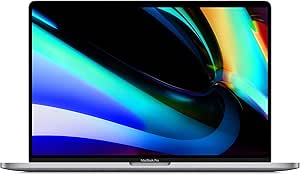


| macbook pro for music production | Processor | Memory | Storage | Display |
|---|---|---|---|---|
| Apple 2024 MacBook Pro 16-inch | Apple M4 Max, 16-core GPU, 3.49 GHz | 48GB RAM | 1TB SSD | 16-inch Liquid Retina XDR, 3456 x 2234 pixels |
| Apple 2025 MacBook Pro Laptop | Apple M5 chip with 10-core CPU and GPU | 16GB unified memory | 1TB SSD | 14.2-inch Liquid Retina XDR |
| Apple 2025 MacBook Pro Laptop | Apple M5 chip with 10-core CPU and GPU | 16GB unified memory | 512GB SSD | 14.2-inch Liquid Retina XDR |
| Apple 2021 MacBook Pro with M1 | Apple M1 Pro, 10-core CPU | 32GB DDR3 | 512GB SSD | 16.2-inch Liquid Retina XDR, 3456 x 2234 resolution, 120Hz refresh rate |
| Apple MacBook Pro Late 2021 wi | Apple M1 Pro, 10-core, 3.2 GHz | 16GB DDR4 SDRAM | 1TB SSD | 14.2-inch Liquid Retina XDR, 3024 x 1964 pixels |
| Apple MacBook Pro with M3 Pro | Apple M3 Pro, 11-core CPU | 18GB unified memory | 512GB SSD | 14.2-inch Liquid Retina XDR, 3024 x 1964 |
| Apple MacBook Pro 16-inch with | Apple M3 Pro, 12-core CPU | 36GB unified memory | 1TB SSD | 16.2-inch Liquid Retina XDR, 3456 x 2234 |
| Apple MacBook Pro 16-inch Late | 6-core Intel Core i7, 2.6GHz | 16GB DDR4 | 512GB SSD | 16-inch Retina, 3072 x 1920 |
| Apple MacBook Pro 13-inch 2.3G | 2.3GHz Intel Core i5 | 8GB DDR3 SDRAM | 256GB SSD | 13-inch Retina, 2560 x 1600 |
| Apple 2026 MacBook Pro Laptop | Apple M5 Pro, 18-core CPU | 24GB unified memory | 1TB SSD | 16.2-inch Liquid Retina XDR |
More Details on Our Top Picks
Apple 2024 MacBook Pro 16-inch with M4 Max Chip, 48GB RAM, 1TB SSD, Space Black (Renewed)
For producers running large sample libraries, many virtual instruments, or demanding mixes, the M4 Max and 48GB of unified memory offer the most headroom in this group. That extra memory can help keep more instruments and audio tools ready at once, while the 16-inch Liquid Retina XDR display gives a roomy workspace for arranging and mixing. Compared with the M5 14-inch models, this is the more studio-focused choice for workload capacity and screen space, not the easier carry. Its 1TB SSD also provides more internal room than the 512GB M5 configuration, though larger libraries may still call for external storage. The tradeoff is substantial: it is a large, heavy machine, and its renewed status may mean less warranty certainty than buying new. I’d choose it for demanding sessions, not casual production on the go.
Pros:- 48GB unified memory gives demanding projects more room for instruments and plugins.
- M4 Max chip is the strongest listed configuration for heavy creative workloads.
- 16-inch XDR display offers a broad workspace for arranging and mixing.
- 1TB SSD and SDXC, HDMI, and Thunderbolt connections support a flexible studio setup.
Cons:- Large 16-inch chassis is less convenient to carry than the 14-inch M5 models.
- Renewed condition can mean less warranty certainty than a new laptop.
- Its high-end processing and memory may be unnecessary for simple recording and editing.
Best for: Producers who run large sample libraries, many simultaneous plugins, and long sessions at a desk or in a home studio.
Not ideal for: Traveling musicians who prioritize a light laptop, or buyers who want a new machine with straightforward warranty coverage.
- Processor:Apple M4 Max, 16-core GPU, 3.49 GHz
- Memory:48GB RAM
- Storage:1TB SSD
- Display:16-inch Liquid Retina XDR, 3456 x 2234 pixels
- Graphics:Integrated Apple M4 Max with 16-core GPU
- Ports:4 USB ports, HDMI, SDXC card slot, Thunderbolt
- Operating system:macOS 15.1
- Keyboard:QWERTY English Magic Keyboard with Touch ID
Our verdict“Choose this renewed M4 Max when large sessions and a spacious screen matter more than portability and new-product warranty coverage.”
Apple 2025 MacBook Pro Laptop with M5 Chip, 14.2-inch Liquid Retina XDR Display, 16GB RAM, 1TB SSD, Space Black
This new 14-inch M5 configuration is a balanced pick for producers who want current hardware and enough internal storage for active projects. Its 1TB SSD doubles the capacity of the 512GB M5 model, leaving more room for sessions, plugins, and local audio files before an external drive becomes necessary. The 10-core M5 CPU and GPU suit everyday production and creative work, while the XDR screen and mix of Thunderbolt 4, HDMI, and SDXC make studio connections less dependent on adapters. Compared with the renewed 16-inch M4 Max, it gives up memory capacity and screen area, so it is not the pick for the largest sample-heavy sessions. Its 16GB memory is also a ceiling to weigh against that machine’s 48GB. For producers who want a new, compact system with generous SSD space, that is a sensible trade.
Pros:- New M5 system pairs a 10-core CPU and GPU with a compact 14.2-inch design.
- 1TB SSD provides more internal project space than the 512GB M5 option.
- Liquid Retina XDR display is well suited to detailed editing and creative work.
- Thunderbolt 4, HDMI, SDXC, MagSafe 3, and headphone jack offer useful connection choices.
Cons:- 16GB unified memory offers less headroom than the 48GB M4 Max configuration.
- 14.2-inch screen provides less workspace than the 16-inch models.
- The listed weight of 3.41 pounds may feel heavy to musicians seeking an ultralight travel laptop.
Best for: Producers who want a new, portable MacBook Pro for recording, editing, and moderate plugin-heavy sessions, with 1TB of built-in storage.
Not ideal for: Composers using huge orchestral libraries or running many memory-heavy instruments at once; the 16GB memory is less suited to those workloads.
- Processor:Apple M5 chip with 10-core CPU and GPU
- Memory:16GB unified memory
- Storage:1TB SSD
- Display:14.2-inch Liquid Retina XDR
- Ports:Three Thunderbolt 4, MagSafe 3, SDXC card slot, HDMI, headphone jack
- Battery life:All-day
- Weight:3.41 pounds
- Dimensions:12.31 x 8.71 x 0.61 inches
Our verdict“Pick this new M5 model if you want a portable production laptop with 1TB storage and do not need the memory capacity of the M4 Max.”
Apple 2025 MacBook Pro Laptop with M5 Chip, 14.2-inch Liquid Retina XDR Display, 16GB RAM, 512GB SSD, Space Black
The 512GB M5 model suits musicians who keep current projects on the laptop and store archives or sample libraries externally. It shares the 10-core M5 chip and 14.2-inch XDR display with the 1TB M5 version, so everyday production capability and screen format are broadly similar. The key compromise is storage: choosing this configuration means less space for large sessions and sound libraries before adding an external drive. Compared with the 1TB M5 MacBook Pro, it is the more restrained setup for users with a disciplined file workflow; compared with the renewed 14-inch M1 Pro, it trades older hardware for a newer chip but still has 16GB memory. The listed 12MP Center Stage camera and six-speaker system are useful extras for calls and media, though neither replaces studio monitors or headphones. I’d shortlist it for mobile recording and editing, not a self-contained library workstation.
Pros:- M5 chip and 14.2-inch XDR display make a compact setup for production and editing.
- Three Thunderbolt 4 ports plus HDMI, SDXC, MagSafe 3, and headphone jack support varied connections.
- All-day battery life is useful for writing and editing away from a desk.
- 12MP Center Stage camera and six-speaker audio add convenience for calls and general media use.
Cons:- 512GB SSD provides half the internal storage of the other 14-inch M5 option.
- 16GB unified memory gives less room for large, memory-hungry sessions than the 48GB M4 Max.
- The 14.2-inch display offers less arrangement space than either 16-inch model.
Best for: Mobile musicians who record, edit, or produce moderate projects and already use external drives for sample libraries and archives.
Not ideal for: Producers who need extensive sample libraries or several years of projects stored internally; the 512GB SSD fills sooner than the 1TB alternative.
- Processor:Apple M5 chip with 10-core CPU and GPU
- Memory:16GB unified memory
- Storage:512GB SSD
- Display:14.2-inch Liquid Retina XDR
- Ports:Three Thunderbolt 4, MagSafe 3, SDXC card slot, HDMI, headphone jack
- Camera:12MP Center Stage
- Audio:Six speakers with Spatial Audio and Dolby Atmos
- Battery life:All-day
Our verdict“Choose this M5 configuration for portable production if 512GB is enough for active work and external storage is already part of your setup.”
Apple 2021 MacBook Pro with M1 Pro Chip (16-inch, 32GB RAM, 512GB SSD) Space Gray (Renewed)
For a producer who wants a large screen and generous memory without choosing the M4 Max, this renewed 16-inch M1 Pro has a distinct appeal. Its 32GB RAM gives more space for concurrent instruments and plugins than the 16GB M5 configurations, while the 16.2-inch XDR display is better suited to arranging and mixing than their 14.2-inch panels. The tradeoff is age and storage: the M1 Pro is an older generation, and its 512GB SSD is smaller than the 1TB options in this lineup. Compared with the renewed 14-inch M1 Pro, this model offers twice the listed memory and a bigger workspace, but it is less portable. Renewed status also brings potential warranty limits, and the supplied listing gives no weight figure. I’d choose it for a mostly stationary studio where screen area and memory count more than having the newest chip.
Pros:- 32GB RAM provides more headroom for demanding sessions than the 16GB M5 models.
- 16.2-inch Liquid Retina XDR display gives more workspace for timelines and mixer windows.
- M1 Pro 10-core CPU and 16-core GPU remain a capable foundation for creative workloads.
- Listed battery life is up to 21 hours.
Cons:- Renewed condition may come with limited warranty coverage.
- 512GB SSD is less spacious than the 1TB configurations in this group.
- Older M1 Pro generation is less current than the M5 and M4 Max options.
Best for: Home-studio producers who need 32GB memory and a large mixing workspace for layered sessions, and are comfortable buying renewed.
Not ideal for: Musicians who travel frequently, need 1TB of built-in storage, or prefer a new machine with clearer warranty coverage.
- Processor:Apple M1 Pro, 10-core CPU
- Graphics:16-core GPU
- Memory:32GB DDR3
- Storage:512GB SSD
- Display:16.2-inch Liquid Retina XDR, 3456 x 2234 resolution, 120Hz refresh rate
- Battery life:Up to 21 hours
- Operating system:macOS
- Dimensions:16 x 12 x 0.95 inches
Our verdict“Choose this renewed 16-inch M1 Pro for a large screen and 32GB RAM in a studio-focused setup, while accepting older hardware and 512GB storage.”
Apple MacBook Pro Late 2021 with M1 Pro Chip (14-inch, 16GB RAM, 1TB SSD) – Space Gray (Renewed)
This renewed 14-inch M1 Pro is a portable way to get 1TB of internal storage without moving up to the newer M5 models. The 10-core processor and 16-core GPU suit recording, editing, and moderate production sessions, while its 14.2-inch XDR display keeps the laptop easier to carry than the 16-inch M1 Pro with 32GB RAM. It also doubles the SSD capacity of the 512GB M1 Pro configuration, which can matter when keeping active projects and some sound content onboard. The compromise is memory: at 16GB, it has less room for large sample-heavy sessions than its 16-inch sibling, and it is an older, renewed machine rather than a new M5 model. Its listed ports are less detailed than those on the 2025 models. I’d pick it for mobile producers who value storage and portability over maximum session headroom.
Pros:- 1TB SSD offers more internal workspace than the 512GB M1 Pro configuration.
- 14.2-inch XDR display is more portable than the 16-inch alternatives.
- M1 Pro 10-core processor and integrated 16-core GPU support creative workloads.
- Listed battery life is up to 17 hours.
Cons:- 16GB RAM is a constraint for large sample-heavy sessions compared with the 32GB 16-inch M1 Pro.
- Renewed condition may mean limited warranty coverage.
- Older M1 Pro hardware is less current than the new M5 models.
Best for: Musicians who move between home, rehearsal, and recording spaces and want a portable renewed Mac with 1TB of storage for active projects.
Not ideal for: Producers running very large sample libraries or many memory-intensive plugins, who are better served by the 32GB 16-inch M1 Pro or 48GB M4 Max.
- Processor:Apple M1 Pro, 10-core, 3.2 GHz
- Memory:16GB DDR4 SDRAM
- Storage:1TB SSD
- Display:14.2-inch Liquid Retina XDR, 3024 x 1964 pixels
- Graphics:Integrated 16-core GPU
- Battery life:Up to 17 hours
- Weight:1.6 kg
- Connectivity:Bluetooth, HDMI, Wi-Fi 6 (802.11ax)
- Ports:3 USB-C, 1 HDMI
Our verdict“Choose this renewed 14-inch M1 Pro if you want a more portable production laptop with 1TB storage and can work within 16GB of memory.”
Apple MacBook Pro with M3 Pro Chip (14-inch, 18GB RAM, 512GB SSD, Silver, Renewed Premium)
The 14-inch M3 Pro is a strong fit for producers who need professional performance in a smaller studio footprint. Its 11-core CPU and 18GB of unified memory suit substantial sessions with software instruments and effects, while the 512GB SSD leaves room for projects but may call for an external drive as sample libraries grow. Compared with the 16-inch M3 Pro with 36GB RAM, this model is easier to carry but offers less memory and a smaller workspace. The Liquid Retina XDR display is useful for arranging and editing away from an external monitor, and the listed ports include HDMI, Thunderbolt 4, and MagSafe 3. The tradeoff is renewed condition: cosmetic wear and non-original accessories are possible, so buyers should weigh that uncertainty against its capable hardware.
Pros:- M3 Pro 11-core CPU and 18GB unified memory support demanding music sessions.
- Compact 14.2-inch form is easier to take between studio, rehearsal, and travel.
- Liquid Retina XDR display offers a detailed workspace for editing and arranging.
- Thunderbolt 4, HDMI, and MagSafe 3 provide useful connection options.
Cons:- 512GB SSD can fill quickly with sample libraries and recorded projects.
- Renewed condition may include cosmetic signs or accessories that are not original.
- 18GB memory is less suited to the largest sessions than the 36GB 16-inch M3 Pro.
Best for: Mobile producers who want an M3 Pro MacBook Pro for moderate-to-large sessions and are comfortable buying a renewed computer.
Not ideal for: Producers with huge sample libraries or exceptionally memory-heavy sessions who would benefit from the 16-inch M3 Pro’s 36GB RAM and 1TB SSD.
- Processor:Apple M3 Pro, 11-core CPU
- Graphics:14-core GPU
- Memory:18GB unified memory
- Storage:512GB SSD
- Display:14.2-inch Liquid Retina XDR, 3024 x 1964
- Ports and connectivity:Thunderbolt 4, HDMI, MagSafe 3, Wi-Fi 6E
- Battery life:Up to 18 hours
- Condition and color:Renewed Premium, Silver
Our verdict“Choose this renewed 14-inch M3 Pro if portability matters more than the extra memory and storage of the 16-inch model.”
Apple MacBook Pro 16-inch with M3 Pro Chip (2023, Renewed, Space Black)
For producers who keep large arrangements, virtual instruments, and other creative apps open together, the 36GB unified memory is this renewed 16-inch model’s defining advantage. Its 12-core M3 Pro CPU and 1TB SSD also give demanding sessions more headroom than the 14-inch M3 Pro with 18GB and 512GB. The roomy 16.2-inch display can make a timeline and mixer easier to view without an external monitor, while HDMI, SDXC, and three Thunderbolt 4 ports support a substantial workstation setup. That extra workspace comes with a less travel-friendly chassis, and the listing’s renewed condition may vary. Compared with the newer 16-inch M5 Pro, this is an older-generation alternative; its appeal is the generous memory and storage, not the newest chip generation.
Pros:- 36GB unified memory gives complex projects more room than the 14-inch M3 Pro’s 18GB.
- 1TB SSD provides more internal space for sessions and sample content than 512GB models.
- Large 16.2-inch Liquid Retina XDR display creates a broad workspace for editing.
- HDMI, SDXC, MagSafe 3, and three Thunderbolt 4 ports suit studio connections.
Cons:- The 16-inch design is less convenient to carry than the 14-inch M3 Pro.
- Renewed condition may vary, so cosmetic state and included accessories are less predictable.
- It uses an older chip generation than the listed 2026 M5 Pro model.
Best for: Producers running large sample-based sessions or juggling a DAW with other demanding creative apps who want a large built-in display.
Not ideal for: Frequent travelers or buyers prioritizing the newest-generation processor, who may prefer a smaller laptop or the 16-inch M5 Pro.
- Processor:Apple M3 Pro, 12-core CPU
- Graphics:18-core GPU
- Memory:36GB unified memory
- Storage:1TB SSD
- Display:16.2-inch Liquid Retina XDR, 3456 x 2234
- Ports:Three Thunderbolt 4, HDMI, SDXC, MagSafe 3, 3.5mm headphone jack
- Battery life:All-day battery
- Condition and color:Renewed, Space Black
Our verdict“Pick this model for memory-intensive music production and a large screen, provided you accept a renewed, older-generation laptop.”
Apple MacBook Pro 16-inch Late 2019 with 2.6GHz Intel Core i7, 16GB RAM, 512GB SSD, Space Gray (Renewed)
This renewed 2019 MacBook Pro earns a place mainly for producers who need an Intel-based Mac for older software, plugins, or workflows that have not moved to Apple silicon. The six-core Core i7, 16GB RAM, and discrete Radeon graphics make it more capable on paper than the 2017 13-inch Core i5, especially for multitasking, but it is far behind the M3 Pro and M5 Pro options for current-generation performance and efficiency. Its 16-inch Retina display gives a DAW a generous workspace; the 512GB SSD, however, still limits how much audio and sample content can stay onboard. Buyers should also factor in the renewed condition and the listed four USB-C/Thunderbolt ports. This is a compatibility-led choice, not my pick for a new long-term production workstation.
Pros:- Intel Core i7 platform may suit workflows tied to older Mac software or plugins.
- Six-core processor and 16GB RAM offer more multitasking capacity than the 2017 13-inch model.
- 16-inch Retina display provides a broad workspace for tracks and mixers.
- 512GB SSD offers useful internal project space for a renewed laptop of this generation.
Cons:- Older Intel hardware is a less compelling basis for a new, demanding production system than M3 Pro or M5 Pro models.
- Renewed condition may come with a limited warranty.
- Four USB-C/Thunderbolt ports may require adapters for some studio equipment.
Best for: Producers who rely on Intel-only plugins, legacy audio software, or other Intel-specific workflows and want a large-screen Mac.
Not ideal for: Buyers starting a modern production setup or running especially large sessions, who should favor an Apple silicon model such as the 14-inch M3 Pro.
- Processor:6-core Intel Core i7, 2.6GHz
- Memory:16GB DDR4
- Storage:512GB SSD
- Display:16-inch Retina, 3072 x 1920
- Graphics:AMD Radeon Pro 5300M, 4GB GDDR6
- Ports:Four USB-C/Thunderbolt ports
- Battery life:Up to 11 hours
- Condition and color:Renewed, Space Gray
Our verdict“Choose this 2019 model only when Intel compatibility is a real requirement; otherwise, the newer Apple silicon options make more sense for music production.”
Apple MacBook Pro 13-inch 2.3GHz Core i5, 256GB – Space Gray – 2017 (Renewed)
The 2017 13-inch Core i5 is the lightest and most modest option here, better suited to basic recording, editing, and smaller projects than to a large modern plugin template. Its 8GB RAM and 256GB SSD are the main constraints: both can become limiting as tracks, virtual instruments, and sample libraries accumulate. Compared with the 2019 16-inch Core i7, it is more portable but has less memory, storage, and processing capacity; against the 14-inch M3 Pro, the performance gap is much larger. The 13-inch Retina display and listed 10-hour battery life make it a practical secondary computer for simple sessions away from the studio. Because it is renewed and carries a stated 90-day warranty, I would not choose it as the foundation for a growing production setup.
Pros:- Three-pound weight makes it more portable than the listed 16-inch MacBook Pros.
- 13-inch Retina display provides a sharp screen in a compact format.
- Listed battery life of up to 10 hours suits light work away from an outlet.
- Tested functional condition offers a basic entry point for modest production tasks.
Cons:- 8GB RAM can restrict plugin-heavy sessions and multitasking.
- 256GB SSD leaves little room for audio projects and sample libraries.
- 2017 processor and stated 90-day warranty make it a limited long-term production choice.
Best for: Beginners recording simple demos, editing a small number of audio tracks, or needing an inexpensive-to-carry secondary Mac for basic sessions.
Not ideal for: Producers using many virtual instruments, large sample libraries, or heavy plugin chains, since 8GB RAM and 256GB storage leave limited room to grow.
- Processor:2.3GHz Intel Core i5
- Memory:8GB DDR3 SDRAM
- Storage:256GB SSD
- Display:13-inch Retina, 2560 x 1600
- Graphics:Intel Iris Plus Graphics 640
- Connectivity:Bluetooth, DisplayPort, USB, Thunderbolt 3
- Weight:3 pounds
- Battery life:Up to 10 hours
Our verdict“Consider this renewed 13-inch model for basic recording and portability, but skip it if your projects depend on large libraries or demanding plugins.”
Apple 2026 MacBook Pro Laptop with M5 Pro Chip, 16.2-inch Liquid Retina XDR Display, 24GB RAM, 1TB SSD, Space Black
For a buyer building a high-end production workstation around current-generation hardware, this 16-inch M5 Pro has the most forward-looking specification set in this batch. Its 18-core CPU, 24GB unified memory, and 1TB SSD offer substantial capacity for multitrack work, software instruments, and project files, while the large XDR display gives a DAW plenty of screen space. The newer Thunderbolt 5 ports and Wi-Fi 7 also distinguish it from the 16-inch M3 Pro, which has more memory at 36GB but an older chip and Thunderbolt 4. That makes the M3 Pro a better fit for memory-heavy sessions, while this M5 Pro favors newer connectivity and generation. Its 16-inch size and listed 4.71-pound weight are less appealing for frequent travel, and its high-end configuration may exceed the needs of smaller projects.
Pros:- M5 Pro 18-core CPU and 20-core GPU provide a current-generation platform for demanding creative work.
- 24GB unified memory supports substantial sessions and multitasking.
- 1TB SSD gives projects and sample content more internal space than 512GB configurations.
- Three Thunderbolt 5 ports, HDMI, SDXC, and MagSafe 3 suit a connected studio desk.
Cons:- The 16.2-inch chassis and 4.71-pound listed weight are less convenient for frequent travel.
- The 36GB-memory 16-inch M3 Pro offers more unified memory for especially memory-heavy sessions.
- Its advanced hardware may be unnecessary for basic recording and smaller projects.
Best for: Professional producers who want a current-generation 16-inch MacBook Pro, 1TB internal storage, and newer Thunderbolt connectivity for a demanding studio setup.
Not ideal for: Travel-first musicians or producers whose sessions are modest and would not make meaningful use of the M5 Pro’s performance and larger chassis.
- Processor:Apple M5 Pro, 18-core CPU
- Graphics:20-core GPU
- Memory:24GB unified memory
- Storage:1TB SSD
- Display:16.2-inch Liquid Retina XDR
- Ports:Three Thunderbolt 5, MagSafe 3, SDXC, HDMI, headphone jack
- Connectivity:Wi-Fi 7, Bluetooth 6
- Battery life and weight:All-day battery; 4.71 pounds
Our verdict“Choose the M5 Pro for a current-generation, large-screen studio laptop with 1TB storage, unless your priority is maximum memory or easy portability.”

How We Picked
I evaluated these MacBook Pro models based on their ability to handle demanding Digital Audio Workstation (DAW) tasks, such as running virtual instruments, processing real-time effects, and managing large audio files. The primary criteria included CPU core performance, unified memory bandwidth, and thermal management, as these factors directly impact latency and stability during long recording sessions. I also considered the longevity of software support, ensuring that each recommended model will receive macOS updates for several more years.
Ranking logic prioritized the balance between performance and cost. Newer M-series chips were ranked higher for their efficiency and silence, while renewed models were assessed on their remaining utility and value proposition. I excluded older Intel models from top spots not because they fail to run audio software, but because their fan noise and heat generation interfere with recording environments, and their performance per watt lags behind Apple Silicon by a wide margin.
Factors to Consider When Choosing Macbook Pro For Music Production
Selecting a laptop for audio work requires looking beyond marketing specs. Here are the critical factors that determine whether a MacBook Pro will serve your workflow effectively.Unified Memory Bandwidth vs. Capacity
While many buyers focus on the amount of RAM, memory bandwidth is equally important for music production. Apple Silicon chips use unified memory architecture, allowing the CPU and GPU to access the same data pool. Higher-end chips like the M4 Max have significantly wider bandwidth than base M-series chips. This means that even if two machines have the same 32GB of RAM, the one with higher bandwidth will handle large sample libraries and complex plugin chains with less strain. If you frequently work with orchestral templates or massive synth presets, prioritize the chip tier over just the RAM number.
Thermal Performance and Fan Noise
Music production often involves exporting tracks or rendering bounces, which pushes the CPU to its limits. In a home studio, fan noise can be a disruptive element if you record vocals or acoustic instruments near your laptop. Newer MacBook Pro models with M4 and M5 chips are designed to run cooler and quieter under sustained loads compared to older Intel models. When choosing between a 14-inch and 16-inch model, remember that the larger chassis allows for more effective heat dissipation, keeping the fans silent for longer during intensive mixing sessions.
I/O Ports and Dongle Life
Producers rely on multiple external devices: audio interfaces, MIDI controllers, external hard drives, and studio monitors. The number and type of ports on your MacBook Pro directly affect your desk setup. Models with HDMI ports and SD card slots reduce the need for hubs, which can introduce latency or connection instability with USB audio interfaces. If you plan to travel with your rig, a model with fewer ports might require a high-quality powered hub, adding bulk and potential points of failure to your mobile setup.
Renewed vs. New: The Risk-Reward Calculation
Buying a renewed MacBook Pro can save hundreds of dollars, but it introduces variables regarding battery health and component longevity. For music production, a degraded battery can cause the system to throttle performance to save power, leading to audio dropouts. When considering renewed units, verify that the seller guarantees a battery cycle count under a specific threshold. For critical professional work, the peace of mind that comes with a new warranty often outweighs the initial savings of a renewed unit, especially given the cost of data loss if a drive fails mid-project.
Storage Speed for Sample Libraries
Modern music production relies heavily on large sample libraries that stream data from the drive. The SSD read speeds on newer MacBook Pros are significantly faster than older generations, reducing the time it takes to load Kontakt instruments or heavy drum kits. However, capacity matters just as much as speed. A 512GB drive fills up quickly with a few major sample libraries and project files. I recommend 1TB as the practical starting point for any producer to avoid constantly moving files to external drives, which adds latency and complexity to your workflow.
Frequently Asked Questions
Is 16GB of RAM enough for music production on a MacBook Pro?
For beginners and hobbyists working on electronic music or small-band recordings, 16GB of RAM is sufficient for most tasks. macOS manages memory efficiently, and you can handle up to 30-40 audio tracks with moderate plugin usage without issues. However, if you use large sample libraries like Spitfire Audio or Native Instruments Komplete, or if you run multiple virtual synthesizers simultaneously, you will likely hit memory limits. In those cases, freezing tracks or bouncing stems becomes necessary, which disrupts the creative flow. Upgrading to 32GB or more provides headroom for complex projects and ensures your machine remains viable for several years.
Does the MacBook Pro M4 Max offer better audio latency than the base M4?
The M4 Max does not inherently reduce audio latency compared to the base M4 when using the same audio interface and buffer settings. Latency is primarily determined by the driver efficiency of your audio interface and the buffer size you select in your DAW. However, the M4 Max’s higher core count allows you to maintain low buffer sizes while running more plugins without audio dropouts. This means you can keep your latency low for monitoring during recording while still having enough processing power for complex mixing tasks, offering a more stable experience under heavy load.
Should I buy a renewed MacBook Pro for my home studio?
Buying a renewed MacBook Pro is a smart financial move for students or producers on a tight budget, provided you check the battery health and warranty terms. Apple Silicon chips are durable, and an M1 Pro or M2 Pro renewed unit will still handle professional-grade audio work efficiently. The main risk is battery degradation, which can lead to unexpected shutdowns or performance throttling. If you primarily use the laptop plugged into power, a renewed model is an excellent value. However, for mobile producers who need reliability on the go, the risk of battery failure might make a new unit a safer investment.
Do I need the 16-inch MacBook Pro for music production?
You do not strictly need the 16-inch MacBook Pro for music production, as the chip performance is similar between the 14-inch and 16-inch models in the same tier. The 16-inch model is better if you do all your mixing directly on the laptop screen and prefer a larger workspace for your DAW timeline. It also offers better thermal management, keeping fans quieter during long rendering sessions. If you use an external monitor for your main production desk, the 14-inch model is more portable and often more cost-effective, allowing you to allocate saved funds toward a higher RAM configuration or better plugins.
Are Intel MacBook Pros still good for music production in 2027?
I generally do not recommend Intel MacBook Pros for music production in 2027. While they can still run most DAWs, they suffer from thermal throttling that causes fan noise to spike during intensive tasks, which is problematic for recording. Additionally, software developers are slowly dropping support for Intel-only plugins, and macOS updates may eventually limit their functionality. The performance-per-watt gap between Intel and Apple Silicon is significant, meaning you get less processing power for the same energy consumption. Unless you have a very specific legacy software requirement that cannot run on Apple Silicon, an older M1 model is a far better choice.
Conclusion
Choosing the right MacBook Pro for music production comes down to matching your specific workflow needs with the right hardware tier. For the professional who demands zero compromise on track count and plugin density, the Apple 2024 MacBook Pro 16-inch with M4 Max is the definitive choice. If you are a traveling producer who values portability and silence, the Apple 2025 MacBook Pro with M5 Chip offers the best balance of size and power. For students and budget-conscious creators, the renewed M1 Pro models provide exceptional value and proven reliability for mid-sized projects. Avoid older Intel models, as they lack the thermal efficiency and software longevity required for modern audio work.