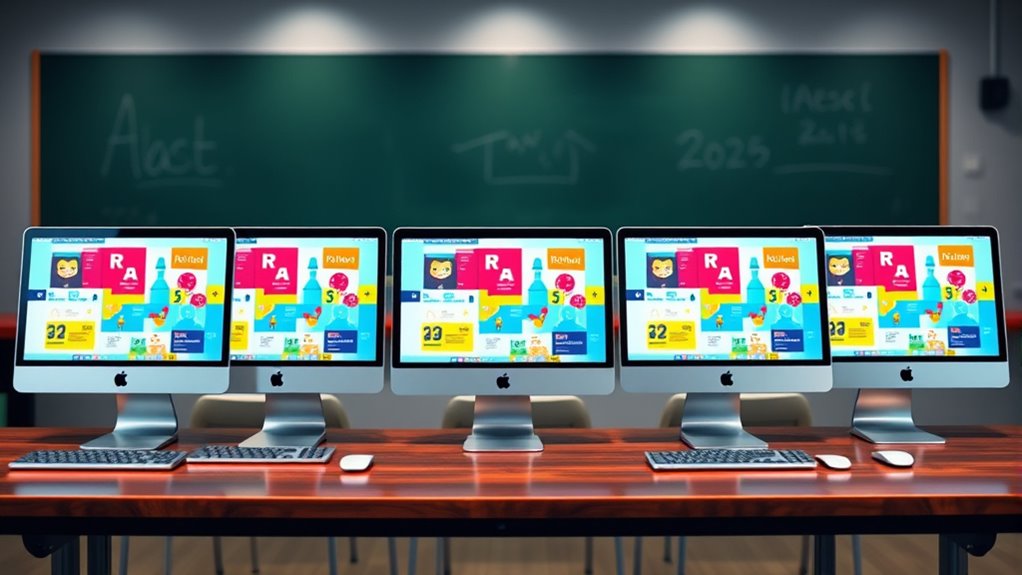

Choosing the right iMac for classroom labs requires balancing raw processing power with budget constraints and long-term support. The Apple iMac (2024) with the M4 chip stands out as the best overall choice for modern educational needs, offering exceptional speed and energy efficiency that reduces heat and noise in crowded rooms. For schools prioritizing value without sacrificing core performance, the Apple 2023 iMac with M3 Chip provides a compelling alternative with ample storage. The primary tradeoff in this category is between the longevity of current-generation silicon and the upfront savings of renewed models. I have analyzed these options to help you determine which configuration best supports your specific curriculum and student volume. Continue reading for a detailed breakdown of performance, durability, and cost-efficiency.

Give the gift of listening to the whole family
- Choose a 1-, 3-, 6- or 12-month membership
- They pick the audiobooks they love
- Easy to send by email
Complete the kit


Key Takeaways
- The M4 chip architecture offers significantly better thermal management than Intel-based models, a critical factor for densely packed lab environments.
- 16 GB of unified memory is the new baseline for multitasking in educational software, whereas 8 GB configurations may struggle with modern browser-heavy curricula.
- Renewed M1 and M3 models provide a viable entry point for budget-constrained labs but may lack the peripheral connectivity and software support lifespan of newer units.
- The 27-inch Intel iMac is no longer recommended for new lab builds due to its outdated architecture and lack of native support for current macOS versions.
- SSD capacity directly impacts workflow efficiency for media projects; 256 GB fills up quickly with video assets, making 512 GB or external storage planning necessary.
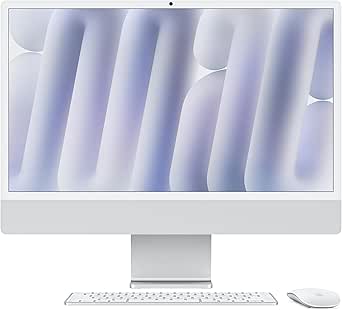

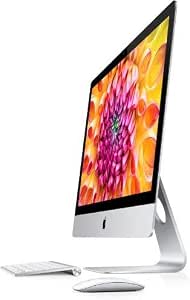


| imac for classroom lab | Processor | Memory | Storage | Display |
|---|---|---|---|---|
| Apple iMac | Apple M4 chip with 8-core CPU | 16 GB unified memory | 256 GB SSD | 24-inch 4.5K Retina, 500 nits brightness |
| iMac | Apple M4 chip, 10-core CPU, 10-core GPU | 24 GB Unified Memory | 512 GB SSD | 24-inch 4.5K Retina, 500 nits, 1 billion colors |
| Apple iMac 27-Inch Desktop | Intel Core i7 3.4 GHz | 16 GB DDR3 SDRAM | 1TB HDD | — |
| Apple 2023 iMac with M3 Chip | Apple M3 | 8 GB RAM | 512 GB SSD | 24-inch Retina |
| Apple iMac | Apple M1, 8-core CPU, 7-core GPU | 8 GB unified memory | 256 GB SSD | 24-inch 4.5K Retina, 500 nits |
| iMac Air | Apple M4 (8-core) | 16 GB Unified | 256 GB SSD | 24-inch 4.5K Retina (500 nits) |
More Details on Our Top Picks
Apple iMac (2024) 24‑inch with M4 chip, 8‑core CPU/GPU, 16 GB unified memory, 256 GB SSD, Silver
This 2024 iMac strikes the best balance of performance and price for modern classroom labs. The M4 chip handles multi-tasking and educational software with ease, outperforming the renewed M1 and M3 models in raw speed and efficiency. While the 16 GB unified memory is a significant upgrade over the 8 GB found in the renewed 2023 and 2021 models, the 256 GB SSD is a tight squeeze for labs storing large media files. Unlike the renewed Intel 27-inch model, this unit supports current macOS versions, ensuring long-term software compatibility. It is the smartest buy for schools wanting Apple Silicon performance without the premium cost of the 10-core configuration.
Pros:- M4 chip offers significant speed and efficiency gains over M1 and Intel models.
- 16 GB unified memory handles multiple browser tabs and apps smoothly.
- Supports current and future macOS versions for long-term viability.
- Vibrant 4.5K Retina display enhances visual learning materials.
Cons:- 256 GB SSD is too small for labs without robust cloud storage.
- All-in-one design prevents internal hardware upgrades.
- Higher upfront cost compared to renewed older models.
Best for: Schools building a new lab that needs reliable, long-term software support and sufficient RAM for multitasking.
Not ideal for: Media production labs or students storing large video projects locally, as the 256 GB storage fills up quickly.
- Processor:Apple M4 chip with 8-core CPU
- Graphics:Apple M4 chip with 8-core GPU
- Memory:16 GB unified memory
- Storage:256 GB SSD
- Display:24-inch 4.5K Retina, 500 nits brightness
- Connectivity:Wi-Fi 6E, Bluetooth 5.3, Thunderbolt 4
Our verdict“The 2024 iMac with 16 GB RAM is the most sensible choice for new labs that need modern performance without paying for excessive storage.”
iMac (24-inch, M4 chip, 10‑core CPU/GPU, 24 GB Unified Memory, 512 GB SSD, Blue)
This configuration is the premium powerhouse for classrooms with demanding curricula. With 24 GB of unified memory and 512 GB of storage, it comfortably handles heavy multitasking, virtual machines, and local media storage that would bottleneck the base 2024 model. The 10-core CPU and GPU provide noticeable headroom for video editing or 3D modeling classes compared to the 8-core M4. However, this capability comes at a steep premium. For general computer literacy or coding labs, this model is overkill compared to the 8-core M4 with 16 GB RAM. It is strictly for institutions where the budget allows for maximum future-proofing and performance.
Pros:- 24 GB RAM allows for heavy multitasking and virtualization.
- 512 GB SSD provides ample room for local project files and software.
- 10-core CPU/GPU delivers top-tier performance for creative work.
- Supports dual external 6K displays for extended workspace.
Cons:- Significantly higher cost than the base 2024 model.
- Overpowered for basic web browsing and document editing.
- No internal upgrade path if needs exceed 24 GB RAM.
Best for: High school or university labs focused on video editing, 3D design, or running complex virtual environments.
Not ideal for: Standard K-12 computer labs or budget-conscious schools where general productivity software is the primary use case.
- Display:24-inch 4.5K Retina, 500 nits, 1 billion colors
- Processor:Apple M4 chip, 10-core CPU, 10-core GPU
- Memory:24 GB Unified Memory
- Storage:512 GB SSD
- Camera:12 MP Center Stage
- Connectivity:Wi-Fi 6E, Bluetooth 5.3, Thunderbolt 4
Our verdict“This iMac is the definitive choice for specialized creative labs, but it is an unnecessary expense for standard educational computing.”
Apple iMac 27-Inch Desktop, 3.4 GHz Intel Core i7, 16 GB RAM, 1TB HDD, macOS High Sierra (Renewed)
The 27-inch Intel iMac offers the largest display area in this roundup, making it ideal for labs where screen real estate matters more than raw speed. The 1TB HDD provides massive local storage compared to the 256 GB or 512 GB SSDs in newer models, though it is significantly slower. The Intel Core i7 is still capable for basic tasks, but it lacks the efficiency and software longevity of the M4 chips in the 2024 models. Running macOS High Sierra is a major limitation, as it blocks access to modern educational apps and security updates. This is a viable stopgap for budget labs needing large screens, but not a long-term solution.
Pros:- 27-inch display provides ample workspace for complex projects.
- 1TB HDD offers substantial storage capacity for local files.
- Includes wireless keyboard and mouse in the box.
- Intel Core i7 is still adequate for light productivity tasks.
Cons:- macOS High Sierra prevents installation of modern apps and updates.
- HDD storage results in slow boot and load times compared to SSDs.
- Intel architecture lacks the efficiency and longevity of Apple Silicon.
Best for: Budget-constrained labs needing large monitors for data entry or coding where software compatibility is less critical.
Not ideal for: Schools requiring current software, security updates, or fast boot times, as the HDD and old OS are major bottlenecks.
- Processor:Intel Core i7 3.4 GHz
- Memory:16 GB DDR3 SDRAM
- Storage:1TB HDD
- Graphics:NVIDIA GeForce GTX 675MX, 2GB GDDR5
- Display Size:27 inches
- Operating System:macOS High Sierra
Our verdict“This renewed 27-inch iMac is a temporary fix for labs needing big screens on a tight budget, but its outdated OS limits its usefulness.”
Apple 2023 iMac with M3 Chip, 24-inch, 8GB RAM, 512GB SSD, Silver (Renewed)
This renewed 2023 iMac offers a sweet spot between cost and modern features. The M3 chip is faster than the M1 in the renewed 2021 model and supports current software, unlike the Intel High Sierra unit. The 512 GB SSD is a welcome upgrade over the 256 GB in the base 2024 model, providing more room for student files. However, the 8 GB of RAM is a significant drawback compared to the 16 GB in the new 2024 iMac. It handles basic tasks well but may struggle with heavy multitasking. This is the best renewed option for labs that need Apple Silicon compatibility without the price of a brand-new unit, provided they manage memory usage carefully.
Pros:- M3 chip ensures compatibility with current and future macOS updates.
- 512 GB SSD provides generous storage for a renewed device.
- More affordable than buying the equivalent 2024 new model.
- Includes modern connectivity like Wi-Fi 6E and Thunderbolt ports.
Cons:- 8 GB RAM is the minimum for modern macOS and may bottleneck multitasking.
- Renewed status means no Apple warranty, only third-party coverage.
- Resolution listed as 1080p in specs, though physically capable of 4.5K.
Best for: Schools wanting a refurbished Apple Silicon machine with good storage, accepting 8 GB RAM as a limitation.
Not ideal for: Labs running memory-intensive applications or heavy browser multitasking, where 8 GB RAM will cause slowdowns.
- Processor:Apple M3
- Memory:8 GB RAM
- Storage:512 GB SSD
- Display:24-inch Retina
- Connectivity:Wi-Fi 802.11ax, Bluetooth, Thunderbolt
- Camera:1080p FaceTime HD
Our verdict“This renewed 2023 iMac is the best value for Apple Silicon labs, trading RAM for storage and a lower price tag.”
Apple iMac (24-inch, 2021) with M1 chip, 8-core CPU, 8 GB RAM, 256 GB SSD – Blue (Renewed)
The renewed 2021 M1 iMac is the most affordable entry point into Apple Silicon. The M1 chip remains surprisingly capable for web browsing, document editing, and basic educational software, offering a much better experience than the Intel model. However, the 8 GB RAM and 256 GB SSD are identical to the base renewed 2023 model but lack its storage advantage. Compared to the new 2024 iMac, it lacks the M4’s speed and the 16 GB RAM. This is strictly for labs with the tightest budgets that still need long-term software support. It is a stopgap for schools that cannot afford the newer models but must move away from Intel.
Pros:- Lowest cost entry into the Apple Silicon ecosystem.
- M1 chip is still efficient and supports current macOS updates.
- Vibrant 4.5K Retina display is excellent for visual learning.
- Compact and thin design saves significant desk space.
Cons:- 8 GB RAM is insufficient for heavy multitasking or modern web apps.
- 256 GB SSD requires immediate reliance on cloud storage.
- Older camera and fewer ports than the 2024 models.
Best for: Schools with very tight budgets needing the cheapest possible Apple Silicon machine for basic tasks.
Not ideal for: Any lab requiring multitasking or local storage, as 8 GB RAM and 256 GB SSD are bare minimums.
- Processor:Apple M1, 8-core CPU, 7-core GPU
- Memory:8 GB unified memory
- Storage:256 GB SSD
- Display:24-inch 4.5K Retina, 500 nits
- Ports:2 Thunderbolt/USB-4, up to 2 USB-3
- Connectivity:Wi-Fi 802.11ax, Bluetooth 5
Our verdict“This is the cheapest way to get a supported Apple Silicon Mac, but its low specs mean it will hit performance limits quickly.”
iMac Air (2024) 24″ 8-core M4, 16 GB RAM, 256 GB SSD, Silver (Renewed)
This renewed unit stands out by offering current-generation M4 performance at a reduced entry point compared to buying new. While the Apple iMac (2024) 24-inch with M4 chip shares identical hardware specs, this option lowers the barrier for schools needing many stations without compromising on the 4.5K Retina display or Apple Intelligence capabilities. The 16 GB unified memory is sufficient for standard classroom multitasking, handling browser tabs, educational software, and video playback without lag. However, buyers must accept the tradeoff of a limited 90-day warranty, which is significantly shorter than the one-year coverage typical of new units or even some refurbished older models like the Apple iMac 27-Inch Desktop. For labs prioritizing modern software compatibility and visual clarity over long-term hardware guarantees, this model delivers the best balance of power and cost efficiency in a renewed package.
Pros:- Features the latest M4 chip architecture for superior software longevity and performance
- Includes 16 GB of unified memory, doubling the base RAM of the previous generation M1 models
- Offers a stunning 4.5K Retina display ideal for visual-heavy educational content
- Supports Wi-Fi 6E and Bluetooth 5.3 for reliable classroom connectivity
Cons:- Short 90-day warranty increases long-term maintenance risk for high-traffic labs
- 256 GB SSD fills quickly if local file storage is required without network drives
- Renewed status implies potential cosmetic wear or battery degradation compared to new units
Best for: School IT departments needing modern M4 architecture and high-resolution displays for general education labs with tight hardware replacement budgets.
Not ideal for: Institutions requiring long-term hardware warranties or students creating large media projects that exceed the 256 GB storage capacity.
- Processor:Apple M4 (8-core)
- Memory:16 GB Unified
- Storage:256 GB SSD
- Display:24-inch 4.5K Retina (500 nits)
- Connectivity:Wi-Fi 6E, Bluetooth 5.3
- Condition:Renewed
- Warranty:90-Day Limited
Our verdict“Choose this renewed M4 iMac if you need current-generation speed and display quality at a lower cost, accepting the shorter warranty as a tradeoff.”

How We Picked
I evaluated these iMac models based on their suitability for high-volume educational environments, focusing on performance consistency, energy efficiency, and long-term software support. Classroom labs require machines that can run multiple student accounts, browser tabs, and specialized software simultaneously without lagging. I prioritized models with modern Apple Silicon chips (M1, M3, M4) over Intel-based options because they offer superior speed and lower heat output, which is vital for maintaining a comfortable classroom temperature.
Value was assessed not just by purchase price, but by total cost of ownership and expected lifespan. I compared renewed units against new devices to determine where the savings justify potential compromises in battery health (for portables, though N/A here) or warranty coverage. The ranking favors models that provide enough headroom for future macOS updates, ensuring the hardware remains relevant for at least five years of academic use.
| imac for classroom lab | Processor | Connectivity |
|---|---|---|
| Apple iMac | Apple M4 chip with 8-core CPU | Wi-Fi 6E, Bluetooth 5.3, Thunderbolt 4 |
| iMac | Apple M4 chip, 10-core CPU, 10-core GPU | Wi-Fi 6E, Bluetooth 5.3, Thunderbolt 4 |
| Apple iMac 27-Inch Desktop | Intel Core i7 3.4 GHz | — |
| Apple 2023 iMac with M3 Chip | Apple M3 | Wi-Fi 802.11ax, Bluetooth, Thunderbolt |
| Apple iMac | Apple M1, 8-core CPU, 7-core GPU | Wi-Fi 802.11ax, Bluetooth 5 |
| iMac Air | Apple M4 (8-core) | Wi-Fi 6E, Bluetooth 5.3 |
Factors to Consider When Choosing Imac For Classroom Labs
Selecting hardware for a classroom lab involves more than just picking the fastest processor. You must consider how the device fits into your existing infrastructure, how it handles student wear and tear, and how long it will remain supported by software updates.Processing Power and Multitasking Capability
In a shared lab environment, computers are rarely idle. Students often have multiple applications open simultaneously, including web browsers, word processors, and creative software. Apple Silicon chips handle this multitasking far better than older Intel processors, thanks to their unified memory architecture. If your curriculum involves video editing, coding, or heavy web-based research, 16 GB of RAM is the practical minimum. While 8 GB models are cheaper, they often force the system to swap data to the SSD, which slows down performance and reduces the drive’s lifespan over time. For general literacy and basic productivity tasks, 8 GB may suffice, but it leaves little room for growth as software requirements increase.
Storage Needs for Student Projects
Storage is frequently underestimated in educational settings. A 256 GB SSD sounds large for a single user, but in a lab with 20-30 students, local file accumulation can become a bottleneck. If students are working on media-heavy projects, such as video or audio editing, you should prioritize models with 512 GB SSDs or plan for robust cloud storage solutions. Relying solely on local storage with smaller drives leads to frequent cleanup tasks for IT staff and potential data loss. The renewed models with larger HDDs, like the Intel iMac, offer capacity but lack the speed of SSDs, resulting in slower boot times and application launches that frustrate young users.
New vs. Renewed: Evaluating the Risk
Purchasing renewed iMacs can stretch a tight budget, allowing schools to buy more units for the same cost. However, renewed devices come with shorter warranty periods and potentially older battery components or minor cosmetic wear. For a lab, this means higher maintenance costs and a shorter window before the devices become obsolete. New models with M4 chips come with full manufacturer support and longer software update cycles, reducing the frequency of hardware replacements. I recommend renewed units only for non-critical tasks or as temporary replacements while waiting for new hardware deliveries, rather than for the core backbone of your lab.
Connectivity and Peripheral Compatibility
Classroom labs rely heavily on peripherals such as projectors, interactive whiteboards, and external audio interfaces. Newer iMac models feature Thunderbolt/USB-4 ports, which offer high-speed data transfer and flexible display connectivity. Older models may have fewer ports or rely on proprietary adapters, creating logistical headaches when standardizing equipment across a room. Verify that the chosen model supports the specific adapters your school already owns. The M4 iMacs generally offer better compatibility with modern display standards, ensuring seamless integration with newer classroom AV systems without needing expensive dongles.
Longevity and Software Support Horizon
Educational institutions plan budgets on 3-5 year cycles. Buying a device that loses macOS support in two years forces an unplanned upgrade cycle. Apple Silicon Macs are supported for significantly longer than Intel models. The Intel-based iMac included in this list is near the end of its support life, meaning it will soon stop receiving security updates. This is a major security risk in a networked environment. Always choose a model that is at least two generations behind the latest release at most, ensuring it remains secure and compatible with new educational software for the duration of your deployment.
Frequently Asked Questions
Is an 8GB RAM iMac sufficient for high school computer labs?
For basic word processing and web browsing, 8 GB of RAM is technically functional. However, modern web browsers are memory-intensive, and if students open multiple tabs or run lightweight creative apps, 8 GB will cause noticeable slowdowns. I strongly recommend 16 GB of unified memory for any high school lab to ensure smooth multitasking and extend the device’s usable life. The slight increase in cost is offset by reduced IT support tickets and longer hardware relevance.
Why should schools avoid the renewed Intel iMac for new labs?
The renewed Intel iMac uses an older architecture that generates more heat and consumes more power than Apple Silicon models. More importantly, it is approaching the end of its macOS support life, which poses security risks and limits software compatibility. Newer M-series chips offer better performance per watt and longer software support. Unless you have a very specific legacy software requirement that only runs on Intel, this model is not a sound investment for a modern classroom.
How does the M4 chip benefit classroom environments specifically?
The M4 chip offers improved neural engine capabilities for AI-driven educational tools and better media processing for video and audio projects. Its efficiency means the fans run less frequently, creating a quieter classroom environment. Additionally, the unified memory architecture allows the CPU and GPU to access the same pool of RAM, reducing latency when switching between applications. This results in a snappier user experience for students who frequently toggle between tasks.
Do renewed iMacs come with the same warranty as new ones?
No, renewed iMacs typically come with a limited warranty, often 90 days to one year, depending on the seller, whereas new devices come with a one-year limited warranty and access to AppleCare+. For schools, this difference matters because repair costs can add up quickly. If a renewed unit fails after the warranty expires, the school bears the full replacement cost. I recommend budgeting for extended warranties or AppleCare+ if available, or strictly limiting renewed purchases to low-stakes environments.
Can students easily personalize their accounts on shared iMacs?
Yes, macOS is designed for multi-user environments, allowing students to log in with individual accounts that save their preferences and files. However, IT administrators should configure screen time and parental controls to restrict access to system settings and ensure a consistent lab experience. The fast SSDs in M-series iMacs make account switching nearly instantaneous, which is critical for maintaining class flow during 45-minute periods. Ensure your school’s identity management system supports Apple’s native login features for the best experience.
Conclusion
Choosing the right iMac for classroom labs depends on your budget and curriculum demands. For the best balance of performance, longevity, and efficiency, the Apple iMac (2024) with M4 chip is the superior choice for most schools. If you need to maximize the number of seats within a tight budget, the Apple 2023 iMac with M3 Chip offers excellent value and sufficient power for general education. The renewed M1 and M4 models serve as good stopgaps or options for lower-intensity tasks, provided you account for the shorter support lifespan. I advise against the Intel-based renewed model for new deployments due to its obsolescence risk. Prioritize 16 GB of RAM and SSD storage to ensure your lab remains functional and fast for years to come.