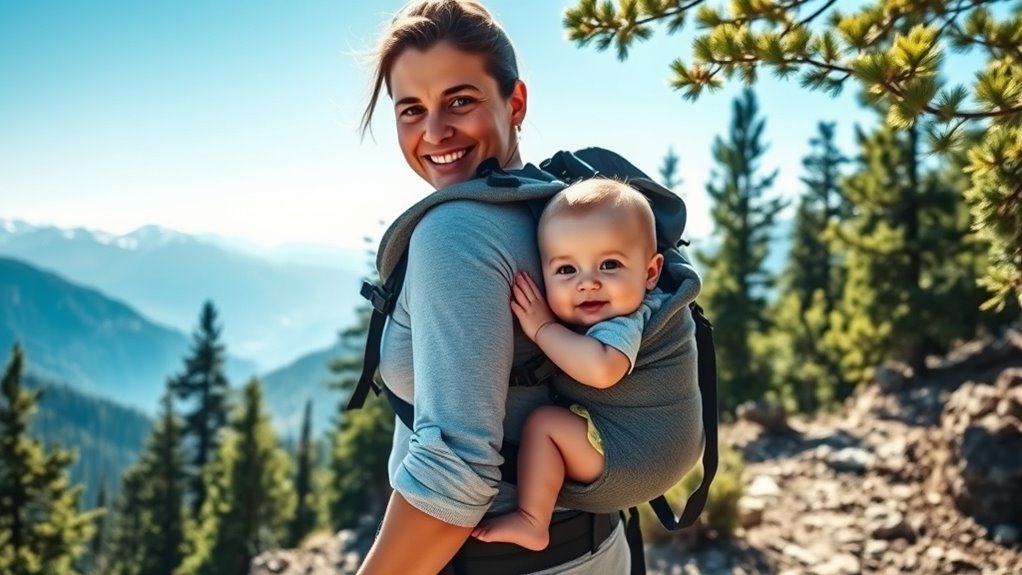

The best hiking baby carrier balances a stable child seat, a comfortable adult fit, and practical trail features without adding more bulk than your outings require. My best overall pick is the Osprey Poco Child Carrier, which offers a more established hiking-focused feature set; the Deuter Kid Comfort stands out as a premium alternative, while the Osprey Poco LT suits families who want a lighter carry. The main tradeoffs are support versus weight, added storage and sun coverage versus pack bulk, and adjustability versus simplicity. Fit matters for both the child and the adult carrying the pack, so a long feature list alone cannot determine the right choice. Read on for the full breakdown, selection criteria, and advice on matching a carrier to your hikes.

Turn the school run and nap time into listening time
- Thousands of audiobooks, podcasts and originals
- Listen on your phone, tablet or Echo — also offline
- Cancel anytime
Complete the kit


Key Takeaways
- The full-featured Osprey Poco Child Carrier is my best overall pick for buyers prioritizing a hiking-focused setup, while the Poco LT and Poco SLT emphasize a lighter carry.
- Deuter Kid Comfort is the premium alternative for shoppers weighing a more feature-rich carrier against added bulk and a higher-complexity setup.
- WIPHA and ClevrPlus offer several canopy-and-storage-oriented options; compare their individual fit and frame details rather than assuming the similarly named models are interchangeable.
- Compact and lightweight models trade some carrying capacity or extras for easier handling, which can matter more on short walks and travel days than on long, gear-heavy hikes.
- The lineup spans distinct needs, not one universal winner: check child size limits, adult adjustment range, folded dimensions, and the maker’s instructions before choosing.
| Vandra Forest Scandinavian Hiking Baby Carrier Backpack with Gravity Lock Hard‑Shell Frame |  | Best for a Stable, Structured Carry | Child weight capacity: 16–40 lbs | Total carry capacity: 48.5 lbs, child plus cargo | Age range: 6 months to 3 years | VIEW ON AMAZON | See Our Full Breakdown |
| Hiking Baby Carrier Backpack – Toddler & Child Carrier |  | Best for Organized Day Hikes | Material: Waterproof ripstop polyester | Safety features: Padded cocoon, safety straps, and stirrups | Strap adjustment: Height-adjustable straps | VIEW ON AMAZON | See Our Full Breakdown |
| WIPHA Toddler Hiking Carrier with Sun Canopy & Storage |  | Best for Storage and Adjustability | Maximum child weight: 40 lbs | Maximum child height: 39 inches | Frame: Collapsible aluminum | VIEW ON AMAZON | See Our Full Breakdown |
| Osprey Poco Child Carrier Backpack – Adjustable Travel Baby Carrier with Sunshade – Hiking Carrier for Toddlers |  | Best for Ventilation and Travel | Item weight: 7.7 lbs | Maximum child weight: 40 lbs | Frame: Folding stainless steel | VIEW ON AMAZON | See Our Full Breakdown |
| WIPHA Ultralight Toddler Hiking Baby Carrier Backpack with Sunshade |  | Best Lightweight Certified Pick | Weight: 2 kg | Safety certifications: TÜV and ASTM F2549-22 | Sunshade: UPF 50+ | VIEW ON AMAZON | See Our Full Breakdown |
| Deuter Kid Comfort Child Carrier and Backpack for Travel & Hiking with Toddlers |  | Best for Ventilated Long Hikes | Fabric: 210 Denier Polyamide with PU coating | Frame: Flexible break-proof spring steel | Ventilation: Aircomfort mesh back | VIEW ON AMAZON | See Our Full Breakdown |
| ClevrPlus Cross Country Baby Backpack Carrier, Grey | 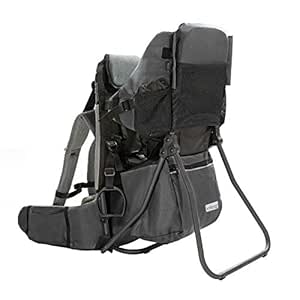 | Best for All-Weather Starter Trips | Weight: 5.5 pounds | Maximum child weight: 33 pounds | Age range: 9–48 months | VIEW ON AMAZON | See Our Full Breakdown |
| Chicco SmartSupport Lightweight Backpack Baby Carrier |  | Best for Everyday Outings | Frame: Aluminum | Seat positions: Two-position, height-adjustable | Harness: 5-point | VIEW ON AMAZON | See Our Full Breakdown |
| Osprey Poco LT Lightweight Child Carrier Backpack |  | Best for Travel and Shared Caregiving | Weight: 5.56 pounds | Dimensions: 23.6 H × 13.8 W × 16.9 D inches | Frame: Foldable stainless steel | VIEW ON AMAZON | See Our Full Breakdown |
| Baby Backpack Carrier with Sunshade, Green |  | Best for Higher Carrying Capacity | Weight: 5.5 pounds / 2.5 kg | Maximum child weight: 40 pounds / 18 kg | Recommended parent height: 5′5″ (165 cm) or above | VIEW ON AMAZON | See Our Full Breakdown |
| ClevrPlus Deluxe Adjustable Baby Carrier for Outdoor Hiking and Camping |  | Best for Weather-Ready Storage | Carrier weight: 5.2 pounds | Maximum child weight: 33 pounds | Child age range: 9–48 months | VIEW ON AMAZON | See Our Full Breakdown |
| Besrey Toddler Hiking Backpack Carrier – Adjustable Padded Shoulder Straps |  | Best for Higher Child Weight Capacity | Carrier weight: 5.5 pounds | Child weight range: 16–44 pounds | Maximum weight capacity: 44 pounds | VIEW ON AMAZON | See Our Full Breakdown |
| Osprey Poco SLT Lightweight Child Carrier Backpack – Green |  | Best for Compact Travel and Storage | Color: Green | Dimensions: 23.6 × 13.8 × 16.9 inches (H × W × D) | Carrier weight: 4.72 pounds | VIEW ON AMAZON | See Our Full Breakdown |
More Details on Our Top Picks
Vandra Forest Scandinavian Hiking Baby Carrier Backpack with Gravity Lock Hard‑Shell Frame
The Vandra Forest is the most distinctive choice here for families who prioritize a steady-feeling child seat: its Gravity Lock hard-shell frame is designed to limit tilt and sway. That sets it apart from the WIPHA Toddler Hiking Carrier, which uses a collapsible aluminum frame and emphasizes storage and adjustability instead. ASTM F2549-22 and TÜV SÜD certifications, an ergonomic cockpit, and lumbar support give the Vandra a clear safety-and-comfort focus for regular trail outings. Its UPF 50+ sunshade and flat-folding design also make it practical beyond hikes. The tradeoff is that a hard shell may add weight compared with lighter designs, and the rain cover is sold separately. Families wanting more color choice will also find only forest green listed.
Pros:- Gravity Lock hard-shell frame is designed to limit tilt and sway
- Certified to ASTM F2549-22 and TÜV SÜD standards
- Lumbar-supporting back panel and padded straps address wearer comfort
- Includes a UPF 50+ sunshade, modular storage, dust bag, and reflective Alu-Tag
Cons:- Hard-shell construction may weigh more than soft-shell alternatives
- All-weather rain cover is sold separately
- Listed in forest green only
Best for: Parents seeking a certified, structured carrier for frequent hikes with a child between 16 and 40 pounds
Not ideal for: Hikers who prioritize the lowest possible pack weight, need an included rain cover, or want multiple color choices
- Child weight capacity:16–40 lbs
- Total carry capacity:48.5 lbs, child plus cargo
- Age range:6 months to 3 years
- Frame type:Gravity Lock hard-shell
- Safety certifications:ASTM F2549-22 and TÜV SÜD
- Sunshade:UPF 50+
- Warranty:2 years
Our verdict“Choose the Vandra Forest if a stable, certified hard-shell frame matters more to you than minimizing weight or getting a rain cover in the box.”
Hiking Baby Carrier Backpack – Toddler & Child Carrier
For parents who want everyday child-care items close at hand on the trail, this carrier’s multiple pockets and insulated bottle pocket give it a practical advantage over the more stability-focused Vandra Forest. A foldable diaper changing pad is included, while the padded cocoon, safety straps, and stirrups provide a defined seat setup for the child. Its waterproof ripstop polyester suits outings where damp ground or light splashes are part of the plan, and height-adjustable straps help tailor the fit. The available details do not specify a weight capacity or safety certification, so buyers who want those figures clearly stated may prefer the Vandra or the certified WIPHA Ultralight. This model may also feel heavy on longer hikes and bulky to store between trips.
Pros:- Multiple pockets include an insulated bottle pocket
- Foldable diaper changing pad is included
- Padded cocoon, safety straps, and stirrups support a contained child seat
- Waterproof ripstop polyester is suited to damp outdoor conditions
Cons:- May feel heavy during extended carrying
- Bulky to transport or store when not in use
- Provided product details do not state a child-weight capacity or named safety certifications
Best for: Caregivers who take toddler day hikes and want a changing pad, insulated bottle pocket, and organized storage built into the carrier
Not ideal for: Long-distance hikers focused on minimizing pack weight or buyers who require a stated child-weight limit and named safety certifications
- Material:Waterproof ripstop polyester
- Safety features:Padded cocoon, safety straps, and stirrups
- Strap adjustment:Height-adjustable straps
- Included accessory:Foldable diaper changing pad
- Storage:Multiple pockets, including an insulated bottle pocket
- Sun visor:Removable
Our verdict“Pick this carrier for organized family day hikes where included diaper and bottle storage matters more than a light, compact carry.”
WIPHA Toddler Hiking Carrier with Sun Canopy & Storage
The WIPHA Toddler stands out for carrying both a larger toddler and the supplies that tend to come along: it supports children up to 40 pounds and 39 inches, with an adjustable sitting area and storage under the seat, at the waist, and in an insulated pocket. Compared with the Osprey Poco, which foregrounds its ventilated backpanel and folding frame, this model puts more emphasis on accessible family gear and a collapsible aluminum frame. A sun canopy, removable cushions, and advanced safety belt add useful trail features, while its foldable design helps with transport. The compromises are a potentially bulky folded form and a fit that may take some setup. Buyers seeking a specifically stated safety certification should look at the Vandra Forest or WIPHA Ultralight, since none is listed here.
Pros:- Supports children up to 40 pounds and 39 inches tall
- Adjustable sitting area and removable cushions let parents tailor the child seat
- Includes a sun canopy, large under-seat bag, waist strap bags, and insulated pocket
- Foldable collapsible aluminum frame aids transport
Cons:- May remain bulky when folded
- May require setup to achieve a comfortable fit
- No safety certification is listed in the supplied product details
Best for: Parents carrying a child up to 40 pounds who want adjustable seating and dedicated storage for bottles, snacks, and trail essentials
Not ideal for: Hikers who want a clearly listed safety certification, a minimal storage design, or a carrier that needs little fit adjustment
- Maximum child weight:40 lbs
- Maximum child height:39 inches
- Frame:Collapsible aluminum
- Sun canopy:Included
- Storage:Large under-seat bag, insulated pocket, and waist strap bags
- Adjustable sitting area:Yes
- Safety features:Advanced safety belt and removable cushions
- Foldable:Yes
Our verdict“Choose this WIPHA if you want generous, organized storage and adjustable space for a larger toddler, and can accept some setup and folded bulk.”
Osprey Poco Child Carrier Backpack – Adjustable Travel Baby Carrier with Sunshade – Hiking Carrier for Toddlers
The Osprey Poco is a strong match for families who expect to use one framed carrier on trails and during travel. Its AirSpeed ventilated backpanel is the standout distinction: it addresses airflow for the adult wearer, while the folding stainless-steel frame makes storage and transport easier than a rigid frame. The adjustable Double Halo harness and padded hip belt give this model a more fit-focused setup than the simpler described features of the Hiking Baby Carrier Backpack – Toddler & Child Carrier. A UPF 50 sunshade and multiple compartments cover common day-hike needs. At 7.7 pounds, though, it is not the lightest option in this group; the WIPHA Ultralight weighs 2 kg. The Poco is best for buyers who value airflow and a compact fold over the lowest carry weight.
Pros:- AirSpeed backpanel is designed to improve airflow for the wearer
- Folding stainless-steel frame stores more compactly
- Adjustable Double Halo harness and padded hip belt support fit and carrying comfort
- Integrated UPF 50 sunshade and multiple compartments suit day outings
Cons:- At 7.7 pounds, it is heavier than the 2 kg WIPHA Ultralight
- Only Koseret Green is listed as a color
- Its framed construction may be more carrier than needed for short, casual walks
Best for: Families wanting an adjustable framed carrier for hikes and travel, especially those who value a ventilated adult backpanel and compact storage
Not ideal for: Parents who need the lightest carrier available or want a wide choice of colors
- Item weight:7.7 lbs
- Maximum child weight:40 lbs
- Frame:Folding stainless steel
- Backpanel:AirSpeed ventilated
- Sunshade:UPF 50
- Harness:Adjustable Double Halo
- Material:Nylon
- Dimensions:29.5 × 15.4 × 17.7 inches
- Care:Machine wash for removable drool pad
Our verdict“Choose the Osprey Poco if you want ventilation, an adjustable harness, and a folding frame for regular hikes and travel, rather than the lightest possible pack.”
WIPHA Ultralight Toddler Hiking Baby Carrier Backpack with Sunshade
At 2 kg, the WIPHA Ultralight is the clearest choice in this group for parents trying to limit the carrier’s own weight. It is substantially lighter than the Osprey Poco at 7.7 pounds, a difference that can matter when a hike already involves a child and extra supplies. The adjustable 3-point carrying system spreads support across shoulders, back, and waist, while the TÜV and ASTM F2549-22 certifications offer a documented safety distinction. A detachable cockpit, washable saliva pad, soft headrest, and UPF 50+ sunshade cover practical child-comfort needs. Its rear and front pockets are more limited than the storage on the WIPHA Toddler with Sun Canopy & Storage. The listed drawbacks are a black-only color and bulk when folded, so low weight does not mean compact storage.
Pros:- Weighs 2 kg, lighter than the listed Osprey Poco
- TÜV and ASTM F2549-22 safety certifications are specified
- 3-point carrying system distributes support across shoulders, back, and waist
- Includes a UPF 50+ sunshade, detachable cockpit, washable saliva pad, and soft headrest
Cons:- Folded carrier may still be bulky to store
- Only black is listed as a color
- Storage is limited to a rear zipper pocket and a small front pocket
Best for: Hiking parents who want a lightweight, certified framed carrier with a sunshade for longer walks and trail days
Not ideal for: Families who need extensive built-in storage, multiple color choices, or a carrier that folds down very small
- Weight:2 kg
- Safety certifications:TÜV and ASTM F2549-22
- Sunshade:UPF 50+
- Carrying system:Adjustable 3-point system
- Material features:Breathable mesh and reinforced stitching
- Storage:Rear zipper pocket and small front pocket
- Child comfort features:Detachable cockpit, washable saliva pad, and soft headrest
Our verdict“Pick the WIPHA Ultralight if reducing carrier weight and having named safety certifications matter more than extensive storage or a compact fold.”
Deuter Kid Comfort Child Carrier and Backpack for Travel & Hiking with Toddlers
The Deuter Kid Comfort is the strongest fit here for caregivers who expect warm-weather miles and want a more adjustable carrying setup. Its Aircomfort mesh back promotes airflow between the carrier and your back, while the spring-steel frame is designed to spread the load. The adjustable Vari Slide system and padded hip belt help tailor the fit; that gives it a more fit-focused feel than the simpler setup described for the Chicco SmartSupport. A sun roof and load adjustment straps add trail-ready utility, but this listing does not include a chin pad, so children who need extra head support may be better matched with a carrier that provides one. The hand-wash-only care instruction is another practical tradeoff after muddy outings. I’d choose it for ventilation and fit flexibility, not for the easiest cleanup.
Pros:- Aircomfort mesh back system supports airflow during warm hikes.
- Spring-steel frame is designed to distribute the carried load.
- Adjustable Vari Slide system helps tailor fit to the caregiver.
- Sun roof, padded hip belt, and load adjustment straps are included.
Cons:- No chin pad is included for additional child head support.
- Hand-wash-only care is less convenient after dusty or muddy outings.
Best for: Caregivers planning longer, warm-weather hikes who want an adjustable fit and a ventilated back system.
Not ideal for: Buyers who prioritize simple post-hike cleaning or whose child needs the added head support of a chin pad.
- Fabric:210 Denier Polyamide with PU coating
- Frame:Flexible break-proof spring steel
- Ventilation:Aircomfort mesh back
- Fit adjustment:Adjustable Vari Slide system
- Included features:Sun roof, padded hip belt, and load adjustment straps
- Care:Hand wash only
- Origin:Made in USA or imported
Our verdict“Choose the Deuter Kid Comfort for ventilated, adjustable carrying on longer hikes, provided the missing chin pad and hand-wash care suit your needs.”
ClevrPlus Cross Country Baby Backpack Carrier, Grey
The ClevrPlus Cross Country suits families who want a carrier with weather accessories already included rather than assembling a separate kit. Its sun canopy and rain cover offer more stated weather coverage than the Chicco SmartSupport, whose canopy is described as less suited to heavy rain. A changing pad and ample storage also make this a practical pick for day trips with frequent stops. At 5.5 pounds, it is listed as lightweight, and the 5-point seat belt and stirrups add useful child-securing features. The tradeoffs are a 33-pound child limit and a foldable design that may still feel bulky to carry when not in use. Compared with the more fit-adjustable Deuter Kid Comfort, this model puts greater emphasis on bundled convenience than on a detailed caregiver-fit system.
Pros:- Includes both a sun canopy and rain cover for variable weather.
- 5-point seat belts and stirrups provide child-securing features.
- Changing pad and storage support longer outings with stops.
- Listed weight is 5.5 pounds.
Cons:- Maximum child weight is limited to 33 pounds.
- May be bulky to carry when not in use.
Best for: Families taking day hikes and outdoor outings with children aged 9–48 months who want a canopy, rain cover, and changing pad included.
Not ideal for: Caregivers planning to carry a heavier toddler or seeking a pack that stays compact and unobtrusive when folded.
- Weight:5.5 pounds
- Maximum child weight:33 pounds
- Age range:9–48 months
- Adjustable waistband:Up to 60 inches
- Harness:5-point seat belt
- Included accessories:Sun canopy, rain cover, and baby changing pad
- Storage:Ample storage space
- Design:Lightweight, foldable carrier with one-piece frame
Our verdict“Pick the ClevrPlus Cross Country for accessory-rich day hikes with a smaller child, but skip it if you need a higher weight limit or compact folded carry.”
Chicco SmartSupport Lightweight Backpack Baby Carrier
The Chicco SmartSupport is a straightforward choice for caregivers splitting time between short hikes, sightseeing, and everyday walks. Its aluminum frame, padded mesh shoulder and waist straps, and built-in kickstand cover the basics without the more extensive accessory package of the ClevrPlus Cross Country. The seat adjusts to two heights, which can help accommodate a growing child, and the 5-point harness keeps the setup focused on secure seating. A UPF 50+ canopy adds sun protection, though the product description does not position it as a full rain cover. Storage is notably lean: two small side pockets make it less suited to carrying snacks and spare layers than the ClevrPlus or the Baby Backpack Carrier with Sunshade. I’d favor this model for simpler outings, not gear-heavy hikes.
Pros:- Lightweight aluminum frame is designed to distribute weight evenly.
- Breathable mesh padding on ergonomic shoulder and waist straps supports comfort.
- Two-position seat height can accommodate a growing child.
- UPF 50+ canopy and built-in kickstand add practical outing features.
Cons:- Storage is limited to two small side pockets.
- Canopy may not provide full protection in heavy rain.
Best for: Caregivers who want one carrier for neighborhood walks, sightseeing, and occasional hikes, with a height-adjustable seat and built-in kickstand.
Not ideal for: Hikers who need substantial pack storage or dependable coverage during prolonged heavy rain.
- Frame:Aluminum
- Seat positions:Two-position, height-adjustable
- Harness:5-point
- Canopy:UPF 50+
- Straps:Padded ergonomic shoulder and waist straps with breathable mesh
- Kickstand:Built in
- Storage:Two side pockets
Our verdict“Choose the Chicco SmartSupport for everyday outings and occasional hikes, rather than trips that call for ample storage or stronger rain coverage.”
Osprey Poco LT Lightweight Child Carrier Backpack
The Osprey Poco LT is the travel-minded pick for families who need a carrier that can adjust between caregivers and fold for storage. Its folding stainless steel frame and listed 5.56-pound weight make it a defined alternative to the Deuter Kid Comfort, which emphasizes a spring-steel frame and adjustable fit for hiking. The Poco LT adds a six-inch torso adjustment, so sharing the pack between adults is a central advantage rather than an afterthought. Its AirScape backpanel supports ventilation, while the built-in UPF 50 sunshade helps with exposed trails and errands. The listing does not give a child weight capacity, so buyers should confirm that the carrier suits their child before choosing it. The stated dimensions also mean lightweight does not equal pocket-sized.
Pros:- Folding stainless steel frame supports more compact storage than a fixed-frame design.
- Six-inch torso adjustment supports fit changes between caregivers.
- AirScape backpanel provides ventilation.
- Built-in UPF 50 sunshade offers sun protection.
Cons:- Listed weight of 5.56 pounds may feel heavy to some caregivers.
- Product data does not specify a child weight capacity.
- Its stated dimensions may still take up substantial storage space.
Best for: Families who travel with a child carrier or regularly share one pack between caregivers with different torso lengths.
Not ideal for: Buyers who need a clearly stated child weight capacity before purchase or want a very small pack for storage.
- Weight:5.56 pounds
- Dimensions:23.6 H × 13.8 W × 16.9 D inches
- Frame:Foldable stainless steel
- Material:Nylon
- Backpanel:AirScape ventilated backpanel
- Sunshade:Built-in UPF 50
- Torso adjustment:6 inches (15 cm)
- Listed age range:Adult
Our verdict“Choose the Poco LT if travel storage and sharing the carrier between caregivers matter most, after confirming its child capacity fits your needs.”
Baby Backpack Carrier with Sunshade, Green
The Baby Backpack Carrier with Sunshade stands out for families whose toddler may outgrow lower-capacity options: its stated child limit is 40 pounds, compared with 33 pounds for the ClevrPlus Cross Country. The aluminum frame, adjustable suspension, and padded straps are aimed at making that load manageable, while breathable ventilation and a UPF 50+ canopy address common trail conditions. An 8-liter main compartment gives it more clearly defined storage than the Chicco SmartSupport’s two small side pockets. The fit has a notable restriction, though: the listing recommends parents be at least 5 feet 5 inches tall. Setup may also take more attention because of the adjustable features, and a 40-pound ceiling still rules out larger children. This is a capacity-and-storage pick, not the most universally fitted option.
Pros:- 40-pound maximum child weight exceeds the ClevrPlus Cross Country’s stated limit.
- 8-liter main compartment provides defined space for outing essentials.
- UPF 50+ sun canopy and breathable ventilation suit exposed trails.
- Aluminum frame, adjustable suspension, and padded straps support carrying comfort.
Cons:- Recommended parent height starts at 5 feet 5 inches, limiting fit options for shorter caregivers.
- Adjustable features may require setup time.
- The 40-pound maximum still limits use with larger children.
Best for: Caregivers at least 5 feet 5 inches tall who want a stated 40-pound child capacity and dedicated storage for trail essentials.
Not ideal for: Shorter caregivers, or families whose child may exceed the 40-pound limit or who want a simpler adjustment process.
- Weight:5.5 pounds / 2.5 kg
- Maximum child weight:40 pounds / 18 kg
- Recommended parent height:5′5″ (165 cm) or above
- Frame:Aluminum
- Sun canopy:UPF 50+
- Main storage capacity:8 liters
- Fit features:Adjustable suspension and padded straps
- Ventilation:Breathable ventilation
Our verdict“Choose this carrier for its higher stated child capacity and 8-liter storage if the recommended caregiver height fits and you are comfortable adjusting the suspension.”
ClevrPlus Deluxe Adjustable Baby Carrier for Outdoor Hiking and Camping
The ClevrPlus Deluxe is a practical pick for hikes where carrying supplies and having weather cover close at hand matter as much as keeping the carrier light. Its sun canopy, rain cover, and removable mini backpack give it a more trip-ready setup than the Osprey Poco SLT, which is lighter and folds flat but has limited storage and an optional sunshade. The one-piece frame and adjustable seat are intended to support children as they grow, while the waistband extends to 60 inches for a broad range of adult fits. The tradeoff is its 5.2-pound weight, which can feel demanding over long outings, and assembly is described as complex. I’d choose it for organized day hikes with changing weather, not for buyers prioritizing the simplest setup or lightest carry.
Pros:- One-piece frame is designed for sturdy support.
- Includes both a sun canopy and rain cover for changing conditions.
- Removable mini backpack and ample storage help carry outing essentials.
- Adjustable seat and waistband accommodate growth and a wide range of adult waist sizes.
Cons:- At 5.2 pounds, it may feel heavy on extended hikes.
- Assembly is described as complex.
- The listed maximum child weight is lower than the Besrey carrier’s 44-pound capacity.
Best for: Caregivers planning day hikes who want included sun and rain protection, extra storage, and a carrier that can accommodate a growing child.
Not ideal for: Hikers who prioritize low carry weight, quick setup, or a minimalist pack; the carrier weighs 5.2 pounds and assembly may take extra effort.
- Carrier weight:5.2 pounds
- Maximum child weight:33 pounds
- Child age range:9–48 months
- Extendable waistband:Up to 60 inches
- Included weather protection:Sun canopy and rain cover
- Included storage:Removable mini backpack
- Frame design:One-piece frame
Our verdict“Choose the ClevrPlus Deluxe for weather protection and built-in storage on day hikes if you can accept added weight and a more involved assembly process.”
Besrey Toddler Hiking Backpack Carrier – Adjustable Padded Shoulder Straps
The Besrey stands out for families who need a framed carrier with room for a heavier toddler: its 44-pound maximum capacity exceeds the ClevrPlus Deluxe’s 33-pound limit. A 5-point seat belt and adjustable straps address child security and adult fit, while the washable drool pad is a useful cleanup feature on longer outings. The detachable sunshade and storage pockets make it better equipped for a trail day than a stripped-down carrier, though the supplied details don’t specify a rain cover as they do for the ClevrPlus. At 5.5 pounds, it is not the lightest choice here, and its bulk may be a drawback for smaller caregivers or extended carries. I’d favor it over the Osprey Poco SLT when listed child capacity matters more than fold-flat portability.
Pros:- 44-pound maximum capacity is higher than the ClevrPlus Deluxe’s 33-pound limit.
- Soft 5-point seat belts help secure the child.
- Detachable sunshade and ample pockets support day outings.
- Washable drool pad makes routine cleanup easier.
Cons:- At 5.5 pounds, it is heavier than the Osprey Poco SLT.
- Its bulk may be uncomfortable for smaller caregivers on extended carries.
- The supplied product details do not list an included rain cover.
Best for: Families carrying toddlers in the 16–44-pound range who want a 5-point harness, adjustable straps, storage, and a detachable sunshade.
Not ideal for: Smaller caregivers seeking a compact-feeling pack for long hikes, or families who need an included rain cover; bulk and rain protection are limitations in the supplied details.
- Carrier weight:5.5 pounds
- Child weight range:16–44 pounds
- Maximum weight capacity:44 pounds
- Child restraint:Soft 5-point seat belts
- Sun protection:Detachable sunshade
- Care feature:Washable drool pad
- Fit features:Adjustable straps
- Storage:Ample storage pockets
Our verdict“Pick the Besrey if your priority is carrying a heavier toddler with a 5-point harness and storage, rather than keeping your pack as light and compact as possible.”
Osprey Poco SLT Lightweight Child Carrier Backpack – Green
The Poco SLT is the strongest fit in this group for caregivers who want a framed carrier that stores neatly between outings. Its fold-flat stainless steel frame and 4.72-pound weight make it more travel-friendly than the 5.5-pound Besrey, while the six inches of torso adjustment help the same carrier fit multiple adults. AirScape mesh and ridged foam are designed to improve airflow against the wearer’s back, a useful feature on warm hikes. That streamlined approach brings clear compromises: the product details list limited internal pockets, and the UPF 50 sunshade is optional rather than included. Compared with the ClevrPlus Deluxe, it gives up included rain and sun covers and a removable mini backpack. I’d pick it for travel and storage convenience, not for an all-in-one trail kit.
Pros:- Folds flat for easier transport and storage.
- At 4.72 pounds, it is lighter than the Besrey and ClevrPlus models listed here.
- Six inches of torso adjustment can help accommodate multiple wearers.
- Ventilated AirScape backpanel is designed to improve airflow during wear.
Cons:- UPF 50 sunshade is sold separately.
- Limited internal pockets leave less room for personal items.
- Unlike the ClevrPlus Deluxe, the listed features do not include a rain cover or removable backpack.
Best for: Families who travel, share a carrier among adults of different heights, or need a framed hiking carrier that folds flat for storage.
Not ideal for: Buyers who want included sun protection, substantial internal storage, or a ready-to-go weather kit; the sunshade is optional and pockets are limited.
- Color:Green
- Dimensions:23.6 × 13.8 × 16.9 inches (H × W × D)
- Carrier weight:4.72 pounds
- Frame material:Folding stainless steel
- Backpanel:AirScape mesh with deep-ridged foam
- Torso adjustment:Up to 6 inches
- Optional sunshade:UPF 50
- Frame storage:Folds flat
Our verdict“Choose the Poco SLT for a lightweight, fold-flat carrier and adjustable fit, but look elsewhere if you want included weather protection and more storage.”

How We Picked
I ranked these carriers around the demands of actual trail use: how the frame and child seat support a stable carry, how much adjustment is available for different adults, and whether features such as a sunshade, storage, and a kickstand help with real outings. I also weighed portability, likely setup complexity, and versatility for travel or shorter walks. A feature only counted as an advantage when it offered a clear buyer benefit; extra compartments or a canopy cannot compensate for a poor fit.
The ranking favors options whose listed design is more explicitly oriented toward hiking and whose features appear useful across a wider range of outings. That puts the Osprey Poco first, with the Deuter Kid Comfort and lighter Osprey models serving different priorities rather than simply repeating the same recommendation. More affordable-looking or simpler alternatives remain useful for buyers with shorter routes or narrower needs, but I place them lower when the available product details give less reason to choose them for demanding trail days. Product names and feature descriptions alone cannot confirm individual fit, so I recommend checking current specifications and trying the carrier with the intended wearer when possible.
Factors to Consider When Choosing Hiking Baby Carrier
Product features are only part of the decision. I would first match the carrier to your child’s size and the adults who will carry it, then decide how much frame support, sun protection, storage, and portability your usual hikes call for.
Match the child seat to your child and the maker’s limits
Check the manufacturer’s minimum and maximum child weight, height guidance, and readiness requirements before comparing storage pockets or accessories. A carrier that fits a toddler today may have limited room as the child grows, while a seat that is too large can make a smaller child harder to position securely. Do not rely on age alone: children of the same age can differ in size and developmental readiness. Read the current instructions for how to seat, buckle, and support the child, and confirm that the harness adjusts to a secure fit. If the maker’s limits or setup steps are unclear, that uncertainty is a reason to pause rather than guess.
Fit the carrier to the adult who will carry it
Adult fit affects balance as much as comfort, especially when a child and trail supplies shift the load away from the body. Look for usable torso adjustment, a supportive hip belt, shoulder straps that sit correctly, and a sternum strap that can be positioned without pinching. A pack may have many adjustment points yet still feel wrong on a particular body shape, so try it on with weight if you can. If several adults will share carrying duties, check how easily the torso and straps reset between them. A poor fit can turn a manageable walk into a tiring one, even when the carrier has an impressive feature list.
Choose frame support for your route, not just the product label
Longer, uneven routes put more value on a supportive frame, a stable load, and a waist belt that transfers weight effectively. Short park paths or travel days may reward a lighter, simpler pack that is easier to lift and store. A rigid frame adds structure but can increase bulk, so consider where you will set the carrier down and how often you will carry it when your child is not aboard. Do not equate a hiking label with suitability for every distance or terrain. Start with your typical route length and elevation, then decide whether extra support is worth the added weight.
Treat sun protection and weather coverage as one part of the plan
A built-in canopy can shade a child, but it does not replace suitable clothing, sunscreen when appropriate, or checking conditions along the route. Compare how the canopy attaches and stores, and whether it may obstruct your view or catch wind when extended. Some outings call for rain protection as well; a sunshade alone does not provide that. Families hiking in exposed areas may value a canopy more than those on shaded woodland paths, while a removable design can be easier to manage across changing conditions. Pack a separate weather plan instead of assuming one accessory covers every forecast.
Calculate the full load, including water and trail essentials
Storage capacity can make a carrier more useful, but every item packed adds to the weight on the adult’s back. Think through what you actually carry: water, snacks, spare layers, diapers, and a first-aid kit may call for different pocket layouts. A carrier with less storage can still work well if another adult carries a daypack, while a larger pack may reduce the need for a second bag. Check whether pockets are reachable while wearing the carrier and whether small items can be secured. Avoid packing to fill every compartment; keeping the load modest can matter more than having extra space.
Check storage, transport, and setup before buying
Measure the carrier against your car trunk, home storage area, and any travel plans rather than judging portability by a lightweight description alone. A frame that stands independently can help with loading and breaks, but it still needs a stable surface and correct use. Ask how the carrier folds, whether removable parts are easy to keep together, and how it is cleaned after muddy walks. Practice buckling and adjusting the carrier at home before a trail outing, particularly if the pack has several straps or a sunshade. A slightly less feature-rich model may be the better choice if it is faster to set up and easier to store.
Frequently Asked Questions
How do I decide between the Osprey Poco and the Poco LT or Poco SLT?
Start with the outings you take most often, then compare the current specifications for weight, storage, adjustment, and included features. The standard Poco is my stronger all-around choice when a more complete hiking setup matters, while the LT and SLT make more sense if reducing carry weight is a priority. Lighter does not automatically mean more comfortable, since adult fit and load distribution still matter. Check child limits and pack dimensions for each model rather than assuming the variants share the same fit or accessories. If possible, try the exact version with the intended wearer and a realistic load.
Is a lightweight carrier enough for a full-day hike?
It can be, but the label alone does not tell you whether it will suit a full day. Consider the child’s size, the adult’s fit, route terrain, total supplies, and how often you expect to stop or carry the pack unloaded. A lighter model can reduce handling effort, while a more supportive or storage-rich design may be preferable when the route is long or the load is substantial. Review the maker’s limits and practice with a shorter walk before committing to a demanding outing. If the pack shifts, rubs, or feels unstable, its low weight will not solve the fit problem.
Do I need a built-in sun canopy?
A canopy is useful on exposed trails, at rest stops, and when shade is hard to find, but it is not a complete sun-safety plan. The child may still need appropriate clothing and other protection based on age, conditions, and health guidance. Canopies also add parts to store and may be less useful on windy or heavily shaded routes. Compare how each model attaches and stows, and check whether a separate accessory is compatible if the carrier does not include one. Choose based on your usual conditions rather than treating a canopy as a must-have for every family.
Can two adults share one hiking baby carrier?
Often they can, but only if the carrier adjusts well to both adults and can be reset securely between them. Torso length, shoulder width, hip shape, and preferred belt position all affect fit, so a quick strap adjustment may not be enough. Check how easy the torso system is to change and whether each adult can reach and fasten the buckles without help. Have both adults try the pack with weight before a long outing, then confirm that the child seat and harness remain correctly set. If one person cannot get a stable fit, a shared carrier may be less practical than the plan suggests.
Should I buy a used hiking baby carrier?
A used carrier may be a reasonable option if you can confirm its exact model, age, condition, and included parts. Inspect the frame, buckles, stitching, straps, kickstand, and harness for cracks, damage, repairs, or missing components. Look up current manufacturer instructions and check whether the maker has issued a recall or changed its guidance for that model. Do not use a carrier with an uncertain history or a damaged child restraint, even if the exterior looks clean. A used purchase also needs a careful fit check for both the child and the adult who will carry it.
Conclusion
For one carrier to cover the widest range of hiking needs, I recommend the Osprey Poco Child Carrier as best overall. The Deuter Kid Comfort is my best premium pick for buyers who want a more feature-rich hiking option and are comfortable with a larger setup. For best value, compare the WIPHA and ClevrPlus models against your specific needs and verify fit, limits, and included features before buying; I would not choose on name or accessories alone. The best choice for beginners is the carrier they can adjust confidently and fit securely, so I would favor a straightforward setup and a hands-on try-on over extra features. If your priority is lower carry weight, look at the Osprey Poco LT or Poco SLT; if sun coverage and storage matter most, compare the canopy-equipped WIPHA options and the other models listed with those features. Your final choice should match the child’s size, the adult’s body, and the routes you actually plan to hike.