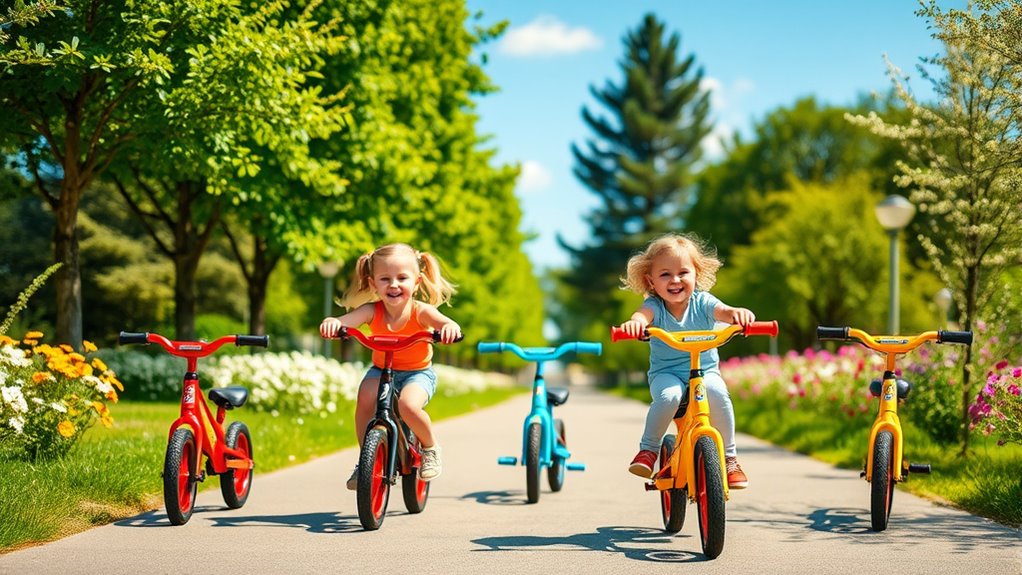
The Strider 12 Sport is my best overall balance bike pick for its broad age range and adjustable fit, while the Strider 12 Classic stands out for flat-free tires and a built-in footrest. For very young first-time riders, the SEREED and Baby Balance Bike models offer toddler-focused alternatives, though their intended age ranges and riding features differ. The main choice is between a simple, lightweight starter bike and a larger model designed for older children, with fit, tire type, and adjustability shaping the tradeoffs. I compare all 14 options by rider fit, usability, and practical features. Continue reading for the full breakdown and help matching a bike to your child.

Turn the school run and nap time into listening time
- Thousands of audiobooks, podcasts and originals
- Listen on your phone, tablet or Echo — also offline
- Cancel anytime
Complete the kit


Key Takeaways
- The Strider 12 Sport leads for flexibility: its stated ages of 1–4 and adjustable setup give it broader potential use than models aimed only at ages 2–3.
- The Strider 12 Classic takes a different approach: flat-free tires and a built-in footrest favor low-maintenance riding, while shoppers should compare its fit and included features with the Sport.
- Age labels vary across this lineup: several bikes target ages 2–5, but a stated age range alone cannot confirm a comfortable fit; a child’s inseam and the seat-height range matter more.
- The 14-inch Ridego is the size outlier: its air rubber tires and larger wheel size make it a candidate for older or taller riders, not an automatic upgrade for a smaller toddler.
- There are many overlapping SEREED and Umatoll listings: compare the exact model, age range, adjustability, and wheel details rather than assuming similar names mean identical bikes.


| balance bike | Frame material | Item weight | Wheel size | Bike type |
|---|---|---|---|---|
| Baby Balance Bike for 1 Year O | Aluminum | 3.6 pounds | 10 inches | Balance bike |
| Umatoll Toddler Balance Bike f | Carbon steel | 3.49 kg | 11 inches | Balance bike |
| Strider 12 Sport No-Pedal Bala | Steel | — | — | No-pedal balance bike |
| Umatoll Baby Balance Bike | Aluminum | 3.3 pounds | 6 inches | Balance bike |
| Ridego 14-Inch Balance Bike fo | Glass-reinforced nylon | 4.23 kg | 14 inches | Balance bike |
| KRIDDO Toddler Balance Bike fo | Carbon steel | 6.6 pounds | — | — |
| SEREED Baby Balance Bike for 1 | Aluminum | 3.5 pounds | 6.7 inches | — |
| SEREED Toddler Balance Bike fo | Carbon steel | 7.8 pounds | 11 inches | — |
| SEREED Toddler Balance Bike fo | Carbon steel | 9 pounds | 11 inches | — |
| Ziffy JOVA 12 Inch Balance Bik | Carbon steel | 6.8 pounds | 12 inches | — |
| SEREED Toddler Balance Bike fo | Carbon steel | 7.8 pounds | 11 inches | Balance bike |
| Gotrax KS12 Toddler Balance Bi | Iron | 8.6 pounds | 12 inches | Balance bike |
| Strider 12” Classic Bike | Alloy steel | 6.5 pounds | 12 inches | Balance bike |
| SEREED Toddler Balance Bike fo | Carbon steel | 7.8 pounds | 11 inches | Balance bike |
More Details on Our Top Picks
Baby Balance Bike for 1 Year Old Girl Boy, First Birthday Gift Toy
For a child just starting to scoot, this model’s strongest case is its 3.6-pound weight and simple, beginner-focused setup. Its aluminum frame and EVA wheels keep the bike easy for a toddler to maneuver indoors or on smooth pavement, while the 10-inch wheels suit its stated 12–24-month age range. Compared with the Umatoll Baby Balance Bike, it has fewer toddler-specific features: there is no stated steering limiter, adjustable seat, or enclosed-wheel design. In return, the listed frame is lightweight and the overall setup stays straightforward. The main tradeoff is growth and stopping: it has no brake, and the product data does not list seat adjustment, so it is better as an early starter than a bike to keep through several growth stages. Adult supervision is needed.
Pros:- At 3.6 pounds, it is easy for a small beginner to move and for an adult to carry.
- Aluminum frame offers a sturdy structure without a listed steel-frame weight.
- EVA wheels are described as non-slip and suitable for indoor and outdoor use.
- A simple no-pedal format supports early practice with steering and balance.
Cons:- No brake means the child must stop with their feet, with close adult supervision required.
- No seat-adjustment range is listed, limiting confidence about fit as the child grows.
- The beginner focus and 12–24-month age range make it a short-term choice for many families.
Best for: Families seeking a light, simple first balance bike for a beginner aged 12–24 months who will ride mainly indoors or on smooth paved ground.
Not ideal for: Buyers wanting an adjustable bike that can fit a child for several years, or a model with a brake or clearly specified toddler steering safeguards.
- Bike type:Balance bike
- Age range:12–24 months
- Frame material:Aluminum
- Wheel material:EVA
- Wheel size:10 inches
- Item weight:3.6 pounds
- Maximum weight recommendation:55 pounds
- Brake:None
- Minimum user height:26 inches
Our verdict“Choose this lightweight starter for a very young beginner, but pick the adjustable Umatoll toddler model if longer fit and added steering features matter more.”
Umatoll Toddler Balance Bike for 2-5 Year Olds, Adjustable Kids Bicycle Gift for Girls and Boys
The appeal here is practical longevity: the adjustable seat and handlebar let the bike accommodate a child through more than one early riding stage, unlike the fixed-fit details listed for the Baby Balance Bike for 1 Year Old. Its air-free EVA tires also avoid punctures and routine inflation, a useful advantage for families who want a low-maintenance ride on paved paths. The carbon steel frame gives this model a sturdier-feeling direction than the lightweight aluminum starter, though its 3.49 kg weight is substantially higher than that bike’s 3.6 pounds. Tool-free assembly can reduce setup hassle, but the listing does not provide a maximum weight limit or seat-height range, so fit over time is harder to verify. With no brakes and terrain guidance limited to paved and urban surfaces, this is a simple neighborhood learner, not an all-terrain option.
Pros:- Adjustable seat and handlebar can accommodate changes in a growing rider’s fit.
- Air-free EVA tires remove the need for inflation and help avoid punctures.
- Tool-free assembly makes initial setup more convenient.
- Carbon steel frame provides a durable frame option for regular neighborhood use.
Cons:- At 3.49 kg, it is much heavier than the 3.6-pound Baby Balance Bike for 1 Year Old.
- No brakes are listed, so stopping depends on the child’s feet and adult supervision.
- No maximum weight recommendation or adjustment range is supplied, making fit limits less clear.
Best for: Families looking for an adjustable balance bike for a child around 2–5 years old, especially those who prefer puncture-free tires and tool-free assembly for paved-path riding.
Not ideal for: Caregivers prioritizing the lightest possible bike, rides on rough trails, or a model with a brake and published weight limit.
- Bike type:Balance bike
- Stated age range:2–5 years
- Frame material:Carbon steel
- Tires:Air-free EVA foam
- Wheel size:11 inches
- Item weight:3.49 kg
- Minimum user height:88 centimeters
- Brakes:None
- Terrain:Paved roads and urban terrain
Our verdict“Pick this Umatoll for an adjustable, low-maintenance paved-path bike, but skip it if low weight or rough-terrain capability is the priority.”
Strider 12 Sport No-Pedal Balance Bike for Kids Ages 1–4, Blue
The Strider 12 Sport stands out for pairing a 1–4-year age range with a broad 11–17-inch seat-height range, giving a family more room to fit the bike as a young rider grows. Its 6.7-pound weight is still manageable, though the Baby Balance Bike for 1 Year Old is lighter at 3.6 pounds and may be easier for the youngest toddlers to handle. The Strider’s never-flat foam rubber tires remove puncture worries and are described for varied terrain, while the Umatoll 2–5 model also uses maintenance-free foam but is specified mainly for paved and urban riding. A steel frame and 60-pound rider limit make this a more substantial option than the very light starter bikes. It has no pedals or listed brake, so it remains a learning bike and requires foot-powered stopping.
Pros:- The 11–17-inch seat-height range gives caregivers specific fit information as a child grows.
- Never-flat foam rubber tires avoid inflation and puncture maintenance.
- At 6.7 pounds, it remains reasonably manageable while using a steel frame.
- The 60-pound maximum rider weight exceeds the listed limit of the two smaller toddler-focused models.
Cons:- It is heavier than the Baby Balance Bike for 1 Year Old, which weighs 3.6 pounds.
- No brake is listed, so riders must use their feet to slow and stop.
- The stated age range ends at 4 years, and no pedals are included for later riding stages.
Best for: Families wanting a balance bike with a published seat-height range and a broad stated age window for a child learning from about age 1 through 4.
Not ideal for: Buyers who need a brake, want the lightest possible option for a very small toddler, or expect the child to ride a pedal bike without further practice.
- Bike type:No-pedal balance bike
- Age range:1–4 years
- Seat height range:11–17 inches (28–43 cm)
- Frame material:Steel
- Tire type:Foam rubber, never flat
- Weight:6.7 pounds (3.0 kg)
- Maximum rider weight:60 pounds (27 kg)
- Dimensions:33.25 × 15 × 22 inches
Our verdict“Choose the Strider for a growing beginner who benefits from a clearly specified seat range and flat-free tires, rather than the lighter first-bike models.”
Umatoll Baby Balance Bike – Adjustable Seat, Glow Rear Wheels for 12-24 Month Olds
This Umatoll is the most toddler-specific design in this group: its 135° steering limiter and fully enclosed wheels are intended to reduce abrupt turns and keep little feet away from moving wheel gaps. That gives it a clearer safety-feature advantage over the simpler Baby Balance Bike for 1 Year Old, which lists non-slip wheels but no limiter or enclosure. A three-position adjustable seat and removable basket add fit flexibility and a small practical touch, while the glow rear wheels work without batteries. At 3.3 pounds, it is light enough for indoor practice and easy carrying. Its 6-inch wheels and 12–24-month range make it a starter rather than a longer-term choice, and it has no brake. EVA wheels are quiet, but the listing notes they may wear faster with extensive outdoor use.
Pros:- A 135° steering limiter helps restrict sharp steering movements for very young riders.
- Fully enclosed wheels address access to wheel openings around small feet.
- Three seat positions provide more fit flexibility than the unadjustable details listed for the Baby Balance Bike for 1 Year Old.
- Battery-free glow wheels add visibility and visual interest without requiring charging.
Cons:- No brake is listed, so the steering limiter does not provide a way to stop the bike.
- The 12–24-month age range makes it a short-lived option as the child grows.
- EVA wheels may wear faster with extensive outdoor use.
Best for: Caregivers of 12–24-month beginners who value a steering limiter, enclosed wheels, a few seat positions, and quiet indoor-friendly tires.
Not ideal for: Families seeking one bike to last beyond toddlerhood, frequent outdoor riders who need more durable tire performance, or buyers who want a brake.
- Bike type:Balance bike
- Age range:12–24 months
- Frame material:Aluminum
- Wheel material:EVA
- Wheel size:6 inches
- Item weight:3.3 pounds
- Maximum weight recommendation:55 pounds
- Seat:Three-position adjustable
- Steering limiter:135°
Our verdict“Choose this Umatoll for a feature-rich toddler starter with steering safeguards, but look to the Strider 12 Sport for a longer age range.”
Ridego 14-Inch Balance Bike for Kids 3-6 Years Old – Lightweight with Adjustable Seat and Air Rubber Tires
Unlike the toddler-sized picks, the Ridego is built around a 14-inch wheel size, a stated 3–6-year age range, and a 110-pound maximum weight recommendation. That makes it the lineup’s clearest option for an older or larger child who has outgrown smaller starter bikes such as the Strider 12 Sport. Its air-filled rubber tires are described for pavement, grass, and gravel, offering a different ride approach from the puncture-proof foam tires on the Strider and Umatoll models: more cushioning and grip, but with air-tire maintenance. The adjustable seat helps with fit, and the 4.23 kg weight is manageable for an older child, though not as light as the smallest toddler models. A coaster brake is listed, but the data also claims 12 speeds despite no drivetrain, so that specification is unclear.
Pros:- 14-inch wheels and a 36-inch minimum user height target a larger rider than the toddler models.
- Air-filled rubber tires are suited to pavement, grass, and gravel, with cushioning for varied surfaces.
- Adjustable seat supports fit changes as the child grows.
- The listed 110-pound maximum recommendation is higher than the limits supplied for the other bikes here.
Cons:- Air-filled tires can require inflation and are more vulnerable to punctures than the Strider’s foam tires.
- The listed 12 speeds conflict with the stated no-drivetrain balance-bike design, leaving that spec unclear.
- At 4.23 kg, it is heavier than the lightweight toddler options, and its size is unsuitable for many young beginners.
Best for: Families with a taller or older beginner, roughly 3–6 years old, who needs larger wheels and expects to ride on pavement, grass, or gravel.
Not ideal for: Parents of very young toddlers seeking a compact first bike, or buyers who prefer puncture-free tires and clear, internally consistent drivetrain specifications.
- Bike type:Balance bike
- Stated age range:3–6 years
- Wheel size:14 inches
- Tire type:Air-filled rubber
- Frame material:Glass-reinforced nylon
- Item weight:4.23 kg
- Maximum weight recommendation:110 pounds
- Minimum user height:36 inches
- Brake style:Coaster
Our verdict“Pick the Ridego for a bigger beginner who needs larger wheels and mixed-surface tires, but choose the Strider if flat-free simplicity matters more.”
KRIDDO Toddler Balance Bike for 2-5 Year Olds, Adjustable, White
The KRIDDO is a sensible pick for families who want one bike to fit across several early riding years. Its adjustable seat and handlebar let the fit change as a child grows, while the carbon steel frame and puncture-resistant tires suit regular rides on sidewalks and grass. Compared with the SEREED 1-year-old bike, this model targets a wider age range and offers a higher stated weight capacity, but it is heavier and less suited to the very youngest first-time riders. Its tires also provide more protection from flats than EVA foam wheels, though the product details do not specify a brake. The customizable plate adds a personal touch, but the overall styling is straightforward. I’d favor it for families prioritizing durability and a wider fit window over the lightest possible carry.
Pros:- Adjustable seat and handlebar can accommodate a growing child
- Puncture-resistant tires are better suited to mixed sidewalk and grass use than small EVA wheels
- Carbon steel frame offers a sturdy foundation
- Customizable plate and sticker sets let children personalize the bike
Cons:- At 6.6 pounds, it is heavier than the SEREED bike for 12–24-month-olds
- Product information does not mention included assembly tools
- The stated age range ends at 5 years, which may limit use for older preschoolers
Best for: Families seeking an adjustable balance bike for a child from toddlerhood through the preschool years, especially for rides on sidewalks and grass
Not ideal for: Caregivers shopping for a very lightweight first bike for a 12-month-old or wanting a clearly specified braking system
- Age range:18 months to 5 years
- Weight capacity:110 lbs
- Item weight:6.6 pounds
- Frame material:Carbon steel
- Tires:Extra-thick, puncture-resistant
- Adjustable:Yes
- Dimensions:33.07 x 14.96 x 22.05 inches
Our verdict“Choose the KRIDDO if adjustability, a sturdy frame, and puncture-resistant tires matter more than a particularly light build or distinctive styling.”
SEREED Baby Balance Bike for 1 Year Old Boy Girl, First Birthday Gift Toy
For a child just starting to sit on and steer a ride-on, the SEREED Baby Balance Bike puts low weight and a compact wheel size ahead of a longer riding life. At 3.5 pounds, it is easier for a young toddler to move than the 7.8-pound SEREED model for ages 2–3, and its 6.7-inch EVA wheels suit indoor practice and smooth outdoor paths. The aluminum frame keeps the structure light, while the small format fits its intended 12–24-month age range. This is a first-step balance toy, not the better choice for rough trails or a child who is already ready for a larger bike. It has no brake, so an adult needs to supervise closely, especially outdoors. I’d pick it for early steering and coordination practice rather than extended use as skills develop.
Pros:- Light 3.5-pound build is easier for toddlers and caregivers to handle
- Aluminum frame keeps the bike comparatively light
- EVA wheels can be used indoors and on smooth outdoor surfaces
- Small 6.7-inch wheels suit the intended early-rider age range
Cons:- No brake means close adult supervision is needed
- Small wheels are less suited to uneven ground than the 11-inch wheels on the SEREED 2–3-year model
- The 55-pound maximum recommendation and 12–24-month age range limit how long it may fit
Best for: Parents of 12–24-month-olds who want a lightweight, small-wheeled bike for supervised indoor practice and smooth paths
Not ideal for: Families looking for a bike that will fit a child beyond age 2 or handle uneven outdoor terrain
- Age range:12–24 months
- Item weight:3.5 pounds
- Maximum weight recommendation:55 pounds
- Minimum user height:18 inches
- Frame material:Aluminum
- Wheel size:6.7 inches
- Wheel material:EVA
- Brake:No brake
Our verdict“Choose this SEREED for a very young beginner who needs a light, compact first bike, not for a child ready for longer rides or varied terrain.”
SEREED Toddler Balance Bike for 2-3 Year Olds, Adjustable, No Pedals, White
This SEREED 2–3-year model is aimed at families who want an adjustable bike sized around the early toddler learning stage, rather than a broad age range like the KRIDDO. Its 11-inch EVA tires and carbon steel frame create a more substantial ride than the tiny wheels on SEREED’s 12–24-month bike, while the adjustable seat and handlebar allow some room for growth within the intended age band. The tires are airless, so owners avoid puncture repairs, but the listed terrain is paved roads; I would not treat “all terrains” in the description as a reason to choose it for rough trails. At 7.8 pounds, it is also heavier than the 6.6-pound KRIDDO. With no brakes, it calls for supervised practice, and its narrower age positioning may be less useful for families seeking a bike to keep longer.
Pros:- Adjustable seat and handlebar help refine fit as a toddler grows
- 11-inch EVA tires avoid punctures and suit paved riding
- Carbon steel frame provides a sturdy structure
- Customizable stickers add a personal detail
Cons:- At 7.8 pounds, it is heavier than the KRIDDO
- No brakes require adult supervision during practice
- Listed terrain is paved roads, so it is a weaker choice for rough trails
Best for: Caregivers of 2–3-year-olds who want adjustable fit and airless tires for practice on paved paths
Not ideal for: Families who need a very light bike, expect frequent riding on rough ground, or want a model sized through age 5
- Intended age:2–3 years
- Item weight:7.8 pounds
- Maximum weight recommendation:110 lbs
- Minimum user height:13 inches
- Frame material:Carbon steel
- Wheel size:11 inches
- Wheel material:EVA
- Intended terrain:Paved roads
Our verdict“Pick this SEREED when a 2–3-year-old needs an adjustable, puncture-free bike for paved practice and a narrower age fit is acceptable.”
SEREED Toddler Balance Bike for 2-5 Year Olds, Adjustable No-Pedal Bike for Boys and Girls
Among these SEREED options, this model makes the strongest case for a bike that can stay in the family through more than one toddler stage: it is listed for ages 2–5 and has an adjustable seat and handlebar. Its 11-inch EVA foam tires are described as suitable for general terrain, giving it a broader stated use than the paved-road-focused SEREED 2–3-year bike. The tradeoff is weight: at 9 pounds, it is the heaviest of the three SEREED bikes here, so carrying it between rides may be less convenient than carrying the 3.5-pound baby model. It also has no brakes, and the 110-pound limit should not be mistaken for an age-fit guarantee; the child still needs a comfortable seat height. I’d choose it over the KRIDDO when the wider age range and personalization matter more than lower weight.
Pros:- Listed for ages 2–5, giving it a broader stated age range than the SEREED 2–3-year model
- Adjustable seat and handlebar support changes in fit
- 11-inch EVA foam tires are noiseless and described for general terrain
- Personalized plate and stickers add child-friendly customization
Cons:- At 9 pounds, it is heavier than both other SEREED models in this group
- No brakes mean adult supervision is needed
- The 110-pound weight limit does not guarantee a comfortable fit for older children
Best for: Families with a 2–5-year-old who want adjustable fit, EVA tires, and a bike described for general-terrain use
Not ideal for: Caregivers who need the lightest option to carry or want a brake-equipped bike for a beginner
- Age range:2–5 years
- Item weight:9 pounds
- Maximum weight recommendation:110 pounds
- Minimum user height:13 inches
- Frame material:Carbon steel
- Wheel size:11 inches
- Tire material:EVA foam
- Brake:No brakes
Our verdict“Choose this SEREED for a wider stated age range and adjustable fit if its 9-pound weight and lack of brakes are acceptable.”
Ziffy JOVA 12 Inch Balance Bike for 2-5 Years Old, No-Pedal Kids Balance Bike Toy, Lightweight Steel Frame, Sporty Outdoor Gift for Boys & Girls
The Ziffy JOVA earns its place through a feature the other bikes here do not list: built-in footrests. Once a child starts gliding, a resting place for the feet can make balance practice feel more natural. Its 12-inch wheels are larger than the 11-inch wheels on both SEREED toddler models, and the foam tires avoid punctures; the product is also described for unpaved trails. The steel frame weighs 6.8 pounds, putting it close to the KRIDDO and well below the 9-pound SEREED 2–5-year model. A stated foot brake distinguishes it from the SEREED options with no brakes, though buyers should check how the brake is operated and whether it suits their child. It is still a beginner-focused bike with one speed and an age range ending at 5.
Pros:- Built-in footrests give children a place to put their feet while gliding
- 12-inch wheels are larger than the 11-inch wheels on the SEREED toddler models
- Foam rubber tires are puncture-proof
- Listed foot brake sets it apart from the no-brake options in this group
Cons:- Single-speed design offers no gearing options
- The brake style may be less intuitive than a hand brake, so buyers should confirm it suits their child
- The stated age range ends at 5 years
Best for: Families with a 2–5-year-old beginner who wants footrests for gliding practice and may ride on trails as well as smooth ground
Not ideal for: Buyers seeking a bike with multiple speeds, a lighter aluminum frame, or a model intended for children older than 5
- Age range:2–5 years
- Wheel size:12 inches
- Item weight:6.8 pounds
- Frame material:Carbon steel
- Wheel material:Foam rubber
- Brake style:Foot brake
- Suspension:Rigid
- Intended terrain:Unpaved trails
Our verdict“Choose the Ziffy JOVA if footrests, larger wheels, and a listed foot brake are priorities for a young beginner.”
SEREED Toddler Balance Bike for 2-3 Year Olds, Adjustable Pink Kids Bike
The pink SEREED suits families who want fit adjustments without moving to a larger 12-inch bike. Its seat and handlebar adjust as a young rider grows, while the 11-inch EVA tires stay flat-free and keep maintenance simple. At 7.8 pounds, it is easier for an adult to carry than the 8.6-pound Gotrax KS12, though the Gotrax adds a bell and LED light for extra play appeal.
This SEREED keeps the setup focused on learning to scoot, steer, and balance; it has no brakes, so a child must rely on their feet to stop and needs close supervision. The listed paved-road terrain also makes it a less convincing pick for regular rough-ground rides. Choose it for adjustable beginner fit and easy handling, not for braking features or advanced riding.
Pros:- Adjustable seat and handlebar help accommodate a growing rider.
- At 7.8 pounds, it is relatively easy to carry and maneuver.
- Airless EVA tires avoid inflation and puncture upkeep.
- No-pedal layout lets beginners focus on balance and steering.
Cons:- No brake means the child must stop with their feet and requires close supervision.
- Paved-road positioning makes it a weaker fit for frequent rough-surface rides.
- Decorative stickers may peel with use.
Best for: Families seeking a lightweight, adjustable first balance bike for a young beginner who will ride mainly on paved paths.
Not ideal for: Caregivers who want a hand or coaster brake, or children who will regularly ride on rough terrain.
- Bike type:Balance bike
- Wheel size:11 inches
- Frame material:Carbon steel
- Wheel material:EVA
- Item weight:7.8 pounds
- Brake style:No brake
- Maximum weight recommendation:110 pounds
- Color:Pink
Our verdict“Pick this SEREED for a young beginner who needs an adjustable, lightweight bike for paved paths and does not need a brake.”
Gotrax KS12 Toddler Balance Bike, 12-inch No-Pedal Bike for Boys & Girls Ages 2-5
The Gotrax KS12 is the most play-oriented choice in this group: its LED light and bell give children extra reasons to engage with a first bike, while the comfort seat and rubber grips support everyday scooting. Its 12-inch wheels and stated age range of 2–5 make it a larger-format option than the 11-inch SEREED models, so families should check the child’s fit rather than choosing by age alone.
Those extras come with a modest weight penalty: at 8.6 pounds, it is heavier than the 6.5-pound Strider 12” Classic. The Gotrax has adjustable seat and handlebar positions, but no brake; the Strider, by comparison, lists a coaster brake and integrated footrests. Choose Gotrax for lights, a bell, and an adjustable setup, not if braking support or the lightest frame matters most.
Pros:- LED light and bell add engaging features beyond basic balance practice.
- Adjustable seat and handlebar allow fit changes as the child grows.
- EVA wheels do not need inflation.
- 12-inch wheels offer a larger format than the 11-inch SEREED options.
Cons:- At 8.6 pounds, it is heavier than the Strider 12” Classic.
- No brake is listed, so stopping depends on the child’s feet.
- The larger wheel size may not suit every child in the stated age range.
Best for: Families with a child aged 2–5 who is motivated by lights and a bell and needs adjustable fit for indoor or outdoor play.
Not ideal for: Buyers prioritizing a listed brake, minimum carry weight, or a bike with a simpler feature set.
- Bike type:Balance bike
- Wheel size:12 inches
- Frame material:Iron
- Wheel material:EVA
- Item weight:8.6 pounds
- Age range:2–5 years
- Maximum load capacity:110 pounds
- Additional features:LED light, bell, comfort seat, rubber grip
Our verdict“Choose the Gotrax KS12 if lights and a bell will encourage a young rider and the child fits its 12-inch format.”
Strider 12” Classic Bike – No Pedal Balance Bicycle for Kids 1 to 3 Years – Includes Built-In Footrest, Handlebar Grips & Flat-Free Tires
For families who value a brake and a notably light frame, the Strider 12” Classic has a clear distinction from both SEREED bikes and the Gotrax KS12: it lists a coaster brake, weighs 6.5 pounds, and includes integrated footrests. That combination can make the bike easier for a small rider to manage and gives them a place to rest their feet while gliding. Its flat-free tires also avoid inflation and puncture maintenance.
The tradeoff is a narrower fit window. It is aimed at ages 18–36 months, and the supplied product details do not list adjustable seat height; the SEREED models and Gotrax offer adjustable seat and handlebar positions. The brake is a useful differentiator, but does not replace adult supervision while a beginner learns to stop. Pick this Strider for a very young rider who fits it now, not for longer-term adjustability.
Pros:- At 6.5 pounds, it is the lightest of these four listed bikes.
- Coaster brake is a distinguishing feature absent from the other three options.
- Integrated footrests give riders a place to put their feet while gliding.
- Flat-free tires avoid inflation and puncture upkeep.
Cons:- Product details do not list adjustable seat height, unlike the SEREED and Gotrax models.
- Its 18–36-month age range may limit how long it fits.
- A coaster brake still requires a child to learn the stopping action.
Best for: Caregivers of an 18–36-month-old who want a light balance bike with a listed coaster brake, footrests, and flat-free tires.
Not ideal for: Families seeking more room to adjust the fit as a child grows, or a bike for riders older than its stated age range.
- Bike type:Balance bike
- Wheel size:12 inches
- Frame material:Alloy steel
- Item weight:6.5 pounds
- Brake style:Coaster
- Age range:18–36 months
- Minimum user height:11 inches
- Additional features:Integrated footrests, flat-free tires, handlebar grips
Our verdict“Choose the Strider Classic for a young rider who fits its narrower age range and would benefit from a brake and low weight.”
SEREED Toddler Balance Bike for 2-3 Year Olds, Adjustable, No Pedal Kids Bike
This SEREED is the fit-focused choice among the two closely related 11-inch models. Unlike the pink version, its listed seat range of 12.6–17.1 inches and handlebar range of 19.6–22.5 inches give buyers concrete adjustment measurements to check against a child’s size. It keeps the same lightweight, 7.8-pound carbon-steel format and airless EVA tires, making it easier to carry than the Gotrax KS12 while avoiding tire inflation.
The main compromise is shared with the pink SEREED: no brakes, so young riders need close supervision and must use their feet to stop. Its product data also cautions that airless tires may feel less comfortable on rough ground. Compared with the Strider 12” Classic, it offers more documented adjustability but lacks that bike’s listed coaster brake and integrated footrests. Choose it when fit measurements matter more than braking features.
Pros:- Published seat and handlebar ranges help caregivers judge fit before buying.
- 7.8-pound weight makes it easier to carry than the Gotrax KS12.
- Airless EVA wheels avoid inflation and punctures.
- Carbon-steel frame and 110-pound maximum weight recommendation give it a sturdy beginner-bike setup.
Cons:- No brakes are listed, so beginners need close supervision while learning to stop.
- Airless tires may feel less comfortable on rough terrain.
- Its beginner focus may not suit a child ready for more advanced riding.
Best for: Caregivers who want stated seat and handlebar adjustment ranges to check fit for a beginner aged around 2–3.
Not ideal for: Families needing a brake, a soft ride over rough surfaces, or a bike intended for advanced riders.
- Bike type:Balance bike
- Wheel size:11 inches
- Frame material:Carbon steel
- Wheel material:EVA
- Item weight:7.8 pounds
- Adjustable seat height:12.6–17.1 inches
- Handlebar height:19.6–22.5 inches
- Maximum weight recommendation:110 pounds
Our verdict“Choose this SEREED when documented seat and handlebar adjustments matter more than a brake or a softer ride on rough ground.”

How We Picked
I ranked these bikes around what changes the riding experience: whether the intended rider can fit the bike, how straightforward it is to start and steer, and whether its construction and tires suit the family’s usual riding surfaces. I also weighed useful ownership details, such as adjustability that may extend fit, tire maintenance, wheel size, and features that support a young rider. A broad age range can be useful, but I did not treat age claims as proof of fit; the child’s measurements and the manufacturer’s seat-height range should guide the final choice.
The Strider 12 Sport ranks first for its stated 1–4 age range and adjustable design, which make it the most flexible central recommendation in this group. The Strider 12 Classic follows for its flat-free tires and footrest, while the Ridego earns a distinct place for its 14-inch wheels and air tires. The many toddler-focused SEREED, Umatoll, KRIDDO, Gotrax, and Ziffy options are separated by their listed age ranges and stated features; where product names provide few distinctions, I avoid assuming unlisted advantages.
| balance bike | Bike type | Frame material | Wheel material |
|---|---|---|---|
| Baby Balance Bike for 1 Year O | Balance bike | Aluminum | EVA |
| Umatoll Toddler Balance Bike f | Balance bike | Carbon steel | — |
| Strider 12 Sport No-Pedal Bala | No-pedal balance bike | Steel | — |
| Umatoll Baby Balance Bike | Balance bike | Aluminum | EVA |
| Ridego 14-Inch Balance Bike fo | Balance bike | Glass-reinforced nylon | — |
| KRIDDO Toddler Balance Bike fo | — | Carbon steel | — |
| SEREED Baby Balance Bike for 1 | — | Aluminum | EVA |
| SEREED Toddler Balance Bike fo | — | Carbon steel | EVA |
| SEREED Toddler Balance Bike fo | — | Carbon steel | — |
| Ziffy JOVA 12 Inch Balance Bik | — | Carbon steel | Foam rubber |
| SEREED Toddler Balance Bike fo | Balance bike | Carbon steel | EVA |
| Gotrax KS12 Toddler Balance Bi | Balance bike | Iron | EVA |
| Strider 12” Classic Bike | Balance bike | Alloy steel | — |
| SEREED Toddler Balance Bike fo | Balance bike | Carbon steel | EVA |
Factors to Consider When Choosing Balance Bike
Before choosing a balance bike, match the bike to the child and the places they will ride, rather than relying on age labels or color. These checks can prevent common mismatches and help clarify when a more specialized feature is worth choosing.
Measure fit before comparing age ranges
Age guidance is a starting point, not a fit guarantee: children the same age can have very different inseams and confidence levels. Measure your child’s inseam while wearing the shoes they will ride in, then compare it with the bike’s minimum seat height in the manufacturer’s specifications. A child should be able to place their feet on the ground while seated, with room to scoot rather than stretch for contact. Avoid buying a bike that is clearly too large on the assumption that a child will grow into it; an awkward first fit can make pushing and stopping harder. If a listing does not provide seat-height details, ask the seller or manufacturer before ordering. For the lineup here, that check matters especially when comparing compact 2–3-year options with broader 2–5-year claims.
Choose wheel size for the rider, not as an upgrade
A larger wheel is not automatically better: the frame and seat position must also suit the child’s body. The 14-inch Ridego stands apart from the many smaller-wheel toddler listings, but that makes it a better candidate to investigate for an older or taller child, not a default choice for every family. Smaller wheels can make a bike easier for a little rider to handle, while a bike that is too small may become cramped as the child grows. Check the maker’s fit range and seat adjustment instead of comparing wheel diameter alone. If two models both fit now, favor the one that allows a comfortable posture without making the bike harder to control. This is one place where measuring first can matter more than choosing the model with the widest age claim.
Match tire type to where the bike will be ridden
Tire construction shapes both upkeep and ride feel, so think about the routes your child will use most. Flat-free tires, such as those specified for the Strider 12 Classic, avoid puncture repairs and pressure checks, which can suit casual use and families who value simpler upkeep. Air tires, as listed for the 14-inch Ridego, require more attention but may be preferable for families who want pneumatic tires for their usual surfaces. Do not assume a tire type is best for every path; check the product details and consider pavement, packed paths, and rougher ground. Also account for the adult who will maintain the bike: a theoretical ride benefit is less helpful if regular tire care will be neglected. Confirm whether the listing specifies tire material and whether any maintenance is required.
Prioritize a manageable first ride over extra features
For a new rider, the first priorities are a comfortable fit, a frame the child can handle, and uncomplicated steering and foot contact. A footrest can give a rider a place to put their feet after building momentum, but it is not a substitute for learning to push and stop. Decorative details or gift-oriented wording should carry less weight than clear fit information and a design suited to the child’s stage. If your child is hesitant, a smaller, approachable bike may make more sense than choosing a model simply because it covers more ages. Give the child room to walk the bike and practice scooting at their own pace. Buy for the confidence-building experience you want now, rather than for features they may not use yet.
Decide how much adjustability you will actually use
Adjustability can extend a bike’s useful fit, but it only helps when the adjustment range suits the child today and remains practical to change. Check both the minimum and maximum seat heights, and look for clear information about handlebar adjustment rather than assuming the whole bike adjusts. A broad age range across listings, such as the 2–5-year claims on several models here, does not establish that every child in that span will fit. If you are choosing between a narrowly targeted bike and a more adjustable one, consider the child’s current measurements and likely growth over the coming riding season. Paying extra for adjustment makes little sense if the minimum setting is still too tall. Prioritize documented dimensions over a general promise of long-term use.
Compare exact model details when listings look alike
This roundup includes several SEREED and Umatoll listings with similar names, so brand or color alone may not identify the bike’s meaningful differences. Open the specifications for the exact version and check wheel size, stated age range, seat adjustment, tire type, and any included features. A title may emphasize a gift occasion or color while leaving the practical details less visible. Do not assume two variants share the same dimensions or construction just because they appear in the same product family. If a specification is missing, treat that as unanswered rather than filling the gap with assumptions from another listing. This habit is particularly useful when a child’s fit depends on a narrow seat-height range.
Frequently Asked Questions
How can I tell whether a balance bike fits my child if the listing gives only an age range?
Measure your child’s inseam and compare it with the bike’s minimum seat height, which you may need to confirm with the manufacturer if the listing omits it. A suitable setup lets the child sit on the saddle and place both feet on the ground with enough bend to push along. Age ranges like 2–5 years are broad guidance and cannot account for differences in height or leg length. Check the handlebar position too, so the child can steer without reaching uncomfortably. If the bike’s minimum seat height is unavailable, I would not rely on the age label alone.
Should I choose the Strider 12 Sport or the Strider 12 Classic?
The Sport is my stronger all-round choice in this lineup because its stated ages of 1–4 and adjustable design give it broad appeal. The Classic has a more specific draw: its flat-free tires reduce tire-related upkeep, and its built-in footrest may suit a rider ready to coast after pushing. Compare the exact fit range and included features for the versions you are considering, since the model name alone does not answer every sizing question. Choose the Sport if flexibility and the listed age span lead your decision; choose the Classic if its stated low-maintenance tire setup and footrest match your priorities. Either way, verify that the seat height suits your child now.
Is a 14-inch balance bike a better choice than a 12-inch bike?
Not by default. The 14-inch Ridego differs from most of the smaller-wheel options here, but wheel size must work with the frame and the rider’s measurements. A taller or older child may need a different fit from a young toddler, yet the bike still needs to allow confident foot contact and easy control. Compare the manufacturer’s seat-height range and your child’s inseam before choosing by wheel diameter. If you cannot confirm that the child can sit comfortably and push the bike, a larger wheel is not a safe bet simply because it may last longer.
Are flat-free tires or air tires the better choice for a toddler’s balance bike?
Flat-free tires are appealing when you want to avoid punctures and routine pressure checks, which is a stated feature of the Strider 12 Classic in this roundup. Air tires, listed on the 14-inch Ridego, require more care but may suit families who prefer pneumatic tires for their regular riding surfaces. Neither type is automatically best for every child or route, so check the manufacturer’s tire details and intended use. Think about who will handle upkeep as well as where the bike will be ridden. If maintenance simplicity is your main concern, flat-free tires have a clear practical advantage.
Which balance bike makes sense for a child who is not yet confident riding?
Start with fit and ease of handling rather than a feature list or the broadest age range. The Strider 12 Sport is my best overall starting point for families whose child fits its stated range, while the baby-focused SEREED and Umatoll options may suit some younger riders if their dimensions match. A child who cannot comfortably reach the ground will have a harder time pushing and stopping, whatever the bike’s other features. Look for the manufacturer’s minimum seat height and choose a model that allows walking and scooting at the child’s pace. A footrest can be useful later, but a comfortable first fit matters more for building early confidence.
Conclusion
For most families, I recommend the Strider 12 Sport as the best overall because its adjustable design and stated 1–4 age range make it the most flexible central pick. The Strider 12 Classic is my best premium-style choice for simpler tire upkeep, thanks to its specified flat-free tires and built-in footrest; compare its fit details before deciding. For best value, I would start with a well-fitting model among the Umatoll, SEREED, KRIDDO, Ziffy, or Gotrax options, then choose based on verified dimensions and the features the child will use rather than the listing’s gift language. For beginners, prioritize a low enough seat and manageable handling; a SEREED or Umatoll baby model may suit a very young rider if the measurements line up. For an older or taller child, investigate the 14-inch Ridego, but confirm fit before buying. Across every category, the right choice is the bike your child can sit on, push, and control comfortably now.