Choosing between kids tablets with parental controls mostly comes down to one tradeoff: polished, tightly managed ecosystems like Amazon’s versus cheaper Android tablets with more hardware for the money but rougher software. The Amazon Fire HD 8 Kids Tablet (2024) stands out as my best overall pick because its parental controls are the most granular and its bundled kid-proof case is genuinely rugged. If you want maximum storage and speed on a budget, the PRITOM 10-Inch 128GB makes sense, while the Amazon Fire 7 Kids is the better entry point for ages 3-7. Below, I break down all 15 models by age fit, control depth, and long-term value.

Turn the school run and nap time into listening time
- Thousands of audiobooks, podcasts and originals
- Listen on your phone, tablet or Echo — also offline
- Cancel anytime
Complete the kit


Key Takeaways
- Amazon‘s three kids tablets (Fire 7 Kids, Fire HD 8 Kids, Fire HD 8 Kids Pro) offered the deepest, most reliable parental controls in the lineup — time limits, content filters, and activity reports worked consistently, which most generic Android alternatives matched only partially.
- Several Android 15/16 tablets like the COLORROOM and ApoloSignage models delivered far more RAM and storage per dollar than the Fires, but their parental control apps were often third-party add-ons with clunkier setup and less robust content filtering.
- Storage became a real dividing line: 32GB models (PRITOM base, HOTTABLET, Contixo V9) filled up fast with offline videos and apps, making 64GB or the 128GB PRITOM the safer long-term choices.
- Small-screen 7-inch tablets (Fire 7 Kids, Contixo V9, HOTTABLET) suited preschoolers well but felt cramped for ages 8+, where 10-inch displays won for reading, schoolwork, and video.
- Case quality varied more than expected — Amazon and PRITOM included thick bumper cases built for drops, while some generic Android models shipped thinner shells that needed extra protection for younger kids.
| COLORROOM 10.1-Inch Kids Android 15 Tablet, 4GB RAM, 64GB Storage, Green |  | Best Overall | Operating system: Android 15 | Display: 10.1-inch HD, 1280 × 800 | Processor: Unisoc T606 octa-core, 2 GHz | VIEW LATEST PRICE | See Our Full Breakdown |
| PRITOM 10-Inch Kids Tablet, Android 14, 32GB, Parental Controls, Green |  | Best Value Pick | Screen size: 10 inches | Operating system: Android 14 | Processor: Quad-core | VIEW LATEST PRICE | See Our Full Breakdown |
| ApoloSignage 2026 Android 16 Kids Tablet, 10 Inch HD Display, 8GB RAM, 64GB ROM, Blue |  | Best for Eye Comfort | Display: 10-inch IPS HD, 1280 × 800 | RAM: 8GB (3GB physical + 5GB virtual) | Storage: 64GB, expandable to 1TB | VIEW LATEST PRICE | See Our Full Breakdown |
| Amazon Fire HD 8 Kids Tablet (2024), 64GB, Blue |  | Best Battery and Content Bundle | Display: 8-inch HD, 1280 × 800 | Processor: Hexa-core 2.0 GHz | RAM: 4GB | VIEW LATEST PRICE | See Our Full Breakdown |
| COLORROOM 2026 Android 15 Kids Tablet, 10.1 inch, Octa-core, 10GB RAM/64GB Storage (1TB Expandable), Pink |  | Best for Multimedia | Operating system: Android 15 | Display: 10.1-inch 1280 × 800 HD fully-in-cell, anti-blue light | Processor: Unisoc T606 octa-core, 2 GHz | VIEW LATEST PRICE | See Our Full Breakdown |
| PRITOM 10 Inch Kids Tablet, 128GB, Octa-Core, Blue with Kid-Proof Case |  | Best Storage for Media-Loving Kids | Screen Size: 10 inches | Display: 1280×800 HD IPS | Storage: 128GB, expandable to 1TB | VIEW LATEST PRICE | See Our Full Breakdown |
| Plimpton Kids Tablet 10 Inch – Android 15 Tablet for Kids with Case Included (PlimPad Kids20, Purple) |  | Best Software Support | Screen Size: 10.1 inches | Resolution: 1280 x 800 | Operating System: Android 15 | VIEW LATEST PRICE | See Our Full Breakdown |
| HOTTABLET Kids Tablet, 7-Inch Android 12, 4GB RAM, 32GB Storage, Parental Controls, Wi-Fi, Bluetooth, Dual Cameras, Protective Case, Blue |  | Best Budget First Tablet for Young Kids | Display: 7-inch IPS, 1024 x 600 | Operating System: Android 12 | RAM: 4GB (2GB + 2GB expandable) | VIEW LATEST PRICE | See Our Full Breakdown |
| Kids Tablet 10 Inch, Android 16, with Parental Controls and Protective Case – Purple |  | Best Battery and Eye Comfort | Display: 10-inch IPS, 1280×800, comfort-view | Operating System: Android 16 | Processor: UNISOC T7200 Octa-Core | VIEW LATEST PRICE | See Our Full Breakdown |
| NextCheer A30PRO 10.1″ Kids Tablet (Android 16), Ages 6-12 |  | Best Performance for Older Kids | Display: 10.1-inch HD IPS | Operating System: Android 16 | Processor: Unisoc 2x A75 @ 2.2GHz + 6x A55 @ 1.8GHz | VIEW LATEST PRICE | See Our Full Breakdown |
| TUOHAITIME 10.1-Inch Kids Tablet, Android 16, 64GB, Black |  | Best Big-Screen Value for Google Kids Space | Operating System: Android 16 | Display: 10.1-inch HD, 1280 x 800 | Processor: Octa-core | VIEW LATEST PRICE | See Our Full Breakdown |
| Amazon Fire 7 Kids Tablet (Ages 3-7), 16 GB, Blue |  | Best for the Youngest Kids | Display: 7-inch IPS, 1024 x 600, 171 ppi | Processor: Quad-core 2.0 GHz | RAM: 2GB | VIEW LATEST PRICE | See Our Full Breakdown |
| Contixo V9 Kids Tablet, 7-Inch HD Android Tablet with Parental Controls, Green |  | Best Budget Starter Tablet | Screen: 7-inch HD touchscreen | Operating System: Android 11 | Processor: Quad-core | VIEW LATEST PRICE | See Our Full Breakdown |
| Amazon Fire HD 8 Kids Pro Tablet, 64GB, Hello Teal (2024 Release) |  | Best for Elementary-Age Kids | Screen: 8-inch HD | Processor: Hexa-core | RAM: Up to 4GB | VIEW LATEST PRICE | See Our Full Breakdown |
| Kids Tablet 10 Inch, Android 16, Parental Controls, Teal |  | Best for Eye Comfort | Screen: 10 inches, 1280×800 IPS comfort-view | Operating System: Android 16 | Processor: UNISOC T7200 Octa-Core | VIEW LATEST PRICE | See Our Full Breakdown |
| kids tablets with parental control | Processor | Storage | Operating system | Display |
|---|---|---|---|---|
| COLORROOM 10.1-Inch Kids Andro | Unisoc T606 octa-core, 2 GHz | 64GB, expandable up to 1TB (microSD sold separately) | Android 15 | 10.1-inch HD, 1280 × 800 |
| PRITOM 10-Inch Kids Tablet | Quad-core | 32GB, expandable up to 512GB (card not included) | Android 14 | 1280 × 800 IPS |
| ApoloSignage 2026 Android 16 K | Octa-core | 64GB, expandable to 1TB | Android 16 | 10-inch IPS HD, 1280 × 800 |
| Amazon Fire HD 8 Kids Tablet | Hexa-core 2.0 GHz | 64GB, expandable up to 1TB via microSD | — | 8-inch HD, 1280 × 800 |
| COLORROOM 2026 Android 15 Kids | Unisoc T606 octa-core, 2 GHz | 64GB, expandable up to 1TB (microSD sold separately) | Android 15 | 10.1-inch 1280 × 800 HD fully-in-cell, anti-blue light |
| PRITOM 10 Inch Kids Tablet | Octa-core | 128GB, expandable to 1TB | Android | 1280×800 HD IPS |
| Plimpton Kids Tablet 10 Inch | Octa-core 2.0GHz | 64GB, expandable to 1TB | Android 15 | — |
| HOTTABLET Kids Tablet | — | 32GB, expandable to 1TB | Android 12 | 7-inch IPS, 1024 x 600 |
| Kids Tablet 10 Inch | UNISOC T7200 Octa-Core | — | Android 16 | 10-inch IPS, 1280×800, comfort-view |
| NextCheer A30PRO 10.1" Kids Ta | Unisoc 2x A75 @ 2.2GHz + 6x A55 @ 1.8GHz | 64GB, expandable to 1TB via microSD | Android 16 | 10.1-inch HD IPS |
| TUOHAITIME 10.1-Inch Kids Tabl | Octa-core | 64GB, expandable to 1TB via microSD | Android 16 | 10.1-inch HD, 1280 x 800 |
| Amazon Fire 7 Kids Tablet | Quad-core 2.0 GHz | 16GB or 32GB, expandable to 1TB | — | 7-inch IPS, 1024 x 600, 171 ppi |
| Contixo V9 Kids Tablet | Quad-core | 32GB internal, expandable to 128GB (card sold separately) | Android 11 | — |
| Amazon Fire HD 8 Kids Pro Tabl | Hexa-core | 64GB, expandable to 1TB (card sold separately) | — | — |
| Kids Tablet 10 Inch | UNISOC T7200 Octa-Core | — | Android 16 | — |
More Details on Our Top Picks
COLORROOM 10.1-Inch Kids Android 15 Tablet, 4GB RAM, 64GB Storage, Green
This model earns the top spot because it balances modern software, genuine parental oversight, and everyday usability without pushing into premium pricing territory. Google Kids Space gives parents a curated, age-appropriate content library out of the box, and the parental control layer covers screen-time limits and content filtering in a way that feels complete rather than bolted on. Compared with the PRITOM 10-Inch, the COLORROOM’s newer Android 15 platform and 4GB of physical RAM make it noticeably better equipped for multitasking and app updates over time. The tradeoff is real, though: the 64GB of onboard storage fills fast with videos and apps, and you’ll need to buy a microSD card separately to take advantage of the 1TB ceiling. A 3-hour first charge also demands some planning before gifting.
Pros:- Google Kids Space plus granular parental controls for screen time and content
- Android 15 keeps the software current longer than older rivals
- Storage expands up to 1TB for years of apps and videos
- EVA case and 6000mAh battery included for durability and long sessions
Cons:- microSD card needed for expansion is sold separately
- Requires a 3-hour charge before first use
Best for: Families who want a current-generation Android tablet with strong parental controls and room to grow via expandable storage
Not ideal for: Gift-givers who need a tablet ready out of the box on birthday morning, since it requires a 3-hour initial charge and a separate storage card
- Operating system:Android 15
- Display:10.1-inch HD, 1280 × 800
- Processor:Unisoc T606 octa-core, 2 GHz
- Memory:4GB RAM + 6GB virtual RAM
- Storage:64GB, expandable up to 1TB (microSD sold separately)
- Battery:6000mAh, up to 8 hours
- Camera video:Up to 4K UHD
- Warranty:180-day money-back, 5-year protection
Our verdict“The most well-rounded pick here for parents who want modern software, real oversight tools, and expandable storage at a mid-range price.”
PRITOM 10-Inch Kids Tablet, Android 14, 32GB, Parental Controls, Green
For buyers watching their budget, this PRITOM delivers the core parental control experience — profiles, content management, and screen-time limits through the iWawa platform — at a lower cost than most 10-inch rivals. Where the COLORROOM Android 15 tablet pulls ahead on software freshness and RAM, the PRITOM counters with included learning apps and games that work offline, plus an EVA case with an adjustable stand that doubles as a hands-free viewing prop for videos. The compromises are hard to ignore: 2GB of RAM means sluggish performance when several apps are open, and 32GB of storage is tight before you add a microSD card. Still, for a first tablet for a young child, those limits matter less than the price does.
Pros:- iWawa parental controls manage profiles, content, and screen time
- Bundled learning apps and games add value beyond hardware
- Durable EVA case includes an adjustable stand
- Storage expands up to 512GB
Cons:- Only 2GB of RAM limits multitasking and app performance
- 32GB base storage fills quickly, and the expansion card is not included
Best for: Parents buying a first tablet for a young child who want parental controls and bundled learning content at a low price
Not ideal for: Households with kids who juggle multiple apps or download lots of video content, given the 2GB RAM and 32GB storage
- Screen size:10 inches
- Operating system:Android 14
- Processor:Quad-core
- RAM:2GB
- Storage:32GB, expandable up to 512GB (card not included)
- Display:1280 × 800 IPS
- Battery:6000mAh
- Recommended age:3–12 years
Our verdict“A sensible budget entry point for young kids whose needs are simple and whose parents prioritize oversight over horsepower.”
ApoloSignage 2026 Android 16 Kids Tablet, 10 Inch HD Display, 8GB RAM, 64GB ROM, Blue
This option stands out for its eye-comfort focus: blue light reduction, auto-brightness, and an IPS panel that’s easier on young eyes during long reading or video sessions — something neither the PRITOM nor the green COLORROOM emphasizes. Its Google Kids Space integration includes educator-approved apps and learning goals inside the parental dashboard, which gives it a slight edge for school-adjacent use over the PRITOM’s iWawa system. Be skeptical of the headline RAM figure, though: only 3GB is physical, with the remaining 5GB borrowed from storage, so real-world performance sits closer to the mid-pack than the top. The 1280 × 800 resolution on a 10-inch screen is also noticeably softer than what a premium tablet offers.
Pros:- Blue light reduction and auto-brightness protect developing eyes
- Parental controls include content filtering, screen time, and learning goals
- Pre-loaded Google Kids Space with educator-approved apps
- Expandable storage up to 1TB and a protective case with stand
Cons:- Only 3GB of the advertised 8GB RAM is physical memory
- 1280 × 800 resolution is low for a 10-inch display
Best for: Parents of early readers who want blue light reduction and learning-goal tracking built into the parental controls
Not ideal for: Buyers chasing true performance, since most of the advertised RAM is virtual rather than physical hardware
- Display:10-inch IPS HD, 1280 × 800
- RAM:8GB (3GB physical + 5GB virtual)
- Storage:64GB, expandable to 1TB
- Operating system:Android 16
- Processor:Octa-core
- Battery:5000mAh
- Age range:3–12 years
- Included:Protective case with adjustable stand
Our verdict“The right pick when screen-time comfort and learning structure matter more than raw hardware specs.”
Amazon Fire HD 8 Kids Tablet (2024), 64GB, Blue
No other tablet in this lineup matches the Fire HD 8 Kids on endurance and content: up to 13 hours of battery life — roughly double a typical kids tablet day — plus a full year of the Amazon Kids+ subscription, which serves thousands of books, shows, and apps curated by age. The two-year worry-free replacement guarantee means Amazon replaces a broken tablet no questions asked, a safety net the PRITOM’s one-year warranty can’t touch. The catch is ecosystem lock-in: this is a Fire tablet, not full Android, so no Google Play store, and when the Kids+ year ends it renews monthly unless you cancel. The smaller 8-inch screen also suits the 3–7 age range specifically, whereas 10-inch rivals like the ApoloSignage better serve older kids.
Pros:- Up to 13 hours of battery life beats every 10-inch rival here
- One-year Amazon Kids+ subscription bundles books, shows, and apps
- Two-year worry-free replacement guarantee covers accidental damage
- Kid-proof case, USB-C, and 64GB expandable storage included
Cons:- Amazon Kids+ renews monthly after the included year unless canceled
- Fire OS locks out the Google Play store entirely
Best for: Parents of 3–7-year-olds who want maximum battery life, a curated content library, and an unmatched breakage guarantee
Not ideal for: Families wanting full Android with Google Play, or those unwilling to monitor the auto-renewing Kids+ subscription after year one
- Display:8-inch HD, 1280 × 800
- Processor:Hexa-core 2.0 GHz
- RAM:4GB
- Storage:64GB, expandable up to 1TB via microSD
- Battery life:Up to 13 hours
- Connectivity:Dual-band Wi-Fi
- Ports:USB-C 2.0, microSD, 3.5mm audio jack
- Recommended age:3–7 years
- Guarantee:Two-year worry-free replacement
Our verdict“The safest, longest-running choice for young children — provided you’re comfortable living inside Amazon’s ecosystem.”
COLORROOM 2026 Android 15 Kids Tablet, 10.1 inch, Octa-core, 10GB RAM/64GB Storage (1TB Expandable), Pink
Compared with the green COLORROOM that takes Best Overall, this pink 2026 model pushes harder on the entertainment side: dual stereo speakers, a fully-in-cell anti-blue-light display, and up to 12 hours of quoted battery life make it the stronger choice for kids who watch a lot of video or play sound-heavy games. The extended 10GB RAM configuration (4GB physical plus 6GB virtual) also helps keep apps from force-closing mid-cartoon. The parental controls match its sibling — Google Kids Space, content filtering, time limits, and educational goals — so oversight isn’t sacrificed for fun. Just as with its green counterpart, the 1280 × 800 resolution falls short of premium tablets, the microSD card is extra, and it demands a 3-hour first charge with a 15W/18W adapter.
Pros:- Dual stereo speakers and anti-blue-light display make media comfortable
- 6000mAh battery rated for up to 8–12 hours of use
- 10GB total RAM keeps apps from reloading during multitasking
- Google Kids Space with filtering, time limits, and learning goals
Cons:- 1280 × 800 resolution lags premium tablets
- microSD expansion card and a 15W/18W charger needed for best results are extra purchases
Best for: Families whose kids lean on a tablet for video, music, and gaming who still want full parental oversight
Not ideal for: Buyers expecting a sharp premium display, since the 1280 × 800 panel shows its limits on a 10.1-inch screen
- Operating system:Android 15
- Display:10.1-inch 1280 × 800 HD fully-in-cell, anti-blue light
- Processor:Unisoc T606 octa-core, 2 GHz
- RAM:10GB (4GB physical + 6GB extended)
- Storage:64GB, expandable up to 1TB (microSD sold separately)
- Battery:6000mAh, up to 8–12 hours
- Speakers:Dual stereo
- Warranty:180-day money-back, 5-year protection
Our verdict“The pick for media-hungry kids who need long battery life and good sound without giving up parental controls.”
PRITOM 10 Inch Kids Tablet, 128GB, Octa-Core, Blue with Kid-Proof Case
Most kids tablets in this price bracket ship with 32GB or 64GB of storage, so the PRITOM TAB11’s 128GB of built-in space immediately sets it apart — and it expands to 1TB via microSD. For families who download a lot of offline videos, educational apps, and games for road trips, that headroom means far less app-deleting triage. The iWawa parental control suite covers app filtering, screen time limits, and spending caps, which is a broader permission set than the HOTTABLET 7-inch offers, and Google Play access gives parents more flexibility than a closed ecosystem. Compared with the Plimpton Kids20, the PRITOM trades a slightly older software experience for double the base storage. The tradeoff is visual: 1280×800 on a 10-inch panel looks noticeably soft next to sharper rivals, and PRITOM doesn’t disclose RAM or battery capacity, which makes long-term performance hard to predict.
Pros:- Class-leading 128GB storage, expandable to 1TB
- iWawa controls cover apps, screen time, and in-app spending
- Durable EVA case with rotatable stand included
- Full Google Play access alongside the kids mode
Cons:- 1280×800 resolution looks soft on a 10-inch display
- RAM and battery capacity are not disclosed by the manufacturer
Best for: Families who preload lots of downloaded movies, shows, and apps for travel and don’t want to manage storage constantly
Not ideal for: Parents who prioritize a crisp display for reading or video — the low pixel density is visible on a screen this size
- Screen Size:10 inches
- Display:1280×800 HD IPS
- Storage:128GB, expandable to 1TB
- Processor:Octa-core
- Operating System:Android
- Connectivity:5GHz WiFi, Bluetooth
- Parental Controls:iWawa (apps, content, screen time, spending)
- Case:EVA kid-proof case with rotatable stand
- Recommended Age:2-12 years
Our verdict“This pick makes the most sense for storage-hungry households that value capacity and flexible parental controls over display sharpness.”
Plimpton Kids Tablet 10 Inch – Android 15 Tablet for Kids with Case Included (PlimPad Kids20, Purple)
The PlimPad Kids20 earns its place through polish rather than raw specs. Running Android 15 with Google Kids Space pre-installed, it delivers the most curated content pipeline in this batch — educator-endorsed apps, books, and videos managed through Google’s own parental dashboard rather than a third-party layer like PRITOM’s iWawa. That matters for parents who want a trusted filtering system they can set up in minutes. The Gemini AI learning assistant is a differentiator no other tablet here offers. The 360° rotatable EVA stand out-flexes the PRITOM’s case for portrait reading, and the 2-year warranty doubles the coverage of the HOTTABLET and NextCheer options. Be realistic about the limits: 4GB of RAM is fine for Kids Space apps but will strain with multitasking, and like nearly every 10-inch budget kids tablet here, 1280×800 resolution means visible pixels on text-heavy content.
Pros:- Google Kids Space with educator-endorsed content out of the box
- 2-year warranty plus 30-day returns
- 360° rotatable stand and low blue light eye mode
- Storage expandable to 1TB
Cons:- 4GB RAM limits performance with demanding apps
- 720p-class resolution is low for a 10.1-inch screen
Best for: Parents who want a set-and-forget curated experience with Google Kids Space and the longest warranty in the lineup
Not ideal for: Households with older kids who multitask or stream heavily — 4GB of RAM will feel sluggish under load
- Screen Size:10.1 inches
- Resolution:1280 x 800
- Operating System:Android 15
- Processor:Octa-core 2.0GHz
- RAM:4GB
- Storage:64GB, expandable to 1TB
- Certification:Google GMS
- Case:EVA with 360° rotatable stand
- Warranty:2 years
Our verdict“This model is better suited to parents who value curated software, eye comfort, and warranty coverage over hardware muscle.”
HOTTABLET Kids Tablet, 7-Inch Android 12, 4GB RAM, 32GB Storage, Parental Controls, Wi-Fi, Bluetooth, Dual Cameras, Protective Case, Blue
When the goal is a low-risk first tablet for a young child, smaller and cheaper beats bigger and fancier. The HOTTABLET’s 7-inch size is genuinely easier for small hands to grip than the 10-inch PRITOM or NextCheer, and the protective case doubles as a stand for video watching. Parental controls handle the basics — screen-time limits and child-friendly content management — without the deeper spending controls of iWawa, but for a 4-year-old watching cartoons, that’s usually enough. The stated 8-hour battery from a 3000mAh cell is respectable for the class. The compromises are real, though: 1024×600 resolution is the lowest in this lineup and text looks fuzzy, and 32GB of storage fills fast once a few videos land on it. Compared with the Contixo V9, another 7-inch option, the HOTTABLET counters with newer Android 12 software and USB-C charging.
Pros:- Compact 7-inch size is easy for small hands to hold
- Protective case doubles as a viewing stand
- Up to 8 hours of stated battery life
- USB-C charging, which many budget kids tablets still skip
Cons:- 1024×600 is the lowest-resolution display in the roundup
- Only 32GB of built-in storage
Best for: Parents buying a first tablet for a young child where low cost and grippable size matter more than screen quality
Not ideal for: Kids who read e-books or watch long videos — the low-resolution display and 32GB storage will frustrate quickly
- Display:7-inch IPS, 1024 x 600
- Operating System:Android 12
- RAM:4GB (2GB + 2GB expandable)
- Storage:32GB, expandable to 1TB
- Battery:3000mAh, up to 8 hours mixed use
- Cameras:2MP front, 5MP rear
- Connectivity:Wi-Fi, Bluetooth, USB Type-C
- Warranty:1 year
Our verdict“A sensible starter tablet for toddlers and preschoolers whose parents accept a fuzzy screen in exchange for a low-commitment price.”
Kids Tablet 10 Inch, Android 16, with Parental Controls and Protective Case – Purple
This unnamed-brand entry competes on two things rivals often fumble: battery size and screen comfort. The 6000mAh cell comfortably outlasts the HOTTABLET’s 3000mAh and should carry a school-age child through a full day of mixed use, while the comfort-view blue light reduction makes evening reading less harsh on young eyes. Its parental control stack — Google Kids Space, screen time limits, and content filtering — matches what the Plimpton offers but runs on the newer Android 16, with built-in ad-blocking that keeps the experience cleaner than PRITOM’s iWawa setup. Dual-band Wi-Fi and Bluetooth 5.4 round out modern connectivity. The honest weakness is the UNISOC T7200 processor, an entry-level chip that lags the MediaTek-class silicon in similarly priced rivals under heavy load, and the familiar 1280×800 panel means visuals won’t wow anyone. It’s a practical workhorse, not a performer.
Pros:- 6000mAh battery for all-day use
- Google Kids Space with screen time limits and content filtering
- Android 16 with built-in ad-blocking
- Blue light reduction comfort-view display
Cons:- UNISOC processor is entry-level compared with rivals
- 1280×800 resolution is low for a 10-inch panel
Best for: Parents of school-age kids who need all-day battery life and strong eye-comfort settings for reading and homework
Not ideal for: Families expecting smooth gaming or video editing — the entry-level UNISOC chip struggles with demanding titles
- Display:10-inch IPS, 1280×800, comfort-view
- Operating System:Android 16
- Processor:UNISOC T7200 Octa-Core
- Battery:6000mAh, USB-C charging
- Connectivity:Dual-band Wi-Fi, Bluetooth 5.4
- Certification:GMS-certified, Google Play
- Parental Controls:Google Kids Space, time limits, content filtering
- Case:EVA protective case with foldable stand
Our verdict“This option stands out for parents who rank battery endurance and current software above raw processing power.”
NextCheer A30PRO 10.1″ Kids Tablet (Android 16), Ages 6-12
Older kids outgrow cartoon cases and toddler apps — they want to play real games, video-call friends, and store their own downloads. The A30PRO’s 6GB of RAM is the most memory in this batch and gives it a genuine edge over the Plimpton Kids20’s 4GB when apps stack up. The Unisoc 2×A75 + 6×A55 configuration won’t challenge a flagship, but paired with that RAM it handles mainstream games and multitasking better than the HOTTABLET or the Android 16 Purple tablet. Parental controls with screen-time limits and content filters keep supervision intact, and the 6000mAh battery matches the best here. Practical annoyances exist: it’s Wi-Fi only with no cellular option, and no charger ships in the box — you’ll supply your own USB adapter. For ages 6-12 as pitched, it’s the most future-proof hardware of the group.
Pros:- 6GB RAM, the most in this roundup, for smoother multitasking
- 6000mAh battery with dual-band Wi-Fi and Bluetooth 5.0
- Storage expandable to 1TB via microSD
- Shockproof EVA case plus dual speakers and headphone jack
Cons:- Wi-Fi only — no SIM or cellular support
- Charger not included in the box
- Not suited to graphics-intensive gaming
Best for: Parents of kids aged 6-12 who need extra RAM for games, video calls, and heavier multitasking
Not ideal for: Anyone expecting a complete out-of-box experience — you must supply your own charger — or who needs cellular connectivity on the go
- Display:10.1-inch HD IPS
- Operating System:Android 16
- Processor:Unisoc 2x A75 @ 2.2GHz + 6x A55 @ 1.8GHz
- RAM:6GB
- Storage:64GB, expandable to 1TB via microSD
- Battery:6000mAh with fast charging
- Connectivity:Dual-band Wi-Fi, Bluetooth 5.0, GPS; no cellular
- Parental Controls:Screen-time limits, content filters
- Warranty:1 year
Our verdict“Compared with similar options, this is the pick for older kids whose tablet needs to keep pace with bigger apps and longer sessions.”
TUOHAITIME 10.1-Inch Kids Tablet, Android 16, 64GB, Black
This option stands out for pairing a 10.1-inch HD display with the newest software in this batch — Android 16 — while staying in budget territory. Compared with the Contixo V9, which runs the much older Android 11 on a 7-inch screen, this model gives kids far more room for drawing apps, videos, and split reading pages. Storage is the real hook: 64GB onboard, expandable to 1TB via microSD, which means years of downloaded books and shows without constant cleanup. The 6000mAh battery is advertised at 8–12 hours, though real-world use usually lands on the lower end. My main caution: the microSD card is sold separately, and the listing wants a three-hour first charge, so it isn’t grab-and-go out of the box.
Pros:- Google Kids Space with built-in parental controls for ages 3 and up
- Massive storage ceiling of 1TB with a microSD card
- Large 10.1-inch HD display with dual stereo speakers for media
- Runs Android 16, the newest OS in this lineup
Cons:- MicroSD card for expansion is sold separately
- Requires a lengthy initial charge of at least 3 hours before first use
- Advertised 8–12 hour battery life is optimistic under heavy video use
Best for: Families who want a large-screen Android tablet with modern software and room to grow, without paying premium prices
Not ideal for: Buyers expecting everything in the box — you’ll need to buy a microSD card and charge it for hours before first use
- Operating System:Android 16
- Display:10.1-inch HD, 1280 x 800
- Processor:Octa-core
- RAM:4GB physical + 20GB virtual
- Storage:64GB, expandable to 1TB via microSD
- Battery:6000mAh, advertised 8–12 hours
- Kids Features:Google Kids Space with parental controls
Our verdict“This pick makes the most sense for parents who want a big, modern Google-based tablet that scales with a growing media library.”
Amazon Fire 7 Kids Tablet (Ages 3-7), 16 GB, Blue
For ages 3–7, this model earns its spot through durability and ecosystem rather than raw specs. The 2-year worry-free guarantee — Amazon replaces it free if it breaks — is unmatched here; no generic Android option like the Contixo V9 or TUOHAITIME offers anything close, and that matters enormously when the user is a preschooler. A bundled 1-year Amazon Kids+ subscription delivers ad-free Disney, Nickelodeon, and PBS Kids content with filtering, time limits, and educational goals already built in. The tradeoffs are real: the 1024 x 600 display is the softest screen in this roundup, usable storage on the 16GB model is under 10GB, and Kids+ auto-renews as a paid subscription after year one unless you cancel.
Pros:- 2-year worry-free guarantee with free replacement if broken
- 1 year of Amazon Kids+ with ad-free Disney, Nickelodeon, and PBS Kids content
- Simple parental dashboard for filtering, time limits, and educational goals
- Kid-proof case included and storage expandable up to 1TB
Cons:- Amazon Kids+ auto-renews as a paid monthly subscription after the first year
- Low-resolution 1024 x 600 display and only 2MP cameras
- Under 10GB of usable internal storage on the base model
Best for: Parents of preschoolers who prioritize a bulletproof replacement guarantee and curated, ad-free content over screen quality
Not ideal for: Kids who will watch video often — the low-resolution display and tiny usable storage feel dated quickly
- Display:7-inch IPS, 1024 x 600, 171 ppi
- Processor:Quad-core 2.0 GHz
- RAM:2GB
- Storage:16GB or 32GB, expandable to 1TB
- Battery Life:Up to 10 hours
- Included:Kid-proof case, 1-year Amazon Kids+, 2-year worry-free guarantee
- Recommended Age:3–7 years
Our verdict“If your child is between 3 and 7 and rough on devices, this is the safest bet in the lineup despite its dated screen.”
Contixo V9 Kids Tablet, 7-Inch HD Android Tablet with Parental Controls, Green
This is the lowest-commitment entry point in the roundup — a small, cheap, functional tablet for deciding whether your child even wants one. Compared with the Amazon Fire 7 Kids, it skips the replacement guarantee and subscription content but offers full Google Play access over Wi-Fi, so you aren’t locked into one ecosystem. Pre-installed educational apps cover reading, math, and creativity right out of the box, and the parental controls handle profiles, screen time, and app permissions. The compromises show its price: Android 11 is several generations behind the Android 16 tablets here, 2GB of RAM feels slow with multiple apps open, and 128GB is the storage ceiling — a fraction of the 1TB the TUOHAITIME supports. Wi-Fi is also required for any new app downloads.
Pros:- Full Google Play access instead of a closed content ecosystem
- Pre-installed educational apps for reading, math, and creativity
- Parental controls for screen time, app access, and child profiles
- Protective case included for everyday drops
Cons:- Ships with Android 11, several versions behind current Android 16 tablets
- Storage maxes out at 128GB and the microSD card is sold separately
- Requires Wi-Fi for downloading additional apps
Best for: Parents testing the waters with a first tablet for a 3–7-year-old without a big investment
Not ideal for: Families wanting longevity — the old OS, modest RAM, and 128GB storage cap limit how long it stays useful
- Screen:7-inch HD touchscreen
- Operating System:Android 11
- Processor:Quad-core
- RAM:2GB
- Storage:32GB internal, expandable to 128GB (card sold separately)
- Recommended Age:3–7 years
- Included:Protective case
Our verdict“A sensible low-risk first tablet, as long as you accept its dated software and modest performance ceiling.”
Amazon Fire HD 8 Kids Pro Tablet, 64GB, Hello Teal (2024 Release)
This model targets the 6–12 age range, and its design choices reflect that: a slimmer case than the chunky Fire 7 Kids, more autonomy for the child, and parent-approved voice and video calls over Wi-Fi — something no generic Android tablet in this roundup offers natively. With up to 13 hours of battery, it outlasts both the Fire 7 (10 hours) and the 6000mAh TUOHAITIME, which matters on long car rides. Parents get a detailed activity review dashboard to see what their child is actually doing, and the 2-year worry-free guarantee carries over. Tradeoffs: only six months of Amazon Kids+ (versus a full year on the Fire 7 Kids), it auto-renews as a paid subscription after that, and expansion requires a separately purchased microSD card.
Pros:- Wi-Fi voice and video calls to parent-approved contacts
- Up to 13-hour battery life, the longest in this lineup
- Activity review dashboard plus content and time management controls
- Slim case and 2-year worry-free replacement guarantee included
Cons:- Only six months of Amazon Kids+ included, renewing monthly afterward unless canceled
- Expandable storage requires a separately sold microSD card
- Amazon’s appstore lacks some apps available on full Google Play tablets
Best for: School-age kids 6–12 who need longer battery life, calling to approved contacts, and gradually loosened restrictions
Not ideal for: Anti-subscription households — the Kids+ content library is the main draw and renews monthly after six months
- Screen:8-inch HD
- Processor:Hexa-core
- RAM:Up to 4GB
- Storage:64GB, expandable to 1TB (card sold separately)
- Battery Life:Up to 13 hours
- Included:Slim case, 6 months Amazon Kids+, 2-year worry-free guarantee
- Recommended Age:6–12 years
Our verdict“The strongest pick for older kids who have outgrown toddler tablets but still need supervised independence.”
Kids Tablet 10 Inch, Android 16, Parental Controls, Teal
What separates this tablet is the comfort-view IPS display with blue light reduction — a genuine differentiator when bedtime screen battles are the concern. Neither the TUOHAITIME 10.1-inch nor the Amazon Fire HD 8 Kids Pro advertises any eye-strain mitigation, so for long reading sessions this model has a clear argument. It matches the TUOHAITIME on the essentials — Android 16, Google Kids Space parental controls, a 6000mAh battery, and a 10-inch 1280×800 screen — while adding Bluetooth 5.4, dual-band Wi-Fi, and USB-C charging. The bundled EVA case with a foldable stand also handles hands-free viewing during video calls or shows. Be realistic about performance: the UNISOC T7200 is a budget-tier chip that can stutter on demanding games, and the resolution matches the entry-level standard rather than premium screens.
Pros:- Comfort-view display with blue light reduction for reduced eye strain
- Google Kids Space with profiles, time limits, and content filtering
- Modern connectivity: dual-band Wi-Fi, Bluetooth 5.4, and USB-C charging
- Durable EVA case with a foldable hands-free stand
Cons:- 1280×800 resolution is basic compared with premium tablets
- Budget-tier UNISOC processor may lag on demanding apps and games
Best for: Parents prioritizing eye comfort and screen-time health for kids who read or watch for long stretches
Not ideal for: Kids who play graphics-heavy games — the budget processor will struggle where octa-core rivals do not
- Screen:10 inches, 1280×800 IPS comfort-view
- Operating System:Android 16
- Processor:UNISOC T7200 Octa-Core
- Battery:6000mAh
- Connectivity:Dual-band Wi-Fi (2.4/5GHz), Bluetooth 5.4
- Charging:USB-C
- Parental Controls:Google Kids Space with profiles, time limits, content filtering
- Included:Teal EVA protective case with foldable stand
Our verdict“The right choice when display comfort matters more than raw power, especially for readers and video watchers.”
How We Picked
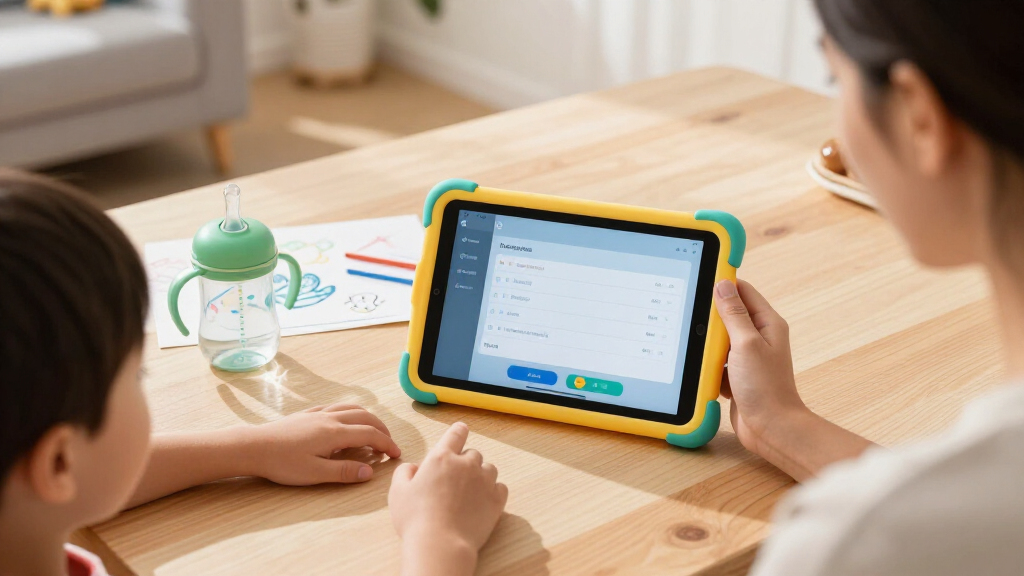
I ranked these tablets against four criteria, weighted in this order: quality of parental controls, age-appropriate durability, hardware that stays usable for 2-3 years, and value relative to how long the tablet remains relevant. Parental controls came first because that is the entire reason to buy a dedicated kids tablet over a hand-me-down. I looked at whether time limits, app approval, web filtering, and activity reporting were built into the OS or bolted on as a downloadable app, since built-in systems are harder for kids to work around and easier for parents to maintain.
For hardware, I favored models with at least 4GB of RAM, 64GB of storage (or affordable expansion), and a current Android version, because underpowered kids tablets are abandoned within a year. Bundled protective cases counted heavily for younger age ranges, while screen size and app-store freedom mattered more for the 8-12 tier. Tablets that excelled in one area but failed in another — like high RAM paired with weak filtering software — ranked lower than balanced options.
| kids tablets with parental control | Operating system |
|---|---|
| COLORROOM 10.1-Inch Kids Andro | Android 15 |
| PRITOM 10-Inch Kids Tablet | Android 14 |
| ApoloSignage 2026 Android 16 K | Android 16 |
| Amazon Fire HD 8 Kids Tablet | — |
| COLORROOM 2026 Android 15 Kids | Android 15 |
| PRITOM 10 Inch Kids Tablet | Android |
| Plimpton Kids Tablet 10 Inch | Android 15 |
| HOTTABLET Kids Tablet | Android 12 |
| Kids Tablet 10 Inch | Android 16 |
| NextCheer A30PRO 10.1" Kids Ta | Android 16 |
| TUOHAITIME 10.1-Inch Kids Tabl | Android 16 |
| Amazon Fire 7 Kids Tablet | — |
| Contixo V9 Kids Tablet | Android 11 |
| Amazon Fire HD 8 Kids Pro Tabl | — |
| Kids Tablet 10 Inch | Android 16 |
Factors to Consider When Choosing Kids Tablets With Parental Controls
Before picking a specific model, it helps to understand what actually separates a kids tablet that lasts from one that frustrates your family within months. These are the factors I weighed hardest during this comparison, including a few mistakes I see parents make repeatedly.Native vs. App-Based Parental Controls
The single biggest differentiator in this category is whether parental controls are built into the operating system or installed as a third-party app. Amazon’s kids tablets run controls at the system level: a child profile cannot sideload apps, browse unfiltered, or exceed screen-time limits without a parent PIN. Generic Android tablets typically ship with a downloadable parental control suite layered on top of Android, which works but can be uninstalled during a factory reset, glitch after OS updates, or filter web content inconsistently. If your priority is set-it-and-forget-it oversight, native systems win. If you prefer hands-on management with a wider app selection, app-based controls on Android offer more flexibility — provided you revisit the settings monthly rather than assuming they run themselves. A common mistake is buying based on hardware specs alone and discovering the control software is the weak link after the tablet arrives.
Matching the Tablet to the Age Range
A tablet that suits a 4-year-old will bore a 10-year-old, and vice versa. Preschoolers (3-6) need big icons, simple content curation, a small grippable screen, and a chunky case — the Fire 7 Kids and Contixo V9 fit this profile. Elementary kids (6-9) benefit from 10-inch displays, curated app libraries, and stricter web filtering. Tweens (9-12) start rejecting babyish interfaces and want real apps like YouTube Kids alternatives, Roblox, and video calling, which is where the Fire HD 8 Kids Pro with its older-kid UI earns its place. Buying too young is the most common and most expensive mistake: a preschool-focused tablet is often outgrown in 18 months. Buying one tier up, with controls you can gradually loosen, stretches the purchase across more birthdays.
Nothing kills a kids tablet faster than filling its storage. Offline video, game apps, and even educational content consume space quickly, and a 32GB tablet with no expansion slot becomes sluggish and frustrating within a school year. I recommend 64GB minimum for any child who downloads content, ideally with a microSD slot for expansion — the COLORROOM’s 1TB expansion ceiling is the kind of headroom that keeps a tablet viable for years. RAM matters just as much: 4GB handles one app at a time, but 8GB or 10GB (as on the ApoloSignage and COLORROOM 2026) means smoother video calls, faster app switches, and fewer crashes. Cheap tablets with 2GB or less may look like bargains, but the lag they introduce is the reason kids abandon them — and the reason parents end up buying twice.
Ecosystem Lock-In: Amazon vs. Open Android
Amazon’s kids tablets run Fire OS, which means the Amazon Appstore — not Google Play. Most major kids apps are there, but some popular titles arrive late or never, and sideloading Google Play is a workaround most parents should avoid. In exchange, you get a tightly curated, age-scaled content library and one of the strongest parental dashboards available, sometimes bundled with a kids content subscription. Open Android tablets like the PRITOM, Plimpton, and COLORROOM models give full Google Play access, which is great for specific apps your child needs — but it also means you carry more responsibility for what gets downloaded. Neither approach is universally better. Decide whether you want a walled garden you manage lightly or an open device you manage actively before comparing specs at all.
Build Quality and Case Realism
Every kids tablet claims to be durable; very few survive a tile-floor drop without help. The real question is what the included case actually protects against. Thick silicone bumpers with raised edges (Amazon and PRITOM cases) absorb corner impacts, which account for most screen cracks. Thin snap-on shells, common on budget generic models, prevent scratches but not drops. Screen size changes the risk too — 10-inch tablets hit the ground with more force than 7-inch ones and are harder for small hands to grip. If your chosen tablet ships with a flimsy case, budget for a reinforced replacement immediately, because repairing a cracked kids screen usually costs close to the tablet’s price. Also check charging port quality: micro-USB on older budget models fails far more often than USB-C.
Total Cost of Ownership Beyond the Sticker Price
The purchase price is only part of the math. Amazon kids tablets historically tie their best content experience to a subscription, which adds a recurring cost unless you cancel after the trial and rely on free apps. Generic Android tablets have no subscription, but factor in a microSD card and possibly a better case. Battery replacement is rarely practical on any of these, so a tablet with a weak battery (under ~8 hours of mixed use) ages faster. Warranty terms differ sharply too — Amazon’s kids lineup includes a two-year worry-free replacement policy that effectively insures against toddler damage, something no generic Android brand matches. Weigh the total two-year cost, not the checkout price, and the ranking of ‘cheap’ versus ‘expensive’ options often flips.
Frequently Asked Questions
Are Amazon Fire Kids tablets or generic Android kids tablets better for parental controls?
For control depth and reliability, Amazon’s system-level controls are stronger. They manage screen time, app approval, web access, and activity reports through a parent dashboard that a child cannot bypass without the PIN, and the settings survive factory resets. Generic Android tablets like the PRITOM or COLORROOM models use parental control apps layered on top of Android, which are functional but occasionally conflict with OS updates and can be less consistent at filtering web content. The counterweight is app selection: Fire tablets use the Amazon Appstore, which misses some Google Play titles kids want. If oversight is your priority, choose Amazon; if app availability matters more and you will actively manage settings, an Android tablet serves you well.
How much storage does a kids tablet actually need?
Treat 64GB as the practical floor for any child who downloads games or watches offline video, because 32GB fills within months and a full tablet slows down and refuses updates. If your child mostly streams, 32GB is tolerable but tight. Expansion slots change the equation: the COLORROOM’s microSD support up to 1TB means a cheap card can add years of usable life, while fixed-storage tablets force a replacement decision when they fill. Among the models compared here, the PRITOM 128GB offered the most built-in headroom, and the base PRITOM 32GB and HOTTABLET 32GB are the ones most likely to need a memory card early. Budget for a microSD card at purchase if the tablet supports one — it is the cheapest longevity upgrade in this category.
What age is too young for a tablet, and which model suits a 3-5 year old?
Most child-development guidance treats supervised tablet use as reasonable from around age 3, with the tablet acting as a shared, time-limited activity rather than a personal device. For that bracket, small screens and heavy curation matter more than performance: the Amazon Fire 7 Kids (Ages 3-7) is purpose-built for this stage with its compact size, thick bumper case, oversized icons, and a content library scaled to preschoolers. The Contixo V9 and HOTTABLET 7-inch models are workable alternatives if you prefer Android. Avoid 10-inch tablets for preschoolers — they are harder to grip, drop harder, and their extra capability goes unused. The realistic lifespan of a preschool-focused tablet is about two to three years before the child outgrows the interface.
Do these parental controls work without an internet connection?
Time limits and app restrictions generally keep working offline because they run locally on the tablet, so a Wi-Fi outage does not unlock anything. What stops working offline is everything that requires remote management: content filtering on live web browsing, new app approvals, activity reports syncing to your phone, and streaming content itself. This is why pre-loading approved offline content matters — on Fire tablets through the kids subscription downloads, on Android tablets through the Play Store’s offline section. One gap to know: some app-based parental controls on generic Android tablets delay syncing your changes until the device reconnects, so a limit you adjust remotely may not take effect immediately. If you travel often or have unreliable Wi-Fi, native controls like Amazon’s behave more predictably offline.
Is it worth paying more for extra RAM like 8GB or 10GB on a kids tablet?
It depends almost entirely on your child’s age and usage. For a preschooler watching videos and tapping simple apps, 4GB is plenty and spending more buys nothing they will notice. For kids ages 8 and up who juggle games, video calls, and schoolwork apps, the extra RAM genuinely helps — the ApoloSignage 8GB and COLORROOM 10GB models switch apps faster, hold video calls more steadily, and will still feel responsive in three years, when a 4GB tablet of the same generation will not. Pair high RAM with at least 64GB of storage or expansion, because fast memory cannot compensate for a full drive. My rule of thumb from this comparison: buy the RAM for the child’s age in two years, not their age today, if you want the tablet to survive more than one school year of growing demands.
Conclusion
After comparing all fifteen models, the right choice depends less on specs and more on who is using it and how much oversight you want. For the best overall pick, I recommend the Amazon Fire HD 8 Kids Tablet (2024): its system-level parental controls, rugged case, and two-year worry-free guarantee deliver the most complete package for most families. For the best value, the PRITOM 10-Inch 128GB gives you more storage than anything else here at a budget price — a smart pick if you are comfortable managing app-based parental controls yourself. The best premium option is the COLORROOM 2026 Android 15 with 10GB of RAM and 1TB expansion, which will still feel fast when your child is two years older. For beginners and young children, the Amazon Fire 7 Kids (Ages 3-7) is the easiest entry point in the lineup, with a preschool-scaled interface and drop-proof build. For tweens, the Fire HD 8 Kids Pro offers an older-kid UI with controls you can gradually loosen, and the ApoloSignage Android 16 suits families who need real multitasking power for schoolwork and entertainment together. Match the tablet to the child’s age today and their needs in two years, and any of these picks will serve your family well.