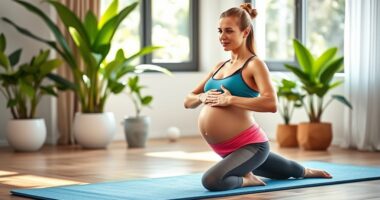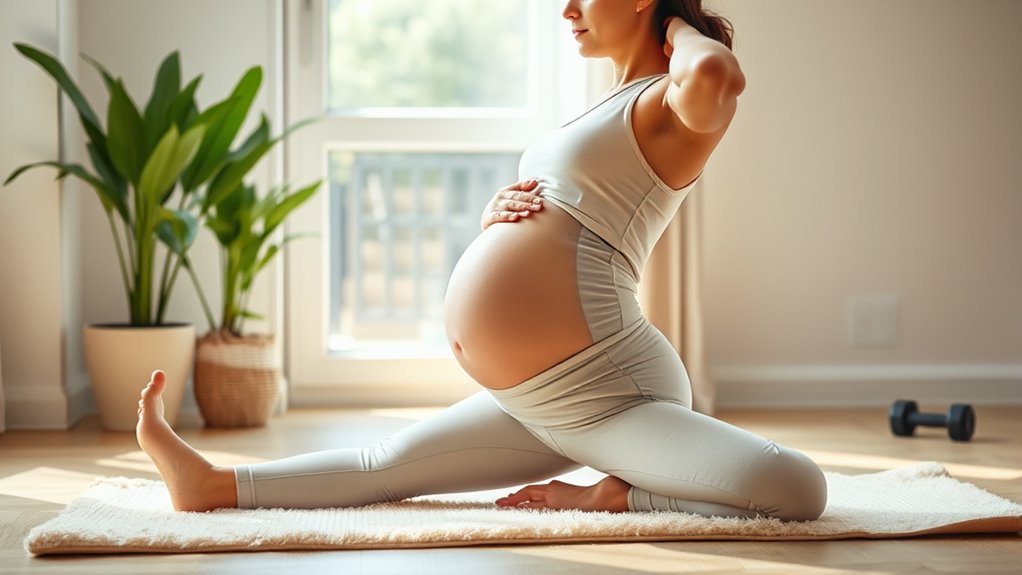

Staying active during pregnancy helps boost your energy, improve mood, and prepare your body for labor and recovery. Safe options include prenatal yoga, swimming, water aerobics, and walking, all of which support your changing body without risking harm. Follow your healthcare provider’s advice, listen to your body, and avoid high-impact or risky activities. Keep exploring to discover more tips on exercising safely and staying healthy throughout your pregnancy.
Key Takeaways
- Engage in low-impact activities like prenatal yoga, swimming, or walking to maintain fitness safely during pregnancy.
- Consult your healthcare provider before starting any new exercise routine to ensure safety.
- Avoid high-impact, strenuous, or risky poses, especially lying flat on your stomach or back after the first trimester.
- Stay hydrated, wear comfortable clothing, and exercise in moderate conditions to prevent overheating and dehydration.
- Listen to your body and stop exercising if you experience dizziness, pain, shortness of breath, or contractions.

Pregnancy is a time to prioritize your health, but that doesn’t mean you have to give up staying active. Staying active during pregnancy can boost your energy, improve your mood, and prepare your body for labor and recovery. The key is choosing safe exercises that suit your trimester and individual health needs. Activities like prenatal yoga and swimming exercises are excellent options because they are gentle, low-impact, and adapted specifically for pregnant women. These exercises help strengthen muscles, improve flexibility, and reduce stress without putting undue strain on your body.
Prioritize safe, low-impact activities like prenatal yoga and swimming to stay active and healthy during pregnancy.
Prenatal yoga is particularly beneficial because it combines gentle stretching, breathing techniques, and relaxation. It helps alleviate common pregnancy discomforts like back pain, swelling, and fatigue. Plus, practicing yoga can enhance your mental well-being, helping you manage anxiety and stay centered throughout your pregnancy. When you do prenatal yoga, focus on poses that are safe for pregnancy — avoid lying flat on your stomach or back after the first trimester, and steer clear of poses that involve deep twists or excessive stretching. Always follow a certified prenatal yoga instructor’s guidance, and listen to your body. If a pose feels uncomfortable or causes pain, stop immediately, and consult your healthcare provider if needed.
Swimming exercises are another fantastic way to stay active during pregnancy. The buoyancy of water supports your growing belly and relieves joint pressure, making swimming a low-impact activity that’s easy on your body. It also provides resistance training, which helps strengthen your muscles without risk of falling or overstressing your joints. Swimming can help improve circulation, reduce swelling, and keep you cool, especially as your body temperature rises during pregnancy. Whether you prefer doing laps, water aerobics, or simply walking in the pool, make sure to stay within your comfort zone and avoid overly vigorous movements. Always check with your healthcare provider before starting any new exercise routine, especially if you have specific health concerns or pregnancy complications.
Incorporating these activities into your weekly routine can make a positive difference in how you feel physically and emotionally. Remember to stay hydrated, wear comfortable clothing, and avoid exercising in extreme heat or humidity. Pay attention to your body’s signals—if you experience dizziness, shortness of breath, pain, or contractions, stop exercising and seek medical advice. Maintaining safe exercise practices is crucial to ensure both your health and your baby’s well-being. With proper precautions and a focus on safe, moderate activity, you can maintain your fitness, enjoy your pregnancy journey, and prepare for the arrival of your baby with confidence.
Frequently Asked Questions
Can I Start New Exercises Late in Pregnancy?
You can start new exercises late in pregnancy, but it’s crucial to make exercise modifications for safety. Always consult your healthcare provider before beginning any new activity. Focus on gentle, low-impact options like walking or prenatal yoga. After childbirth, gradually incorporate postpartum exercises to regain strength. Listening to your body and avoiding overexertion helps ensure a healthy, safe experience throughout your pregnancy journey.
Are There Exercises Safe for High-Risk Pregnancies?
Think of high-risk pregnancies as delicate flowers that require extra care. Yes, certain exercises like gentle prenatal yoga and tailored postpartum exercises can be safe if your doctor approves. Always consult your healthcare provider before starting or continuing any activity. Focus on low-impact options, avoid strenuous moves, and listen to your body. With proper guidance, staying active can support your health and your baby’s well-being.
How Can I Tell if I Overexert Myself?
You can tell if you overexert yourself by paying attention to signs of fatigue, like feeling unusually tired or weak, and dehydration indicators such as dry mouth or dark urine. If you experience dizziness, chest pain, or shortness of breath, stop exercising immediately. Listen to your body and take breaks as needed. Staying hydrated and not pushing beyond your comfort level are key to safe, healthy activity during pregnancy.
Is Swimming Safe During All Pregnancy Stages?
Swimming is generally safe during all pregnancy stages when you practice water safety and use proper swimming techniques. It’s gentle on your joints and helps reduce swelling. Just make certain you stay in shallow areas, avoid diving, and listen to your body. Always consult your healthcare provider before starting or continuing any exercise, especially during pregnancy, to ensure swimming remains safe for your specific situation.
What Precautions Should I Take When Exercising Outdoors?
Imagine stepping outside, feeling the warm sun on your skin, but don’t forget the hidden dangers. You should always wear sun protection like sunscreen and a hat, especially during pregnancy. Watch out for uneven terrain that could cause a fall. Stay hydrated, avoid peak sun hours, and listen to your body. These precautions help keep you safe and comfortable while enjoying outdoor exercise during pregnancy.
Conclusion
Staying active during pregnancy is like planting seeds for a healthy future—each gentle workout nurtures both you and your baby. By choosing safe exercises, you create a path paved with strength and wellness, guiding you smoothly through this beautiful journey. Remember, your body is your greatest ally, so listen to its whispers and honor its needs. Embrace movement with confidence, knowing that each step brings you closer to a vibrant, joyful motherhood.