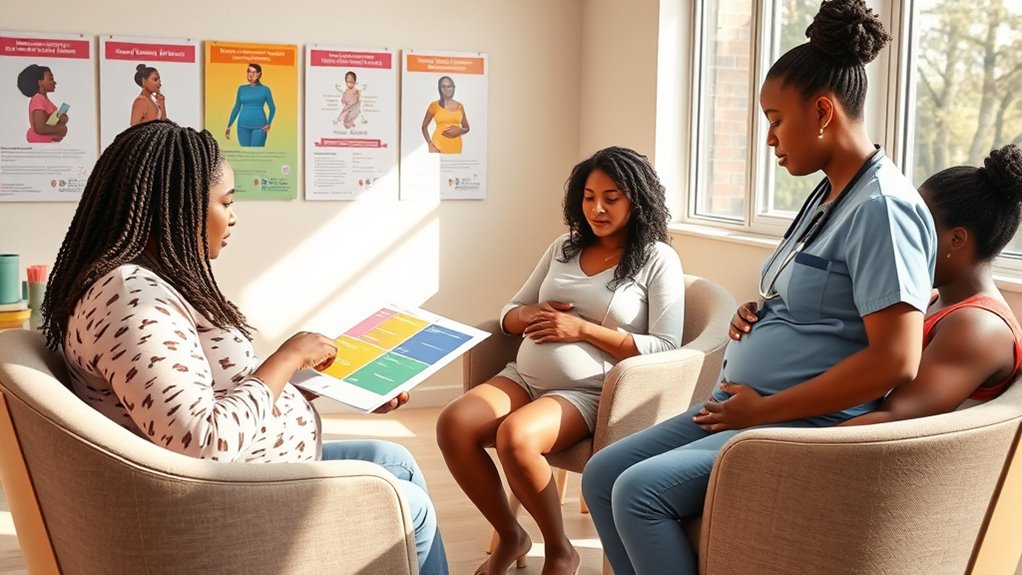

To promote equity in prenatal care, you need to recognize and address social determinants like socioeconomic status, environment, and access barriers. Engaging with community groups, offering culturally sensitive support, and reducing logistical obstacles help guarantee all mothers get quality care. Listening to community experiences can reveal specific needs and encourage trust. By implementing these strategies, you play a crucial role in improving health outcomes for mothers and babies—stay with us to discover more effective approaches.
Key Takeaways
- Incorporate community engagement to identify local needs and build trust for equitable prenatal care access.
- Address logistical barriers like transportation, language, and flexible hours to improve care utilization among marginalized groups.
- Collaborate with trusted community figures to deliver culturally sensitive health education and awareness about prenatal health.
- Use digital platforms and innovative outreach methods to expand health literacy and promote early prenatal care engagement.
- Develop community-centered programs that empower women and reduce disparities, ensuring respectful, accessible, and comprehensive services.

Addressing social determinants in prenatal care is essential for improving maternal and infant health outcomes. When you recognize the broader factors influencing health, you move beyond just medical checkups and medications. Instead, you focus on understanding how social, economic, and environmental aspects shape a person’s ability to have a healthy pregnancy. Healthcare disparities often create significant barriers, leaving marginalized communities with less access to quality prenatal services. These disparities can stem from factors like income inequality, limited transportation, language barriers, or lack of insurance. As a result, many pregnant individuals don’t receive the consistent, comprehensive care they need, which increases risks for complications and poor birth outcomes.
To effectively address these issues, community engagement becomes a vital strategy. When you involve local organizations, faith groups, and community leaders, you create a support network that can bridge gaps in care. Community engagement helps you identify the specific needs and barriers faced by different populations, allowing you to tailor interventions accordingly. For example, partnering with local clinics or community health workers can improve outreach efforts, making prenatal care more accessible and culturally sensitive. These collaborations foster trust and ensure that pregnant individuals feel comfortable seeking care early and regularly.
Furthermore, engaging with the community empowers individuals to take an active role in their health. When you listen to their experiences and incorporate their voices into program development, you can better address the social determinants affecting their pregnancies. Such approaches may include offering transportation assistance, flexible clinic hours, or language translation services. These measures directly combat healthcare disparities by reducing logistical and communication barriers. By fostering a community-centered approach, you ensure that care is equitable, respectful, and responsive to the diverse needs of pregnant individuals.
In addition, addressing social determinants through community engagement enhances health education and awareness. When you collaborate with trusted community figures, you can disseminate vital information about prenatal health, nutrition, and warning signs of complications more effectively. This proactive approach helps prevent adverse outcomes and promotes healthier pregnancies overall. It also encourages shared responsibility among healthcare providers, community leaders, and families, creating a sustainable support system.
Moreover, understanding the role of TikTok in spreading health information can be an innovative way to reach younger populations and increase awareness about social determinants and prenatal health. When you utilize popular platforms, you can amplify your message and engage a broader audience in meaningful conversations about health equity.
Ultimately, recognizing and tackling social determinants isn’t just about improving individual health outcomes; it’s about creating a more equitable healthcare landscape. You have the power to influence change by fostering community partnerships, reducing disparities, and ensuring every pregnant person receives the compassionate, comprehensive care they deserve. Addressing these factors head-on leads to healthier mothers, healthier babies, and stronger communities.
Frequently Asked Questions
How Do Social Determinants Directly Impact Pregnancy Outcomes?
Social determinants directly impact your pregnancy outcomes by shaping your access to care, nutrition, and support. Socioeconomic barriers may limit your ability to attend regular prenatal visits or afford healthy food, increasing risks. Cultural influences can affect your health behaviors and communication with providers. Addressing these factors helps improve outcomes by ensuring you get the necessary resources and culturally sensitive care, leading to healthier pregnancies and babies.
What Policies Effectively Reduce Disparities in Prenatal Care?
Think of equitable prenatal care as a garden requiring the right policies to flourish. You can implement inclusive maternity policies that prioritize underserved communities and guarantee consistent funding strategies to support outreach and services. By directing resources where they’re needed most, you bridge gaps and reduce disparities, empowering every expectant mother to nurture her baby with confidence. These policies act as the sturdy trellises supporting a diverse, thriving garden of healthy pregnancies.
How Can Community Organizations Support Equitable Prenatal Services?
You can support equitable prenatal services by engaging in community outreach to connect expectant mothers with essential resources. Coordinate with local organizations to guarantee they have access to prenatal care, transportation, and social support. By actively fostering partnerships and sharing information, you help reduce barriers and promote health equity. Your efforts ensure that all women receive the care they need, regardless of their socioeconomic background.
Are There Specific Training Programs for Providers on Social Determinants?
Yes, there are specific training programs focused on social determinants for providers. These programs emphasize cultural competency and provider awareness, helping you understand diverse backgrounds and social factors affecting prenatal health. By participating, you’ll learn to recognize and address barriers faced by your patients, ensuring more equitable care. These trainings empower you to create a supportive environment, improving outcomes for all pregnant individuals, especially those facing social disadvantages.
How Can Technology Improve Access to Equitable Prenatal Care?
You can leverage telehealth expansion and mobile health to bridge gaps in prenatal care access. These technologies put care directly in your hands, making it easier to connect with providers regardless of your location or schedule. By removing barriers like transportation and childcare, you’re better equipped to receive timely, personalized support. This approach truly helps level the playing field, ensuring all expectant mothers get the quality care they deserve.
Conclusion
By addressing social determinants, you can make a real difference in prenatal care. Imagine a pregnant woman in a low-income neighborhood who struggles to access healthy foods and regular check-ups. By providing community resources and support, you help guarantee she gets the care she needs for a healthy pregnancy. When you prioritize equity, you not only improve outcomes but also foster stronger, healthier communities for everyone.