To cut clutter fast with a toy rotation system, try the simple 3-bin approach. Organize toys into three categories: in use, stored away, and out of rotation. Swap toys between bins regularly to keep play fresh and minimize overwhelm. Keep the system straightforward and consistent so your child can easily participate. Maintaining this routine creates a calmer, more organized space, making cleanup easier. Stay tuned to discover more tips for seamless toy management.
Key Takeaways
- Divide toys into three categories: in use, stored away, and out of rotation for easy management.
- Swap toys between bins regularly to keep playtime fresh and reduce boredom.
- Label bins clearly with pictures or words to help children independently find and return toys.
- Limit active toys to promote focus and streamline cleanup routines.
- Consistently follow a schedule for toy rotation to establish routine and maintain organization.
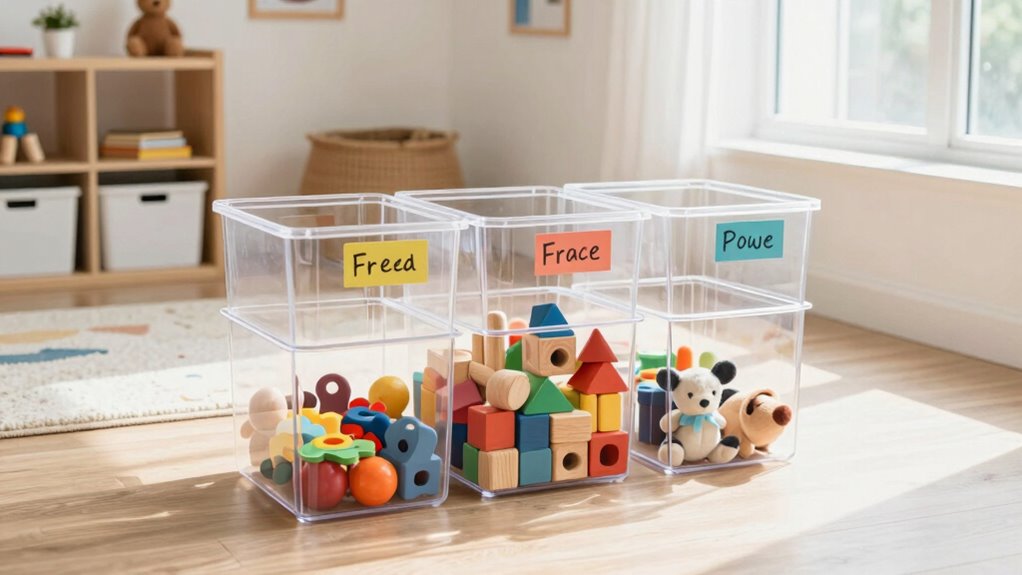
Implementing a toy rotation system can transform the way you manage your child’s toys, making cleanup easier and playtime more engaging. Instead of dealing with an overwhelming pile of toys all at once, you can use smart storage solutions to keep things organized and accessible. This approach not only reduces clutter but also keeps your child excited about their toys, as they’ll look forward to rediscovering favorites from the rotation. When setting up your system, start with simple storage solutions like clear bins, baskets, or boxes that are easy for your child to access. Label each bin with pictures or words to help your child identify where toys belong, fostering independence and responsibility. As a parent, you’ll find that this method simplifies tidying up and creates a more manageable environment for everyone.
A 3-bin system works particularly well because it divides toys into manageable groups. You can designate one bin for toys currently in use, another for toys that are stored away but still loved, and a third for toys that are temporarily out of rotation. When your child tires of their current toys, you simply swap out the toys from the active bin with those stored away, keeping things fresh and reducing boredom. This method also encourages delayed gratification, as your child learns that their favorite toys will return after a break, which can help with patience and sharing. It’s an effective parenting tip that promotes organization and emotional regulation.
Using a rotation system means you won’t have to constantly battle clutter or spend ages tidying up. Instead, you focus on maintaining a few bins, which makes cleaning routines faster and more efficient. Plus, by limiting the number of toys in play at a time, your child is more likely to engage deeply with each item, enhancing their creativity and focus. Over time, you’ll notice how this simple change improves your daily routine, reducing stress and creating a more inviting play space. The key to success is consistency—schedule regular times for swapping toys and stick to it, so your child gets used to the routine. This consistency turns toy rotation into a natural part of your parenting tips toolkit, making it easier for you to manage clutter without constant supervision. Incorporating herbal remedies into your routine can also help promote a calm environment, making cleanup time even smoother.
Frequently Asked Questions
How Often Should I Rotate the Toys?
You should rotate toys weekly or every two weeks to maintain toy safety and guarantee age appropriateness. Regular rotation keeps playtime fresh and prevents clutter, making it easier for you to supervise and store toys properly. When rotating, check each toy for safety hazards and age compatibility, discarding broken or unsafe items. This way, your child always has safe, suitable toys that promote healthy development.
What if My Child Doesn’t Like the New Toys?
If your child doesn’t like the new toys, don’t worry. You can explore their toy preferences by asking questions and observing what they enjoy. Keep communication open, so they feel heard and involved in choosing toys. Sometimes, mixing old favorites with new options helps ease resistance. Remember, patience is key; gradually introducing new toys builds excitement and trust, making the changeover smoother for both of you.
How Do I Store Toys During Rotation?
Think of storing toys during rotation as putting your ducks in a row. Use clear storage solutions like bins or baskets to keep toys organized and easily accessible. Label each container for quick identification, which helps with clutter management. Store toys in a designated spot, like a closet or under the bed, and rotate them out regularly. This way, your space stays tidy, and your child always has fresh options to enjoy.
Can This System Work for All Toy Types?
Yes, this 3-bin system works for all toy types, making your storage solutions versatile. You can easily categorize and rotate different toy types—blocks, dolls, action figures, or puzzles—by dedicating each bin to a specific category. This method keeps things organized, reduces clutter, and simplifies toy management. Plus, it’s flexible enough to adapt as your collection grows or changes, ensuring all toy types stay accessible and well-maintained.
What if My Child Outgrows the Toys Quickly?
If your child outgrows toys quickly, you can easily update your toy age range by swapping out older toys with newer ones. Use versatile storage solutions like labeled bins to organize toys by age or type, making it simple to rotate and refresh their playthings. This way, you keep their interests engaged without clutter, and your storage stays efficient and adaptable as they grow.
Conclusion
With this simple, smart three-bin system, you’ll swiftly sweep away clutter and create a clutter-free, enchanting space. By balancing beauty and bulk, you’ll boost your kid’s curiosity and cut chaos. Consistent rotation keeps toys fresh and fun, fostering focus and freedom. So, start sorting, streamline your space, and enjoy a clutter-free zone where creativity can truly flourish. Simplify, streamline, and savor the satisfaction of a tidy, toy-triumphant territory!