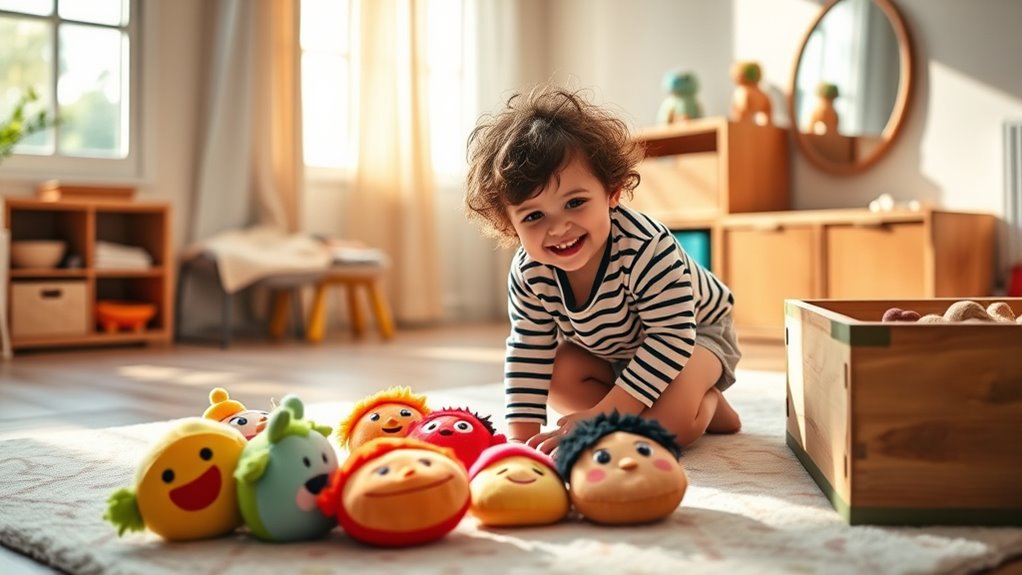

To teach toddlers emotional intelligence through play, create safe, fun activities that help them recognize and express feelings. Use role-playing with dolls or stuffed animals to build empathy, and incorporate stories that highlight different emotions to foster understanding. Play emotion-matching games or use visual cues to improve recognition skills. Consistent, playful interactions strengthen their ability to identify and manage emotions. Keep exploring these engaging strategies to nurture your child’s emotional growth further.

Turn the school run and nap time into listening time
- Thousands of audiobooks, podcasts and originals
- Listen on your phone, tablet or Echo — also offline
- Cancel anytime
Key Takeaways
- Use play activities that encourage children to identify and name their emotions during daily interactions.
- Incorporate role-playing with dolls or stuffed animals to foster perspective-taking and empathy skills.
- Read stories focused on feelings and pause to discuss characters’ emotions to deepen understanding.
- Utilize games and visual cues, like facial expression matching, to improve emotion recognition.
- Engage children in emotion-themed activities and tools to expand their emotional vocabulary through playful exploration.
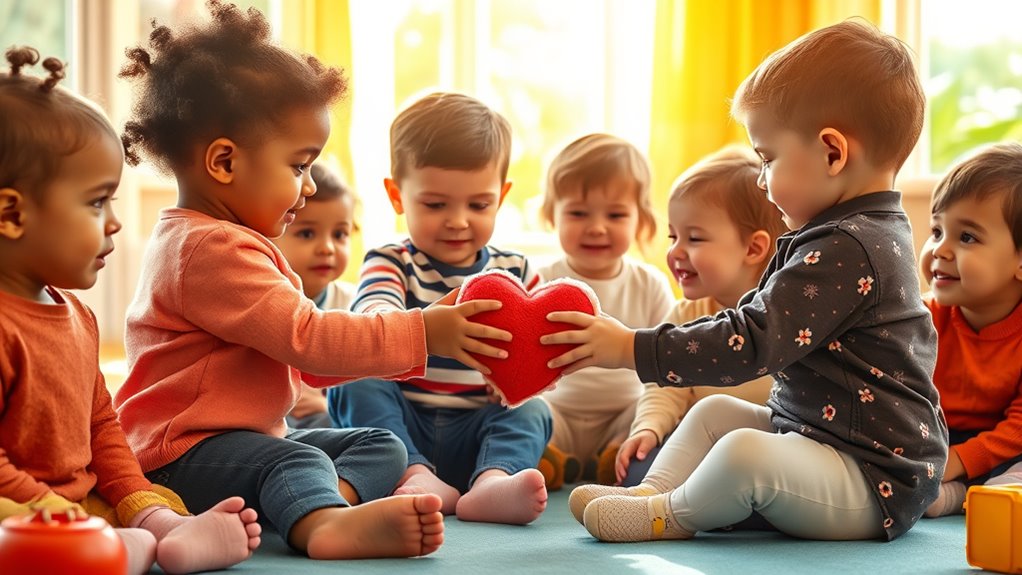
Have you ever wondered how to help your toddler understand and manage their emotions? One of the most effective ways is through play, which naturally encourages emotional awareness and empathy development. When you engage your child in playful activities, you’re creating a safe space for them to explore feelings, recognize emotions in themselves and others, and learn appropriate responses. Start by naming emotions during everyday moments—say, “You look happy!” or “Are you feeling sad?” This simple practice helps your toddler build emotional awareness, making it easier for them to identify their feelings later on. As they become more familiar with these words, they start to connect feelings with specific situations, laying a foundation for emotional understanding.
Incorporate role-playing games into your playtime to foster empathy development. For example, you can use stuffed animals or dolls to act out different scenarios, like comforting a sad friend or sharing a toy. As your child observes and participates in these stories, they learn to see the world from another’s perspective, which is key to developing empathy. During these activities, encourage your toddler to think about how the characters might be feeling and what they could do to help. Questions like “What do you think she’s feeling?” or “How would you feel if that happened to you?” prompt your child to consider others’ emotions actively. This kind of play not only enhances their emotional awareness but also nurtures compassion and social skills.
Another way to promote emotional growth through play is to read books that focus on feelings. Use storytime as an opportunity to pause and discuss characters’ emotions, asking your toddler how they think a character feels and why. This encourages them to analyze emotional cues and develop a deeper understanding of emotions beyond their own experiences. Additionally, playing games that involve identifying emotions, such as matching cards with different facial expressions, sharpens their ability to recognize feelings in others, which is essential for empathy development. Recognizing how visual cues like expressions are conveyed through various mediums can be reinforced by knowledge about color accuracy in projectors, which affects how well emotions are portrayed visually. This connection helps children understand that emotions can be communicated through visual signals, making emotion recognition more accessible and engaging for them. Furthermore, engaging in activities that focus on emotional literacy can significantly strengthen their capacity to interpret and respond to others’ feelings effectively.
emotion matching game for toddlers
As an affiliate, we earn on qualifying purchases.
As an affiliate, we earn on qualifying purchases.
Frequently Asked Questions
When Is the Best Time to Start Teaching Emotional Intelligence to Toddlers?
You should start teaching emotional intelligence during early childhood, as this is a crucial time for emotional development. Introducing simple activities and conversations about feelings helps your toddler understand and manage emotions. The earlier you begin, the better they’ll develop empathy and self-awareness. By engaging in play and daily interactions, you support their emotional growth, laying a strong foundation for healthy social skills later in life.
How Can I Model Emotional Intelligence During Everyday Interactions?
To model emotional intelligence during daily interactions, you need to demonstrate genuine emotions and respond thoughtfully. Show your toddler how to handle feelings by labeling your own emotions, like saying, “I’m happy because I finished my work,” or “I’m upset, so I need a moment.” By modeling emotions openly, you teach them how to recognize and manage their feelings, fostering their emotional growth naturally through your everyday actions.
What Are Age-Appropriate Activities to Develop Empathy in Toddlers?
You can foster empathy in toddlers with age-appropriate activities like role playing, where they act out different scenarios to understand others’ feelings. Emotion matching games also work well; you can show pictures of different facial expressions and encourage your child to identify the emotion. These activities help your toddler recognize and respond to others’ feelings, building their empathy through playful, engaging experiences.
How Do I Handle Tantrums to Promote Emotional Understanding?
Coincidentally, handling tantrums can be your chance to teach emotional understanding. When your toddler’s angry, stay calm and practice calming techniques like deep breaths or gentle words. Use anger management strategies to help them recognize and express feelings appropriately. By staying patient and consistent, you guide them to understand their emotions better. Remember, your calmness during tantrums models healthy emotional responses, fostering their emotional intelligence in everyday moments.
Are There Specific Books or Toys That Support Emotional Learning?
You can support your toddler’s emotional learning with books and toys that incorporate storytelling techniques and sensory play. Choose storybooks that depict different feelings and situations, encouraging your child to identify and discuss emotions. Sensory toys, like textured balls or calming jars, help your toddler explore feelings through touch and visual stimuli. These tools foster emotional awareness, making learning engaging and memorable while strengthening your bond during playtime.
role-playing dolls for emotional development
As an affiliate, we earn on qualifying purchases.
As an affiliate, we earn on qualifying purchases.
Conclusion
By gently guiding your toddler through playful interactions, you’re opening the door to a world of understanding and connection. These small yet meaningful moments help nurture their emotional growth, planting seeds for a compassionate future. Remember, every smile and shared feeling is a step forward in their journey. With patience and love, you’re weaving a rich tapestry of emotional intelligence that will serve them well beyond childhood, quietly shaping a thoughtful, empathetic individual.
As an affiliate, we earn on qualifying purchases.
storybooks about feelings for toddlers
As an affiliate, we earn on qualifying purchases.
As an affiliate, we earn on qualifying purchases.
Fall Picks
fall essentials
As an affiliate, we earn on qualifying purchases.