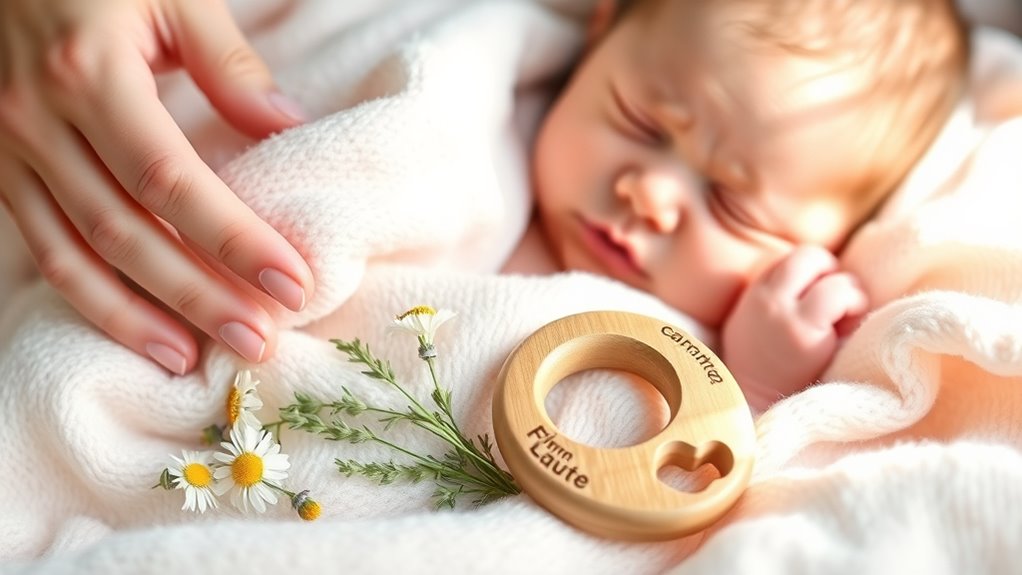

Teething pain can be tough, but there are natural fixes that can really help. Try cold compresses or chilled teething rings to numb those sore gums. Gentle gum massages with your clean finger can also provide relief, while small amounts of cooled chamomile tea may calm your baby. Don’t forget safe chewing options like silicone teething toys. Keep an eye on what works best for your little one, and more effective remedies await your discovery.
Key Takeaways
- Chill teething rings or a damp washcloth for soothing relief from teething pain.
- Offer cooled chamomile tea or soak a washcloth in it for added comfort.
- Gently massage your baby’s gums with a clean finger to alleviate discomfort.
- Provide safe chewing options like silicone teething toys or cold purees.
- Maintain a calm environment and use gentle distractions to ease irritability.
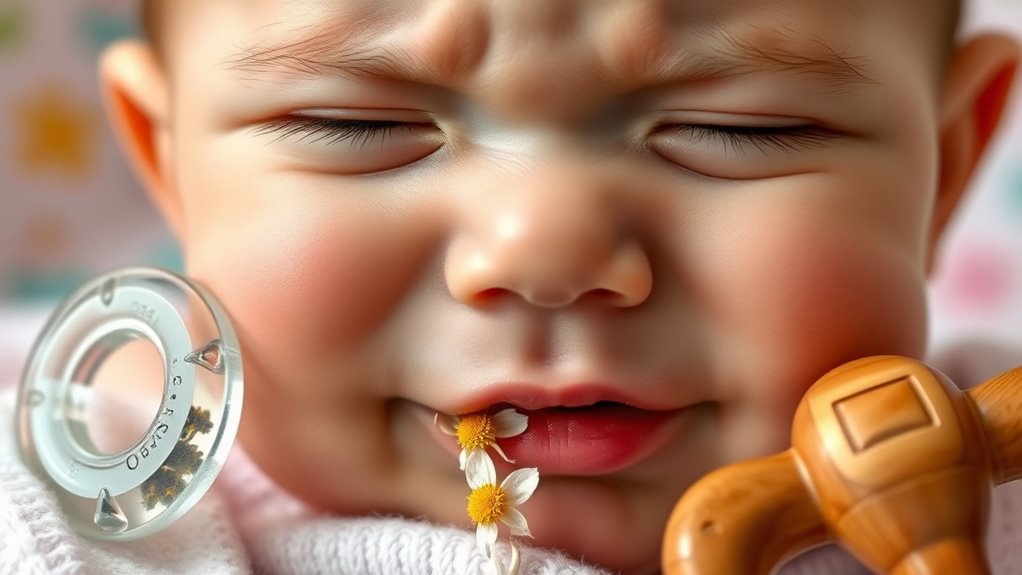
Teething can be a tough time for both you and your baby, but you don’t have to rely solely on over-the-counter medications for relief. There are many natural remedies that can effectively soothe your baby’s discomfort.
Start with cold compresses; they numb the gums and reduce swelling. You can use a clean, damp washcloth, chill it in the freezer, and let your baby chew on it. This simple technique can work wonders.
Cold compresses can numb your baby’s gums and reduce swelling—simply chill a damp washcloth for soothing relief.
Chamomile tea is another great option. Not only does it have anti-inflammatory properties, but it also helps calm your little one. You can give your baby small amounts of cooled chamomile tea or soak a washcloth in it for added relief.
If you’re considering something more potent, clove oil is known for its analgesic properties. Just remember to dilute it properly and consult with your pediatrician before using it on your baby’s gums.
Teething rings are a classic solution, too. Opt for solid ones and chill them in the refrigerator to provide a soothing sensation without the risk of leaking.
You might find that your baby enjoys chewing on frozen fruits like bananas or berries once they’ve started solids. These treats not only calm the gums but also offer a tasty distraction.
If your baby enjoys sucking, you can offer cool water in a sippy cup to help ease their discomfort. For breastfed babies, frozen breast milk cubes can serve as a terrific teething toy. Just pop a cube into a teether, and watch your baby find relief.
Don’t overlook the power of gentle gum massage. Using a clean finger, you can massage their gums to alleviate tension and pain. Facial massages around the cheeks and jawline can also help. Gently massaging gums can stimulate blood flow and provide relief from discomfort.
Additionally, silicone or rubber teething toys provide a safe outlet for chewing and pressure relief. As for dietary approaches, cold purees like applesauce can soothe teething discomfort for babies who are eating solids.
Moreover, breastfeeding can offer comfort through the natural sucking action, while cool water can ease older babies’ irritability.
Always keep safety in mind. Avoid items that pose choking hazards, and ensure all teething products are non-toxic.

Stroller Organizer with Cup Holder, Non-Slip Stroller Caddy Baby Essentials
- Large Capacity Storage: Holds bottles, diapers, toys, snacks
- Ideal Gift for New Moms: Perfect for baby showers and gender reveals
- Universal Compatibility: Fits most stroller brands and models
As an affiliate, we earn on qualifying purchases.
Frequently Asked Questions
What Age Do Babies Typically Start Teething?
Babies typically start teething around 6 months old, but some might begin as early as 2 or 3 months.
You’ll notice the first teeth, usually the lower central incisors, popping through during this time.
However, it’s important to remember that every baby is different; some may not start teething until after their first birthday.
Keep an eye on your little one for signs of teething to help you prepare for this milestone.
How Long Does Teething Pain Usually Last?
Did you know that the entire teething process can take up to three years?
Teething pain typically lasts about a week, including the days before and after a tooth emerges. You might notice symptoms like drooling and irritability during this time.
Some babies experience discomfort longer, sometimes for weeks. It’s important to keep an eye on your child and provide comfort, especially if their symptoms seem to worsen or persist.
Are There Any Signs My Baby Is Teething?
You’ll notice several signs that your baby is teething.
Look for swollen, tender gums, and expect fussiness or crying due to discomfort.
Drooling is common, and you might see your little one chewing on hard objects for relief.
A slightly raised temperature can also occur, though it shouldn’t exceed 100.4°F.
These signs typically show up between 4 to 7 months, marking the start of their teething journey.
Can Teething Cause a Fever in Babies?
When it comes to teething and fever, it’s important to separate fact from fiction.
Teething doesn’t cause a true fever; it might lead to a slight increase in temperature, but that’s usually not high enough to worry about.
If your baby has a fever, it’s likely due to something else. Keep an eye on their symptoms, and if the fever’s high, don’t hesitate to call your pediatrician for guidance.
When Should I Consult a Doctor About Teething Pain?
If you’re concerned about your baby’s teething pain, consult a doctor if their fever exceeds 100.4°F, especially if they’re under three months old.
Persistent crying, loss of appetite, diarrhea, vomiting, or unusual rashes also warrant a call to the pediatrician.
Trust your instincts—if your baby seems very sick or behaves unusually, don’t hesitate to seek medical attention.
It’s always better to be safe when it comes to your child’s health.

Accmor Universal Stroller Organizer with Insulated Cup Holder Detachable Phone Bag and Shoulder Strap,Stroller Bag Caddy Organizer Fits for Uppababy, Baby Jogger, Britax Strollers
- Multi-Functional Storage: Includes insulated cup holders and compartments
- Insulated Cup Holders: Keeps drinks warm or cool for 6 hours
- Universal Compatibility: Fits various stroller brands with adjustable strap
As an affiliate, we earn on qualifying purchases.
Conclusion
You might be surprised to find that some of the best remedies for teething pain are already in your kitchen! While you’re preparing dinner, grab a chilled washcloth or some frozen fruit for your little one. It’s funny how the simplest solutions often bring the most relief. By trying these natural fixes, you’re not just easing discomfort; you’re also creating cherished moments. So, embrace the chaos, and remember that this phase, like all things, will pass!

JanSport Laptop Backpack - Computer Bag with 2 Compartments, Ergonomic Shoulder Straps, 15” Laptop Sleeve, Haul Handle - Cyberspace Galaxy
- Spacious Design: Large capacity with multiple compartments
- Laptop Protection: Dedicated 15-inch padded laptop sleeve
- Durable Materials: Made from high-quality recycled materials
As an affiliate, we earn on qualifying purchases.

mibasies Girls Backpack: Large Kids Backpack Girls for Elementary School with Laptop Compartment - Rainbow Pink
- Warranty: 3-Year guarantee with repairs or replacement
- Capacity: 17L with laptop and front pockets
- Main Storage: Fits books, clothing, and folders
As an affiliate, we earn on qualifying purchases.