
To guarantee your nursery has good air quality, regularly use a HEPA filter air purifier placed centrally and maintained properly to trap dust, allergens, and germs. Keep humidity levels between 40% and 60% using a humidifier or dehumidifier, monitored with a hygrometer, to prevent mold and dry skin. Maintain a steady room temperature around 68-72°F with thermostats, and ensure proper air circulation for a safe, cozy space. If you want to create the perfect environment, it’s worth exploring these tips further.
Key Takeaways
- Use HEPA air purifiers placed centrally and maintained regularly to remove airborne allergens, dust, and microbes.
- Maintain humidity levels between 40-60% with humidifiers or dehumidifiers, monitored by a hygrometer for optimal comfort.
- Keep room temperature steady at 68-72°F using thermostats or smart climate controls for a safe, comfortable nursery environment.
- Avoid placing radiators or heaters near the crib and ensure gentle air circulation for fresh, balanced air.
- Proper placement and upkeep of air quality devices enhance their effectiveness, ensuring a healthier nursery space.

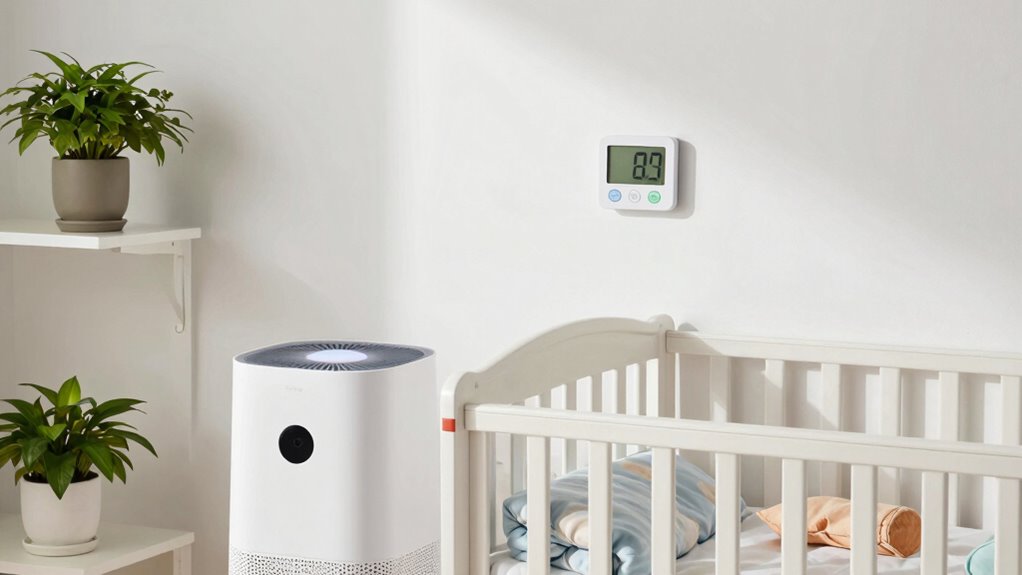
Ensuring good air quality in your nursery is essential for your child’s health and well-being. One of the most effective ways to do this is by investing in air purifiers. These devices help eliminate dust, pet dander, airborne allergens, and even some bacteria or viruses, creating a cleaner environment for your little one. When choosing an air purifier, look for models equipped with HEPA filters, as they are proven to capture 99.97% of particles as small as 0.3 microns. This level of filtration is crucial for reducing irritants that can affect your baby’s respiratory health. Position the purifier in a central location, away from walls and debris, to ensure optimal airflow and coverage. Regularly replace or clean the filters as recommended to maintain the purifier’s effectiveness. Using proper placement and maintenance techniques enhances the purifier’s performance and ensures consistent air quality.
Alongside air purifiers, humidity control plays a vital role in maintaining a healthy nursery environment. Too much humidity can foster mold, dust mites, and mildew, which are common allergens that can trigger respiratory issues or allergies. Conversely, low humidity can dry out your baby’s skin, nasal passages, and throat, leading to discomfort and increased vulnerability to illness. To strike the right balance, use a reliable humidifier or dehumidifier, depending on your room’s natural moisture levels. Aim for a humidity level between 40% and 60%, which is considered safe and comfortable for infants. Use a hygrometer to monitor these levels accurately, and adjust your devices accordingly. Proper humidity control not only improves air quality but also helps your baby breathe easier, sleep better, and stay healthier overall.
Temperature regulation is equally important when ensuring your nursery’s air quality. An environment that is too hot or too cold can cause discomfort and disrupt sleep, which is essential for your baby’s development. Keep the room temperature steady, ideally around 68-72°F (20-22°C). Use a reliable thermostat or a smart climate control system to maintain this range, especially if your nursery tends to fluctuate with outdoor weather. Avoid placing direct heat sources like radiators or heaters near the crib, as sudden temperature changes or hot spots can be dangerous. Also, consider the ambient air circulation; a gentle fan or an open window on mild days can help circulate fresh air and prevent stale, stuffy air from lingering. Consistently maintaining an optimal temperature, combined with good humidity levels and air purification, creates a safe, cozy environment where your baby can thrive.
Frequently Asked Questions
How Often Should I Replace the HEPA Filter in the Nursery?
You should replace the HEPA filter in the nursery every 6 to 12 months, depending on the HEPA lifespan and your filter replacement schedule. Regularly check for signs of dirt or reduced airflow, which indicate it’s time for a change. Following the manufacturer’s recommendations guarantees peak air quality. Keep in mind, maintaining a consistent filter replacement schedule helps protect your baby’s health and keeps the nursery environment fresh.
What Signs Indicate Poor Air Quality in the Nursery?
You should watch for increased coughing, sneezing, or eye irritation, which signal poor air quality. Studies show indoor air can be 2-5 times more polluted than outdoor air, often due to airborne allergens and mold growth. If you notice musty odors or visible mold, these are clear signs of compromised air. Regularly check for dust buildup, and guarantee proper ventilation to keep the nursery safe for your little ones.
Are There Safe Humidifiers for Babies With Skin Sensitivities?
Yes, there are safe baby humidifiers designed for skin-sensitive infants. Look for skin sensitive humidifiers made with natural, BPA-free materials, and that have adjustable settings to control humidity levels. Safe baby humidifiers often feature automatic shut-off and antimicrobial filters to prevent mold and bacteria growth. Always choose models specifically labeled for infants, and use distilled or filtered water to keep the air pure and avoid skin irritation.
What Is the Ideal Temperature Range for a Nursery?
You should aim for a temperature range of 68-72°F for nursery comfort, as it promotes ideal temperature regulation for your baby. Maintaining this range prevents overheating and chills, ensuring a cozy environment. Think of it as a gentle climate control zone where your little one stays safe and comfortable. Regularly monitor the room temperature with a reliable thermometer to keep the nursery consistently within this ideal range.
Can Plants Improve Nursery Air Quality Naturally?
Yes, plants can improve nursery air quality naturally through plant air purification and natural air filtration. By adding indoor plants, you help remove toxins and increase oxygen levels. Choose plants like spider plants, pothos, or peace lilies, which are known for their air-purifying qualities. Regularly care for them, and you’ll create a healthier environment, reducing airborne pollutants and enhancing overall nursery air quality naturally.
Conclusion
By regularly checking humidity, using a HEPA filter, and maintaining proper temperature, you create a safe, healthy nursery environment. Imagine a parent noticing their baby struggles with congestion; after adjusting humidity and installing a HEPA filter, the baby’s breathing improves. Small steps make a big difference in ensuring your little one’s comfort and safety. Keep up with these simple checks to foster a nurturing space where your baby can thrive and breathe easy every day.