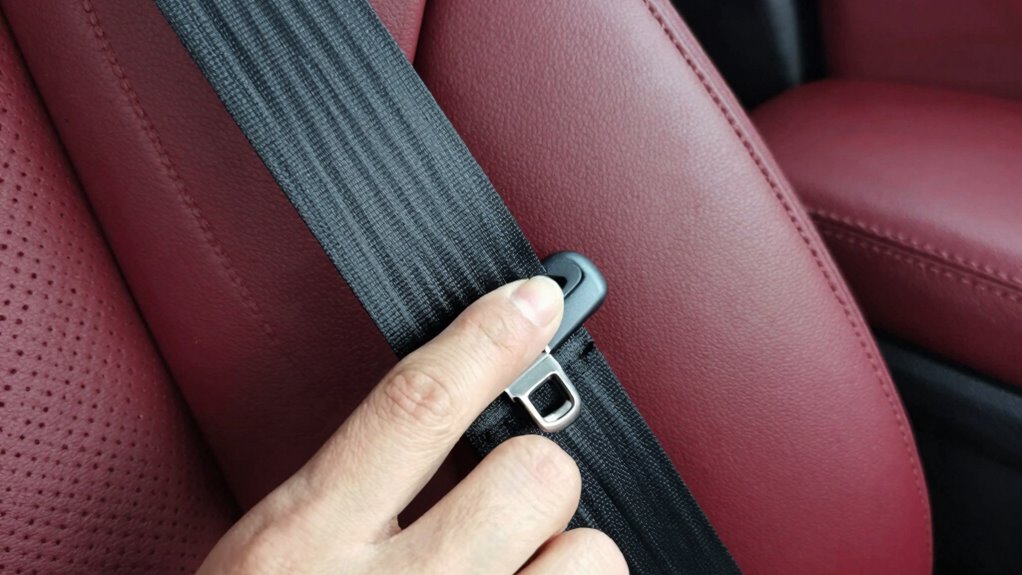

To make certain your child’s car seat straps are snug enough, perform the pinch test: buckle your child in, then try to pinch the webbing at shoulder level. If you can pinch any material or it easily slips between your fingers, the straps are too loose. They should lie flat and be tight enough that you can’t pinch any webbing, but not so tight that your child is uncomfortable. Keep practicing this simple step to stay confident in your child’s safety.
Key Takeaways
- The pinch test checks if the harness straps are snug enough by attempting to pinch webbing at shoulder level.
- Straps should lie flat without slack but not be overly tight or uncomfortable for the child.
- Perform the pinch test after every adjustment, cleaning, or child’s growth to ensure proper fit.
- If you can pinch webbing easily, the straps are too loose; if not, they are correctly snug.
- Maintaining proper strap tension through the pinch test maximizes safety during rides and crashes.

Car seat straps are a essential safety feature that keep your child securely harnessed in their car seat during every ride. Ensuring these straps are correctly adjusted is crucial for your child’s safety, and that’s where the pinch test comes into play. Before performing this simple check, it’s important to understand proper installation tips and adhere to safety standards. Proper installation guarantees the car seat is secure, and safety standards provide guidelines to ensure every aspect of your child’s restraint system offers maximum protection.
Ensuring proper car seat strap adjustment is vital for your child’s safety during every ride.
When installing your car seat, start by carefully reading the manufacturer’s instructions. Every seat can differ slightly, so following specific guidelines helps you avoid common mistakes. Make sure the seat is tightly secured, either via the vehicle’s seat belt or lower anchors, depending on your model. Once the seat feels stable with minimal movement—less than an inch side to side or front to back—you’re on the right track. Proper installation forms the foundation for a safe and effective use of the harness system.
Now, to the pinch test itself. Once your child is buckled in, check the harness snugness by trying to pinch the strap at their shoulder. If you can pinch any excess webbing between your fingers, the straps are too loose. This is a clear sign that you need to tighten the harness. The straps should lie flat against your child’s chest without any slack, but not so tight that they cause discomfort or restrict movement. Ensuring a snug fit is a essential part of meeting safety standards, which emphasize that straps should secure your child firmly while allowing comfortable movement.
It’s important to remember that the pinch test isn’t just a quick check; it’s an integral part of your routine to maintain safety. Regularly perform this test, especially if your child has grown or if the straps have been adjusted after cleaning or use. Proper adjustment prevents dangerous slack that could cause the seat to move in a crash or during sudden braking. Conversely, overly tight straps can cause discomfort, so aim for a fit that’s snug but not suffocating. Additionally, maintaining proper strap tension helps ensure the harness performs correctly in the event of an accident.
Frequently Asked Questions
How Often Should I Check the Pinching Points on Straps?
You should check the pinch points on straps at least once a month to guarantee safety. Regularly inspect the strap material for signs of wear or damage and confirm the tension adjustment is secure but not overly tight. If you notice any fraying, looseness, or difficulty in adjusting, tighten or replace the straps immediately. Consistent checks help keep your child’s car seat safe and comfortable, giving you peace of mind.
Are There Specific Age or Size Guidelines for the Pinch Test?
Think of the pinch test as your child’s safety net. Age-related guidelines suggest testing straps regularly, especially as your child grows, and size considerations mean checking more frequently for slimmer or smaller children. While there’s no strict age limit, if straps pinch easily, it’s time to tighten or replace them. Keep in mind, as your child develops, their safety requirements change, so stay vigilant and proactive.
Can a Strap Pass the Pinch Test but Still Be Unsafe?
Yes, a strap can pass the pinch test but still be unsafe. Even if it feels snug, fabric wear or hidden buckle damage might compromise its integrity. Check for frayed or worn fabric, and make certain the buckle clicks securely without damage. Regularly inspecting these areas helps you identify issues that the pinch test alone might miss, keeping your child’s car seat as safe as possible.
What Tools or Equipment Are Recommended for Testing Strap Safety?
They say “measure twice, cut once,” and that applies here. You should use proper strap testing tools and safety equipment to guarantee your car seat straps are safe. Look for a pinch test gauge or a strap tension meter, which accurately assess strap strength and integrity. These tools help you identify potential issues before use, giving you peace of mind and ensuring your child’s safety every time.
How Do Weather Conditions Affect the Integrity of Car Seat Straps?
Weather impact can markedly affect strap durability, especially with prolonged exposure to extreme temperatures, humidity, or sunlight. Hot weather can weaken straps over time, while cold weather might make them brittle. Moisture from rain or snow can cause deterioration or mold growth. To guarantee safety, regularly inspect your car seat straps for signs of wear caused by weather conditions and replace them if you notice any damage or degradation.
Conclusion
Now that you know how to perform the pinch test, you can confidently check your child’s car seat straps. Think of it like tightening a guitar string—if it’s too loose, it won’t hold the tune. Regularly inspecting the straps guarantees your little one stays safe and secure on every ride. Remember, safety isn’t a one-time task but a habit, just like brushing your teeth. Keep up the good work and ride confidently!