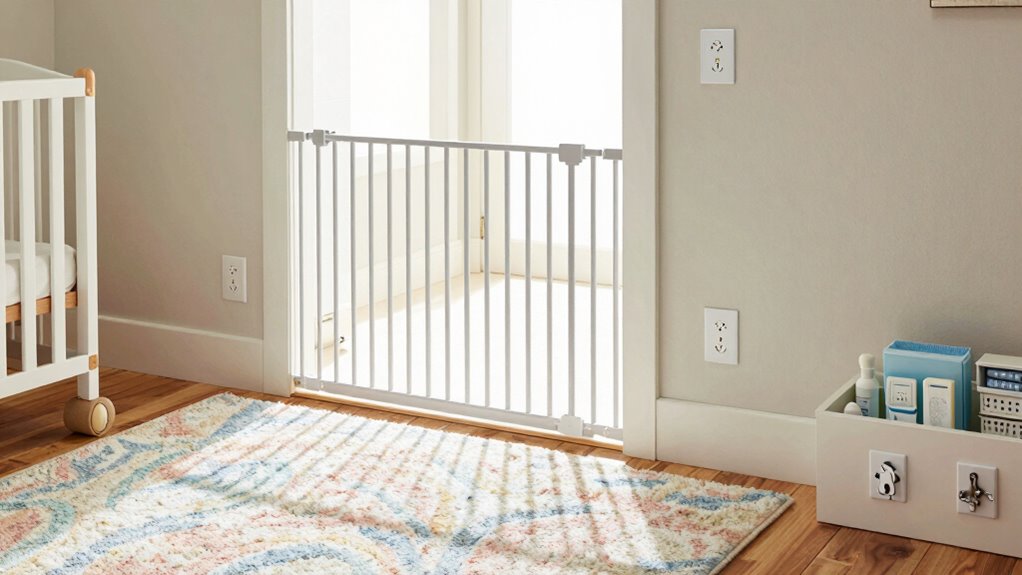

Before your baby starts crawling, it’s essential to babyproof your home. Turn off or secure ceiling fans, install safety covers on outlets, and add corner protectors to sharp furniture edges. Secure heavy furniture to walls and remove small objects that could cause choking. Install safety gates and secure windows to prevent falls. Walk through your home at your child’s eye level to spot hazards. Staying proactive now helps create a safer space as your little explorer begins to move around.

Give the gift of listening to the whole family
- Choose a 1-, 3-, 6- or 12-month membership
- They pick the audiobooks they love
- Easy to send by email
Key Takeaways
- Secure furniture and install corner protectors before baby starts crawling.
- Install outlet covers and hide electrical cords to prevent electrical hazards.
- Turn off or replace ceiling fans with safety models before baby reaches crawling age.
- Remove small objects and install safety gates to prevent falls and choking risks.
- Crawl through your home at baby’s eye level to identify hazards early.
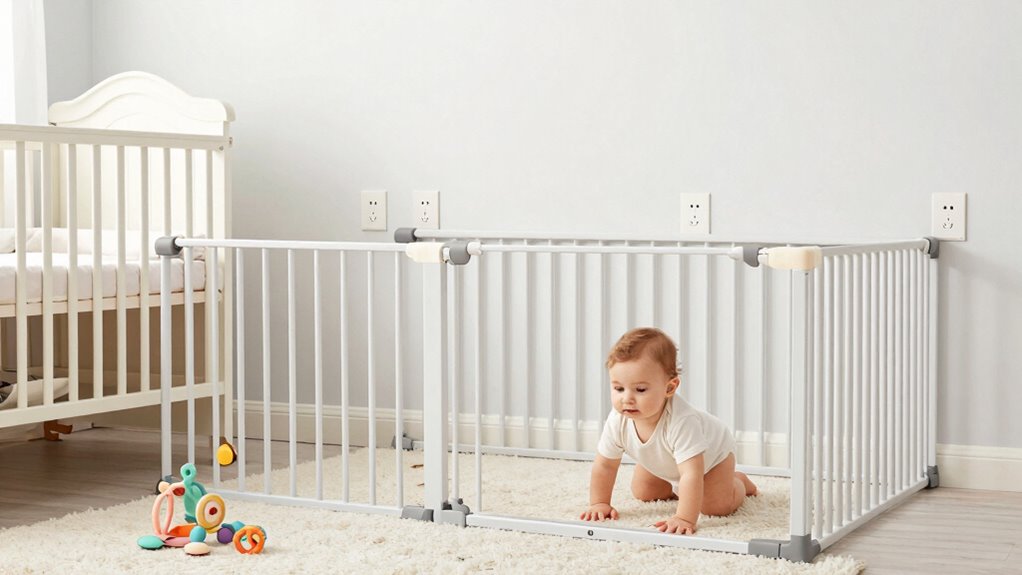
Babyproofing is a crucial step in preparing your home for your growing little explorer, and starting early can make the process smoother. The moment you realize your baby is approaching the crawling stage, it’s time to get proactive. Waiting until they start crawling can lead to risky situations; instead, you want to create a safe environment before they become mobile. One of the first areas to address is overhead hazards like ceiling fans. Fans with exposed blades pose a considerable risk, especially if your ceilings are high and the fan is in a frequently used room. Turn off ceiling fans during babyproofing or replace them with models that have safety features like blades that are less likely to cause injury if they come into contact with your little one. Additionally, installing safety covers on the fan switches can prevent accidental activation, giving you peace of mind.
Begin babyproofing early by securing ceiling fans and installing safety covers to protect your little one.
As you move through your home, focus on securing sharp edges and corners of furniture. Corner protectors become invaluable here; they’re simple to install and greatly reduce injury risks from bumps and falls. You should add corner protectors to tables, countertops, fireplace hearths, and any furniture your baby can reach. Keep in mind that babies are curious and tend to pull up on furniture, so covering corners early prevents the habit from becoming dangerous later. Beyond furniture, consider the entire layout—eliminate clutter, secure loose cords, and ensure heavy furniture is anchored to the wall. These steps prevent tipping hazards and choking risks.
In the process of babyproofing, don’t overlook electrical outlets and cords. Outlet covers are easy to install and prevent your baby from poking fingers or objects into sockets. Wrap or hide cords behind furniture to keep them out of reach. Also, check your windows and door locks to prevent accidental falls or escapes. If you have stairs, install safety gates at the top and bottom, and don’t forget to secure or remove any small objects that could be choking hazards. Additionally, exploring your home from a baby’s perspective can help you identify hazards you might otherwise miss.
Starting early with babyproofing means you get to observe your home from your baby’s perspective. Crawl around on your hands and knees, and get down to eye level to spot hazards you might otherwise miss. This proactive approach ensures you aren’t just reacting to hazards after your baby starts crawling but preventing accidents before they happen. By addressing ceiling fans, corner protectors, and other potential dangers beforehand, you create a safer environment that allows your little one to explore confidently, giving you peace of mind during this exciting stage of development.
Products Worth Considering

Nanit Smart Baby Monitor with 1080p Camera and Floor Stand

Owlet Dream Sock Smart Baby Monitor

LEGO Creator Expert Gingerbread House Building Kit, 1,477 Pieces
As an affiliate, we earn on qualifying purchases.
Frequently Asked Questions
When Should I Start Babyproofing My Home?
You should start babyproofing your home as soon as possible, ideally before your baby begins crawling. Focus on organizing the playroom safely and securing furniture to prevent tipping. Also, consider pet safety considerations, like keeping pets away from baby areas and managing pet access. Early babyproofing guarantees your home is safe, reduces stress, and gives your little one room to explore without hazards.
How Do I Prioritize Babyproofing Tasks?
Your baby’s safety depends on how you prioritize babyproofing tasks now. Start with toys safety—ensure no small parts or choking hazards—and then focus on furniture placement, securing heavy items to prevent tip-overs. Imagine a tiny explorer tumbling or choking on an unsafe toy—that’s a nightmare you can prevent. Focus on these critical areas first, then move on to outlets and cabinets, creating a safe haven for your little adventurer.
Are There Specific Babyproofing Products Recommended?
You should choose safety products like electric outlet covers and cabinet locks to keep your little one safe. Look for durable, easy-to-install options that fit your home’s needs. Electric outlet covers prevent curious fingers from getting shocked, while cabinet locks stop your baby from accessing dangerous items. Prioritize trusted brands and verify all products meet safety standards. Regularly check and update these items as your baby grows and explores new areas.
How Often Should I Reassess Babyproofing Measures?
You should reexamine your babyproofing measures every few months, especially as your little one grows and explores new areas. Regular hazard identification helps you spot potential dangers early. Use a safety checklist during each review to ensure all safety measures are effective and up-to-date. This ongoing process keeps your baby safe, allowing you to address new risks promptly and maintain a secure environment as your child develops.
What Are Common Babyproofing Mistakes to Avoid?
You might think leaving sharp edges exposed is safe—think again! Avoid overlooking common childproofing hazards like unsecured furniture, accessible cords, or unsafe household items. Never assume your baby won’t find trouble; always double-check for hidden dangers. Don’t ignore small objects or toxic substances at their reach. Remember, underestimating these hazards can turn your home into an accident waiting to happen, so stay vigilant and proactive in your safety measures.
Conclusion
By babyproofing early, you’re setting the stage for a safer, more confident crawl—think of it as laying the groundwork before the storm. Just as Prospero prepared his island, you prepare your home, ensuring your little explorer can venture freely without unnecessary risks. Remember, the goal isn’t perfection but progress. With each proactive step, you’re weaving a safety net that allows your baby’s curiosity to flourish—embracing the adventure while guarding against the unexpected.