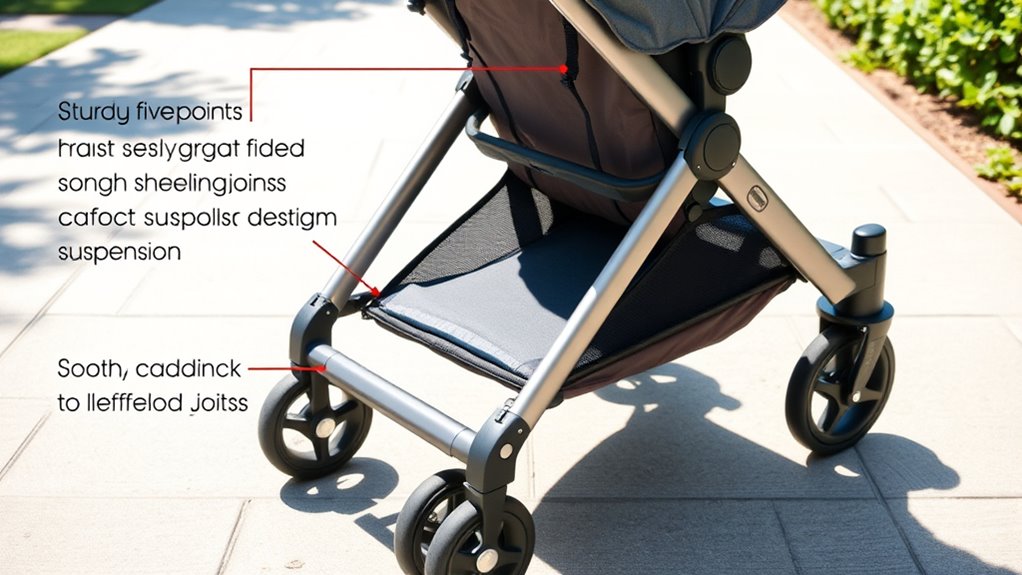

When selecting a stroller, focus on reliable safety features like responsive, easy-to-engage brakes that lock securely and release smoothly, as well as a five-point harness with adjustable, sturdy straps for maximum security and comfort. Make sure these features are simple to access and operate, and always test them before use to verify they function correctly. Prioritizing models with proven safety mechanisms will give you peace of mind—so keep exploring to discover more ways to keep your child safe.
Key Takeaways
- Ensure the stroller has responsive, easy-to-engage brakes that securely lock wheels and are simple to operate and release.
- Look for a five-point harness with adjustable, padded straps and secure buckles for optimal child restraint.
- Check that safety features like brakes and harnesses are easily accessible and intuitive to use.
- Test the stroller’s safety mechanisms by verifying brake effectiveness and harness fit before purchase.
- Prioritize models with proven, reliable safety features to ensure consistent performance and child security.
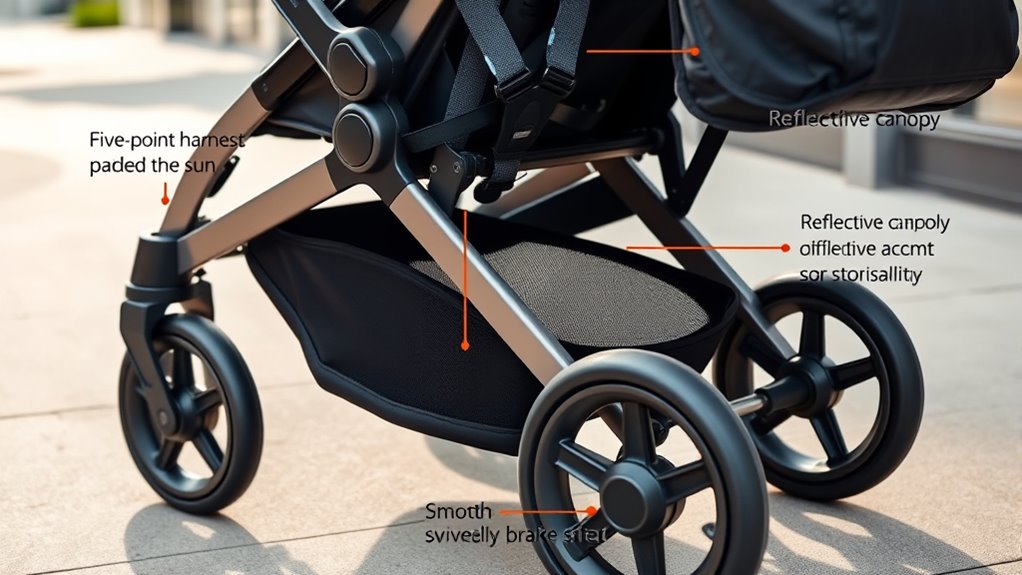
Are you confident that your stroller has all the essential safety features? Ensuring your child’s safety starts with understanding what to look for in a reliable stroller. One of the most critical safety aspects is the braking system. A good stroller should have a responsive and easy-to-engage brake. Look for models with foot-activated brakes that lock the wheels securely when you step on the pedal. Some strollers offer separate brakes for each wheel, giving you better control on uneven or slippery surfaces. Test the brake mechanism before purchasing—push the stroller forward to see if it stays put when the brake is engaged. A reliable braking system prevents accidental rollaways, especially when you’re stopping on hills or uneven terrain. It’s also vital to check how quickly the brake releases when you’re ready to move again, guaranteeing smooth transitions between stopping and going.
Another crucial safety feature involves harness types. The harness keeps your child securely seated, preventing falls or ejections. Look for a five-point harness, which has straps over the shoulders, hips, and between the legs. This configuration offers the best restraint, distributing forces evenly across your child’s body. Avoid strollers with only a lap belt or a simple harness, as they provide less security. Make sure the harness is easy to adjust and securely fastens with a sturdy buckle—nothing too complicated or prone to accidental release. The straps should be padded for comfort and adjustable to accommodate your growing child. Proper harness fit is essential; it should be snug but not tight, allowing your child to sit comfortably without slipping out. Some harnesses come with quick-release buckles for convenience, but ensure they are secure enough to prevent accidental unbuckling.
Beyond these features, consider how easily you can access and operate the braking system and harness. Accessibility matters—if you struggle to lock the brake quickly or adjust the harness, it could compromise safety. Check for clear instructions and intuitive controls. It’s also a good idea to test the stroller with your child in it, ensuring the harness fits well and that the brakes hold firmly when engaged. Remember, safety features shouldn’t be an afterthought; they should be integral to your choice. Invest in a stroller with a dependable braking system and a secure harness type—these are your first lines of defense to keep your little one safe, secure, and comfortable during every outing.
Frequently Asked Questions
How Often Should Stroller Safety Features Be Inspected?
You should inspect your stroller’s safety features monthly and before each use. Regular stroller maintenance is essential to guarantee all parts work properly. Use safety checklists to verify that brakes, harnesses, wheels, and locking mechanisms are secure. If you notice any damage or wear, address it immediately. Frequent inspections help keep your child safe and ensure your stroller remains reliable during outings.
Are There Specific Safety Standards for Strollers?
Surprisingly, there are indeed safety standards for strollers, so you can rest assured your little one’s ride is up to snuff. Look for safety certifications and safety labels, which indicate the stroller meets established safety standards. These standards are set by organizations like ASTM International or the Juvenile Products Manufacturers Association. Always verify these labels before purchasing, because a stroller without proper safety standards might just turn your peace of mind into a gamble.
Can Safety Features Be Added After Purchase?
Yes, you can add safety features after purchase through aftermarket modifications and safety feature upgrades. However, you should carefully research compatibility and quality before making any changes. Always confirm that aftermarket parts meet safety standards to avoid compromising your stroller’s integrity. Consult with the manufacturer or a professional to verify that these modifications won’t affect the stroller’s safety or warranty. Proper upgrades help keep your child safe and secure.
What Safety Features Are Essential for Newborns?
Think of your newborn’s safety as a delicate flower needing protection. You should prioritize a stroller with secure baby harnesses, ensuring your little one stays safely in place. A sturdy sun canopy shields them from harmful rays and harsh weather. These features act like a guardian, keeping your baby safe and comfortable during every outing. Always choose a stroller that emphasizes these essential safety features for your newborn’s well-being.
How Do I Ensure Stroller Safety on Uneven Terrain?
To guarantee stroller safety on uneven terrain, focus on terrain stability and suspension systems. Choose a stroller with sturdy, wide wheels designed for rough surfaces, which help prevent tipping. Activate the suspension system to absorb shocks and keep your baby comfortable. Always maintain a firm grip on the handlebar, go at a slower pace, and test the stroller on similar terrain before heading out. This keeps your little one safe and secure.
Conclusion
So, next time you choose a stroller packed with all those fancy safety features, remember—your little one’s safety isn’t just about the bells and whistles. It’s funny how we often get caught up in the extras while the basics, like a sturdy harness or reliable brakes, are what truly keep your kiddo safe. Ironically, the simplest safety measures are sometimes the most overlooked. After all, it’s those tiny details that make all the difference—just like in life.