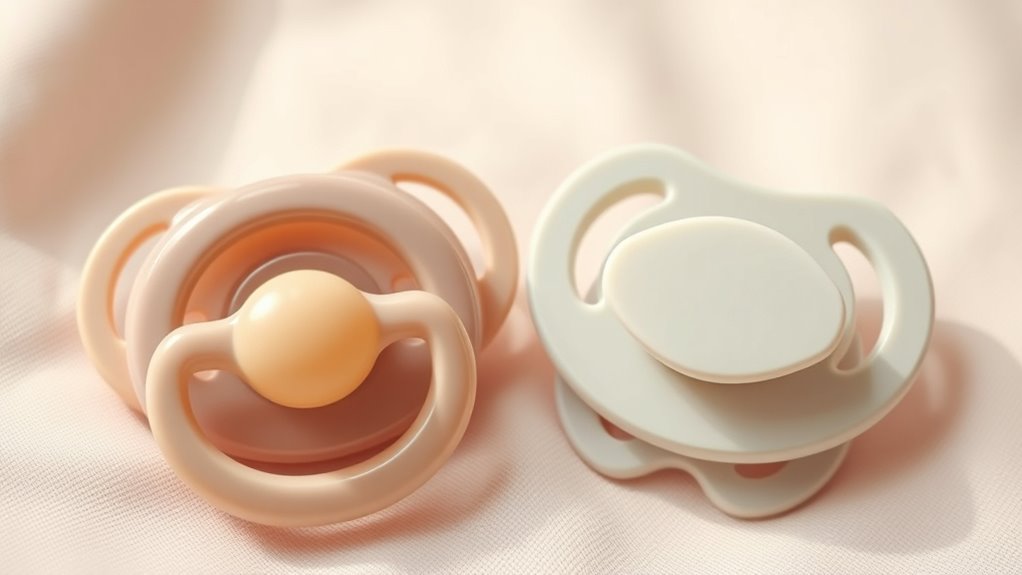

When choosing a pacifier, consider safety, durability, and allergies. Latex pacifiers are softer and more flexible but can tear, stain, and may cause allergies in sensitive babies. Silicone pacifiers are hypoallergenic, more durable, and easier to clean, making them safer for sensitive skin and long-term use. Each material has pros and cons; understanding these differences helps you make the best choice. Keep exploring to discover more about which option suits your little one best.

Turn the school run and nap time into listening time
- Thousands of audiobooks, podcasts and originals
- Listen on your phone, tablet or Echo — also offline
- Cancel anytime
Key Takeaways
- Silicone pacifiers are hypoallergenic and less likely to cause allergic reactions compared to latex.
- Latex can trigger sensitivities or allergies in some babies, posing safety concerns.
- Silicone’s non-porous surface resists bacteria buildup, enhancing safety and cleanliness.
- Latex may wear out faster, increasing the risk of small pieces breaking off and posing choking hazards.
- Silicone pacifiers are more durable, reducing the risk of tears or punctures that compromise safety.
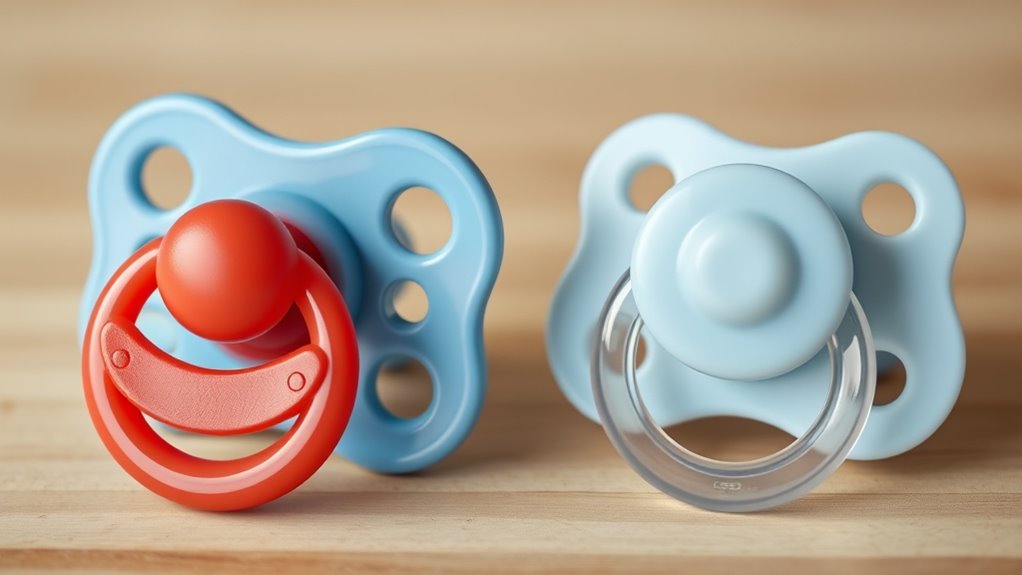
Choosing the right pacifier can be challenging, especially when deciding between latex and silicone options. One of the key factors to evaluate is material durability. Latex pacifiers are generally softer and more flexible, which many babies find comforting. However, they tend to wear out faster and are more prone to tearing or puncturing over time. If you’re looking for a pacifier that can withstand daily chewing and biting, silicone might be the better choice. Silicone pacifiers are highly durable; they resist tearing, cracking, and staining, making them last longer despite frequent use. This durability can be especially important if your baby is teething or tends to chew aggressively. Besides durability, another aspect to contemplate is color variety. Latex pacifiers often come in a wide range of vibrant colors and playful patterns, appealing to many parents and kids alike. Since latex is a natural material, manufacturers can easily add dyes and designs, giving you plenty of options to match your baby’s personality or nursery decor. Silicone pacifiers, on the other hand, typically feature a more limited color palette, often favoring clear or pastel shades. While they may have fewer options regarding color variety, silicone pacifiers are usually easier to keep looking clean and new because their non-porous surface doesn’t stain as easily as latex. If you prefer a lively, colorful selection that captures your child’s attention, latex might be more attractive. Conversely, if you prioritize ease of cleaning and a more subdued look, silicone could suit your needs better. Another point to bear in mind is that some babies develop sensitivities or allergies to latex, which can cause irritation or discomfort. Silicone is hypoallergenic and less likely to cause allergic reactions, making it a safer choice for sensitive skin. When choosing between latex and silicone, evaluate your baby’s specific needs, preferences, and any potential allergies. Ultimately, both materials have their advantages and drawbacks. Latex offers a softer, more colorful option but sacrifices some durability. Silicone provides a longer-lasting, hypoallergenic alternative with a more limited color range. Your decision should balance these factors based on your child’s comfort, safety, and your personal preferences for style and maintenance. With careful consideration, you’ll find a pacifier that’s both safe and suitable for your little one’s needs, helping soothe and comfort them through their early months.
Frequently Asked Questions
Are Silicone Pacifiers More Durable Than Latex Ones?
If you’re wondering whether silicone pacifiers are more durable than latex ones, you’ll find that silicone generally offers better material longevity and tear resistance. Silicone is less prone to cracking or breaking over time, making it more resilient to frequent use and cleaning. While latex might feel softer initially, it tends to wear out faster, so if durability is your priority, silicone is the better choice for long-term use.
Can Latex Pacifiers Cause Allergic Reactions in Babies?
If you’re wondering whether latex pacifiers can cause allergic reactions, it’s important to take into account latex allergies and pacifier sensitivities. Some babies are allergic to latex, which can lead to symptoms like redness, swelling, or rash around the mouth. If your baby shows these signs, switch to silicone pacifiers. Always watch for reactions and consult your pediatrician if you suspect a latex allergy to guarantee your little one stays safe and comfortable.
How Does Sterilization Differ Between Latex and Silicone Pacifiers?
When it comes to sterilization, cleaning methods differ between latex and silicone pacifiers. Silicone pacifiers are more heat-resistant, so you can safely sterilize them using boiling water, steam sterilizers, or microwave sterilizers without damage. Latex pacifiers, however, are more sensitive to high temperatures, so you should use gentler cleaning methods like boiling for a shorter period or chemical sterilization. Always follow manufacturer instructions to guarantee safe, effective sterilization.
Which Pacifier Type Is More Environmentally Friendly?
Imagine making a small change that can save the planet—choosing an environmentally friendly pacifier. Silicone pacifiers are often more eco-conscious because they’re made from durable, biodegradable materials, and some brands offer recycling options. Latex pacifiers, while natural, aren’t always biodegradable and can be harder to recycle. By selecting silicone, you actively reduce waste, turning a simple choice into a meaningful step toward protecting our environment.
Do Silicone Pacifiers Affect Teething Compared to Latex?
You might wonder if silicone pacifiers affect teething comfort differently than latex ones. Silicone is firmer, so it often provides less gum irritation and a more consistent teething experience. Latex is softer, which can soothe sore gums better but might cause more irritation over time. Ultimately, silicone pacifiers tend to support better teething comfort with less gum irritation, making them a popular choice for many parents.
Conclusion
Ultimately, choosing between latex and silicone pacifiers depends on your baby’s needs and your preferences. Both options have their pros and cons, so stay informed and trust your instincts. Remember, “A stitch in time saves nine”—addressing safety concerns early can prevent bigger issues later. Whichever you pick, prioritize quality and regular inspection to keep your little one safe and happy. Your attentive care makes all the difference.
Fall Picks
fall essentials
As an affiliate, we earn on qualifying purchases.