
To keep your baby safe, choose a crib mattress that’s firm, fits snugly with no gaps, and meets safety standards like CPSC and ASTM certifications. Don’t be deceived by “breathable” claims—look for real airflow features rather than marketing buzzwords. Soft or poorly fitting mattresses can cause suffocation risks. Understanding these truths helps you make better choices, so you’ll discover more practical tips to ensure your little one’s safety with each detail.
Key Takeaways
- Ensure the crib mattress is firm, providing solid support to reduce SIDS risk and prevent soft, sagging surfaces.
- Verify the mattress fits snugly in the crib, allowing only one finger’s width to prevent gaps and entrapment hazards.
- Look for safety certifications like CPSC and ASTM to confirm compliance with safety standards and chemical safety.
- Be cautious of marketing claims; “breathable” often refers to materials that promote airflow but do not guarantee safety or suffocation prevention.
- Choose eco-friendly mattresses with reliable technology, ensuring safety, durability, and sustainability without compromising standards.

Choosing the right crib mattress is vital for your baby’s safety and comfort, but with so many options on the market, it can be overwhelming. One of the most important factors to weigh is that the mattress complies with safety regulations and manufacturing standards. These guidelines are set by organizations like the Consumer Product Safety Commission (CPSC) and the American Society for Testing and Materials (ASTM). They ensure that the mattress is free from harmful chemicals, has appropriate durability, and meets size requirements to prevent gaps that could pose a suffocation risk. When shopping, always check for labels or certifications that confirm the mattress adheres to these safety standards. Avoid products that lack proper testing or are made without regard to these regulations, as they can jeopardize your baby’s safety.
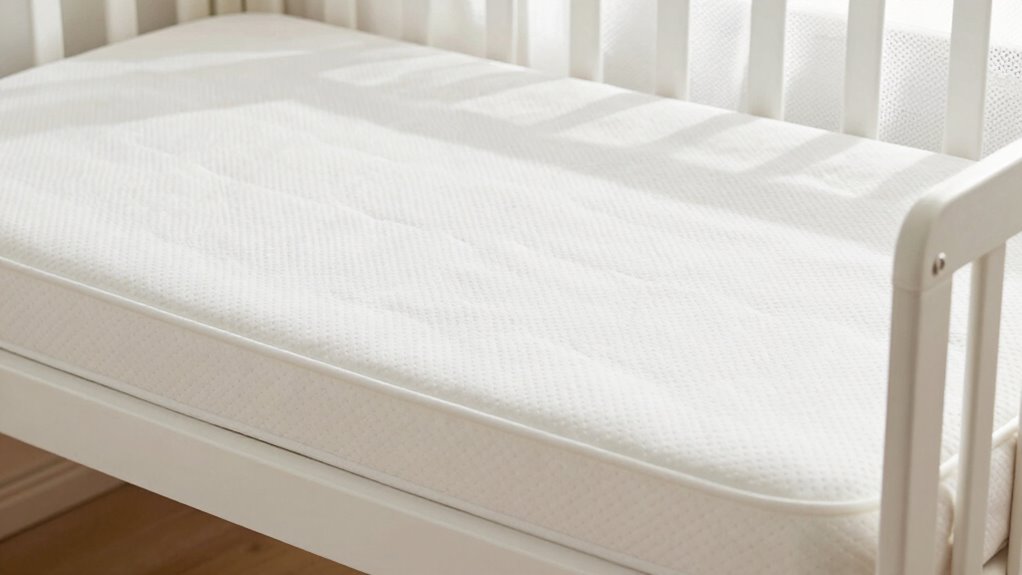
Understanding firmness is vital when selecting a crib mattress. A firm surface helps reduce the risk of Sudden Infant Death Syndrome (SIDS) and provides proper support for your baby’s developing bones. You should feel a firm, solid surface when pressing down—soft or sagging mattresses can be dangerous. While many brands claim to offer “soft” or “plush” options, these are often misleading. The best way to verify firmness is to test the mattress yourself or read reviews that specify firmness levels. Remember, a mattress that is too soft can create indentations or allow your baby’s face to sink in, increasing suffocation hazards. Manufacturers abide by safety standards that specify firmness levels, but it’s your responsibility to guarantee that the product you choose matches these criteria. Additionally, selecting a mattress made with innovative European cloud technology can offer energy-efficient and sustainable benefits, aligning safety with eco-consciousness.
Choose a firm, supportive mattress to reduce SIDS risk and ensure proper development.
The fit of the crib mattress is equally important to prevent gaps that could trap or entrap your baby. A mattress that’s too small leaves dangerous space around the edges, increasing the risk of suffocation or entrapment. Conversely, an overly tight fit can stress the mattress or damage the crib. To check the fit, insert the mattress into the crib and ensure it fits snugly with no more than one finger’s width between the mattress and the crib sides. High-quality mattresses are designed with precise dimensions to meet safety standards, but always double-check. Remember, an ill-fitting mattress can compromise safety even if the mattress itself meets all regulations.
Lastly, the term “breathable” gets thrown around a lot, but it’s often misused. Many products claim to be “breathable,” but that doesn’t mean they allow for significant airflow or reduce the risk of suffocation. Instead, look for mattresses that are made with breathable materials or have covers that promote airflow. Be wary of marketing that suggests that simply having tiny holes or mesh covers makes a mattress safe or more breathable. Ultimately, no mattress is completely breathable or safe enough to negate proper supervision and adherence to safety guidelines. Keep these considerations in mind, and you’ll make a more informed choice that prioritizes your baby’s safety and well-being.
Frequently Asked Questions
How Often Should I Replace My Baby’s Crib Mattress?
You should replace your baby’s crib mattress every 5 to 7 years to guarantee mattress longevity and safety. Keep an eye out for replacement indicators like sagging, permanent stains, or persistent odor, which can compromise comfort and hygiene. Regularly inspect the mattress for wear and tear, and if it no longer provides firm support or shows signs of deterioration, it’s time for a new one. Prioritize safety for your little one’s restful sleep.
Are Organic Crib Mattresses Safer Than Synthetic Ones?
Organic crib mattresses are generally safer because they prioritize organic safety, avoiding harmful chemicals found in some synthetic options. While synthetic mattresses tend to offer greater durability, they may contain materials that concern health-conscious parents. Choosing an organic mattress reduces chemical exposure and supports better sleep safety for your baby. Consider both safety and durability to find the best balance for your little one’s comfort and long-term use.
Can a Mattress Be Too Firm for a Baby?
A mattress can be too firm for a baby, and firmness concerns are important because they affect your baby’s comfort and safety. You want to choose a firm enough surface to support proper spinal development, but not so hard that it causes discomfort. Look for a mattress that’s firm yet cushioned, ensuring your baby feels secure without sacrificing comfort. Always prioritize quality and proper fit to promote safe, restful sleep.
What Are Signs My Crib Mattress Is Unsafe?
You might think your crib mattress is safe if it looks fine, but don’t be fooled. Signs of an unsafe mattress include sagging, tears, or a loose fit that leaves gaps. Always prioritize crib safety by doing a thorough mattress inspection regularly. If it’s uneven or shows wear, replace it immediately. Remember, a safe sleep environment isn’t just about looks—it’s about proactive checks and secure fit.
Is a Waterproof Mattress Necessary for All Cribs?
A waterproof mattress isn’t necessary for all cribs, but it offers clear benefits like easy cleaning and protection against spills or accidents. If you want to keep your baby’s sleeping environment hygienic, a waterproof cover can simplify maintenance. Keep in mind, though, you’ll need to regularly clean and replace the waterproof layer to prevent mold or odors. Consider your baby’s needs and your cleaning routines when choosing whether to get one.
Conclusion
Knowing the facts about crib mattress firmness, fit, and breathable claims helps you make safer choices for your little one. Did you know that sleep-related infant deaths have decreased by over 50% since strict guidelines on mattress safety were introduced? By understanding these truths, you’re empowering yourself to choose a mattress that truly protects your baby. Stay informed, ask questions, and prioritize safety—because every moment of peace you give your child is priceless.