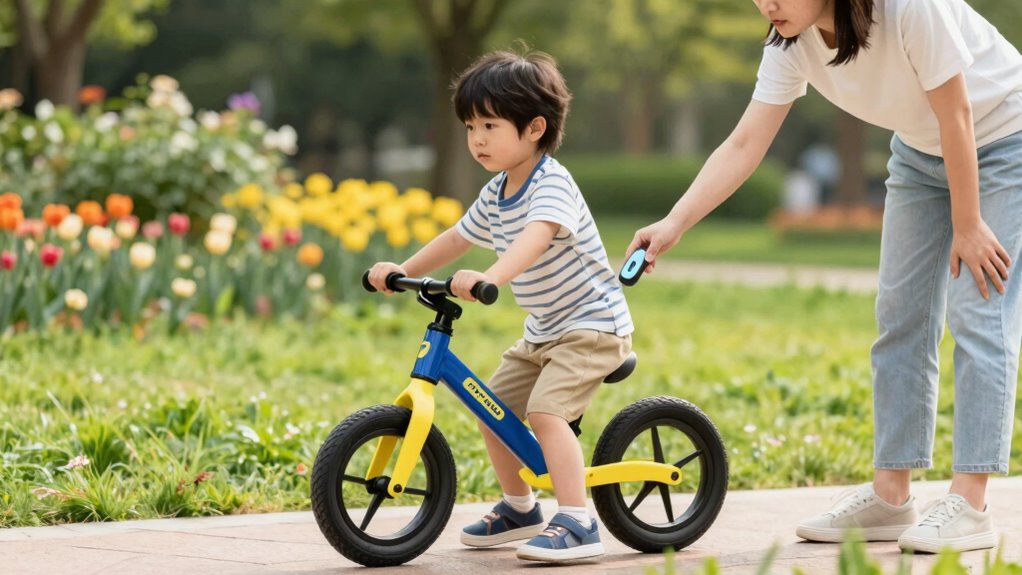
To prevent wobbly falls, make sure your child’s balance bike fits properly. Check that they can stand over the bike with both feet flat on the ground and their knees slightly bent when sitting. The seat height should allow for comfortable striding without overstretching. Ensuring a good fit builds confidence and improves balance, making falls less likely. Keep these tips in mind, and you’ll help your child ride safely and smoothly as they learn new skills.

Get baby and family essentials delivered free — and shop member deals
- Fast, free delivery on millions of items
- Access to Prime Big Deal Days deals on October 6–7
- Prime Video, Amazon Music and more included
Key Takeaways
- Ensure the child’s feet fully touch the ground while seated to maintain stability and control.
- Verify the seat height allows a slight bend in the knees when sitting comfortably on the saddle.
- Confirm the handlebars are at a comfortable height, enabling easy steering without overreaching.
- Check that the bike’s weight is manageable for the child to handle confidently during balance exercises.
- Observe the child’s ability to glide smoothly, stopping and starting confidently, indicating proper fit and balance.
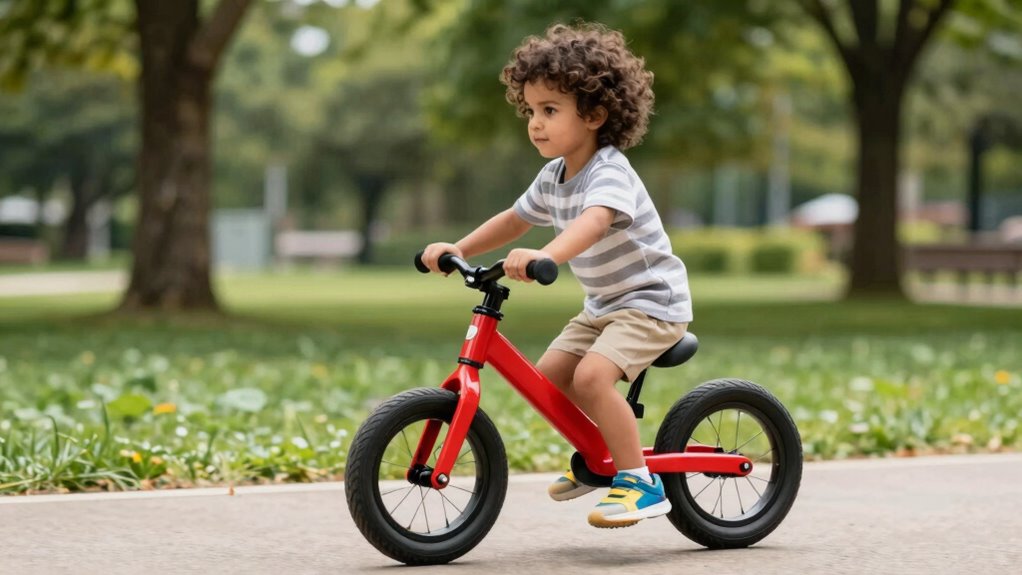
Balance bikes are an excellent way to help young children learn how to ride a bike without the need for training wheels. They allow your child to develop balance and coordination first, which makes the subsequent pedal transition much smoother. When your child is comfortable gliding on a balance bike, they’ll naturally gain confidence in their ability to control the bike, setting a solid foundation for pedal riding. As you watch them maneuver, it’s essential to guarantee they’re wearing the right safety gear. A helmet, knee pads, and elbow pads protect against falls and scrapes, especially since balance bikes can sometimes lead to wobbly moments. Proper safety gear isn’t just about protection; it also encourages your child to ride more confidently, knowing they’re safeguarded.
Balance bikes help children develop confidence and coordination safely with proper safety gear.
When it’s time to introduce pedals, keep in mind that the transition should be gradual. Once your child masters balancing and gliding comfortably, you can start to introduce pedal bikes. However, rushing this step can lead to frustration or falls. A good rule of thumb is to make certain your child can confidently stop and start without wobbling, and has good control over the bike’s steering. This way, the pedal transition feels natural rather than overwhelming. Some children might need a few weeks of riding on a balance bike before they’re ready for pedals, but patience is key. When they’re prepared, switching to a pedal bike can feel like an exciting new adventure rather than a formidable challenge.
During this shift, safety gear remains essential. Equip your child with a helmet and pads, especially as they learn to pedal and navigate more complex terrains. The focus should be on building skills gradually, not pushing too hard too soon. As your child gets comfortable pedaling, they’ll rely less on the balance skills they’ve already developed and more on their new pedaling techniques. It’s a good idea to choose a bike that fits well and is lightweight enough for them to handle easily. This will help prevent wobbling and falls, giving them a steady experience as they learn to pedal with confidence. Additionally, incorporating energetic alignment practices can help boost their focus and coordination during riding.
Remember that every child learns at their own pace. Some will switch from balance to pedal bikes quickly, while others need more time. Keep the experience positive, and celebrate small victories along the way. The right safety gear, patience during the pedal transition, and consistent encouragement will help your child develop the skills they need to ride confidently, avoiding wobbly falls and setting the stage for a lifelong love of biking.
As an affiliate, we earn on qualifying purchases.
Frequently Asked Questions
When Should My Child Move From a Balance Bike to a Pedal Bike?
You should consider moving your child from a balance bike to a pedal bike when they can confidently balance, ride comfortably with proper riding posture, and can stop safely. Make sure they’re wearing a well-fitting bike helmet and can handle starting and stopping smoothly. Once they show steady balance and coordination, it’s time to shift, ensuring they feel secure and focused on enjoying their ride.
How Do I Choose the Right Size Balance Bike for My Child?
Think of choosing a balance bike like finding a seat that fits perfectly; it should feel just right. To pick the right size, focus on bike frame fit—your child’s inseam measurement is key. For wheel size, a 12-inch wheel suits younger or smaller kids, while 14-inch works for larger ones. make sure your child can sit comfortably with feet flat on the ground and handlebar reach without strain.
Are Balance Bikes Suitable for All Terrains and Weather Conditions?
Balance bikes are generally suitable for most terrains, offering good terrain versatility, but you should consider weather conditions. They work well on smooth surfaces like pavement and packed dirt, but rough, rocky, or muddy terrains may be challenging. During wet or icy weather, the bike’s tires may lose traction, so it’s best to ride in dry conditions or equip the bike with appropriate tires for better grip. Always prioritize safety based on weather considerations.
What Safety Gear Is Recommended When Riding a Balance Bike?
Imagine your child zooming down the sidewalk, wind in their hair, feeling confident. To keep that moment safe, you should always have them wear a helmet, ensuring helmet safety with a snug fit. Protective gear like knee and elbow pads also shields against falls, especially on uneven surfaces. These safety essentials help your little rider enjoy their adventure while minimizing injuries, making every ride both fun and secure.
How Can I Encourage My Child to Practice Balance Bike Skills Consistently?
You can encourage your child to practice balance bike skills consistently by using motivational strategies like setting achievable goals and offering plenty of praise. Make fun practice sessions by turning them into playful activities or mini adventures. Keep sessions short and engaging to prevent fatigue and boredom. Celebrate successes, no matter how small, to boost confidence. Your enthusiasm and positive reinforcement will inspire your child to keep practicing regularly.
kids safety helmet for balance bike
As an affiliate, we earn on qualifying purchases.
As an affiliate, we earn on qualifying purchases.
Conclusion
Remember, a proper fit isn’t just a detail—it’s the steady foundation beneath your child’s first ride. When the bike aligns perfectly, it’s like planting a seed of confidence that will grow strong and tall. Skip the fit test, and you risk wobbling through the journey, much like a boat tossed on rough seas. So, take the time to get it right; it’s the compass guiding your little adventurer toward smooth, joyful rides ahead.
As an affiliate, we earn on qualifying purchases.
lightweight balance bike for toddlers
As an affiliate, we earn on qualifying purchases.
As an affiliate, we earn on qualifying purchases.
Cold & flu season Picks
humidifiers
As an affiliate, we earn on qualifying purchases.