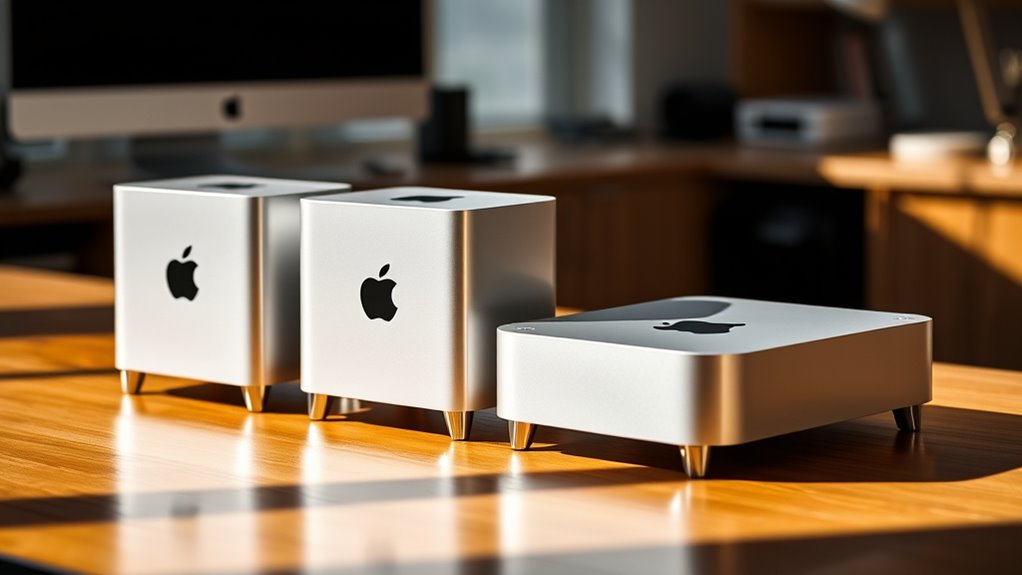

Among renewed Mac mini desktops in this lineup, I’d put the 2020 M1 with 16GB RAM and 256GB SSD first for its newer chip and memory headroom. The M1 with 16GB RAM and 1TB SSD suits buyers who keep large files on the computer, while the M1 with 8GB RAM and 512GB SSD offers a useful middle ground. The main tradeoff is between the M1 generation’s newer architecture and older Intel models, which may fit particular software needs but vary widely in age, memory, and storage. The oldest 4GB HDD configurations are best approached as basic, low-demand machines rather than flexible everyday computers. Read on for the full ranking, buying advice, and answers to common questions.

Turn the school run and nap time into listening time
- Thousands of audiobooks, podcasts and originals
- Listen on your phone, tablet or Echo — also offline
- Cancel anytime
Complete the kit


Key Takeaways
- The M1 models lead this comparison: the 16GB configurations offer more memory headroom than any listed Intel option, while the 8GB models remain alternatives for lighter workloads.
- Memory and storage affect different kinds of users: 16GB RAM helps with heavier multitasking; a larger SSD mainly benefits buyers who keep apps and files locally.
- The 2018 Intel options vary meaningfully: the 16GB/512GB configuration has more room for multitasking and files than the 8GB/256GB and 8GB/128GB versions.
- The 4GB HDD systems are the narrowest-fit picks: they may suit basic legacy or simple desktop tasks, but their older processors, limited memory, and spinning drives constrain everyday flexibility.
- Renewed condition is separate from model performance: check the specific seller’s return terms, included accessories, and condition details before choosing between otherwise similar configurations.


| renewed mac mini desktop | Processor | Memory | Storage | Graphics |
|---|---|---|---|---|
| Apple Late 2018 Mac Mini with | 3.0GHz Intel Core i5, 6-core | 16GB DDR4 | 512GB SSD | Intel UHD Graphics 630 |
| Apple 2020 Mac Mini with M1 Ch | Apple M1 | 16GB DDR4 SDRAM | 256GB SSD | Integrated graphics, 16GB shared memory |
| Apple Mac Mini with M1 Chip | Apple M1 | 8GB DDR4 | 512GB SSD | Integrated, shared |
| Apple Late 2018 Mac Mini with | 3.0GHz 6-core Intel Core i5 | 8GB DDR3 SDRAM | 256GB SSD | Intel UHD Graphics 630 |
| Apple Late 2018 Mac Mini with | 3.0GHz 8th-generation Intel Core i3, quad-core | 8GB DDR4 SDRAM | 128GB SSD | Intel UHD Graphics 630 |
| Apple 2020 Mac Mini with M1 Ch | Apple M1, 8-core CPU | 16GB | 1TB SSD | 8-core GPU |
| Apple Mac Mini MGEM2LL/A 1.4 G | Dual-core Intel Core i5 | 4GB LPDDR3 | 500GB 5400 RPM HDD | Intel HD Graphics 5000 |
| Apple Mac mini | 1.4 GHz dual-core Intel Core i5 | 4GB DDR3 | 500GB HDD | Intel HD Graphics 5000 |
| Apple Mac Mini Desktop | Intel Core i3, 4-core | 8GB DDR4 | 256GB SSD | Intel UHD Graphics 630 |
| Apple Mac Mini with M1 Chip | Apple M1, 8-core | 8GB | 256GB SSD | Integrated 8-core GPU |
More Details on Our Top Picks
Apple Late 2018 Mac Mini with 3.0GHz Intel Core i5, 16GB RAM, 512GB SSD, Space Gray (Renewed)
I’d rank this 2018 Mac mini as the strongest Intel option here for buyers who want room for everyday multitasking. Its six-core 3.0GHz Core i5, 16GB of RAM, and 512GB SSD give it more memory and storage headroom than the 8GB/256GB 2018 i5 model. That makes it a better fit for keeping several work apps open or storing a larger set of files locally. The Intel UHD Graphics 630 is still integrated, though, so this isn’t the choice for demanding gaming or graphics work. Compared with the 2020 M1 Mac mini with 16GB RAM, it offers more SSD capacity in this configuration, but the M1 is the more compelling pick for buyers who prefer Apple silicon. The 90-day warranty and non-original accessories are meaningful renewed-purchase tradeoffs.
Pros:- Six-core Core i5 processor suits a broad range of everyday workloads
- 16GB RAM provides more multitasking headroom than the 8GB 2018 models
- 512GB SSD offers the largest listed storage capacity among these five options
- Compact desktop design takes up little desk space
Cons:- Integrated Intel graphics are a poor fit for demanding gaming or graphics-heavy work
- Accessories are compatible replacements rather than original Apple accessories
- Renewed listing specifies a 90-day warranty and does not claim Apple certification
Best for: Buyers who need an Intel-based compact desktop with 16GB RAM and substantial built-in storage for office work, browsing, and general multitasking.
Not ideal for: People seeking newer Apple silicon, demanding graphics performance, or the reassurance of Apple-certified refurbishment.
- Processor:3.0GHz Intel Core i5, 6-core
- Memory:16GB DDR4
- Storage:512GB SSD
- Graphics:Intel UHD Graphics 630
- Operating system:macOS Ventura
- Connectivity:Bluetooth, USB-C
- Color:Space Gray
- Warranty:90 days
Our verdict“Choose this renewed Mac mini if you want the most storage and memory among these Intel options, but pick the 16GB M1 model if Apple silicon matters more.”
Apple 2020 Mac Mini with M1 Chip, 16GB RAM, 256GB SSD, Silver (Renewed)
This is my lead recommendation for buyers who want a renewed Mac mini with Apple silicon and 16GB RAM. The M1 platform paired with that memory makes it a stronger fit for everyday work across multiple apps than the 8GB M1 model, while its compact case keeps the desktop unobtrusive. The main compromise is 256GB of SSD storage: the 2018 Core i5 model with 16GB RAM and 512GB SSD gives you twice the listed capacity, which matters if you keep large projects or media files on the computer. The M1’s integrated graphics also aren’t a substitute for a dedicated graphics card. I’d favor this over the Intel options for buyers prioritizing Apple silicon, but anyone with a large local library should compare its storage limit against the 512GB M1 configuration elsewhere in the roundup. Internal upgrades are limited.
Pros:- M1 processor provides an Apple-silicon option in this group
- 16GB RAM is a better match for heavier multitasking than the 8GB M1 model
- Compact desktop footprint suits a crowded desk
- SSD storage supports quick access to files and applications
Cons:- 256GB SSD may feel restrictive for large media libraries or project files
- Integrated graphics are not designed for high-end gaming or demanding graphics work
- Limited internal upgrade options reduce flexibility after purchase
Best for: Mac users who keep several everyday work apps open and want an M1 desktop with 16GB RAM, while relying on external storage or cloud files for larger libraries.
Not ideal for: Buyers who need 512GB or more of built-in storage, plan graphics-intensive gaming, or want to upgrade internal components later.
- Processor:Apple M1
- Memory:16GB DDR4 SDRAM
- Storage:256GB SSD
- Graphics:Integrated graphics, 16GB shared memory
- Operating system:macOS
- Connectivity:USB, Wi-Fi 802.11a/b/g/n, Bluetooth
- Color:Silver
- Weight:1.18 kg
Our verdict“Pick this renewed M1 Mac mini for Apple-silicon performance and 16GB memory, provided 256GB of internal storage fits your workflow.”
Apple Mac Mini with M1 Chip (8GB RAM, 512GB SSD, Renewed)
I’d choose this M1 configuration when 512GB of built-in SSD storage matters more than having 16GB of RAM. It shares the M1 platform with the 16GB M1 Mac mini, but its 8GB unified memory leaves less headroom for demanding multitasking. In exchange, it doubles that model’s listed storage, making it more convenient for buyers who keep files and applications on the desktop rather than leaning on external drives. The compact silver design and M1 processor suit everyday computing and many common work tasks; integrated graphics still limit its appeal for high-end gaming. Compared with the 2018 Intel i5/16GB/512GB model, this one brings Apple silicon but less memory. Its 90-day limited warranty and lack of an included keyboard or monitor mean buyers should plan for the rest of their setup.
Pros:- M1 processor offers Apple silicon in a compact desktop
- 512GB SSD provides more local capacity than the 256GB M1 configuration
- Small footprint suits home offices and shared desks
- 90-day limited warranty is specified
Cons:- 8GB memory offers less multitasking headroom than the 16GB M1 and Intel options
- Integrated graphics are not suited to high-end gaming
- Keyboard and monitor are not included
Best for: M1-focused buyers who want 512GB of local storage for applications and files and mainly use a moderate number of apps at once.
Not ideal for: Power users who regularly run memory-intensive workloads, need demanding graphics performance, or expect a keyboard and monitor in the box.
- Processor:Apple M1
- Processor speed:3.1GHz
- Memory:8GB DDR4
- Storage:512GB SSD
- Graphics:Integrated, shared
- Operating system:Mac OS
- Connectivity:Wi-Fi
- Warranty:90-day limited
Our verdict“Choose this renewed M1 model if you value 512GB of internal storage over the 16GB RAM found in the other M1 option.”
Apple Late 2018 Mac Mini with 3.0GHz Intel Core i5, 8GB RAM, 256GB SSD, Space Gray (Renewed)
This 2018 Mac mini is the practical Intel choice for a desk built around several wired peripherals. Its four Thunderbolt 3 ports, HDMI 2.0, and two USB 3 ports give it more clearly listed connection options than the M1 listings in this batch, which can help when a setup includes external displays and storage. The six-core Core i5 is a capable everyday processor, but this configuration pairs it with just 8GB RAM and a 256GB SSD. Compared with the 16GB/512GB 2018 i5 model, it sacrifices both memory and storage; compared with the 16GB M1 Mac mini, it also uses an older Intel platform. The listing’s included-display description conflicts with its Mac mini title and dimension data, so I would verify exactly what is included before buying. Its 90-day limited warranty is another constraint.
Pros:- Four Thunderbolt 3 ports, HDMI 2.0, and two USB 3 ports support varied wired setups
- Six-core 3.0GHz Core i5 is suited to everyday personal and business tasks
- 256GB SSD is more capacity than the 128GB entry-level 2018 model
- Compact Mac mini format fits a desktop setup
Cons:- 8GB RAM and 256GB SSD trail the 16GB/512GB 2018 i5 configuration
- Intel UHD Graphics 630 is integrated and not a fit for demanding graphics workloads
- Listing has conflicting display information and specifies a 90-day limited warranty
Best for: Buyers who specifically need an Intel Mac mini with multiple Thunderbolt 3, HDMI, and USB connections for a peripheral-heavy desk.
Not ideal for: People who need 16GB RAM, substantial internal storage, a clearly specified display bundle, or a longer stated warranty.
- Processor:3.0GHz 6-core Intel Core i5
- Memory:8GB DDR3 SDRAM
- Storage:256GB SSD
- Graphics:Intel UHD Graphics 630
- Ports:Four Thunderbolt 3 (USB-C), HDMI 2.0, two USB 3
- Operating system:Mac OS Mojave
- Color:Space Gray
- Warranty:90-day limited
Our verdict“Consider this renewed Intel Mac mini if its listed port selection matches your setup, but verify the display details and accept its lower memory and storage.”
Apple Late 2018 Mac Mini with 3.0GHz Intel Core i3, 8GB RAM, 128GB SSD, Space Gray (Renewed)
Among these five, this is the simplest route to a renewed 2018 Intel Mac mini, but its 128GB SSD sets a tight limit on local files and installed apps. The quad-core 3.0GHz Core i3 and 8GB RAM are better matched to browsing, documents, and light home-office use than to demanding workloads. Its listed four Thunderbolt 3 ports, HDMI 2.0, and two USB 3 ports give it useful wired connections, a strength it shares with the 2018 Core i5 model. That i5 option is the more sensible comparison for buyers who need extra processor capacity, while the 16GB M1 models offer a different platform and more memory. The integrated Intel graphics are not for high-end gaming, and the listing specifies macOS Mojave. I’d select this only if modest computing needs make its limited storage workable.
Pros:- Quad-core 3.0GHz Core i3 suits basic productivity and everyday use
- Four Thunderbolt 3 ports, HDMI 2.0, and two USB 3 ports support a range of peripherals
- 8GB DDR4 memory is listed
- Compact Space Gray desktop design
Cons:- 128GB SSD leaves little room for large applications and local files
- 8GB RAM and Core i3 processor are less suited to demanding multitasking than the 2018 i5 models
- Intel integrated graphics are not appropriate for high-end gaming or graphics-heavy work
Best for: Light-use buyers who want a compact Intel Mac for documents, web browsing, and basic home-office tasks with mostly external or cloud storage.
Not ideal for: People with large local file collections, memory-heavy workflows, demanding games, or a preference for an M1 Mac mini.
- Processor:3.0GHz 8th-generation Intel Core i3, quad-core
- Memory:8GB DDR4 SDRAM
- Storage:128GB SSD
- Graphics:Intel UHD Graphics 630
- Operating system:macOS Mojave
- Ports:Four Thunderbolt 3 (USB-C), HDMI 2.0, two USB 3
- Network:802.11ac Wi-Fi, Gigabit Ethernet
- Color:Space Gray
Our verdict“Choose this renewed Mac mini for light desktop tasks and a multiport Intel setup, but skip it if you need generous storage or more workload headroom.”
Apple 2020 Mac Mini with M1 Chip, 16GB RAM, 1TB SSD, Silver (Renewed)
Among these renewed Mac minis, this M1 configuration is the strongest fit for buyers who keep many apps open and store large working files locally. Its 16GB of unified memory gives it more headroom than the 8GB M1 model, while the 1TB SSD offers four times the listed capacity of that alternative. The M1’s 8-core CPU and GPU also make this a more capable everyday machine than the older dual-core Intel options with 4GB RAM and spinning hard drives. The tradeoff is a fixed internal configuration: memory and storage are not practical upgrade paths, so choose the capacity you need upfront. It is also not a dedicated graphics workstation, and the product data does not specify a display size despite mentioning one as a limitation.
Pros:- M1 8-core CPU and GPU provide a capable foundation for everyday and demanding general workloads.
- 16GB unified memory offers more multitasking headroom than the 8GB M1 model in this lineup.
- 1TB SSD provides ample space and faster access than the older 500GB hard-drive models.
- Renewed listing states that the unit comes with a limited warranty and support.
Cons:- Memory and storage are integrated, limiting future upgrades.
- Integrated graphics are not a substitute for a dedicated GPU in graphics-heavy work.
- The larger SSD and memory configuration may be unnecessary for light browsing and office use.
Best for: People who run several work apps at once and need substantial local storage for documents, media, or creative projects.
Not ideal for: Buyers who need upgradeable memory or storage, dedicated graphics, or a low-cost basic desktop.
- Processor:Apple M1, 8-core CPU
- Graphics:8-core GPU
- Memory:16GB
- Storage:1TB SSD
- Operating system:Mac OS
- Color:Silver
- Connectivity:USB, Wi-Fi 802.11a/b/g/n, Bluetooth
- Weight:1.18 kg
Our verdict“Choose this M1 Mac mini if you want the lineup’s strongest combination of multitasking memory and built-in storage.”
Apple Mac Mini MGEM2LL/A 1.4 GHz Intel Core i5, 4 GB LPDDR3 RAM, 500 GB HDD (Renewed)
This renewed Mac mini’s clearest advantage is its stated support for two displays up to 2560 × 1600 through HDMI and Thunderbolt. That makes it a plausible choice for a fixed, light-duty desk setup, especially if those connections matter more than speed. Compared with the M1 Mac mini with 8GB RAM and a 256GB SSD, though, its 4GB of memory and 5400 RPM hard drive are major constraints for modern multitasking and quick launches. The dual-core 1.4GHz Core i5 can handle basic tasks, but it is not the pick I’d make for demanding apps or a long-term primary computer. Its compact 7.7-inch-square footprint is appealing; the aging storage and limited memory are the price of that legacy-focused fit.
Pros:- Supports up to two displays at 2560 × 1600 through HDMI and Thunderbolt.
- Compact 7.7-inch-square footprint fits easily on a crowded desk.
- Intel Core i5 processor is suitable for basic everyday computing.
- Includes both HDMI and Thunderbolt display connections.
Cons:- 4GB RAM leaves little room for multitasking compared with the 8GB and 16GB options.
- 5400 RPM hard drive is much slower than the SSDs in the M1 and quad-core i3 models.
- Older dual-core processor and limited upgradeability constrain its usefulness for demanding work.
Best for: A buyer maintaining a basic, older Mac setup who needs HDMI and Thunderbolt connections for two supported displays.
Not ideal for: People who multitask heavily, expect fast app loading, or want a renewed Mac mini suited to current demanding software.
- Processor:Dual-core Intel Core i5
- Processor speed:1.4 GHz
- Memory:4GB LPDDR3
- Storage:500GB 5400 RPM HDD
- Graphics:Intel HD Graphics 5000
- Display support:Up to two displays at 2560 × 1600
- Ports:HDMI, Thunderbolt
- Dimensions:7.7 × 7.7 × 1.4 inches
Our verdict“Pick this only for a simple legacy desktop where its dual-display connections matter more than speed or multitasking capacity.”
Apple Mac mini, 1.4GHz Intel Core i5 Dual Core, 4GB RAM, 500GB HDD, Mac OS, Silver (Renewed)
For a buyer who wants a small Mac for simple household tasks, this listing offers a familiar older Mac mini format with 500GB of storage and wireless connectivity. Its 1.4GHz dual-core i5 and Intel HD Graphics 5000 suit light browsing or straightforward office work, but the 4GB RAM and hard drive make it a poor match for heavier app use. The closely related MGEM2LL/A listing in this roundup explicitly describes support for two high-resolution displays; this one instead specifies 802.11ac Wi-Fi and a 90-day limited warranty, so those details may matter more to its intended buyer. Both trail the M1 models substantially in memory, storage speed, and general headroom. I’d treat this as a modest, fixed-purpose desktop rather than a flexible computer for years of growing workloads.
Pros:- Compact silver desktop design is suited to home or office desks.
- 500GB hard drive provides more listed capacity than the 256GB SSD options.
- 802.11ac Wi-Fi and Bluetooth are specified for wireless connections.
- Listing states a 90-day limited warranty.
Cons:- 4GB RAM limits practical multitasking.
- The 500GB HDD is slower than the SSD storage in the M1 and quad-core i3 options.
- Intel HD Graphics 5000 is not suited to high-end gaming or demanding graphics work.
Best for: A household user who needs a compact Mac for light browsing, basic documents, and familiar macOS workflows.
Not ideal for: Students or professionals who keep many browser tabs and apps open, or anyone needing fast storage or graphics-heavy performance.
- Processor:1.4 GHz dual-core Intel Core i5
- Memory:4GB DDR3
- Storage:500GB HDD
- Graphics:Intel HD Graphics 5000
- Operating system:macOS
- Connectivity:Thunderbolt, Wi-Fi 802.11a/b/g/n/ac, Bluetooth
- Warranty:90-day limited warranty
- Model number:MGEM2LL/A
Our verdict“Choose this for light home computing when its larger hard drive matters more than speed, memory, or graphics capability.”
Apple Mac Mini Desktop – Intel Core i3, 8GB RAM, 256GB SSD (Renewed)
This renewed Intel Mac mini takes a practical middle path: its quad-core 3.6GHz Core i3, 8GB RAM, and 256GB SSD avoid the slow hard-drive bottleneck found in both 4GB Core i5 models. It is the Intel pick I’d favor for general desktop work when Thunderbolt 3 connectivity matters. The four Thunderbolt 3 ports, HDMI 2.0, and two USB 3 ports give it a more flexible connection mix than the older MGEM2LL/A models, while its SSD should make everyday starts and file access feel more responsive than their 5400 RPM drives. The compromise is capacity: 256GB fills sooner than the 1TB M1 model, and 8GB RAM is below the 16GB M1 option. It also has integrated graphics and a stated 90-day limited warranty.
Pros:- Quad-core 3.6GHz processor is a stronger general-work fit than the 1.4GHz dual-core models.
- 256GB SSD offers faster storage access than the older 500GB HDD options.
- Four Thunderbolt 3 ports, HDMI 2.0, and two USB 3 ports provide broad connectivity.
- 8GB DDR4 memory gives it more multitasking capacity than the 4GB Intel models.
Cons:- 256GB SSD offers less capacity than the 500GB and 1TB options in this batch.
- 8GB RAM is less headroom than the 16GB M1 configuration.
- Integrated Intel UHD Graphics 630 is not a dedicated graphics solution.
Best for: A buyer who needs an Intel-based Mac mini with Thunderbolt 3, HDMI, and SSD storage for everyday desk work.
Not ideal for: People who need large built-in storage, substantial memory for heavy workloads, or dedicated graphics.
- Processor:Intel Core i3, 4-core
- Processor speed:3.6 GHz
- Memory:8GB DDR4
- Storage:256GB SSD
- Graphics:Intel UHD Graphics 630
- Ports:Four Thunderbolt 3 (USB-C), HDMI 2.0, two USB 3
- Connectivity:Wi-Fi 802.11ac, Gigabit Ethernet
- Warranty:90-day limited warranty
Our verdict“Choose this Intel model if you value a quad-core processor, SSD responsiveness, and Thunderbolt 3 more than maximum memory or storage.”
Apple Mac Mini with M1 Chip, 8GB RAM, 256GB SSD – Silver (Renewed)
This is the more approachable M1 choice for buyers who want the newer chip’s capability without stepping up to the 16GB/1TB configuration. Against the Intel Core i3 Mac mini, the M1 processor and integrated 8-core GPU make it the better fit for everyday multimedia and general use, while the i3 model counters with four Thunderbolt 3 ports and a broader listed port selection. Storage and memory are the main limits here: 8GB RAM and a 256GB SSD match the capacity of the Intel i3 option but fall well short of the 16GB/1TB M1 model. Since the components are integrated, there is little room to expand later. The listing specifies three USB ports and HDMI, plus a 90-day limited warranty; buyers should confirm these connections fit their setup.
Pros:- M1 processor and 8-core GPU provide a capable platform for everyday and multimedia tasks.
- 256GB SSD gives faster access than the HDD-equipped older Intel options.
- Compact 1.18 kg desktop is easy to fit into a small workspace.
- Listing states a 90-day limited warranty.
Cons:- 8GB RAM offers less multitasking headroom than the 16GB M1 model.
- 256GB storage is modest beside the 1TB M1 configuration.
- Integrated memory and storage limit future upgrades.
Best for: Everyday Mac users who want an M1 desktop for office tasks, browsing, and multimedia without needing large local storage.
Not ideal for: People who need 16GB memory, a large internal drive, or multiple Thunderbolt 3 connections.
- Processor:Apple M1, 8-core
- Graphics:Integrated 8-core GPU
- Memory:8GB
- Storage:256GB SSD
- Operating system:Mac OS
- Ports:Three USB, one HDMI
- Connectivity:Wi-Fi 802.11a/b/g/n/ac, Bluetooth
- Warranty:90-day limited warranty
Our verdict“Pick this M1 Mac mini for everyday use if you prefer the M1 platform over Intel and can work within 8GB RAM and 256GB storage.”

How We Picked
I ranked these renewed Mac mini desktops by the practical balance of processor generation, memory, storage, and suitability for common home and office workloads. The M1 models rank ahead of the older Intel systems because they offer a newer platform, with the 16GB versions favored for multitasking and the larger SSD configurations favored for local storage needs. Among the 2018 Intel models, I gave more weight to configurations with extra memory and SSD capacity. I placed the 4GB HDD models lower because their limited resources leave less room for modern apps and multiple tasks.
I also considered how easily each configuration maps to a clear buyer need, rather than treating a larger drive as a universal upgrade. Storage capacity can often be supplemented externally, while buyers should not assume a renewed machine can be upgraded internally; verify the exact model and configuration before purchase. The supplied product names do not establish details such as battery condition, cosmetic grade, warranty, or return policy, so I treat those as seller-specific checks rather than ranking claims. This ordering favors longer-term everyday usefulness while preserving lower-ranked options for specific legacy or basic-use cases.
| renewed mac mini desktop | Operating system | Connectivity | Color | Ports |
|---|---|---|---|---|
| Apple Late 2018 Mac Mini with | macOS Ventura | Bluetooth, USB-C | Space Gray | — |
| Apple 2020 Mac Mini with M1 Ch | macOS | USB, Wi-Fi 802.11a/b/g/n, Bluetooth | Silver | — |
| Apple Mac Mini with M1 Chip | Mac OS | Wi-Fi | — | — |
| Apple Late 2018 Mac Mini with | Mac OS Mojave | — | Space Gray | Four Thunderbolt 3 (USB-C), HDMI 2.0, two USB 3 |
| Apple Late 2018 Mac Mini with | macOS Mojave | — | Space Gray | Four Thunderbolt 3 (USB-C), HDMI 2.0, two USB 3 |
| Apple 2020 Mac Mini with M1 Ch | Mac OS | USB, Wi-Fi 802.11a/b/g/n, Bluetooth | Silver | — |
| Apple Mac Mini MGEM2LL/A 1.4 G | — | — | — | HDMI, Thunderbolt |
| Apple Mac mini | macOS | Thunderbolt, Wi-Fi 802.11a/b/g/n/ac, Bluetooth | — | — |
| Apple Mac Mini Desktop | — | Wi-Fi 802.11ac, Gigabit Ethernet | — | Four Thunderbolt 3 (USB-C), HDMI 2.0, two USB 3 |
| Apple Mac Mini with M1 Chip | Mac OS | Wi-Fi 802.11a/b/g/n/ac, Bluetooth | — | Three USB, one HDMI |
Factors to Consider When Choosing Renewed Mac Mini Desktops
Before choosing among renewed Mac mini desktops, match the configuration to the work you actually do and check what the listing tells you about the particular unit. A model name alone does not answer questions about condition, included items, or seller support.
Choose the processor generation around your software
The M1 and Intel Mac mini models are not interchangeable just because they share the same desktop format. Check whether the apps, peripherals, and any specialized tools you depend on support the processor architecture and macOS version available on the specific machine. Older Intel hardware may suit a legacy workflow, but that does not make it a safer choice for every older app; verify compatibility directly. For general everyday use, the M1 models in this lineup are the stronger starting point. If your work depends on a particular Intel-only tool or device, confirm support before buying rather than relying on broad compatibility claims. This step can matter more than picking a larger SSD.
Set RAM needs before comparing drive sizes
Memory affects how comfortably a desktop can keep multiple apps and browser tabs active, while storage holds the operating system, applications, and files. Buyers who edit media, run many apps at once, or keep large projects open should give 16GB RAM priority over a jump in SSD capacity. For email, browsing, and light office tasks, an 8GB model may be sufficient if expectations stay modest. Do not assume the memory can be upgraded later: check the exact model’s upgrade options before treating a lower-memory configuration as a temporary choice. A roomy drive cannot make up for memory limits during multitasking. If your files fit an external drive or cloud service, a smaller internal SSD may be a sensible compromise.
Treat SSD capacity and HDD speed as separate decisions
A solid-state drive usually makes everyday startup and app loading feel more responsive than a traditional hard drive, while capacity determines how much you can keep locally. The 4GB/500GB HDD configurations may appear to offer generous storage, but their spinning drives and limited memory make them a poor match for buyers expecting modern desktop responsiveness. A smaller SSD can work well if you store large media libraries externally and keep local space available for apps and active files. Before purchasing, check whether the listing identifies the drive type clearly; do not infer it from capacity alone. Consider the cost and convenience of an external drive, too. That helps prevent paying for internal capacity you will not use—or choosing too little space for your actual workflow.
Check renewal details, not just the model name
Renewed describes a sales condition, not a guarantee that every unit has the same cosmetic state or included accessories. Read the individual listing for condition notes, the return window, warranty coverage, and what comes in the box. Ask whether the power cable and any needed adapters are included, especially if you rely on older displays or peripherals. Confirm that the device can be reset and activated normally, and review the seller’s process for handling faults. These details can change the ownership experience even when two listings show the same Mac mini configuration. If the seller leaves key terms unclear, compare with a listing that spells them out.
Weigh age against the workload you expect to keep
A renewed desktop can be a good fit for a fixed, modest role, but older hardware gives you less room to grow into newer apps and heavier tasks. Think beyond today’s needs: a machine for occasional browsing has a different lifespan target from one used for daily creative work. Check the supported macOS versions and the apps you expect to use over the next few years, rather than assuming every Mac mini will receive the same software support. A higher-memory M1 configuration may make more sense for a long-term primary computer, while a low-spec Intel unit may fit a secondary station with a narrow job. Avoid paying for specifications that do not serve your use, but do not select a constrained configuration simply because it meets the bare minimum today.
Frequently Asked Questions
Is an M1 renewed Mac mini a better choice than a 2018 Intel model?
For a general-purpose desktop, the M1 models in this lineup are the stronger starting point because they use a newer processor generation, and the 16GB versions provide more memory headroom than the listed Intel configurations. A 2018 Intel model can still make sense if your specific software or peripherals depend on Intel compatibility. Compare the exact memory and storage, not only the year or chip name. Check current app and macOS support for your workload before deciding. If you have no Intel-specific requirement, I would favor an M1 configuration for everyday use.
Should I choose 16GB of RAM or a larger SSD?
Choose based on the bottleneck you are more likely to encounter. More RAM is generally the better fit for multitasking, heavier apps, and projects that stay open while you work. A larger SSD helps when you need files and applications stored locally, but it does not add memory for active tasks. External storage can expand file capacity, though it adds a separate device and cable. If you are unsure and expect to keep the Mac mini for several years, the 16GB configuration is often the more flexible choice in this lineup.
Are the renewed 4GB RAM Mac mini models suitable as a main computer?
They can handle simple, low-demand tasks, but the 4GB HDD models are the least flexible options listed here. Limited memory can make multitasking uncomfortable, and the traditional hard drive is less responsive than the SSD configurations. I would reserve them for a tightly defined role, such as a basic secondary station, after checking software support. For a primary computer used daily, an 8GB SSD model is a more practical baseline, and an M1 option offers a newer platform. The right choice still depends on the apps and peripherals you need.
Can I upgrade RAM or storage after buying a renewed Mac mini?
Do not assume either component is upgradeable just because the computer is a desktop. Upgrade options vary by model and configuration, and memory in particular may not be user-replaceable. Confirm the exact model identifier and consult reliable technical documentation before purchase if future upgrades matter to you. An external drive can add storage without opening the computer, but it will not solve a memory shortage. It is safer to buy the RAM configuration you expect to need than to count on changing it later.
What should I verify before ordering a renewed Mac mini?
Review the specific seller’s condition description, return period, warranty terms, and included accessories; renewed listings can differ even when the model name matches. Confirm the processor, RAM, and drive type and capacity in the actual configuration details. Check that the Mac supports the apps and macOS version your work requires, and confirm you have a compatible display connection and peripherals. If the listing does not explain an important condition or support detail, ask the seller before ordering. These checks reduce the risk of receiving a machine that fits the headline but not your setup.
Conclusion
For most buyers, I recommend the 2020 M1 Mac mini with 16GB RAM and 256GB SSD as the best overall balance of newer architecture and memory headroom. The 8GB M1 with 256GB SSD is the best value-style choice for lighter everyday tasks, while the 16GB M1 with 1TB SSD is the premium fit for people who keep substantial files locally. Beginners who want a straightforward home or office desktop should start with an M1 model and verify their app and accessory compatibility. For a specific legacy workflow, consider a 2018 Intel configuration only after confirming the software requirement; the 4GB HDD models are best kept to basic or secondary use. Whichever option you choose, check the individual renewed listing’s condition, return terms, and included accessories before ordering.