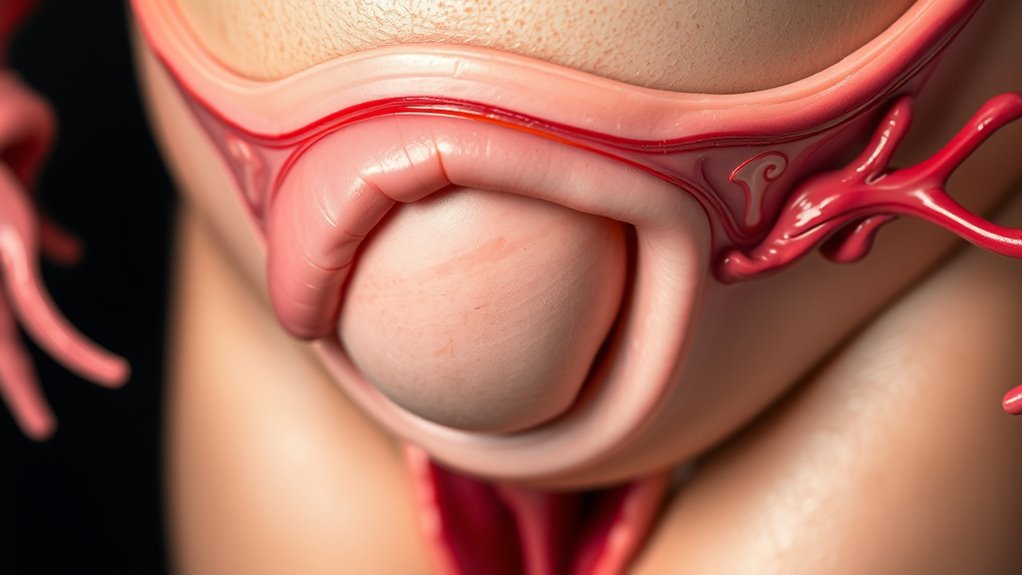

Placenta previa occurs when your placenta partially or fully covers your cervix, often caused by previous cesarean sections, uterine surgeries, or abnormal placental attachment. You might experience painless bleeding in your second or third trimester, which can vary from mild to severe. Modern treatments focus on monitoring, bed rest, and sometimes cesarean delivery to guarantee safety. Staying aware of potential causes and symptoms helps, and you’ll discover more about managing this condition as you continue.
Key Takeaways
- Placenta previa occurs when the placenta partially or fully covers the cervix, often linked to uterine scarring, multiple pregnancies, or advanced maternal age.
- The primary symptom is painless vaginal bleeding during the second or third trimester, which requires prompt medical attention.
- Causes include prior cesarean sections, uterine abnormalities, smoking, and multiple pregnancies, though exact origins are often unclear.
- Modern treatments focus on close monitoring, activity restrictions, and planning cesarean delivery to prevent bleeding complications.
- Early diagnosis via ultrasound and prenatal care are essential for managing risks and ensuring maternal and fetal safety.

Have you ever wondered what happens when the placenta partially or completely covers your cervix during pregnancy? This condition, known as placenta previa, occurs during placental implantation. Normally, the placenta attaches securely to the upper part of your uterus, allowing for proper fetal development and positioning. However, in placenta previa, the placenta implants unusually low in the uterus, often covering or close to the cervix. This abnormal placental implantation can interfere with the baby’s ability to move into the ideal fetal positioning for delivery, which is usually head-down. As your pregnancy progresses, the position of the placenta can shift slightly, but if it remains low-lying, it can lead to complications.
Placenta previa occurs when the placenta covers or is near the cervix, risking complications during delivery.
Understanding the causes of placenta previa helps clarify why it happens. While the exact reason isn’t always clear, several risk factors increase your chances. Previous cesarean sections, uterine surgeries, or abnormalities can disturb normal placental implantation. Women who have had multiple pregnancies or are carrying multiples are also at increased risk. Scar tissue from previous surgeries or infections can interfere with proper placental attachment, causing it to settle in the lower part of the uterus. Additionally, advanced maternal age — generally over 35 — seems to be linked with a higher incidence of this condition. Smoking and substance use during pregnancy might also contribute by affecting the uterine environment and placental development. Moreover, abnormal placental positioning can be identified through imaging tests, aiding in early diagnosis and management planning. Early detection of placental location is crucial for preventing serious complications during delivery. Furthermore, research indicates that placental abnormalities such as previa can be associated with placental implantation issues, emphasizing the importance of regular prenatal check-ups. It is also important to note that placental abnormalities can sometimes be linked to placental accreta, which increases the risk of heavy bleeding during delivery.
Symptoms of placenta previa often appear in the second or third trimester and can be alarming. The most common sign is painless vaginal bleeding, which can vary from mild to severe. Because the placenta covers the cervix, any disruption or movement of the placenta can cause bleeding episodes. It’s essential to seek medical care immediately if you experience bleeding, as it can pose risks to both you and your baby. Sometimes, the bleeding can be intermittent, making it confusing or difficult to recognize early on. Recognizing these symptoms early and consulting with healthcare professionals can significantly improve management outcomes.
Top picks for "placenta previa caus"
Open Amazon search results for this keyword.
As an affiliate, we earn on qualifying purchases.
Frequently Asked Questions
Can Placenta Previa Affect Future Pregnancies?
Placenta previa can affect your future pregnancies, especially if risk factors like previous cesarean sections or uterine surgeries are present. While placental position changes are common in early pregnancy, previa may persist or recur, increasing bleeding risks. You should consult your doctor for personalized advice, as they can monitor placental location and help manage potential complications, ensuring healthier pregnancies down the line.
Are There Any Long-Term Health Risks for the Mother?
You wonder about long-term health risks after placenta previa, and it’s natural to be concerned. While most women recover well postpartum, some may face issues like placental attachment problems or scar tissue that could affect future pregnancies. However, these risks are often minimized with proper postpartum recovery and medical care. Staying informed and following your healthcare provider’s advice helps reduce long-term health risks and supports your overall well-being.
How Is Placenta Previa Diagnosed During Pregnancy?
During pregnancy, you’re diagnosed with placenta previa mainly through ultrasound imaging, which provides clear images of your placenta’s position. Your healthcare provider may also recommend prenatal screening and routine ultrasounds to monitor placental location, especially in the second or third trimester. If the ultrasound shows the placenta covering or near the cervix, a diagnosis of placenta previa is confirmed. This helps guarantee you receive appropriate management and care throughout your pregnancy.
What Are the Chances of Recurrence in Subsequent Pregnancies?
You have about a 20-30% chance of placenta previa recurring in future pregnancies. Risk factors like previous placenta previa, cesarean sections, or uterine surgeries increase this likelihood. While there’s no guaranteed way to prevent recurrence, managing risk factors—like avoiding unnecessary surgeries—may help. You should discuss your personal risk and preventive measures with your healthcare provider to plan for safer pregnancies ahead.
Can Lifestyle Changes Prevent Placenta Previa?
You might wonder if lifestyle changes can prevent placenta previa. While risk factors like smoking, substance use, and multiple pregnancies increase your chances, making healthy lifestyle choices can help reduce these risks. Avoid smoking, limit alcohol, and maintain a balanced diet to support your overall pregnancy health. Though these measures can’t guarantee prevention, they can lower your risk factors and promote a healthier pregnancy.
Conclusion
Understanding placenta previa is crucial, especially since it affects about 1 in 200 pregnancies. Recognizing the causes and symptoms helps you seek timely care. Modern treatments have considerably improved outcomes, reducing complications for both you and your baby. Stay vigilant for warning signs, and don’t hesitate to consult your healthcare provider. With proper management, most women with placenta previa go on to have healthy deliveries, giving you hope and confidence for your pregnancy journey.