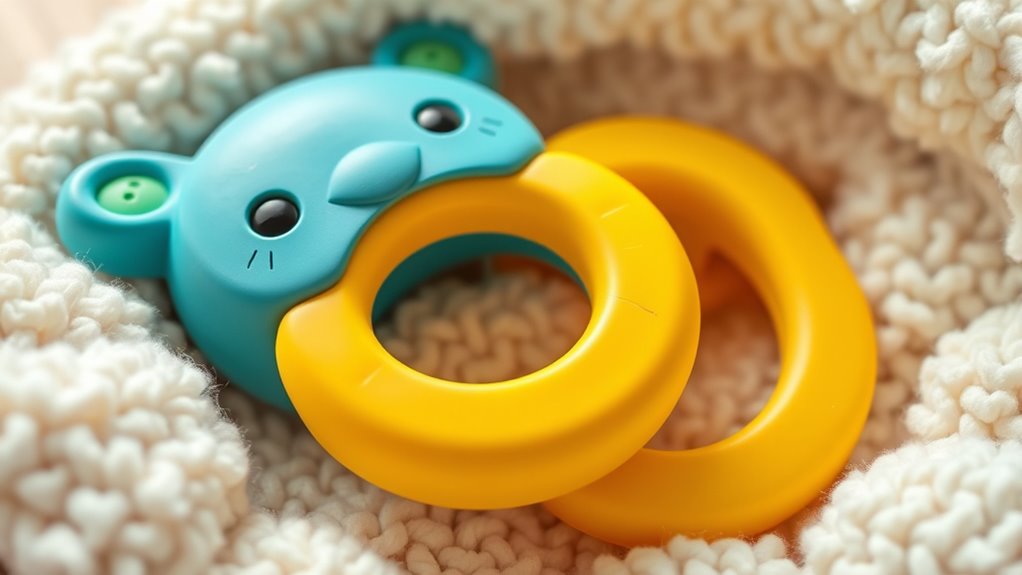

Experts recommend replacing baby teethers every few months to guarantee safety and hygiene. Frequent biting and sterilization can cause wear, cracks, or discoloration, increasing the risk of choking or mouth injuries. Regular inspections are essential, and anytime you spot damage or signs of aging, it’s time for a new teether. Staying aware of these signs helps keep your little one’s teething safer; continue with us to learn more tips on caring for safe teething toys.
Key Takeaways
- Replace baby teethers every 2 to 3 months, especially with heavy use or signs of wear.
- Inspect regularly for cracks, tears, or rough edges; replace immediately if damage is found.
- Heavily chewed or sterilized teethers may weaken faster; consider more frequent replacements.
- Use high-quality, durable materials and monitor for discoloration or deterioration.
- Always prioritize safety and replace the teether if any signs of damage or wear are detected.
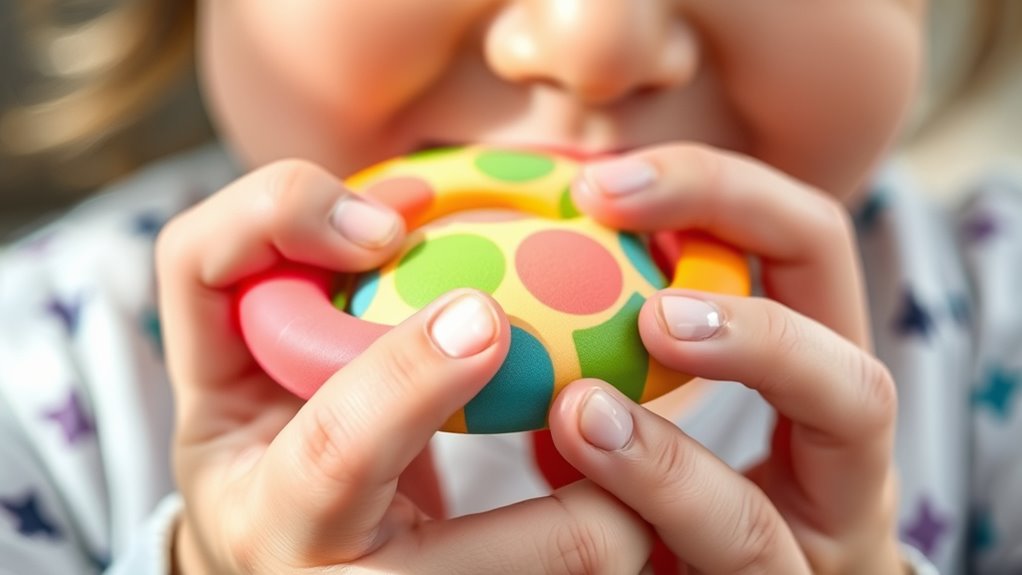
As your baby’s teething journey begins, knowing when to replace their teether is vital for safety and comfort. Teething toys are designed to soothe sore gums, but over time, their safety can become compromised if they aren’t replaced when necessary. Safety concerns are paramount, so keeping an eye on the condition of your child’s teether is essential. Chewed and gnawed teethers can develop cracks, tears, or rough edges that pose choking hazards or mouth injuries. Regularly inspecting your baby’s teether guarantees it remains safe for use. If you notice any visible damage, it’s time to replace it immediately to prevent accidents.
Regularly inspect your baby’s teether and replace it immediately if you notice damage to ensure safety.
Material durability plays a significant role in determining how long a teether remains safe and effective. High-quality teethers are made from durable, non-toxic materials like medical-grade silicone or BPA-free plastics, designed to withstand biting and gnawing. However, even the sturdiest teething toys aren’t indestructible. Over weeks or months of use, they can weaken, especially if your baby is persistent in biting or chewing aggressively. As the material starts to show signs of wear—such as cracks, tears, or discoloration—it’s a clear indicator that replacing the teether is necessary. Durable materials are vital not only for longevity but also for peace of mind, ensuring your baby isn’t exposed to small, broken pieces that could be swallowed or inhaled.
It’s also important to think about how often your baby uses the teether. If your little one is teething intensely, they might chew through their teething toy faster than usual. Even if a teether looks intact, frequent use can accelerate wear and tear, diminishing its safety and effectiveness. Experts recommend replacing teethers every few months, especially if your baby is teething continuously or if the teether has been in use for an extended period. Keep in mind that sterilization routines, such as boiling or dishwasher cleaning, can also affect material durability over time. Repeated exposure to high heat might weaken the material, making replacement more urgent. Additionally, regular cleaning and sterilization can help prolong the lifespan of the teether, but it’s crucial to monitor the integrity of the material after each cleaning. Moreover, staying informed about teething symptoms can help you better understand when your baby needs relief and whether their teether is still suitable for use. Using appropriate sterilization methods is essential to maintain both hygiene and material integrity, which can influence how often a teether should be replaced. Recognizing signs of deterioration early can prevent potential safety hazards and ensure your baby’s comfort. Ultimately, your best guide is your observation. Regularly check for signs of deterioration and be mindful of your baby’s comfort and safety. When in doubt, replace the teether promptly. By doing so, you guarantee your little one stays safe and comfortable during this critical teething phase. Remember, a well-maintained, undamaged teether can provide soothing relief and contribute to a safer teething experience, giving you peace of mind as your baby explores the world through their gums.

mommore Universal Stroller Organizer with Insulated Cup Holders
- Large Capacity Storage: Multiple compartments for essentials
- Insulated Cup Holders: Two spacious, versatile holders
- Additional Pockets: Mesh zip and quick-access wipe pocket
As an affiliate, we earn on qualifying purchases.
Frequently Asked Questions
Can I Clean My Baby’s Teether With Soap and Water?
Yes, you can clean your baby’s teether with soap and water. For effective teether cleaning, use mild soap that’s safe for babies, ensuring soap safety. Rinse thoroughly to remove any soap residue, and let it air dry completely before giving it back to your little one. Regular cleaning helps keep the teether free from germs and buildup, promoting safe teether use and your baby’s health.
Are There Signs That a Teether Needs to Be Replaced Sooner?
You should watch for signs of wear that indicate your baby’s teether might need substituting sooner. If you notice cracks, tears, or pieces that break off, it affects teether durability and could pose a choking hazard. Also, if the teether becomes excessively sticky or starts to smell, it’s time for a new one. Regularly inspecting your baby’s teether helps ensure safety and comfort during teething.
Is It Safe to Share Teethers Between Siblings?
Sharing teethers between siblings is like passing a secret handshake—full of trust but carrying risks. Sibling sharing can spread germs, so teether hygiene is essential. You should avoid it unless the teether is thoroughly cleaned and checked for damage. Regularly inspect for wear and tear, and consider individual teethers for each child to keep everyone safe and healthy, preventing the transfer of germs and ensuring your little one’s comfort.
How Do I Sterilize Teething Toys Effectively?
To sterilize teething toys effectively, start by checking the teether material safety to guarantee it’s suitable for sterilization. Use eco-friendly cleaning methods like boiling, steaming, or dishwasher cycles if the teether is dishwasher-safe. These methods eliminate germs without harsh chemicals, keeping your baby safe. Always follow manufacturer instructions, and regularly inspect teethers for wear or damage to maintain their safety and hygiene.
Are There Specific Materials I Should Look for in Safe Teethers?
When choosing safe teethers, you should look for material safety and non-toxic options. Opt for teethers made from BPA-free silicone, natural rubber, or food-grade plastic, as these materials are free from harmful chemicals. Always check labels and product descriptions to verify they meet safety standards. Selecting teethers with smooth finishes and free from small parts reduces choking risks, ensuring your baby’s comfort and safety during teething.

Stroller Organizer with Cup Holder, Non-Slip Stroller Caddy Baby Essentials
- Large Capacity Storage: Holds bottles, diapers, toys, snacks
- Ideal Gift for New Moms: Perfect for baby showers and gender reveals
- Universal Compatibility: Fits most stroller brands and models
As an affiliate, we earn on qualifying purchases.
Conclusion
Remember, your baby’s teethers aren’t meant to last forever—they’re more like temporary friends on their teething journey. Experts recommend replacing them every few months or if they show signs of wear and tear. Think of it as revitalizing their teething toolkit to keep your little one safe and comforted. Staying attentive ensures you don’t let a worn-out teether become a hidden hazard, helping their smile stay bright and healthy as they grow.
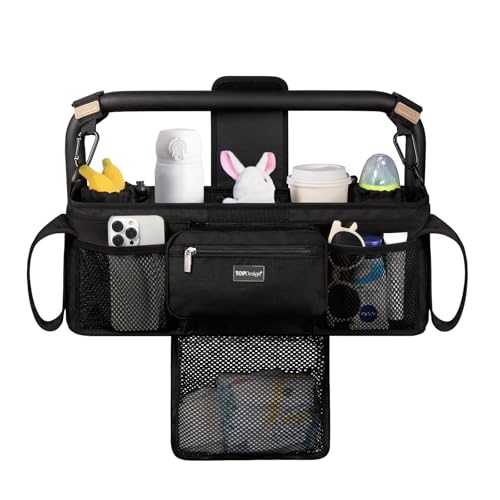
TOPDesign Universal Baby Stroller Organizer, Double Stroller Caddy with Detachable Mesh Bag & Heightened Insulated Cup Holders & Non-Slip Secure Hooks Accessories, Fits Most Strollers (Black)
- Detachable Mesh Laundry Bag: Extra storage for clothes and diapers
- Multi-Functional Organizer: Keeps essentials organized and accessible
- Insulated Cup Holders: Holds bottles, water, or coffee cups
As an affiliate, we earn on qualifying purchases.

Infantino Water Teethers, Cooling & Massaging Relief, Lime/Blue, 3-Pack
- Cooling Relief: Filled with purified water for cooling
- Easy-to-Hold Design: Circular shape for small hands
- Textured Surfaces: Bumps and ridges for gum massage
As an affiliate, we earn on qualifying purchases.