TL;DR

Turn the school run and nap time into listening time
- Thousands of audiobooks, podcasts and originals
- Listen on your phone, tablet or Echo — also offline
- Cancel anytime
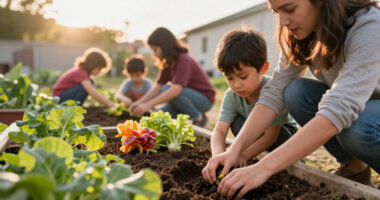
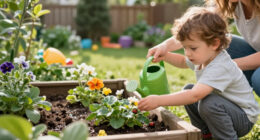
The Princess of Wales announced that The Royal Foundation Centre for Early Childhood will study how nature-rich environments and supportive relationships may help young children develop social and emotional skills. Polling cited in the report found that 33% of parents said their child spends time in nature every day, while 84% believed nature supports children’s wellbeing and development.
The Princess of Wales has announced a new project to examine how nature-rich environments and supportive relationships may help babies and young children develop social and emotional skills. The initiative, led by The Royal Foundation Centre for Early Childhood with the Duchy of Cornwall as a founding partner, comes alongside polling that found only 33% of parents said their child spends time in nature every day.
Kate Middleton announced the work during a visit to Cornwall on October 16. The Centre for Early Childhood says the project will bring together academics, early years practitioners, charities and environmental organisations to examine how outdoor environments could support children’s development during their earliest years. The areas of interest include managing emotions, building relationships, communicating and exploring the world.
The polling cited in the announcement points to a gap between parents’ views and children’s reported routines. 84% of parents said they believe spending time in nature benefits their child’s wellbeing and development, while 33% said their child experiences nature every day. The report also says most parents would like children to have more time and greater access to nature-based experiences through childcare and education. The source does not provide the poll’s sample size, fieldwork dates or methodology.
The initiative is framed as an investigation, not a set of established findings or formal recommendations for families. The Centre plans to consider nature-based experiences alongside positive relationships with adults and other children, rather than treating outdoor access as the sole influence on early development. Details about the project’s research methods and outputs have not yet been announced.
Nature Access and Early Development
The project could bring evidence from child development, early years practice and environmental organisations into discussions about how children experience outdoor spaces. Its focus is on whether, and in what ways, nature-rich settings paired with caring relationships support skills such as communication, emotional wellbeing and social connection.
The polling makes the question relevant to families and providers: many parents surveyed see value in nature, but fewer report daily exposure for their children. That difference does not establish why children are not spending time outdoors, or whether a particular barrier is responsible. It does show why the project’s attention to access through childcare and education, as well as family life, may matter.
Any practical impact will depend on what the work finds and how its evidence is translated into practice. The announcement does not introduce a new policy, funding commitment or requirement for nurseries and schools. For now, it signals an effort to investigate the role of everyday environments in early childhood, rather than a conclusion about what all families should do.
As an affiliate, we earn on qualifying purchases.
The Centre’s Early Years Work
The Princess of Wales has previously focused on the importance of the first five years of life and the influence of early experiences and relationships on children’s development. The new project extends that area of work by examining the possible contribution of nature-rich environments and outdoor experiences.
According to the source report, the initiative builds on visits by the Princess to Denmark and Reggio Emilia in Italy, where she met educators and researchers studying approaches to children’s learning. The current work is being developed by the Royal Foundation Centre for Early Childhood, with the Duchy of Cornwall named as a founding partner. The project is expected to involve specialists from across early years education, child development and environmental science.
Dr Nicola Kemp, director of insight and impact at The Froebel Trust, said research into regular contact with nature was growing. Her comment provides background on the evidence area, but the announcement does not set out a review of existing studies or claim that every child benefits in the same way.
“There is a real opportunity here to shape the future of early years development, and this project will bring together evidence, expertise and practical experience from around the UK and the world, to better understand how nature-rich environments can help nurture confident, curious, creative and emotionally healthy children.”
— Christian Guy, executive director of The Royal Foundation Centre for Early Childhood
As an affiliate, we earn on qualifying purchases.
Research Details Still Pending
The announcement does not specify the project’s timetable, research methods, participating organisations beyond the partners named, or when findings will be published. It is also unclear what kinds of nature-based environments or activities the work will examine, and whether it will include direct research with families and children.
The polling figures are reported as findings, but the source material does not give the sample size, dates, geographic coverage or question wording. The 33% figure should be read as the share of parents who said their child spends time in nature every day, not as a measured account of every child’s daily routine. The polling also does not explain why some children have less access or establish that nature exposure alone causes developmental outcomes.
As an affiliate, we earn on qualifying purchases.
Project Findings and Further Details
The Centre for Early Childhood is expected to work with specialists in early years education, child development and environmental science. Further details are expected to be announced in due course, but no publication date or next public milestone was provided in the source report.
Readers should look for information about the project’s methods, the evidence it reviews or gathers, and how its conclusions may be shared with early years settings and families. Until those details emerge, the announcement describes a research effort under development—not new guidance for parents or a confirmed change to childcare or education policy.
As an affiliate, we earn on qualifying purchases.
Key Questions
What project did the Princess of Wales announce?
She announced a project by The Royal Foundation Centre for Early Childhood examining how nature-rich environments, alongside nurturing relationships, may support babies’ and young children’s development.
What did the polling report about children’s time in nature?
The report said 33% of parents said their child spends time in nature every day. It also reported that 84% believe nature benefits their child’s wellbeing and development. The source does not give the poll’s sample size or methodology.
Who is involved in the project?
The Centre is leading the work, with the Duchy of Cornwall as a founding partner. The project is expected to bring together academics, early years practitioners, charities and environmental organisations.
Has the project issued advice for parents or nurseries?
No formal advice or new requirements were announced. The project is intended to investigate the evidence; its methods, findings and any future recommendations have not yet been published.
Source: rss
Halloween Picks
halloween
As an affiliate, we earn on qualifying purchases.