
TL;DR

Turn the school run and nap time into listening time
- Thousands of audiobooks, podcasts and originals
- Listen on your phone, tablet or Echo — also offline
- Cancel anytime
A Motherly writer describes finding local parent friends through a weekly Tot Shabbat program at her synagogue in New York City. She says repeated visits, shared routines and her daughter’s growing friendships helped her connect with other mothers; the account is personal, not evidence that religious services generally lead to friendship.
A Motherly writer says she built local friendships with other mothers by bringing her daughter to a weekly Tot Shabbat program at their New York City synagogue, describing the religious gathering as a way to find community while parenting a young child. The account, updated Oct. 15, 2026, centers on her experience rather than a broader study of religion or parent friendships.
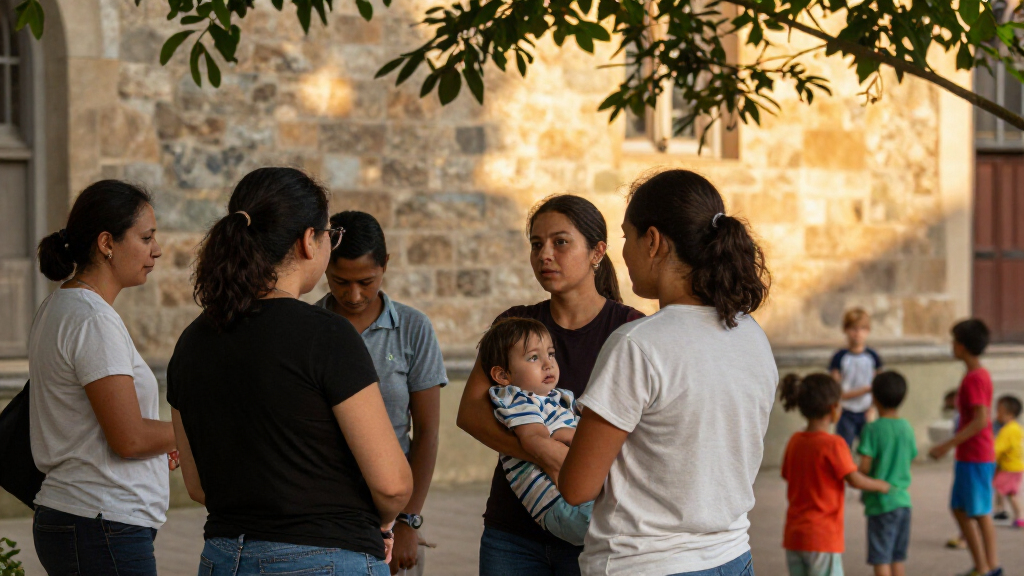
The writer says she and her husband take their daughter to the synagogue nearly every Saturday morning. While the main Sabbath service takes place in the sanctuary, children aged five and under play in a multipurpose room, and adults talk over coffee. The group later gathers for songs and activities led by a teacher. The writer says phones are put away during the gathering.
She first began attending when her daughter was about six months old, partly because the baby was happier outside the home. At first, the writer felt out of place among parents who seemed more experienced and mostly listened to their conversations. She continued showing up; after her daughter turned one, a new group of children joined, including several girls born within roughly the same six-month period.
As the children began playing together, the families started visiting one another for Shabbat lunches. The writer says the parents also made plans to meet at Central Park. The essay presents regular attendance and a shared routine as the conditions that helped her relationships develop over time, not as a guaranteed result for other families.
A Weekly Gathering Builds Local Ties
The account describes one practical route to meeting other parents: returning to the same local gathering often enough for children and adults to become familiar with one another. For parents whose existing friends live elsewhere, a recurring activity can provide an opportunity for face-to-face conversation and informal plans beyond the event itself.
The writer also argues that a place of worship can function as a local community space, bringing families together through ritual and shared activities. That is her interpretation of her own experience; the essay does not establish that religious participation is necessary for making friends or that all congregations offer similar programs.
Tot Shabbat activity kits for children
As an affiliate, we earn on qualifying purchases.
As an affiliate, we earn on qualifying purchases.
From Survival Strategy to Friendship
The essay situates the writer’s difficulty making parent friends in the practical limits of early parenting. She says friends with children of similar ages may live far away, while playground introductions and childcare connections can be temporary. At her daughter’s small in-home daycare, she says it took more than a year to form solid friendships.
To explain why her choice of synagogue felt unusual among some urban mothers her age, the writer references a 2023 New York Times column by Jessica Grose on declining religious attendance and a 2024 column on young women leaving organized religion. She also cites a 2025 study reporting that more than one in four Americans identify as unaffiliated with organized religion. The essay does not supply the study’s title, methodology or a detailed breakdown, so the statistic’s specific scope cannot be independently assessed from the account alone.
The writer notes that some people assume weekly Sabbath observance is restrictive or old-fashioned. She contrasts that response with examples of renewed interest in religious rituals and community, including media coverage of church attendance and Jewish cultural events. Those examples provide the writer’s cultural framing; they do not show that religious attendance is increasing overall.
religious community event supplies
As an affiliate, we earn on qualifying purchases.
As an affiliate, we earn on qualifying purchases.
One Family’s Account, Not a Study
The essay documents one mother’s experience and does not provide data on how often parents make lasting friendships through religious programs. It is unclear how the synagogue organizes the program beyond the writer’s description, whether it is open to families outside the congregation, or what it costs. The writer’s broader references to religious affiliation and attendance are not accompanied by full study details in the essay.
The account also does not suggest that every family will feel comfortable in a religious setting. The writer describes her own connection to Jewish tradition and her local synagogue; other families may seek community through different institutions or activities.
As an affiliate, we earn on qualifying purchases.
The Routine Continues Beyond Services
The writer’s account ends with the families making plans to see one another again at Central Park after Shabbat lunch. She does not announce a new program or report a planned change to the synagogue gathering. The next steps described are informal: continued attendance, visits between families and meetups around the children’s schedules.
For readers weighing a similar approach, the essay offers a personal example rather than a tested formula. Whether a particular worship community has a suitable family program, and whether its traditions fit a family’s beliefs and needs, will depend on the local congregation.
parent-child synagogue activity toys
As an affiliate, we earn on qualifying purchases.
As an affiliate, we earn on qualifying purchases.
Key Questions
How did the writer meet other mothers?
She says she repeatedly attended Tot Shabbat with her daughter at a nearby synagogue. Over time, the children began playing together and the parents started arranging lunches and other meetups.
How often did her family attend?
The writer says they went to the synagogue nearly every Saturday morning for the program.
Did the writer say religion is the only way to make parent friends?
No. She describes what worked for her family. The essay does not claim that religious participation is necessary or that the same experience will apply to other parents.
What is Tot Shabbat in the essay?
It is the synagogue’s Saturday gathering for young children and their caregivers. The writer describes children playing, adults talking over coffee, and a later group session with songs and activities.
Source: rss
Fall Picks
fall essentials
As an affiliate, we earn on qualifying purchases.