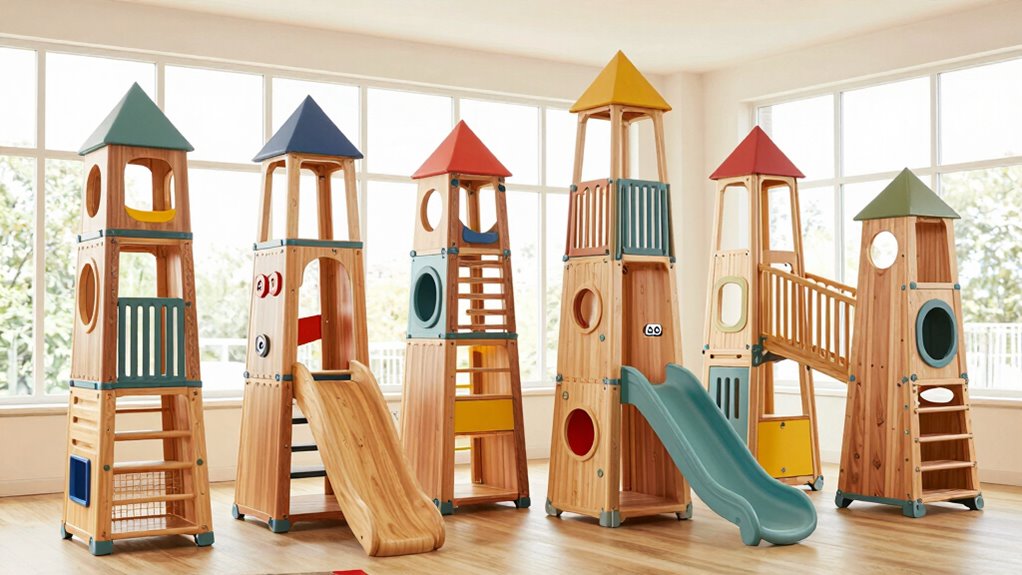

Learning towers bring young children closer to kitchen counters, but the right choice depends on safety features, fit, and how much space you can spare. My best overall pick is the INNOD Kitchen Step Stool for its adjustable height and combination of steel and wood. The Guidecraft Classic Kitchen Helper is a strong option for buyers prioritizing a classic wooden design, while the HBTower foldable model suits households that need a tower they can put away. The tradeoff is often between a sturdy, roomy frame and foldability or extra play features such as a chalkboard. Read on for the full comparison and guidance on matching a tower to your kitchen and child.

Turn the school run and nap time into listening time
- Thousands of audiobooks, podcasts and originals
- Listen on your phone, tablet or Echo — also offline
- Cancel anytime
Complete the kit


Key Takeaways
- Adjustability is a key differentiator: the INNOD and several COSYLAND models offer adjustable platforms, which can help a tower fit a growing child and varied counter heights.
- Foldable designs answer a storage problem, not every safety concern: compare the folded footprint and locking setup with the stability of a fixed-frame option before choosing.
- Extra features divide the lineup: chalkboards and 4-in-1 configurations add ways to play, but buyers focused on kitchen help may prefer a simpler standing tower.
- Entry and enclosure designs affect supervision: products with safety rails, nets, or sliding doors offer different ways to contain a child, so match the opening style to your child’s habits and your routine.
- The strongest choice depends on the household: the Guidecraft offers a classic wooden direction, while HBTower and COSYLAND include options aimed at folding storage, adjustability, or support.


| learning tower | Dimensions | Material | Weight capacity | Maximum height |
|---|---|---|---|---|
| INNOD Kitchen Step Stool for T | 15.7" D x 18.7" W x 35.3" H | — | — | 36.1 inches |
| HBTower Kids 2 Steps Step Stoo | 16" D x 18" W x 37" H | Aluminum alloy | 250 lbs | 35 inches |
| Collapsible Toddler Kitchen St | — | — | 165 lbs | — |
| Dream On Me 2-in-1 Funtastic T | 17.5 x 16 x 33.5 inches | Solid New Zealand pinewood | — | — |
| HBTower Toddler Standing Tower | 16.5" D x 17.7" W x 35" H | Bamboo | 450 lbs | 35 inches |
| Toddler Standing Tower Anti-Ti | 18 × 22.6 × 34.6 inches | Solid wood and MDF | 150 lbs | — |
| Toddler Standing Tower | 23.5 × 21.5 × 34 inches | Wood and MDF | 150 lbs | 34 inches |
| Toddler Tower with Sliding Doo | 17.7 × 15.7 × 36 inches | Pine wood | 150 lbs | — |
| COSYLAND Toddler Tower Toddler | — | Wood | — | — |
| HBTower Kids 2 Steps Step Stoo | 16 × 18 × 37 inches | Aluminum alloy and environmentally friendly materials | 250 lbs | 35 inches |
| COSYLAND Foldable Toddler Kitc | 18.11" D × 17.32" W × 35.43" H | Wood | — | 35.43 inches |
| Labebe Toddler Standing Tower | 25.59" D × 33.07" W × 12.6" H | Wood | 50 kg | 33.07 inches |
| Guidecraft Classic Kitchen Hel | 23" D × 23" W × 36" H | Birch plywood | 125 lbs | 36 inches |
| Toddler Kitchen Step Stool | 24.7" D × 28.2" W × 34" H | Wood | 150 lbs | 34 inches |
| COSYLAND Height Adjustable Tod | 17.7" D × 15.7" W × 35.4" H | Wood | — | — |
More Details on Our Top Picks
INNOD Kitchen Step Stool for Toddlers, Height Adjustable with Safety Rail, Steel and Wood
The INNOD Kitchen Step Stool suits families who want a tower with adjustable height rather than a fixed platform. Its steel-and-wood construction and safety rail make it a sturdy option for counter and sink activities, while the two steps keep the setup straightforward. Compared with the Dream On Me 2-in-1 Funtastic Toddler Tower, INNOD emphasizes height adjustment over conversion into a separate step stool, which may make it a better fit as a child grows but less versatile when tower mode is no longer needed. Its 150-pound capacity is ample for typical toddler use, though lower than the listed capacities of the HBTower options. The tradeoffs are hands-on assembly, a single listed color, and a 6.41 kg weight that may make frequent room-to-room moving less convenient.
Pros:- Adjustable height can accommodate a child’s changing reach.
- Safety rail and steel-and-wood construction provide a sturdy standing setup.
- Two steps support access to counters and sinks.
- Can be used for kitchen, bathroom, and desk activities.
Cons:- Assembly may take more effort than a simpler step stool.
- At 6.41 kg, it may be cumbersome to move frequently.
- Only brown is listed, limiting color choice.
Best for: Families who want adjustable height for a growing child and plan to use the tower in the kitchen or bathroom.
Not ideal for: Caregivers who need a lightweight tower to move often or want a foldable or convertible design for compact storage.
- Materials:Alloy steel and wood
- Maximum weight capacity:150 lbs
- Dimensions:15.7″ D x 18.7″ W x 35.3″ H
- Maximum height:36.1 inches
- Number of steps:2
- Color:Brown
- Weight:6.41 kg
Our verdict“Choose INNOD if adjustable height matters more than foldability or a convertible step-stool mode.”
HBTower Kids 2 Steps Step Stool, Foldable Toddler Tower with Safety Railing
The HBTower foldable toddler tower is the clearest choice here for families short on storage: its folding frame can be put away between cooking or bathroom activities, unlike the fixed-format HBTower Toddler Standing Tower with Safety Rails. The aluminum-alloy build is listed at 10 pounds, giving it a practical balance of portability and a substantial 250-pound capacity. A two-step layout, non-slip feet, and A-shaped frame support everyday use for children aged 18 months to 4 years. The compromise is reach: its listed maximum height is 35 inches, so it may not suit every counter. It is also designed primarily for indoor use, and green is the only listed color. Families who want natural bamboo construction or a much higher stated capacity may prefer the other HBTower model, but it does not offer this tower’s fold-away format.
Pros:- Foldable design makes storage and transport easier.
- Aluminum-alloy construction weighs 10 pounds.
- Non-slip feet and an A-shaped frame support stability.
- Listed weight capacity is 250 pounds.
Cons:- The 35-inch maximum height may not reach every counter comfortably.
- The product is described primarily for indoor use.
- Only green is listed as a color.
Best for: Families in smaller homes who want a tower they can fold away after supervised kitchen or bathroom activities.
Not ideal for: Buyers who need extra counter height, outdoor use, or a color choice beyond the listed green.
- Material:Aluminum alloy
- Weight capacity:250 lbs
- Weight:10 lbs
- Dimensions:16″ D x 18″ W x 37″ H
- Maximum height:35 inches
- Number of steps:2
- Suitable age range:18 months to 4 years
- Features:Foldable, non-skid feet, slip-resistant
- Color:Green
Our verdict“Pick this HBTower model if folding it away matters more than maximum reach or a natural-material finish.”
Collapsible Toddler Kitchen Step Stool with Chalkboard, Safety Rail, and Standing Tower for Kids 1-3
This collapsible 3-in-1 tower adds a chalkboard to the usual kitchen-helper role, giving children a place to draw as well as a raised spot for joining household tasks. Its safety rail, non-slip feet, and 165-pound capacity make it more than a play surface, while the wood-and-MDF build offers a different feel from the aluminum HBTower foldable toddler tower. The added activity is the main reason to choose it: families seeking one piece for kitchen participation and simple creative play may get more use from it than from a more basic tower. The tradeoff is that its multifunctional design may take up too much room in a very small kitchen, and the supplied details do not give dimensions or a listed color. Its stated age range is also limited to 1–3 years.
Pros:- Combines a standing tower with a chalkboard for added activity.
- Safety rail and non-slip feet support use as a learning tower.
- Listed capacity is 165 pounds.
- Assembly is described as easy and takes about 20 minutes.
Cons:- May be too large for very small spaces.
- The stated age range is limited to 1–3 years.
- Dimensions and color are not provided in the product details.
Best for: Families with children aged 1–3 who want a tower that can also support chalk drawing and play.
Not ideal for: Households with very limited floor space or buyers who need clear dimensions, a specific finish, or a longer stated age range.
- Materials:Wood and MDF
- Age range:1–3 years
- Weight capacity:165 lbs
- Features:Collapsible, chalkboard, safety rail, multifunctional
- Assembly:About 20 minutes
- Safety details:Non-slip feet
Our verdict“Choose this model if the chalkboard adds useful play value and you have room for a multifunctional tower.”
Dream On Me 2-in-1 Funtastic Toddler Tower & Kitchen Step Stool, White
The Dream On Me Funtastic stands apart by converting from a railed learning tower into a standalone step stool. That gives it a useful second form as a child’s needs change, while the INNOD Kitchen Step Stool instead focuses on adjustable height. Made from solid New Zealand pinewood with a non-toxic painted finish, Dream On Me also lists safety rails, an anti-slip base, and stabilizer fins—features aimed at keeping the tower steady during everyday kitchen or bathroom tasks. Its 17.5 x 16 x 33.5-inch footprint is comparatively compact, but its stated age range ends at 3 years, which limits its longer-term use. Assembly is required, and the supplied details do not list a weight capacity or height adjustment, so buyers needing those specifications may prefer a model with clearer fit information.
Pros:- Converts between a learning tower and a standalone step stool.
- Solid New Zealand pinewood construction with a non-toxic paint finish.
- Safety rails, anti-slip base, and stabilizer fins are listed.
- Compact listed dimensions suit households watching floor space.
Cons:- The stated age range ends at 3 years.
- Assembly is required.
- Product details do not list weight capacity or adjustable height.
Best for: Caregivers of children aged 18 months to 3 years who want one product that can switch between a tower and a step stool.
Not ideal for: Families seeking a tower for children older than 3, adjustable height, or a published weight-capacity figure.
- Material:Solid New Zealand pinewood
- Finish:Non-toxic paint
- Dimensions:17.5 x 16 x 33.5 inches
- Age range:18 months to 3 years
- Functions:Learning tower and standalone step stool
- Safety features:Safety rails, anti-slip base, stabilizer fins
- Warranty:1 year
Our verdict“Pick Dream On Me for a compact convertible option for toddlers, not for extended age range or adjustable reach.”
HBTower Toddler Standing Tower with Safety Rails
For buyers who prioritize a substantial stated load limit, the HBTower bamboo standing tower lists a 450-pound capacity, higher than the 250 pounds listed for the foldable HBTower Kids 2 Steps Step Stool. Its natural bamboo construction, widened anti-tip base, safety rails, and rounded edges make it a more traditional, fixed tower choice. At 13.3 pounds, it is heavier than that foldable aluminum model, so it is better suited to a regular spot near the counter than repeated carrying or storage. The two-step setup and 35-inch maximum height cover common sink and kitchen tasks, though buyers with unusually high counters should check the fit before choosing it. Natural bamboo is the only listed finish, and the product details do not include an age range or adjustable height.
Pros:- Listed weight capacity is 450 pounds.
- Bamboo construction offers a natural-material alternative to aluminum models.
- Widened anti-tip base, safety rails, and rounded edges are listed.
- Described as easy to assemble and clean.
Cons:- At 13.3 pounds, it may be cumbersome to move often.
- Only natural bamboo is listed as a finish.
- Product details do not specify an age range or adjustable height.
Best for: Families who want a bamboo tower with a high listed weight capacity and expect to keep it in one main location.
Not ideal for: Caregivers who need a fold-away design, frequent portability, adjustable height, or a specified age range.
- Material:Bamboo
- Weight capacity:450 lbs
- Dimensions:16.5″ D x 17.7″ W x 35″ H
- Weight:13.3 lbs
- Number of steps:2
- Maximum height:35 inches
- Safety features:Widened anti-tip base, safety rails, rounded edges
Our verdict“Choose this HBTower if bamboo construction and a high listed capacity matter more than foldability or easy portability.”
Toddler Standing Tower Anti-Tip Wooden Kitchen Step Stool, Nature
The built-in blackboard and 4-in-1 conversion give this tower a role beyond helping a toddler reach the counter: it can also serve as a table-and-chair setup for drawing or play. Its anti-tip A-frame and safety bar are useful for supervised kitchen participation, while the 150-pound capacity adds structural headroom. Compared with the Toddler Standing Tower, 4-in-1 Kitchen Stool with Blackboard, this model is slightly narrower but just as substantial in depth, so neither is a natural fit for a very tight kitchen. The tradeoff is footprint: at 18 inches deep and 22.6 inches wide, it takes up meaningful floor space. It is also aimed at ages 1–3, so families seeking a tower that adjusts across a longer childhood window may prefer the COSYLAND Toddler Tower.
Pros:- Anti-tip A-frame design paired with a safety bar
- Converts into a table-and-chair setup and includes a blackboard
- Solid wood and MDF construction with a 150-pound capacity
- Suitable for kitchen and playroom use
Cons:- Wide, deep footprint may crowd a small kitchen
- Age range is limited to 1–3 years
- Assembly may take time
Best for: Families with children aged 1–3 who want a kitchen tower that can double as a drawing and activity station.
Not ideal for: Households with limited floor space or families seeking an adjustable tower for use beyond the toddler years.
- Material:Solid wood and MDF
- Dimensions:18 × 22.6 × 34.6 inches
- Weight capacity:150 lbs
- Item weight:16 lbs
- Steps:2
- Age range:1–3 years
- Color:Nature
- Room type:Kitchen, playroom
Our verdict“Choose this tower if creative play and convertible use matter as much as reaching the counter, and you have room for its broad footprint.”
Toddler Standing Tower, 4-in-1 Kitchen Stool with Blackboard
This model suits families who want a tower that changes jobs: it is described as a step stool, standing tower, table-and-chair set, and blackboard. That makes it more activity-focused than the straightforward HBTower Kids 2 Steps Step Stool with Safety Railing, which prioritizes portability and quick setup over play features. Its anti-tip design and 150-pound capacity support everyday supervised routines, but the listed dimensions—especially 23.5 inches deep—mean it needs more room than the HBTower. The product data also calls it foldable and adjustable without specifying how the platform adjusts or how compact it becomes when folded, so I would not choose it on storage convenience alone. Like the Nature model, it is intended for ages 1–3, limiting its usefulness as a child grows.
Pros:- Combines a standing tower, step stool, table-and-chair set, and blackboard
- Anti-tip design and rounded edges support supervised use
- 150-pound stated weight capacity
- Wood and MDF construction for daily household use
Cons:- Deep footprint may be difficult to accommodate in small kitchens
- Use is listed for ages 1–3 rather than a wider growing range
- Assembly instructions may be unclear, and foldability details are not specified
Best for: Parents of 1–3-year-olds who want one wooden unit for counter access, drawing, and tabletop activities.
Not ideal for: Families with a narrow kitchen, frequent storage needs, or a child likely to outgrow a 1–3 age range soon.
- Material:Wood and MDF
- Dimensions:23.5 × 21.5 × 34 inches
- Maximum height:34 inches
- Weight capacity:150 lbs
- Item weight:15 lbs
- Age range:1–3 years
- Features:Foldable, anti-tip, adjustable, convertible
- Color:Natural wood
Our verdict“Pick this convertible model for a young toddler’s kitchen and art activities if you can spare the floor space.”
Toddler Tower with Sliding Door – 3 Adjustable Heights, Gray
Three platform heights make this a practical choice for families who want to adapt the standing surface as a child grows, rather than move to a new tower quickly. The sliding door adds a contained entry point, while non-slip steps and padded support feet address footing and stability. Compared with the COSYLAND Toddler Tower Toddler Standing Kitchen Stool, this model gives a clear three-height adjustment feature, but COSYLAND is listed for use from 18 months to 6 years and includes several anti-slip details. This tower’s stated capacity is 150 pounds, though its age range is not provided, so buyers should check fit and supervision needs rather than assume a long age span. Its 15.7-inch width is relatively narrow, but the 36-inch height still calls for a suitable storage spot.
Pros:- Three adjustable platform heights can accommodate changes in a child’s reach
- Sliding door provides a defined way in and out
- Non-slip steps and padded support feet add stability-focused details
- Listed for kitchen, bathroom, dining room, and nursery use
Cons:- Only gray is listed as a color option
- Tall 36-inch profile may be awkward to store
- No age range is supplied in the product data
Best for: Families seeking a height-adjustable wooden tower with a sliding entry and a relatively narrow width.
Not ideal for: Buyers who need a documented age range, multiple color choices, or a compact item to tuck away between uses.
- Material:Pine wood
- Dimensions:17.7 × 15.7 × 36 inches
- Platform heights:3 adjustable heights
- Weight capacity:150 lbs
- Item weight:11.29 kg
- Steps:3
- Color:Gray
- Room type:Bathroom, dining room, kitchen, nursery
Our verdict“Choose this option if platform adjustment and a sliding entry matter more than a documented long-term age range.”
COSYLAND Toddler Tower Toddler Standing Kitchen Stool
The standout here is its listed 18-month-to-6-year age range, which gives it a longer planned use window than the two blackboard towers in this group, both specified for ages 1–3. Three height levels and reinforced supports with anti-slip details make it better suited to families prioritizing a growing child’s kitchen access over extra play functions. It does not offer the table, chair, or blackboard features of the Toddler Standing Tower Anti-Tip Wooden Kitchen Step Stool, Nature, so it is a more focused learning tower rather than a convertible activity station. The tradeoff is handling: its weight is listed as over 20 pounds, making frequent room-to-room moves less convenient than the HBTower Kids 2 Steps Step Stool with Safety Railing, which weighs 10 pounds and folds.
Pros:- Listed age range extends from 18 months to 6 years
- Three levels allow height adjustment as the child grows
- Reinforced support feet, back panel, anti-slip grooves, and silicone strips
- Assembly is described as taking about 10–15 minutes
Cons:- Weight over 20 pounds makes frequent carrying more difficult
- Color choices are limited to Natural and White
- No dimensions or weight capacity are supplied in the product data
Best for: Families wanting an adjustable wooden learning tower for a child expected to use it from toddlerhood into the early school years.
Not ideal for: Caregivers who need a lightweight tower to move often, or buyers looking for convertible play features and broad color choice.
- Age range:18 months to 6 years
- Material:Wood
- Height levels:3
- Weight:Over 20 lbs
- Support features:Reinforced support feet and back panel
- Grip features:Anti-slip grooves and silicone strips
- Assembly:About 10–15 minutes
- Colors:Natural and White
Our verdict“Choose COSYLAND if a longer stated age range and adjustable height matter more than low weight or convertible play features.”
HBTower Kids 2 Steps Step Stool with Safety Railing
For households that need to put a tower away between uses, the foldable, 10-pound frame is the clearest advantage in this lineup. It arrives ready to use without assembly, unlike the wooden convertible towers, and its non-skid feet and A-structure suit supervised access to counters or sinks. It is less of a play station than the Toddler Standing Tower, 4-in-1 Kitchen Stool with Blackboard: there is no listed blackboard or table conversion, but the simpler form is easier to store and carry. The 250-pound capacity is notably higher than the 150-pound ratings on several other options, though it does not answer whether the 35-inch maximum height will match every counter. Its gray finish and indoor-use focus also limit flexibility.
Pros:- Folds for storage and weighs 10 pounds
- No assembly required
- A-frame structure and non-skid feet support stable placement
- 250-pound stated weight capacity
Cons:- Maximum height may not suit all counter heights
- Gray is the only listed color
- Designed primarily for indoor use and lacks convertible activity features
Best for: Caregivers who need a lightweight, foldable step stool that can be moved between indoor rooms and stored after use.
Not ideal for: Families seeking a wooden learning tower with adjustable platform heights, creative-play features, or a height suited to every counter.
- Material:Aluminum alloy and environmentally friendly materials
- Dimensions:16 × 18 × 37 inches
- Maximum height:35 inches
- Weight capacity:250 lbs
- Item weight:10 lbs
- Steps:2
- Age range:18 months to 4 years
- Features:Foldable, non-skid feet, slip resistant
Our verdict“Choose this HBTower when easy folding, low weight, and immediate setup matter more than wooden construction or play features.”
COSYLAND Foldable Toddler Kitchen Stool – Adjustable Height Standing Tower with Safety Net for Kids 18M-6Y, Black & Natural
The fold-flat design gives this COSYLAND an advantage for households that need a learning tower to disappear between kitchen activities. Its adjustable platform and stated 18-month-to-6-year age range make it more adaptable as a child grows than the Labebe tower, which is aimed at ages 1–3. A full surround guardrail and breathable mesh back add a more enclosed feel than an open-front setup, while the two-step layout keeps access straightforward. The tradeoff is that folding does not make it especially compact while in use: the base measures 18.11 inches deep, and the product description notes that its safety-support redesign can make the base appear larger. It also requires assembly and comes in limited colors. I’d choose it for storage flexibility, not for the smallest possible footprint during use.
Pros:- Folds flat for easier storage between uses
- Adjustable height can accommodate a growing child
- Full surround guardrails and breathable mesh back provide an enclosed setup
- Suitable age range is listed as 18 months to 6 years
Cons:- The safety-support base may take up more visual and floor space than expected
- Some assembly is required
- Color choices are limited to the black-and-natural finish
Best for: Families with limited storage who want an adjustable, enclosed tower that can be folded away after kitchen use.
Not ideal for: Buyers who need a particularly narrow tower when set up, or who want several finish choices.
- Material:Wood
- Dimensions:18.11″ D × 17.32″ W × 35.43″ H
- Maximum height:35.43 inches
- Steps:2
- Age range:18 months–6 years
- Color:Black & Natural
- Model number:CS000184-6-US
Our verdict“Choose this COSYLAND if storage flexibility and an enclosed, adjustable setup matter more than a minimal footprint while open.”
Labebe Toddler Standing Tower with Blackboard, Foldable Montessori Learning Tower, Anti-tip Design, Wooden Kitchen Step Stool for 1-3 Year Olds
The Labebe is the most activity-focused pick in this group: its blackboard and foldable tower-to-step-stool design give children a place for drawing as well as supervised kitchen participation. That makes it a stronger match for families who want one piece of furniture to support more than counter-height tasks. Compared with the 4-in-1 Toddler Kitchen Step Stool, the Labebe’s appeal is especially clear in its named blackboard feature and portability; its stated audience, however, is narrower, at ages 1–3. The anti-tip design, safety rails, and rounded corners address stability, but the product description still calls for parental supervision. It also requires assembly, and its 50 kg weight capacity should not be read as a reason to use it outside the stated age guidance. Pick it for creative versatility, rather than a longer listed age span.
Pros:- Blackboard adds a creative activity beyond kitchen participation
- Folds for easier storage and moving between uses
- Anti-tip design, safety rails, and rounded corners are included
- Can be converted into a kitchen step stool
Cons:- Listed age range is limited to 1–3 years
- Requires adult supervision during use
- Some assembly is required
Best for: Families with children aged 1–3 who want a foldable learning tower that also offers a dedicated drawing surface.
Not ideal for: Households seeking a tower with a stated use range beyond age 3, or buyers who do not need the blackboard feature.
- Material:Wood
- Dimensions:25.59″ D × 33.07″ W × 12.6″ H
- Maximum height:33.07 inches
- Weight capacity:50 kg
- Item weight:6.09 kg
- Steps:2
- Foldable:Yes
- Base type:Wood
Our verdict“Choose the Labebe for a young child when a blackboard and foldable, multi-use design matter more than a longer age range.”
Guidecraft Classic Kitchen Helper – Natural
The Guidecraft Classic stands apart through its 125 lb weight capacity and three-step configuration, offering a different emphasis from the two-step COSYLAND models. Its adjustable height gives the platform room to suit a growing child, while the hardwood and birch plywood construction, non-slip mat, and safety guard make it a more substantial choice than a simple step stool. It also folds, which helps with storage, though its 23-by-23-inch footprint is not especially compact while set up. Compared with the COSYLAND Height Adjustable Tower, Guidecraft lists a higher weight capacity and three steps, but does not specify the same 18-month-to-6-year age span in the supplied data. Adult supervision remains necessary, so the capacity is a structural specification, not a substitute for supervision or age-appropriate use.
Pros:- 125 lb weight capacity is stated
- Three-step layout offers more climbing access than the two-step towers here
- Adjustable height can suit changing needs as a child grows
- Foldable design and non-slip mat are included
Cons:- 23-inch depth and width require meaningful floor space when set up
- Adult supervision is required at all times
- Supplied age guidance starts at 18 months and does not specify an upper age
Best for: Families looking for an adjustable, foldable wooden tower with a clearly stated higher weight capacity and three steps.
Not ideal for: Buyers who prioritize a small open footprint, or who want a specified age range extending beyond 18 months and up.
- Material:Birch plywood
- Dimensions:23″ D × 23″ W × 36″ H
- Maximum height:36 inches
- Weight capacity:125 lbs
- Steps:3
- Color:Natural
- Features:Adjustable height, foldable, lightweight
Our verdict“Pick the Guidecraft Classic if its three steps and stated 125 lb capacity outweigh its larger setup footprint.”
Toddler Kitchen Step Stool, 4-in-1 Foldable Learning Tower with Blackboard, Anti-Tip Design for Kids 1-3 Years
This 4-in-1 model is aimed at families who want a learning tower to serve beyond the kitchen: the description frames it for kitchen, bathroom, and play activities, with a foldable design and natural wood finish. Its stated 150 lb capacity is the highest listed among these five options, exceeding both the Guidecraft Classic and the Labebe, though that figure does not change the stated 1–3 age range. The anti-tip support, non-slip base, and safety rail give it a stability-focused setup, while the open front can make access less enclosed than the COSYLAND Foldable Tower’s surround guardrails and mesh back. The two-step layout is simple, but the product data does not spell out every mode behind the 4-in-1 label. Assembly takes an estimated 15–20 minutes, and the finish is limited to natural.
Pros:- Listed for kitchen, bathroom, and play activities
- 150 lb weight capacity is stated
- Anti-tip support and non-slip base address stability
- Folds for storage
Cons:- Age range is listed as 1–3 years
- Assembly is estimated at 15–20 minutes
- Natural finish is the only listed color
Best for: Families with children aged 1–3 who want a foldable tower for supervised activities in several rooms and value a high stated capacity.
Not ideal for: Buyers who want an enclosed front, multiple finish options, or a clearly specified long-term age range.
- Material:Wood
- Dimensions:24.7″ D × 28.2″ W × 34″ H
- Maximum height:34 inches
- Weight capacity:150 lbs
- Item weight:15.2 pounds
- Steps:2
- Age range:1–3 years
- Features:Foldable, safety rail, slip resistant, open front design
Our verdict“Choose this 4-in-1 tower for supervised, multi-room use if its open-front layout and limited age range suit your household.”
COSYLAND Height Adjustable Toddler Standing Tower – Stable Wooden Kids Kitchen Stool with Support Blocks
For families expecting a tower to stay useful across several growth stages, this COSYLAND’s three adjustable height levels and stated 18-month-to-6-year age range make its purpose clear. Four support blocks, non-slip feet, and a removable round safety rail give it a stability-led design, unlike the foldable COSYLAND model, which prioritizes storage and adds a mesh back. This version is listed at 17.7 inches deep and 15.7 inches wide, making its footprint narrower than the foldable COSYLAND’s stated dimensions. The tradeoff is portability: at 9.28 kg, it is a heavier option, and the supplied description does not list a folding feature. Its natural-only finish also limits styling choices. I’d favor it over the Guidecraft Classic when the longer stated age range matters more than three steps or a higher listed weight capacity.
Pros:- Three height levels can adapt as a child grows
- Stated age range runs from 18 months to 6 years
- Four support blocks and non-slip feet add stability-focused features
- Removable round safety rail offers a changeable setup
Cons:- At 9.28 kg, it may be cumbersome to move regularly
- No folding feature is listed in the supplied product data
- Only the natural wood finish is listed
Best for: Families seeking a height-adjustable wooden tower for a child aged 18 months to 6 years, with a narrower listed footprint and removable rail.
Not ideal for: Buyers who need to fold or frequently carry the tower, or who want a choice of finishes.
- Material:Wood
- Dimensions:17.7″ D × 15.7″ W × 35.4″ H
- Weight:9.28 kg
- Adjustable heights:3 levels
- Support blocks:4 included
- Safety features:Removable round safety rail, non-slip feet
- Suitable age:18 months–6 years
Our verdict“Choose this COSYLAND for a growing child when adjustable height and a narrower listed footprint matter more than portability.”

How We Picked
I compared these 15 learning towers around the decisions that matter in a kitchen: platform adjustability, the design of rails or enclosures, frame materials, footprint, folding or storage features, and the usefulness of added functions. I gave more weight to features that affect everyday fit and usability than to novelty alone. Because the product list includes fixed, foldable, multi-use, and enclosed designs, I also considered whether each style solves a distinct household need.
The ranking favors options with a useful balance of fit, stability-oriented design, and practical use, rather than the longest feature list. Products with adjustable heights or straightforward safety barriers rank well for growing children and regular kitchen use; foldable models earn attention when storage is a clear priority. A chalkboard or multi-use configuration can be appealing, but it does not automatically outrank a simpler design. Buyers should check each product’s current instructions, age and weight limits, dimensions, and assembly details before deciding.
Factors to Consider When Choosing Learning Towers
A learning tower is a piece of furniture that brings new movement and supervision questions into a busy room. I’d start with the physical fit and the way your child gets in and out, then weigh storage and extra features. These checks can help rule out a poor match even when a product’s feature list looks appealing.
Match Platform Height to Child and Counter
An adjustable platform can extend the useful fit as a child grows, but the adjustment range only helps if the child can stand comfortably at your counter. Measure the counter and compare it with the platform positions listed by the manufacturer rather than relying on the product name or age range. Check whether changing levels requires tools, since frequent adjustment can become an annoyance. A fixed-height tower may be simpler when one child and one counter are the main use case. Avoid choosing a high platform solely for longer use; a child should be able to stand securely and reach without leaning far forward. Recheck the fit as your child grows and follow the maker’s guidance.
Think Through Entry, Rails, and Supervision
Railings, safety nets, and sliding doors create different entry and exit experiences, and none replaces active adult supervision. A more enclosed opening may suit a child who tends to move around, while an open side can make it easier for an adult to assist. Consider whether your child can climb in and out without pushing or pulling the tower. Look closely at how openings close and whether the manufacturer describes a locking or latching mechanism. Do not assume that a taller barrier or enclosed design makes the tower appropriate for unsupervised use. Pick a layout that fits your child’s behavior and your ability to stay nearby.
Measure the Working and Storage Footprint
Before buying, measure both the space where the tower will be used and the place where it will live when it is not needed. Foldable models can ease storage, but folding hardware and the folded profile still need room, and a tower left open in a walkway can create a different hazard. Fixed wooden frames may take up more space yet remain ready for regular use. Check the base dimensions, not only the advertised height, and leave room for adults to move around the counter. If you plan to move the tower between rooms, consider its weight and whether the design is easy to handle. A compact footprint is useful only if the tower still fits your child and task.
Choose Materials and Construction for Your Routine
Wood, steel, and mixed-material frames each bring different cleaning and durability considerations. Kitchen spills make wipeable surfaces and accessible joints more useful than decorative finishes alone. Look for clear assembly directions and inspect how the platform, rails, and frame connect; a complicated build can make correct setup harder. Ask whether the product needs periodic tightening or other maintenance, and follow the maker’s instructions. A heavier, solid-feeling design may be less convenient to move, while a lighter foldable model may be easier to store. Match construction to how often the tower will be used, moved, and cleaned rather than treating material as a quality verdict by itself.
Decide Whether Multi-Use Features Earn Their Space
Chalkboards and 4-in-1 configurations can turn a kitchen tower into a play or activity station, but extra functions often add parts or occupy space. Ask whether your household will use those features regularly or whether the main job is simply helping a child reach the counter. More functions can mean more surfaces to clean and more setup details to understand. A simple tower may be easier to place near the sink or prep area and simpler to maintain. If you do want a multi-use model, check how each configuration is assembled and whether the tower remains suitable for its primary use. Choose added features for a real routine, not just because they appear on a product listing.
Check Limits, Setup, and the Kitchen Environment
Age ranges are not a substitute for checking the manufacturer’s height, weight, and use limits. Read the full instructions before purchase, especially if the tower has adjustable parts, a door, or folding hardware. Think about the floor surface where it will stand and whether nearby drawers, appliances, or hot surfaces create hazards within reach. A tower that fits one counter area may not work safely beside a stove or a frequently opened cabinet. Set household rules for climbing and use, and keep an adult close during kitchen activities. The best model is one you can set up correctly and use consistently within the maker’s guidance.
Frequently Asked Questions
Is an adjustable learning tower worth choosing over a fixed-height model?
Adjustability is useful when the tower will serve a growing child or needs to work at more than one counter. It can extend the period when the platform feels appropriately placed, but only if the available settings suit your child’s height and your kitchen. Check how the platform changes position and whether the adjustment is simple enough to use correctly. If one child will use one counter and a fixed model fits well, the extra mechanism may not add much value. Compare actual dimensions and manufacturer limits rather than assuming adjustable means a better fit.
Can I leave a learning tower set up in the kitchen?
You can keep a tower set up if its position does not block a walkway, drawer, appliance, or work area, and if you follow the manufacturer’s placement guidance. A tower left out may be more convenient for a child’s regular supervised kitchen activities, but it also remains accessible between those activities. Consider whether the child can climb onto it without an adult and whether nearby counters hold hazards. A folding design may help when the room is tight, though it still needs a safe storage spot. Set household rules for when and how the tower is used.
Does a safety rail or enclosure mean a child can use a tower without supervision?
No. Rails, nets, and doors are design features, not substitutes for an adult staying close. Children can move unexpectedly, climb, or reach for nearby objects, and kitchen environments include hazards beyond the tower itself. Read the maker’s instructions for entry, locking, and age or weight limits, then use the product as directed. Choose an enclosure style that fits your child’s movement and your routine, but plan to supervise every use. Keep the tower away from hot surfaces, sharp tools, and other hazards within reach.
Should I choose a foldable tower if my kitchen is small?
A foldable model can help when a tower cannot stay in the kitchen, but it is not automatically the best fit for a small room. Check its open and folded dimensions, how it locks into position, and whether you have a convenient place to store it. A fixed tower with a compact base may be easier if it can remain safely beside the counter. Think about how often you will fold and move it; frequent handling can add friction to everyday use. Compare the complete footprint and setup routine, not just the foldable label.
Are chalkboards and multi-use features worth prioritizing?
They are worth prioritizing if your child will use the tower for drawing or other activities beyond kitchen tasks. In this lineup, several products combine standing access with a chalkboard or multi-use format, while simpler options focus more directly on reaching the counter. Extra functions may bring additional surfaces, parts, and cleaning needs, so consider how they fit your space and routine. If the tower’s main job is supervised cooking or handwashing, a straightforward design may be a better match. Decide which function you will use most before choosing a more elaborate configuration.
Conclusion
For a versatile everyday choice, I’d start with the INNOD Kitchen Step Stool, whose adjustable platform and steel-and-wood construction set it apart in this group. For a best value direction, compare the simpler HBTower standing tower or two-step options against your space and the safety features you need; the list does not establish a verified price advantage. For a best premium wooden-style pick, the Guidecraft Classic Kitchen Helper is the clearest fit for buyers who prefer a classic, dedicated tower over folding or play features. Beginners may prefer a straightforward model with clear rails and setup instructions, such as a basic HBTower option, rather than starting with a multi-use configuration. If storage is the main challenge, look at foldable COSYLAND or Labebe models; if you want added play functions, compare the chalkboard and 4-in-1 designs. Before choosing, confirm dimensions, assembly details, and manufacturer limits for the exact model.