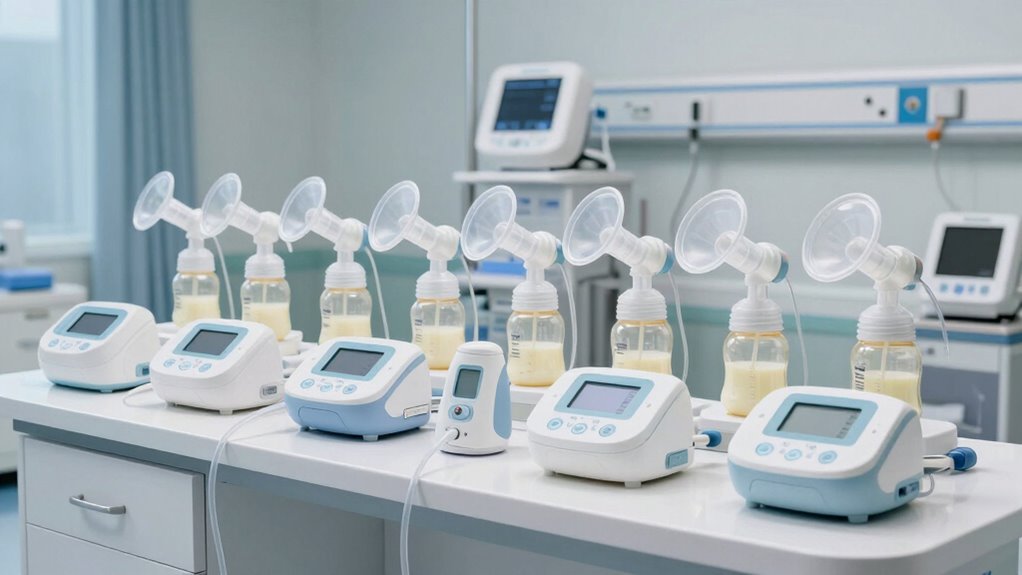

For a hospital-grade pump for low supply, my best overall pick is the Spectra Baby S1 Plus, which pairs adjustable electric pumping with a rechargeable battery for use at home or away from an outlet. The Medela Symphony models stand out for shoppers seeking a clinic-style pump, while the BabyBuddha 2.0 is a more portable option for people who prioritize mobility. The main tradeoff is between a dependable home setup, a higher-cost clinical-style system, and hands-free convenience; wearable designs may suit some routines but can be less forgiving of fit and positioning. “Hospital-grade” is not a standardized performance guarantee, and no pump can promise an increase in milk supply. Read on for how the 12 options compare, what I prioritized, and which type of pump may fit your needs.

Turn the school run and nap time into listening time
- Thousands of audiobooks, podcasts and originals
- Listen on your phone, tablet or Echo — also offline
- Cancel anytime
Complete the kit


Key Takeaways
- The Spectra S1 Plus leads for flexibility: its rechargeable design makes it easier to keep a consistent routine without staying beside a wall outlet.
- The Medela Symphony models serve a different purpose: they are the clinic-style choices in this lineup, but buyers should check access, rental, and included equipment before choosing one.
- Wearable convenience comes with a fit tradeoff: the Momcozy V1 Pro and Elvie Stride can support hands-free routines, but correct placement and flange fit matter more than app features.
- Several NCVI models offer similar mode-and-level controls: compare battery capacity, portability, and included accessories rather than assuming the shared “hospital-grade suction” label means equal performance.
- Low supply needs more than stronger suction: comfort, effective milk removal, correct flange sizing, and a sustainable pumping schedule can matter more than the maximum number of settings.
| Wearable Breast Pump S12, Double Electric Hands-Free Breastfeeding Pump, 12 Adjustable Suction Levels, Portable, Low Noise, Hospital-Grade, 2 Pack, White |  | Best for Lightweight Wearable Pumping | Pump type: Double electric wearable pump | Weight: 230g | Suction levels: 12 | VIEW ON AMAZON | See Our Full Breakdown |
| Spectra Baby S1 Plus Electric Breast Milk Pump |  | Best for Flexible Primary Pumping | Pump type: Electric breast pump | Power: Rechargeable | Pumping setup: Single or double | VIEW ON AMAZON | See Our Full Breakdown |
| BabyBuddha Breast Pump 2.0 – Primary Electric Portable Hands‑Free |  | Best for Fine-Tuned Settings on the Go | Suction levels: 21 | Modes: 3: standard, soft stimulation, advanced expression | Included flange: 24mm EasyFit | VIEW ON AMAZON | See Our Full Breakdown |
| Momcozy V1 Pro Wearable Breast Pump, Hospital-Grade Portable Pump |  | Best for Lightweight Wear with Stated Suction | Suction power: Up to 300mmHg | Rhythms: 3 | Adjustable levels: 15 | VIEW ON AMAZON | See Our Full Breakdown |
| NCVI Electric Breast Pump 8782, Portable Hospital-Grade Double Pump |  | Best for Quiet, Straightforward Portable Pumping | Pump type: Portable double electric pump | Modes: 4 | Suction levels: 9 | VIEW ON AMAZON | See Our Full Breakdown |
| NCVI Double Electric Breast Pump, 4 Modes 9 Levels, Hospital-Grade Suction |  | Best for Flexible, Quiet Sessions | Suction modes: 4: Massage, Stimulation, Expression, Mixed | Suction levels: 9 | Battery capacity: 2200mAh | VIEW ON AMAZON | See Our Full Breakdown |
| Zomee Mother’s Nature H1 Hospital-Grade Dual-Motor Breast Pump |  | Best for Independent Side-to-Side Adjustment | Suction power: Up to 300 mmHg | Modes: 3: Stimulation, Expression, 2-Phase | Adjustable levels: 12 | VIEW ON AMAZON | See Our Full Breakdown |
| Medela Symphony Plus Electric Breast Pump | Hospital Grade | 1 Count |  | Best for Early Supply Establishment | Pump type: Electric breast pump | Grade: Hospital grade | Technology: Initiation Technology | VIEW ON AMAZON | See Our Full Breakdown |
| Medela Symphony Hospital Grade Breast Pump with Rechargeable Battery |  | Best for Battery-Powered Hospital-Grade Flexibility | Technology: 2-Phase Expression | Pumping options: Single or double pumping | Power options: Rechargeable battery and wall power | VIEW ON AMAZON | See Our Full Breakdown |
| Elvie Stride Hospital-Grade, App-Controlled Breast Pump – Hands-Free, Wearable, Ultra-Quiet & Electric with 2 Modes, 10 Settings & 5oz Capacity per Cup |  | Best Wearable for Discreet Pumping | Suction power: Up to -300 mmHg | Modes: 2: Stimulation and Expression | Settings: 10 per mode | VIEW ON AMAZON | See Our Full Breakdown |
| NCVI Electric Breast Pump, 5200mAh Hospital-Grade Suction, 4 Modes 9 Levels |  | Best for Portable Pumping and Milk Storage | Battery capacity: 5200mAh | Modes: 4 | Levels: 9 | VIEW ON AMAZON | See Our Full Breakdown |
| Medela Pump in Style Pro Double Electric Breast Pump, Hospital-Grade |  | Best for Adjustable, Outlet-Powered Sessions | Pump type: Double electric breast pump | Suction claim: Hospital-grade | Suction levels: 16 | VIEW ON AMAZON | See Our Full Breakdown |
| hospital grade pump for low supply | Pump type |
|---|---|
| Wearable Breast Pump S12 | Double electric wearable pump |
| Spectra Baby S1 Plus Electric | Electric breast pump |
| BabyBuddha Breast Pump 2.0 | — |
| Momcozy V1 Pro Wearable Breast | — |
| NCVI Electric Breast Pump 8782 | Portable double electric pump |
| NCVI Double Electric Breast Pu | — |
| Zomee Mother’s Nature H1 Hospi | Dual-motor, hospital-grade |
| Medela Symphony Plus Electric | Electric breast pump |
| Medela Symphony Hospital Grade | — |
| Elvie Stride Hospital-Grade | — |
| NCVI Electric Breast Pump | — |
| Medela Pump in Style Pro Doubl | Double electric breast pump |
More Details on Our Top Picks
Wearable Breast Pump S12, Double Electric Hands-Free Breastfeeding Pump, 12 Adjustable Suction Levels, Portable, Low Noise, Hospital-Grade, 2 Pack, White
For someone trying to keep pumping sessions manageable while moving around, the S12’s 230g wearable design is its main advantage. It comes as a two-pump set and offers 12 suction levels, so each side can be pumped hands-free without carrying a separate motor. Its three included flange sizes—17mm, 19mm, and 21mm—give more fit options than a fixed-size setup, though correct sizing still takes some initial attention. Compared with the Spectra Baby S1 Plus, the S12 puts convenience and wearability first; the Spectra is the more conventional choice for someone who prefers a rechargeable pump with single- or double-pumping flexibility. The tradeoff is that the supplied information gives no measured suction strength or clinical evidence that it will address low supply. Battery life is listed as over 100 minutes, but may vary with use.
Pros:- Two wearable pumps allow hands-free double pumping.
- 230g weight supports a lighter, less cumbersome fit.
- Three flange sizes provide several starting fit options.
- Over 100 minutes of stated battery operation supports portable use.
Cons:- No suction-strength measurement is provided to compare its output for low-supply pumping.
- Battery runtime can vary with usage.
- Finding the right flange size requires initial setup.
Best for: Parents who want a lightweight, hands-free two-pump set for shorter sessions while working or doing household tasks.
Not ideal for: Buyers seeking a clearly documented suction specification or a more established primary-pump setup for managing low supply; the product details do not provide a suction measurement.
- Pump type:Double electric wearable pump
- Weight:230g
- Suction levels:12
- Battery life:Over 100 minutes
- Flange sizes:17mm, 19mm, 21mm
- Materials:Food-grade silicone and PP, BPA-free
Our verdict“Choose the S12 for lightweight, hands-free double pumping, but favor a pump with clearer suction details if output is your main concern.”
Spectra Baby S1 Plus Electric Breast Milk Pump
The Spectra Baby S1 Plus is the most flexible conventional pump in this group: it is rechargeable and can be set up for single or double pumping. That flexibility can help a parent tailor sessions to comfort or schedule, while its hygienic backflow protector supports a cleaner pumping setup. For low supply, the practical distinction is not a stated suction measurement—the product details provide none—but that this is a dedicated electric pump rather than a wearable cup-first option. Compared with the S12, it gives up discreet, all-in-bra wear for a more adaptable pump configuration. It may suit someone establishing a regular routine better than a compact wearable, but the need for compatible Spectra accessories can add setup complexity. I would not read “hospital grade” as a guarantee of increased milk production; fit and individual response still matter.
Pros:- Rechargeable design supports pumping away from a wall outlet.
- Can be configured for single or double pumping.
- Adjustable suction levels allow session settings to be personalized.
- Backflow protector and hygienic components support a cleaner setup.
Cons:- Optimal use depends on compatible Spectra accessories.
- The product details do not specify suction strength or battery runtime.
- Less discreet to wear than the S12 or Momcozy V1 Pro.
Best for: Parents who want a rechargeable primary pump with the option to pump one side or both sides, and are comfortable using compatible accessories.
Not ideal for: Those who need a fully hands-free wearable setup or want a product listing with a stated suction measurement to compare for low-supply needs.
- Pump type:Electric breast pump
- Power:Rechargeable
- Pumping setup:Single or double
- Suction:Adjustable levels; count and measurement not specified
- Hygiene feature:Backflow protector
- Intended use:Baby feeding and breastfeeding support
Our verdict“Pick the Spectra S1 Plus if adaptable single- or double-pumping matters more than wearable convenience.”
BabyBuddha Breast Pump 2.0 – Primary Electric Portable Hands‑Free
Among these portable choices, the BabyBuddha 2.0 offers the most detailed stated adjustment range: 21 intensity levels across three modes. That can give users more room to find a tolerable setting than the S12’s 12 levels or the NCVI 8782’s nine, though more settings do not guarantee better milk removal. Its rechargeable USB-C power and included bottles, tubing, lanyard, travel tote, and flange inserts make it a more complete travel kit than the Spectra S1 Plus listing, which requires compatible accessories. The tradeoff is that it is a portable primary pump with tubing and accessories, not an in-bra wearable like the Momcozy V1 Pro. Battery runtime is not specified, and the supplied description notes that extended use may call for frequent recharging. Its “hospital-level” claim is not backed here by a numerical suction specification.
Pros:- 21 intensity levels offer fine-grained adjustment.
- Three modes provide different pumping approaches.
- Flange inserts from 13mm through 21mm broaden fit options.
- USB-C rechargeable power and travel accessories support portable use.
Cons:- Battery runtime is not stated, and extended sessions may require recharging.
- Tubing and accessories make it less self-contained than wearable pumps.
- No numerical suction measurement is provided to substantiate the hospital-level claim.
Best for: Parents who want a portable primary pump with multiple modes, many intensity steps, and a broad set of included flange sizes.
Not ideal for: Those who want a simple all-in-bra pump or need a published suction measurement and battery runtime before choosing a low-supply pump.
- Suction levels:21
- Modes:3: standard, soft stimulation, advanced expression
- Included flange:24mm EasyFit
- Flange inserts:13mm, 15mm, 17mm, 19mm, 21mm
- Power source:Rechargeable battery via USB-C
- Included accessories:Bottles with lids, tubing, lanyard, travel tote
Our verdict“Choose the BabyBuddha 2.0 for portable pumping with extensive setting and flange options, not for a fully wearable or numerically documented suction setup.”
Momcozy V1 Pro Wearable Breast Pump, Hospital-Grade Portable Pump
The Momcozy V1 Pro stands apart from the S12 by providing a stated maximum suction figure: up to 300mmHg. That gives buyers a more concrete point of comparison for a low-supply shortlist, though it does not predict an individual’s comfort or milk output. At 120g, it is also lighter on paper than the S12’s 230g, and its three rhythms plus 15 levels allow more adjustment than the NCVI 8782’s nine levels. The listed battery capacity supports up to eight or nine sessions, making it more appealing for repeated portable use than a pump with no runtime estimate. Its compromises are fit and cleaning: flange comfort may vary, and the three milk-contact parts may need frequent washing. Compared with the BabyBuddha 2.0, it favors in-bra wear over a broader accessory kit.
Pros:- 120g weight makes it lighter than the S12 based on listed specifications.
- Maximum suction is stated as up to 300mmHg.
- Three rhythms and 15 levels allow adjustment across sessions.
- Battery is listed for up to eight or nine sessions per charge.
Cons:- Fit may be uncomfortable for some users depending on flange size.
- Three milk-contact parts require regular cleaning.
- Battery life varies with use, and the listed session count is an upper estimate.
Best for: Parents prioritizing a light wearable pump with a published maximum suction figure, several settings, and a stated per-charge session range.
Not ideal for: Those who need multiple flange sizes included or want fewer milk-contact parts to clean; fit comfort may vary by user.
- Suction power:Up to 300mmHg
- Rhythms:3
- Adjustable levels:15
- Battery capacity:2300mAh
- Battery life:Up to 8–9 sessions per charge
- Weight:120g
- Noise level:48dB
- Tunnel angle:102°
Our verdict“Pick the V1 Pro if wearable convenience, low weight, and a stated suction ceiling outweigh fit uncertainty and cleaning needs.”
NCVI Electric Breast Pump 8782, Portable Hospital-Grade Double Pump
The NCVI 8782 is the straightforward pick for parents who want a portable double pump with a stated noise figure and familiar adjustment controls. Its 40dB operation is lower than the Momcozy V1 Pro’s listed 48dB, while four modes provide more pumping approaches than the Spectra S1 Plus details specify. Nine suction levels are fewer than the BabyBuddha 2.0’s 21, so it offers less fine-grained adjustment; that may be a reasonable trade if a simpler control range is preferable. The 2200mAh battery can work with power banks and car adapters, adding flexibility away from home. Still, the listing gives no suction measurement or battery runtime, so “hospital-grade” cannot be directly compared with the Momcozy’s stated 300mmHg maximum. A full charge is required before first use, and accessories need replacement over time.
Pros:- Four modes offer several pumping approaches.
- 40dB listed noise level is quieter than the V1 Pro’s stated 48dB.
- 2200mAh battery is compatible with power banks and car adapters.
- Food-grade silicone and anti-backflow design support a practical pumping setup.
Cons:- Nine suction levels provide fewer adjustment steps than the BabyBuddha 2.0.
- No numerical suction strength or battery runtime is provided.
- Requires a full charge before first use, and accessories need replacement over time.
Best for: Parents who want a quiet portable double pump with multiple modes and the option to use a power bank or car adapter.
Not ideal for: Buyers who need a stated suction measurement, a documented session count per charge, or a large range of intensity steps for fine adjustments.
- Pump type:Portable double electric pump
- Modes:4
- Suction levels:9
- Battery capacity:2200mAh lithium battery
- Noise level:40dB
- Material:Food-grade silicone, non-BPA
- Power compatibility:Power banks and car adapters
- Additional feature:Anti-backflow design
- Support period:3 years
Our verdict“Choose the NCVI 8782 for quiet, adaptable portable pumping, but look elsewhere if documented suction strength is your priority.”
NCVI Double Electric Breast Pump, 4 Modes 9 Levels, Hospital-Grade Suction
For low supply, the NCVI’s strength is the choice of four modes and nine levels, letting you adjust stimulation and expression rather than rely on one fixed pattern. Its mixed mode adds another option for parents trying to find a comfortable routine. Compared with the Zomee Mother’s Nature H1, it offers fewer adjustment levels but a more travel-friendly setup, with a rechargeable battery and operation rated under 45 dB. Smart memory can save repeated button changes between sessions, while the included 17, 19, 21, and 24 mm nipple sizes give more fit options out of the box. The tradeoff is that “hospital-grade” suction alone does not guarantee increased milk production, and this model still needs hands-on cleaning; its motor unit cannot go in the dishwasher. I’d choose it for adaptable home or office use, not as a proven supply-building treatment.
Pros:- Four modes and nine levels allow adjustments to stimulation and expression
- Includes four nipple sizes, offering more fit choices than the Zomee H1’s listed 19 mm and 21 mm flanges
- Rechargeable 2200mAh battery supports use away from a wall outlet
- Under-45 dB operation and smart memory suit quieter, repeat sessions
Cons:- Motor unit is not dishwasher safe, and pump parts need regular cleaning
- Four modes and nine levels may still offer less fine adjustment than the Zomee H1’s 12 levels
- Hospital-grade suction wording does not by itself show that the pump will increase supply
Best for: Parents who pump regularly at home or work and want several adjustable patterns, quiet operation, and a rechargeable unit.
Not ideal for: Anyone seeking clinical evidence of improved milk output or a pump with dishwasher-safe motor components; the listed features do not establish either.
- Suction modes:4: Massage, Stimulation, Expression, Mixed
- Suction levels:9
- Battery capacity:2200mAh
- Charging time:2–4 hours
- Noise level:Under 45 dB
- Material:BPA-free
- Included nipple sizes:17, 19, 21, and 24 mm
Our verdict“Choose the NCVI for quieter, adjustable pumping with several included nipple sizes, but not as a substitute for individualized help with low supply.”
Zomee Mother’s Nature H1 Hospital-Grade Dual-Motor Breast Pump
The H1 is the lineup’s most tailored option for parents who want to set each breast separately: its dual motors control suction, speed, and cycle on each side, a useful distinction when comfort or output differs between breasts. It lists suction up to 300 mmHg and 12 adjustment levels, giving more stated control than the NCVI Double Electric Breast Pump, which has nine levels. Its wave-like flange design aims to make suction feel more nursing-like, and the closed system supports hygienic use. The included 19 mm and 21 mm flanges, bottles, and colostrum containers add practical value, while a three-year warranty is a clear ownership benefit. The compromise is a bulkier design that is less appealing for mobile pumping; unlike the NCVI, the supplied details do not specify a rechargeable battery or noise level. High suction is not a promise of higher supply.
Pros:- Dual motors allow independent adjustment for each breast
- Up to 300 mmHg suction and 12 levels provide extensive stated control
- Closed system and wave-like flanges support hygienic, comfort-focused pumping
- Three-year warranty and included bottles and colostrum containers
Cons:- Bulkier design may be less practical to carry than the rechargeable NCVI Double Electric
- Only 19 mm and 21 mm flanges are listed in the package
- The product details do not specify battery operation or a noise level
Best for: Parents who pump frequently, need separate controls for each breast, and value a closed system with a longer stated warranty.
Not ideal for: Commuters who prioritize a compact pump or buyers who need several flange sizes included; only 19 mm and 21 mm are listed.
- Suction power:Up to 300 mmHg
- Modes:3: Stimulation, Expression, 2-Phase
- Adjustable levels:12
- Pump type:Dual-motor, hospital-grade
- Materials:BPA-free and phthalate-free
- Warranty:3 years
- Included flanges:19 mm and 21 mm
- Included containers:6 oz bottles and colostrum containers
Our verdict“Pick the H1 if separate side-to-side controls and a closed system matter more than compact portability.”
Medela Symphony Plus Electric Breast Pump | Hospital Grade | 1 Count
The Symphony Plus is the most clinically oriented choice here for parents working on early milk initiation or maintaining supply. Its Initiation Technology is designed for early production, and the product description positions it for exclusive pumping and latching difficulties—needs that a wearable like the Elvie Stride does not specifically address. The pump’s role is less about portability or app features and more about a hospital-style setup for frequent, structured sessions. That focus comes with a notable gap: the double pumping kit is sold separately, so the listed package is not ready for double pumping on its own. Compared with the Medela Symphony with rechargeable battery, this Plus listing highlights initiation support but does not list battery power or a carrying case. The product data reports a supply benefit, but individual results vary; I would not treat that claim as a guaranteed outcome.
Pros:- Initiation Technology is specifically positioned for early milk production
- Designed for exclusive pumping and parents with latching difficulties
- Includes a program card and container stand
- Three-year warranty is listed
Cons:- Requires a separately sold Medela Symphony Double Pumping Kit
- No rechargeable battery is listed, unlike the other Medela Symphony in this lineup
- A stationary hospital-style pump is less suited to discreet, mobile sessions than the Elvie Stride
Best for: Parents in the early weeks who are exclusively pumping, working through latch difficulties, or seeking a pump built around initiation and supply maintenance.
Not ideal for: Buyers who need an all-in-one double-pumping kit, battery-powered portability, or a wearable setup for moving around.
- Pump type:Electric breast pump
- Grade:Hospital grade
- Technology:Initiation Technology
- Included components:Pump, program card, container stand, quick start card, card/cord protector, instructions
- Required accessory:Medela Symphony Double Pumping Kit, sold separately
- Warranty:3 years
Our verdict“Choose the Symphony Plus when early initiation support is the priority and you are prepared to obtain the separate double-pumping kit.”
Medela Symphony Hospital Grade Breast Pump with Rechargeable Battery
This Symphony’s main advantage over the Symphony Plus is the listed rechargeable battery and carrying case, which make its hospital-grade format easier to move between rooms or take along. Its 2-Phase Expression technology is designed to mimic a nursing rhythm, and users can pump singly or double, offering a flexible setup for different routines. For someone managing low supply through frequent sessions, battery operation can reduce dependence on finding an outlet. But the added mobility does not make it compact: the pump and accessories remain bulkier than the Elvie Stride, which sits in wearable cups. The supplied information also does not list flange sizes or a pumping kit, so buyers should check exactly which personal parts they need. Compared with the Symphony Plus, this listing emphasizes power flexibility rather than initiation-specific technology.
Pros:- Rechargeable battery and wall power offer two power options
- Supports both single and double pumping
- 2-Phase Expression is designed to mimic a nursing rhythm
- Carrying case and accessories are listed in the package
Cons:- Bulkier for travel and discreet use than the wearable Elvie Stride
- The included personal pumping parts and flange sizes are not specified
- May be more equipment than casual or occasional pumpers need
Best for: Parents who want a hospital-grade pump with single- or double-pumping options and battery power for use away from a fixed outlet.
Not ideal for: People seeking a light, discreet wearable or an explicitly initiation-focused system; the Elvie is more wearable, while the Symphony Plus lists Initiation Technology.
- Technology:2-Phase Expression
- Pumping options:Single or double pumping
- Power options:Rechargeable battery and wall power
- Included components:Breast pump, rechargeable batteries, program card, container stand, quick start card, protector, instructions, carrying case
Our verdict“Choose this Symphony if battery-powered flexibility and single-or-double pumping matter more than a compact wearable design.”
Elvie Stride Hospital-Grade, App-Controlled Breast Pump – Hands-Free, Wearable, Ultra-Quiet & Electric with 2 Modes, 10 Settings & 5oz Capacity per Cup
Among these five, the Elvie Stride is the clear pick for hands-free, discreet pumping: its lightweight cups fit in a bra, and app control lets you adjust sessions without reaching for a conventional pump unit. Each cup holds up to 5 oz, while two modes with ten settings each provide more adjustments per mode than the NCVI’s nine levels. That convenience may help parents fit pumping into a busy day, but low-supply buyers should weigh it against fit and routine needs. The included 24 mm shields may not suit everyone, and other sizes must be purchased separately. The Medela Symphony Plus is more directly positioned for early initiation, while the Elvie favors mobility over that specialized focus. Full app functionality requires a smartphone, and wearable convenience does not itself establish that milk output will improve.
Pros:- Wearable cups support hands-free pumping and discreet use
- App control enables remote adjustment and monitoring
- Two modes with ten settings each offer several adjustment choices
- BPA-free design and dishwasher-safe parts simplify care
Cons:- Only 24 mm breast shields are included; other sizes require a separate purchase
- Full functionality requires a smartphone app
- Wearable convenience does not replace the Symphony Plus’s initiation-focused positioning
Best for: Parents who need hands-free pumping during work, caregiving, or travel and are comfortable using a smartphone app.
Not ideal for: Buyers who need a pump specifically positioned for early initiation, want multiple flange sizes included, or prefer controls that do not depend on an app.
- Suction power:Up to -300 mmHg
- Modes:2: Stimulation and Expression
- Settings:10 per mode
- Capacity:5 oz per cup
- Weight:Less than 5 oz per cup
- Included breast shields:24 mm
- Material:BPA-free
Our verdict“Choose the Elvie Stride when discreet, hands-free sessions are your priority, provided the included shield size fits and app use suits you.”
NCVI Electric Breast Pump, 5200mAh Hospital-Grade Suction, 4 Modes 9 Levels
The 5200mAh rechargeable battery and included cooler bag make this NCVI a strong fit for someone who needs to pump away from an outlet and carry milk afterward. Its four modes and nine levels, along with gentle micro-vibration, offer ways to adjust comfort and stimulation—useful when you are trying to establish a repeatable pumping routine for low supply. Compared with the Medela Pump in Style Pro, this kit is better equipped for travel, while the Medela lists 16 suction levels and dishwasher-safe parts. The NCVI’s broad flange set, from 17mm to 24mm, can help buyers match fit without sourcing sizes separately. The tradeoff is a more involved kit: several small parts and accessories may slow setup and cleanup, and the charging time is not specified. “Hospital-grade” is a product claim, not a guarantee of better output for every person.
Pros:- 5200mAh rechargeable battery supports pumping away from an outlet
- Four modes and nine levels provide adjustment options for comfort and stimulation
- Includes 17mm, 19mm, 21mm, and 24mm flanges
- Cooler bag, ice pack, and tote support milk transport
Cons:- Multiple accessories and components can make setup and cleanup more involved
- Battery charging time is not specified
- The provided data does not state whether parts are dishwasher-safe
Best for: Pumping parents who need cordless sessions, multiple flange sizes, and an included cooler for transporting expressed milk.
Not ideal for: Buyers who want a simple, outlet-powered setup or clearly specified charging time; the many accessories may also frustrate anyone seeking minimal assembly.
- Battery capacity:5200mAh
- Modes:4
- Levels:9
- Flange sizes:17mm, 19mm, 21mm, 24mm
- Included bottles:Bottles and nipples
- Milk storage accessories:Cooler bag with ice pack, bottle covers
- Other included parts:Pump bodies, duckbill valves, air tubes, nipple ruler, charger, tote bag
Our verdict“Choose this NCVI if cordless use, included flange sizes, and milk transport matter more to you than a simpler setup or detailed charging information.”
Medela Pump in Style Pro Double Electric Breast Pump, Hospital-Grade
The Medela Pump in Style Pro is the more straightforward pick for a home routine built around access to electricity: it is a double electric pump with 16 suction levels, soft breast shields, and dishwasher-safe parts. That greater number of listed levels gives you more adjustment points than the NCVI’s nine, which may help you find a comfortable setting, though it cannot guarantee increased output for low supply. Compared with the rechargeable NCVI, Medela gives up cordless flexibility and included travel-storage gear in favor of a light, under-two-pound pump and easier parts cleaning. It also differs from the Medela Symphony options in this roundup: this model is described as compact for home use, not as a rental-style hospital unit. Setup may take practice, and the need for an outlet limits where you can pump.
Pros:- Double electric design supports pumping both breasts
- Sixteen suction levels offer more adjustment steps than the NCVI’s nine
- Under-two-pound weight supports moving it around the home
- Dishwasher-safe parts simplify routine cleaning
Cons:- Requires electricity and is not battery operated
- Initial setup may take some practice
- May cost more than basic pumps
Best for: Pumping parents with a consistent outlet-powered home setup who want double pumping, fine-grained suction adjustments, and dishwasher-safe parts.
Not ideal for: People who need cordless pumping at work or while traveling, or buyers seeking a full-featured hospital rental unit rather than a compact home pump.
- Pump type:Double electric breast pump
- Suction claim:Hospital-grade
- Suction levels:16
- Power:Requires electricity; not battery operated
- Weight:Under 2 pounds
- Included items:Bottles, breast shields, pump parts
- Material compatibility:BPA-free bottles and parts
- Cleaning:Dishwasher-safe parts
Our verdict“Choose the Medela Pump in Style Pro if you mostly pump near an outlet and value adjustable double pumping and easier parts cleaning over cordless travel use.”

How We Picked
I ranked these pumps for the specific needs behind a low-supply search: repeated use, adjustable comfort, portability, and how practical each system is for a sustained pumping routine. I gave the most weight to control over suction and modes, power options, and the distinction between a conventional electric pump and a wearable design. I also considered maintenance and buyer friction, including whether the pump’s format makes setup, positioning, and consistent use easier or harder.
The ranking reflects meaningful differences, not a claim that every pump has been clinically tested head-to-head. The Spectra S1 Plus ranks first for its balance of adjustability and battery-powered use; Medela Symphony models rank highly for shoppers seeking a clinic-style system, with access and cost-related logistics to verify. Portable and wearable models follow when their convenience is the main advantage, while closely related NCVI options are separated by their stated power and control features. I do not treat “hospital-grade” as a regulated performance measure or infer that suction labels alone predict milk output.
| hospital grade pump for low supply | Pump type |
|---|---|
| Wearable Breast Pump S12 | Double electric wearable pump |
| Spectra Baby S1 Plus Electric | Electric breast pump |
| BabyBuddha Breast Pump 2.0 | — |
| Momcozy V1 Pro Wearable Breast | — |
| NCVI Electric Breast Pump 8782 | Portable double electric pump |
| NCVI Double Electric Breast Pu | — |
| Zomee Mother’s Nature H1 Hospi | Dual-motor, hospital-grade |
| Medela Symphony Plus Electric | Electric breast pump |
| Medela Symphony Hospital Grade | — |
| Elvie Stride Hospital-Grade | — |
| NCVI Electric Breast Pump | — |
| Medela Pump in Style Pro Doubl | Double electric breast pump |
Factors to Consider When Choosing Hospital Grade Pump For Low Supply
Choosing a pump for low supply is less about chasing the strongest advertised suction and more about finding a setup you can use comfortably and consistently. These broader checks can help you avoid buying features that do not solve your actual pumping problem.
Prioritize Effective Milk Removal Over Maximum Suction
A higher suction number does not automatically mean more milk or better stimulation. If suction causes pain, the body may respond poorly to the session, and discomfort can make regular pumping harder to maintain. Look for adjustable suction and modes that let you use a comfortable setting rather than pushing toward the highest level. Change settings gradually and stop if you feel pain, pinching, or tissue damage. If output remains low despite comfortable sessions, ask a lactation professional to review your technique and feeding plan instead of assuming you need a stronger motor.
Treat Flange Fit as Part of the Pump Decision
A pump can be powerful and still work poorly if its flange does not fit your nipple. A flange that is too large or too small can cause rubbing, discomfort, or inefficient milk removal. Do not assume the standard size in the box will suit you, and check whether compatible sizes or inserts are available before buying. Wearable cups can be more sensitive to alignment because the collection cup sits inside a bra and may shift as you move. If pumping hurts or your output changes after switching pumps, revisit sizing and positioning before blaming the motor.
Choose a Format You Can Use on a Difficult Day
Low-supply routines may involve frequent sessions, so ease of setup can matter as much as portability. A standard double electric pump is often easier to see and adjust while seated, while a wearable model frees your hands but may require careful placement and a supportive bra. Consider where you will pump most often, whether you need to move around, and how quickly you can clean the parts afterward. A compact pump is not automatically the most practical if its cups are awkward to position or its parts are hard to wash. Choose the format that lowers the chance of skipping sessions in your actual daily routine.
Check What “Hospital-Grade” Means for the Specific Model
“Hospital-grade” is used broadly in marketing and is not, by itself, a standardized guarantee of suction, durability, or suitability for low supply. Some buyers use the phrase to mean a robust personal pump; others are looking for a multi-user pump commonly found in clinical settings. Those are not interchangeable expectations. Confirm whether a model is intended for personal use or multi-user use, what parts must be replaced between users, and whether the manufacturer provides instructions for that use. For rental-style options such as the Symphony, check availability and the full equipment arrangement rather than assuming a listing includes everything needed to pump.
Compare the Full Routine, Not Just the Motor
Repeated pumping means cleaning, charging, assembling, and storing parts can shape your experience. A rechargeable battery can help when outlets are inconvenient, but battery capacity and charging habits still matter. Wearable systems may reduce tubing and visible equipment, though their cups and valves still require regular cleaning. Before choosing, check how many parts touch milk, whether replacement valves or membranes are easy to obtain, and how the pump is powered. A simpler setup that you can maintain consistently may be a better fit than a feature-rich model that adds chores.
Set Expectations and Get Support When Output Stays Low
A pump is one part of a milk-removal plan, not a treatment that guarantees increased supply. Milk output can be affected by flange fit, session timing, frequency, health factors, and the baby’s feeding pattern. Keep track of comfort and output across sessions, but avoid judging a pump from a single session or comparing your amount with someone else’s. If supply concerns persist, a lactation consultant or healthcare professional can help assess latch, pumping technique, and possible medical factors. Seek prompt clinical advice for pain, nipple injury, or a sudden change in milk production.
Frequently Asked Questions
Does a hospital-grade label mean a pump will increase my milk supply?
No label can guarantee a supply increase, and “hospital-grade” does not have one universal meaning across pump listings. A pump may offer strong or adjustable suction, but output also depends on fit, comfort, milk-removal frequency, and individual health factors. Choose a model that lets you pump comfortably and regularly rather than selecting by the label alone. If supply remains low, a lactation professional can help identify issues a pump change may not address.
Should I buy a Medela Symphony or a personal double electric pump?
The Symphony is the clinic-style option in this group, while a personal double electric pump is generally easier to own and use as an everyday home appliance. A Symphony may suit someone with access to a rental or clinical setup, but check the arrangement, included parts, and user instructions before committing. A personal model such as the Spectra S1 Plus may be a more straightforward choice when portability and routine home use matter. Your decision should reflect access and ongoing logistics as much as the pump’s stated category.
Are wearable pumps a good choice when I have low supply?
They can be useful if hands-free pumping makes it easier to keep sessions in your day, but wearability alone does not make a pump more effective. Cup alignment, flange fit, and a secure bra can affect comfort and milk removal. Some people also find it harder to monitor positioning or adjust the setup while the cups are in place. If reliable visibility and easy adjustments are your priority, a conventional pump may be a better starting point; a wearable can be a convenience option if it fits well.
What should I change first if a new pump gives me less milk?
Start by checking flange fit, nipple alignment, and whether the pump is assembled correctly before deciding that the motor is inadequate. Make sure the suction setting is comfortable and that the parts are in good condition, since worn valves or membranes can affect performance. Compare sessions at similar times and under similar conditions rather than relying on one measurement. If output stays lower or pumping hurts, ask a lactation professional to observe your setup and discuss other possible causes.
Is a double pump worth choosing if I am trying to build supply?
A double pump lets you express from both breasts at once, which can make a session more time-efficient and may suit a schedule with frequent pumping. That convenience does not mean it will produce a specific increase in supply for every person. Comfort, fit, effective milk removal, and a routine you can keep up are still central. If you are comparing single- and double-sided options, weigh the time saved against the setup and cleaning you will manage each day.
Conclusion
For most shoppers seeking one dependable personal pump, I recommend the Spectra Baby S1 Plus as best overall for its combination of adjustable electric pumping and battery-powered flexibility. The NCVI Double Electric Breast Pump is my best value-style pick for buyers who want multiple modes and levels in a conventional double-pump format, while the Medela Symphony is the best premium clinic-style choice for people who can confirm access and equipment details. For beginners, I would start with the Spectra S1 Plus rather than a wearable, since a conventional setup can make positioning and adjustments easier to monitor. Choose the Elvie Stride or Momcozy V1 Pro for hands-free convenience, and the BabyBuddha 2.0 if portability is your main need. Whichever you pick, treat comfort and flange fit as part of the decision, and seek professional support if low supply persists.