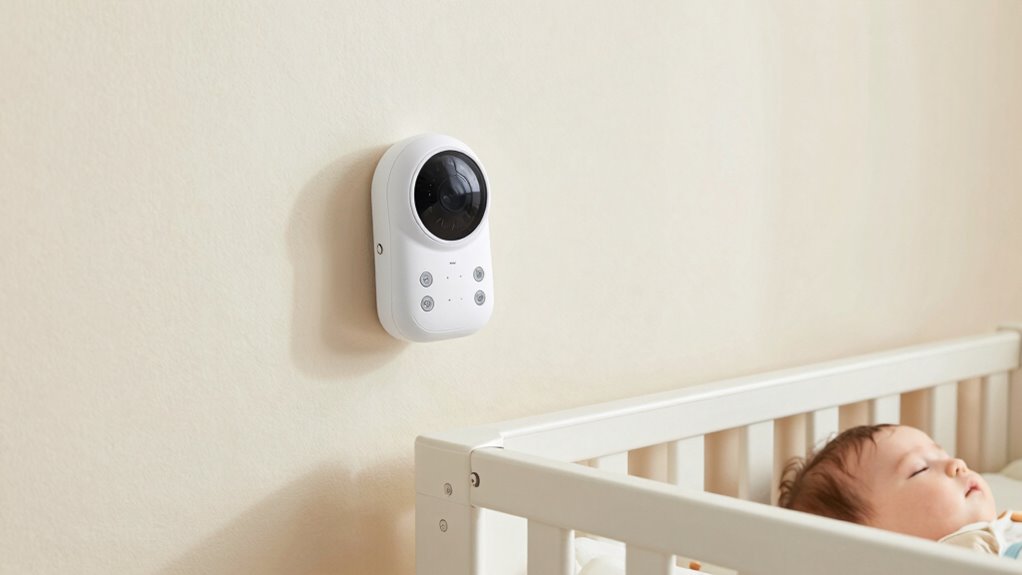

To get the best view safely, position your baby monitor at eye level or slightly above the crib, ensuring a clear, straightforward line of sight. Use an adjustable mount to fine-tune the angle and avoid glare from windows or lights. Keep the monitor steady on a stable surface or wall bracket, and test the angle at different times for ideal visibility and sound. If you want to learn more about perfect placement tips, keep exploring.
Key Takeaways
- Position the monitor at eye level or slightly above the crib for a clear, unobstructed view of the baby.
- Use adjustable mounts to fine-tune the angle and avoid blind spots or glare from lights.
- Ensure the monitor is stable on a secure surface to prevent accidental dislodging.
- Keep the camera aimed directly at the baby’s sleeping area, avoiding obstructions or reflections.
- Regularly test and adjust the angle during different times of day to maintain optimal visibility and safety.

Choosing the right placement for your baby monitor is essential for guaranteeing you can keep an eye (or ear) on your little one at all times. The placement impacts not only how well you can see or hear your baby but also the monitor’s performance, including issues like cordless interference and battery life. When setting up your monitor, you want a spot that offers a clear, unobstructed view while minimizing potential disruptions. Positioning it too far from your baby’s crib can weaken the signal, leading to lag or poor audio quality. Conversely, placing it too close might cause interference, especially if there are other wireless devices nearby. Cordless interference is a common problem, especially in homes with multiple Wi-Fi networks, cordless phones, or Bluetooth devices. To avoid this, you should place your monitor away from these sources and keep it within a reasonable distance—usually within 100 to 300 feet—so the signal remains strong without picking up unwanted noise. Additionally, considering wireless network interference during placement can help maintain optimal performance. Battery life is another factor to contemplate when choosing your monitor’s placement. You want the monitor to be within reach of a power outlet if it isn’t equipped with a rechargeable battery that lasts all night. If your monitor relies on batteries, placing it in a location where you can easily replace or recharge them helps ensure uninterrupted operation. Avoid spots where the monitor might be knocked over or exposed to excessive heat or moisture, which can drain batteries faster or damage the device. Positioning the monitor at an ideal height—usually eye-level or slightly above—can improve the view and reduce the chance of accidental bumps that could disconnect or damage it. The angle of the monitor should give you a clear line of sight to your baby’s crib while avoiding glare from windows or lights that could obscure the camera or distort the audio. A slight tilt or mounting the monitor on a stable surface often works best. Keep in mind that some monitors come with adjustable mounts, allowing you to fine-tune the view easily. This flexibility means you can avoid blind spots and ensure you’re always able to check on your child comfortably. Remember to test the placement at different times of day to account for changing lighting conditions and to confirm that the signal remains strong and clear. By thoughtfully positioning your baby monitor, you’re setting yourself up for consistent, reliable monitoring—giving you peace of mind and keeping your little one safe.

Adjustable Baby Monitor Mount for HelloBaby HB6550/ HB6560/ HB6240/ HB6148/ HB6339/ HB66/ HB65/ HB40, ANMEATE 549/SM935E, Universal Baby Monitor Wall Mount with Perfect View and Easy to Install
✔Compatibility:Especially designed for hello baby monitor HB65/HB40/HB6550/HB6560/ HB6148/ HB6240/ HB66/ HB6339/ HB6550 Pro, ANMEATE 549/SM935E, and also fit…
As an affiliate, we earn on qualifying purchases.
As an affiliate, we earn on qualifying purchases.
Frequently Asked Questions
Can Baby Monitors Be Left Unattended Overnight?
Yes, you can leave baby monitors unattended overnight, but you should check the monitor’s battery life regularly to avoid disruptions. Make sure the camera’s night vision works properly for clear visibility in low light. Keep the monitor charged and placed securely, away from hazards. Regularly inspecting the device helps you stay connected and confident, knowing you can monitor your baby’s safety throughout the night without interruptions.
How Often Should I Check the Monitor’s Camera Angle?
You should check your monitor angle and adjust the camera at least once a week—because who doesn’t love a little surprise when you find your baby in an unexpected pose? Regularly reviewing the monitor’s camera adjustment guarantees the view stays ideal and safe. Keep in mind, a quick glance daily isn’t enough; a weekly check helps catch any shifts or obstructions before they become a problem.
Are There Any Risks of Radiation From Baby Monitors?
Radiation concerns with baby monitors are understandable, but most devices emit very low levels of non-ionizing radiation, which is considered safe for both you and your baby. To guarantee monitor safety, follow the manufacturer’s guidelines, keep the monitor at a safe distance, and avoid prolonged exposure. If you’re still worried, opt for audio-only monitors or models with lower radiation emissions. Regularly check for updates on safety standards to stay informed.
How Do I Prevent My Monitor From Overheating?
Ironically, your monitor’s overheating isn’t due to magic, but poor device placement. To prevent this, guarantee proper monitor cooling by keeping it in a well-ventilated area, away from direct sunlight or heat sources. Avoid stacking objects on or around it, and regularly check for dust buildup that can trap heat. Proper device placement allows airflow, keeping your monitor cool and functioning safely, without risking overheating.
Can Baby Monitors Be Used Outdoors Safely?
Yes, you can use baby monitors outdoors, but you need to prioritize outdoor safety. Place the monitor in a shaded, dry spot away from direct sunlight and weather elements. Keep it within a reasonable range to avoid signal interference, which can affect performance. Confirm the monitor is weatherproof or protected with a suitable cover. Regularly check the signal strength and device temperature to maintain safe, reliable monitoring outside.

HelloBaby No WiFi Baby Monitor 5" Screen 30-Hour Battery Pan-Tilt-Zoom Video Upgrade with Camera and Audio, Night Vision, VOX, 2-Way Talk, 8 Lullabies and 1000ft Range, HB6550
Remote 355° Pan and Tilt Baby Monitor & 5" Color Display: Enjoy a 5" Big Screen on this…
As an affiliate, we earn on qualifying purchases.
As an affiliate, we earn on qualifying purchases.
Conclusion
By carefully choosing the right angle and position for your baby monitor, you guarantee your little one stays safe and visible at all times. Do you really want to risk missing that precious moment or overlook a potential hazard? Remember, a well-placed monitor isn’t just about viewing; it’s about peace of mind. Take the time to optimize your setup, and you’ll find reassurance in knowing you’re doing everything possible to keep your baby safe and sound.
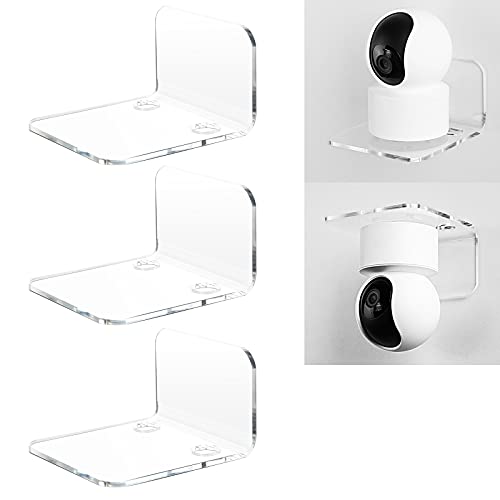
OAPRIRE Acrylic Floating Wall Shelves Set of 3 for Security Cameras, Baby Monitors, Speakers – Universal Small Wall Shelf with Cable Clips, 10-Piece Strong Tapes, No Drill (Clear)
BEST VIEWING ANGLE: Contains 3 clear floating shelves, made to accommodate all popular video surveillance cameras, IP Cameras…
As an affiliate, we earn on qualifying purchases.
As an affiliate, we earn on qualifying purchases.
HelloBaby No WiFi Baby Monitor 5" Screen 30-Hour Battery Pan-Tilt-Zoom Video Upgrade with Camera and Audio, Night Vision, VOX, 2-Way Talk, 8 Lullabies and 1000ft Range, HB6550
Remote 355° Pan and Tilt Baby Monitor & 5" Color Display: Enjoy a 5" Big Screen on this…
As an affiliate, we earn on qualifying purchases.
As an affiliate, we earn on qualifying purchases.