
For safer nights with a bedside bassinet, look for a firm, flat sleep surface that keeps your baby’s head and neck properly aligned. Make certain it’s made from non-toxic, high-quality materials that are easy to clean and free from harmful chemicals. Check for sturdy construction, lockable wheels, and safety features like secure attachments to your bed. If you keep these tips in mind, you’ll find a bassinet that offers both safety and peace of mind. Discover more essential safety details below.

Turn the school run and nap time into listening time
- Thousands of audiobooks, podcasts and originals
- Listen on your phone, tablet or Echo — also offline
- Cancel anytime
Key Takeaways
- Choose a bassinet with a flat, firm sleep surface to ensure safe sleep posture and reduce SIDS risk.
- Verify the materials are non-toxic, hypoallergenic, and free from harmful chemicals for baby’s safety.
- Ensure the bassinet features a sturdy, stable structure with secure lockable wheels for safe mobility and placement.
- Look for washable, durable fabrics that maintain hygiene and withstand regular cleaning without degradation.
- Prioritize models with additional safety features like secure attachments, breathable sides, and compliance with safety standards.

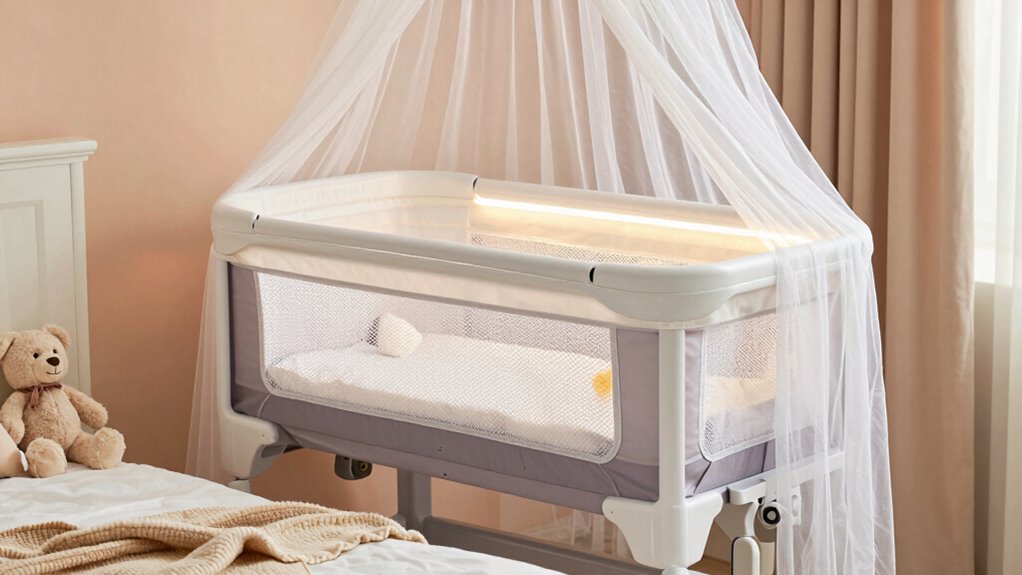
A bedside bassinet is a compact, convenient solution that allows you to keep your newborn close during the night, making nighttime feedings and comforting much easier. When choosing the right bassinet, one of the most important factors to take into account is how it supports your baby’s sleep position. You want to make certain that the bassinet provides a firm, flat sleep surface, as this promotes safe sleep by reducing the risk of suffocation or Sudden Infant Death Syndrome (SIDS). Avoid bassinets with soft mattresses or thick padding that could cause your baby to sink or become positioned dangerously. Instead, look for models that specify a firm, snug-fitting mattress, which helps your baby maintain a safe sleep posture throughout the night.
Material safety is equally critical when selecting a bedside bassinet. You need to feel confident that the materials used are safe and non-toxic, especially since newborns tend to spend a lot of time in their sleep environment. Opt for bassinets made from high-quality, durable materials that are free from harmful chemicals like phthalates, lead, or formaldehyde. The frame should be sturdy, with no sharp edges or small parts that could pose a choking hazard. The fabric coverings should be breathable, hypoallergenic, and easy to clean, reducing the risk of allergies and ensuring a hygienic sleeping space. If the bassinet has a canopy or decorative features, verify that these are securely attached and made from safe, non-toxic materials. Additionally, considering material safety standards can help you choose a product that has undergone rigorous testing for safety and chemical content.
Another aspect to pay attention to is how well the materials withstand regular use and cleaning. Babies can be messy, so choosing a bassinet with removable, washable fabrics makes maintenance easier and keeps the sleep environment safe and hygienic. Also, check the manufacturer’s specifications on material safety and certifications. Many reputable brands undergo safety testing and adhere to strict standards, providing peace of mind that your baby’s health isn’t compromised.
In addition to the sleep position and material safety, you should also evaluate the overall stability and design of the bassinet. It should be sturdy enough to prevent tipping or collapsing and should have secure, lockable wheels if it’s mobile. A well-designed, safe bedside bassinet will give you peace of mind, knowing you’ve taken the necessary steps to create a safe and comfortable sleeping environment for your newborn. Ultimately, prioritizing these safety features ensures that your nighttime routine is both convenient and secure, giving you confidence as you care for your little one.
bedside bassinet with firm flat sleep surface
As an affiliate, we earn on qualifying purchases.
As an affiliate, we earn on qualifying purchases.
Frequently Asked Questions
Are Bedside Bassinets Suitable for All Nursery Sizes?
Bedside bassinets are suitable for most nursery sizes, but you need to take into account your layout and space optimization. If your nursery is small, choose a compact model that fits comfortably without overcrowding. For larger spaces, opt for a bassinet with additional features or storage. Always measure your available space beforehand to ensure the bassinet fits securely and allows easy movement, promoting safer nights for both you and your baby.
How Do Bedside Bassinets Impact Sleep Training Routines?
Think bedside bassinets are a sleep magic wand? Not quite. They may boost nighttime convenience, but they can also blur sleep training boundaries. Your sleep environment becomes more about quick feedings than independent rest. Expect more frequent interruptions and less consistency, making it harder for your little one to learn self-soothing. So, if you want a smooth sleep routine, weigh the convenience against the potential disruption to sleep training.
Can Bedside Bassinets Be Used for Twins Simultaneously?
Yes, you can use bedside bassinets for twin sleeping simultaneously, but it depends on the size and design of the bassinets. Make sure they’re sturdy and have enough space for each baby to sleep safely without risk of suffocation or entrapment. Consider bassinets with individual compartments or those that can be securely placed side by side. Always prioritize safety and follow manufacturer guidelines for twin sleeping arrangements.
What Are the Allergen Considerations With Bedside Bassinets?
While bedside bassinets offer convenience, allergens like dust mites and pet dander pose concerns. You should regularly dust mite-proof the bassinet and wash fabrics to prevent dust buildup. Pet allergen concerns also mean keeping pets away from the sleeping area and choosing hypoallergenic materials. These steps help minimize allergy triggers, ensuring a safer, more comfortable environment for your baby’s delicate respiratory health.
Do Bedside Bassinets Require Special Mattress Types?
Yes, bedside bassinets often require special mattress types to guarantee safety. You should look for a mattress that meets strict mattress safety standards and has the right firmness—firm enough to prevent SIDS but comfortable for your baby. Always choose a mattress specifically designed for bassinets, avoiding soft or plush options that could pose a risk. Properly fitting mattresses help minimize gaps and keep your baby safe during the night.
non-toxic hypoallergenic baby bassinet
As an affiliate, we earn on qualifying purchases.
As an affiliate, we earn on qualifying purchases.
Conclusion
Choosing a bedside bassinet might feel overwhelming, but prioritizing safety makes all the difference. Think about sturdy construction, breathable fabrics, and secure attachments—these details guarantee your little one sleeps soundly and safely beside you. Some worry about convenience, but with the right features, you’ll find it easier to attend to your baby’s needs during the night. A safe, well-designed bassinet creates peaceful nights for both you and your baby, making every moment together even more precious.
baby bassinet with lockable wheels
As an affiliate, we earn on qualifying purchases.
As an affiliate, we earn on qualifying purchases.
washable fabric bedside bassinet
As an affiliate, we earn on qualifying purchases.
As an affiliate, we earn on qualifying purchases.
Fall Picks
fall essentials
As an affiliate, we earn on qualifying purchases.